
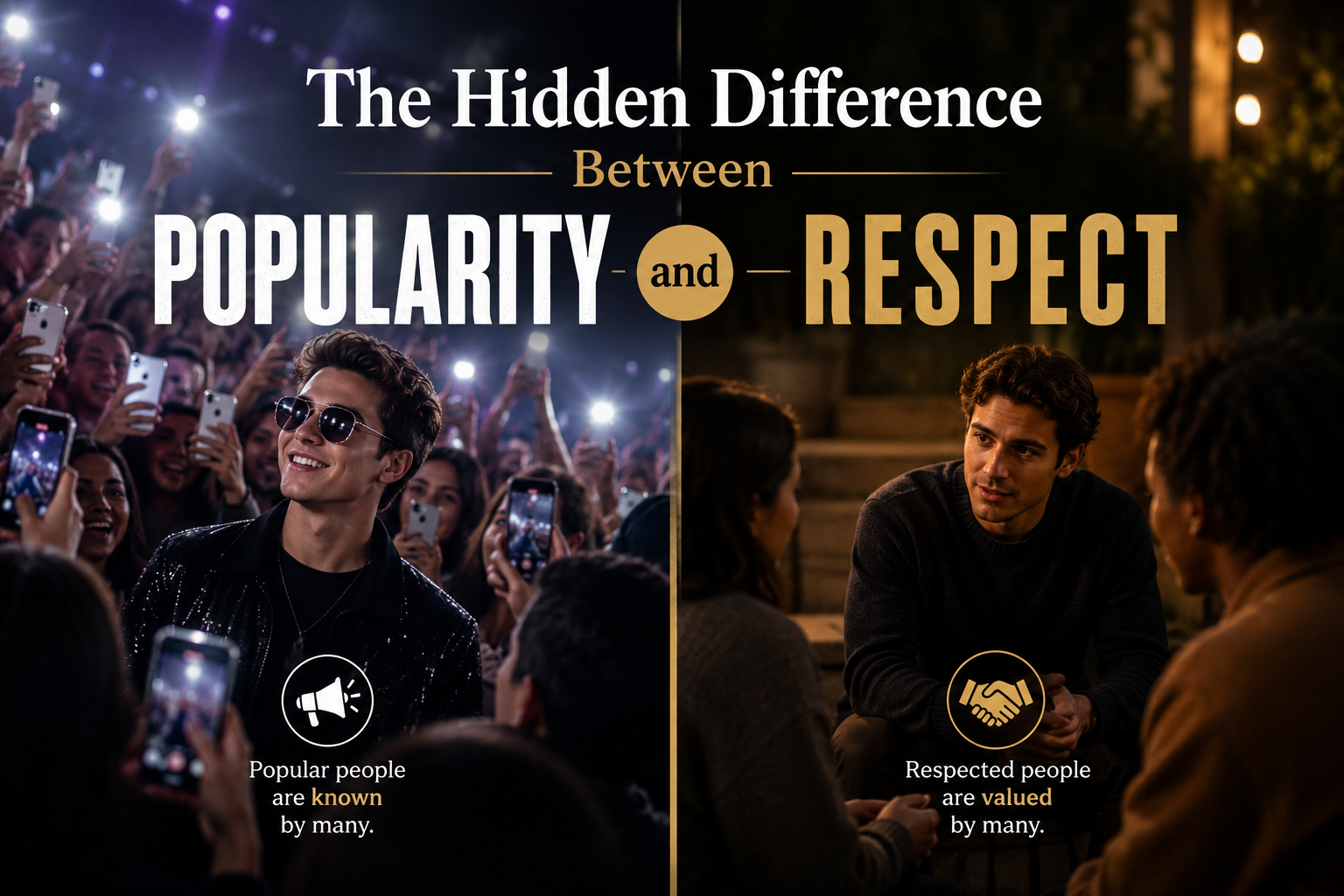
The Hidden Difference Between Popularity and Respect
Popularity and respect are often confused because both can place a person in the spotlight, both can make others listen, and both can create the appearance of influence. Yet beneath the surface, they operate on completely different foundations. Popularity is driven by visibility, emotional appeal, timing, and social momentum. Respect is driven by character, consistency, value, and long-term trust. One rises quickly and can fade just as fast. The other grows slowly but tends to last longer than trends, attention cycles, or public opinion. Understanding this difference is important because many people spend their lives chasing one while unknowingly sacrificing the other.
Popularity is often built on attraction rather than substance. It can come from humor, appearance, charisma, trends, or even controversy. In modern digital spaces, popularity can be manufactured through algorithms that reward engagement rather than depth. A person can become widely known without being deeply known. They can gather attention without earning trust. This is why someone can be followed by thousands or millions yet still struggle to be taken seriously when it matters. Popularity thrives on moments, not memory. It is tied to what is exciting now, not what is proven over time.
Respect, on the other hand, is built in silence long before it is recognized publicly. It is not usually the result of viral attention or sudden visibility. Instead, it is formed through repeated behavior that demonstrates reliability, honesty, and competence. People respect those who do what they say they will do, especially when it is inconvenient. They respect those who remain consistent when there is no applause. They respect those who maintain principles even when compromise would be easier. Unlike popularity, respect does not depend on being constantly seen. In fact, it often grows stronger when no one is watching.
One of the clearest differences between popularity and respect is how they respond to time. Popularity tends to peak quickly and decline just as quickly. It is sensitive to trends, opinions, and changing attention. What is admired today may be forgotten tomorrow. Respect behaves differently. It compounds over time. The longer someone demonstrates integrity and value, the stronger their reputation becomes. Time exposes popularity as surface level, while it deepens respect into something more permanent. This is why individuals who are highly respected are often not the most talked about, but they are the most trusted when it matters.
Another difference lies in emotional versus rational influence. Popularity is often emotional. It appeals to how people feel in the moment. It can be driven by excitement, admiration, curiosity, or entertainment. Respect is more rational. It is based on evaluation, experience, and proven outcomes. People may be emotionally drawn to popular figures, but they rely on respected individuals when decisions carry consequences. In workplaces, communities, and serious environments, respect determines who gets responsibility, authority, and trust, even if that person is not the most liked or visible.
Popularity also depends heavily on external validation. It requires constant reinforcement through likes, comments, attention, and recognition. Without external feedback, it begins to fade. This creates a cycle where individuals may feel pressure to constantly perform, entertain, or impress others just to maintain relevance. Respect does not depend on constant validation. It can exist even in disagreement. People can respect someone they do not always agree with because respect is rooted in principles rather than preferences. This makes respect more stable and less emotionally exhausting to maintain.
There is also a difference in how both are earned. Popularity can sometimes be gained quickly through a single moment, event, or exposure. A viral post, a successful performance, or a trending topic can elevate someone into public attention overnight. Respect cannot be rushed in the same way. It requires repeated proof over time. It is earned through patterns of behavior rather than isolated moments. One mistake can damage popularity, but consistent behavior is required to build respect. This is why respect is often associated with discipline and maturity, while popularity is associated with timing and exposure.
Interestingly, popularity can exist without respect, and respect can exist without popularity. There are many individuals who are widely known but not deeply trusted. Their influence may be large but shallow. At the same time, there are individuals who are not widely known but are deeply respected within their circles. Their influence may be smaller in reach but stronger in depth. When problems arise, people do not turn to the most popular person in the room; they turn to the most reliable one. This reveals the practical difference between attention and authority.
The consequences of prioritizing popularity over respect can be significant. When individuals focus too much on being liked or noticed, they may begin to compromise their values, decisions, or long-term goals. They may prioritize short-term approval over long-term credibility. This can create a cycle where they become increasingly dependent on external validation, making it difficult to maintain stability when attention shifts. On the other hand, those who prioritize respect often make decisions that may not be immediately popular but build long-term trust and influence.
In professional environments, respect often determines career growth more than popularity. A person may be popular within a team, liked by colleagues, and socially well-connected, yet still not be trusted with important responsibilities. Another person may be less socially visible but consistently delivers results, handles pressure, and maintains integrity. Over time, leadership tends to move toward the second type of individual. Organizations rely on people they can depend on, not just people who are liked. This is why respect is closely tied to authority and responsibility.
In personal life, the difference is equally important. Popularity can attract attention and social engagement, but respect determines the depth and stability of relationships. People may enjoy the company of someone who is popular, but they build long-term trust with someone they respect. Respect influences how conflicts are handled, how boundaries are maintained, and how loyalty is formed. Relationships grounded in respect tend to survive challenges, while those based only on popularity often fade when novelty disappears.
Another important distinction is how both affect identity. Popularity can sometimes push individuals to perform a version of themselves that is shaped by external expectations. They may begin to prioritize what gets attention over what reflects their true values. Respect, however, is aligned with authenticity. It is built when actions consistently match principles. People respect those who are genuine, even if they are not always impressive or entertaining. This creates a stronger internal foundation because the individual is not constantly adjusting themselves to maintain approval.
The pursuit of popularity can also create pressure to constantly compete for attention. In environments where popularity is the main currency, comparison becomes constant. People measure themselves against visibility, trends, and engagement. This can lead to insecurity and instability because attention is unpredictable. Respect removes much of this instability because it is less about comparison and more about consistency. It is not about being the loudest or the most visible; it is about being dependable and valuable over time.
In the long run, respect becomes more powerful because it translates into influence that does not rely on constant visibility. People seek out those they respect even when they are not actively present. Their opinions carry weight because they are backed by history and consistency. Popularity, however, requires continuous presence to maintain influence. Once attention shifts, influence can fade quickly. This is why many people discover that being popular is not the same as being influential in meaningful or lasting ways.
It is also important to understand that popularity is not inherently negative. It can open doors, create opportunities, and increase visibility. The issue arises when it is mistaken for respect or prioritized above it. The most stable and impactful individuals often understand how to balance both. They may gain attention, but they do not depend on it. They may be visible, but their foundation is built on trust and consistency rather than approval.
Ultimately, the hidden difference between popularity and respect lies in their source and their durability. Popularity is granted by crowds, shaped by trends, and sustained by attention. Respect is earned through behavior, proven through time, and sustained by trust. One is external and fluctuating. The other is internal and stable. One makes you known. The other makes you trusted. And in the long run, it is trust that determines real influence, lasting success, and meaningful impact in any area of life.

EarnSmartOnline.com.ng is dedicated to helping readers make smarter financial decisions through practical guides on online income, personal finance, technology, digital business, and wealth creation. Our goal is to provide reliable, easy-to-understand, and actionable content that empowers individuals to earn smarter, build sustainable income streams and achieve long-term financial success.
Recommended: Start Earning Online
- Ultimate Affiliate Marketing Program — learn affiliate marketing with a done-for-you sales system ($15). Check it out
- The Newbie Affiliate Guide — the beginner-friendly starter guide (~$6.68). Check it out
- Easy Dollar Maker — earn in dollars uploading AI images and videos from your phone ($17). Check it out
Disclosure: These are affiliate links. If you buy through them, I may earn a commission at no extra cost to you.



