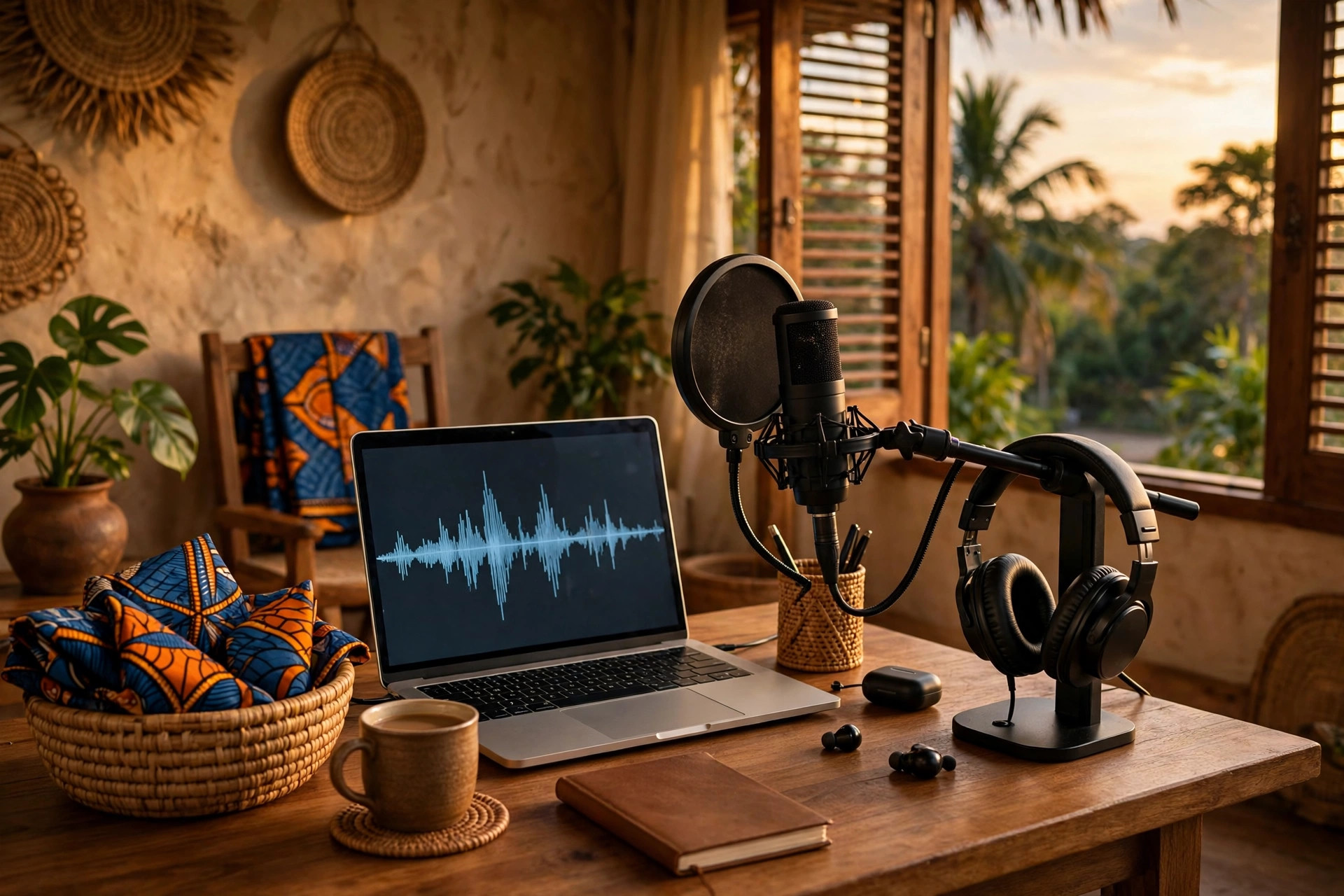
Every week in Nigeria, thousands of hours of valuable speech are recorded and then left to gather dust. Sermons that could become blog posts and books. Podcast episodes that need show notes and subtitles to grow. Interviews with researchers, journalists and final year students that must become text before anyone can use them. Somebody has to turn all that audio into accurate text, and that somebody gets paid per audio hour, working from home with headphones and a laptop. It is called transcription, and it is one of the quietest legitimate incomes on the internet.
Who buys transcription, and what for
Churches are the biggest local buyers nobody pitches. A pastor who preaches two sermons a week is sitting on a book, a devotional and a year of blog content, if someone converts the recordings faithfully. Media teams are usually too busy with Sunday production to type sermons, so the work goes begging or goes to whoever offers first. One church on a weekly arrangement is a retainer, not a gig.
Researchers and media houses buy accuracy by the hour. Postgraduate students must transcribe interview recordings before they can analyse them, journalists need exact quotes from recorded conversations, and podcast producers need transcripts for search visibility and accessibility. These buyers are easy to find, they post their needs openly in academic and media communities, and they care about one thing above price: whether names, figures and quoted words come back exactly right. A transcriber known for precision in those circles gets passed from one researcher to the next all year.
Clear audio is a different job from difficult audio. A studio podcast with two speakers is straightforward work. A market interview recorded over generator noise, with three people talking across each other, can take three times as long per audio hour. Learn to ask for a two minute sample before quoting any new client, and price what you actually hear. Experienced transcribers are not faster typists only. They are better quoters, and quoting is where this trade is won or lost.
Platforms supply the foreign work. Rev, GoTranscript and TranscribeMe pay freelancers worldwide to transcribe business calls, interviews, lectures and media files. You apply, pass a test file, and take work from a queue. The pay per job looks small until you convert it, and the queue teaches you speed and accuracy faster than any course, because unclear work gets rated and low ratings close accounts.
The honest money, and the speed problem
Rates are quoted per audio minute or audio hour. Foreign platforms commonly pay the equivalent of $0.30 to $1.00 per audio minute depending on difficulty and turnaround, while direct local clients typically agree a fee per audio hour, commonly ₦15,000 to ₦40,000 for clean recordings delivered in two to three days. Rush work and difficult audio should always cost more, and you must say so before accepting the file.
Your typing speed decides your real wage. One hour of clear audio takes a beginner four to six hours to transcribe properly, with all the pausing and rewinding. That maths humbles everyone at first. Two things fix it: genuine touch typing practice, and the modern workflow, run the audio through a free or cheap AI transcription tool first, then edit the draft against the recording. Editing a good draft is two to three times faster than typing from silence, and your accuracy is what the client is really buying.
Tools that cost little or nothing
Your ears matter more than your software. A decent pair of headphones, commonly ₦15,000 to ₦30,000, catches words laptop speakers lose. Pair them with free tools: oTranscribe or Express Scribe for controlled playback with hotkeys, and any AI transcription service your budget allows for first drafts. A foot pedal for play and pause is a professional luxury you can buy later from earnings.
Learn the style rules clients judge you by. Speaker labels, timestamps where requested, how to mark unclear words honestly instead of guessing, and clean paragraphs. A transcript riddled with confident guesses is worse than one with three honest “[inaudible]” marks, because the client can fix an honest gap and cannot find a silent invention. Build a personal glossary as you work, names of people, places, churches, companies and technical terms that recur in a client’s recordings, because the second episode or sermon from the same source should be noticeably faster and cleaner than the first, and clients renew when they can feel that improvement.
Getting started this week
Pass one platform test properly. Take the test file slowly, follow the platform’s style guide to the letter, and proofread against the audio twice before submitting. Most applicants fail on style, not typing. Once inside, protect your rating fiercely at the start: choose clear audio files even when they pay slightly less, because early ratings decide whether the good queue opens to you.
Pitch two local clients with a free sample page. Take one public sermon or podcast episode from a church or creator you admire, transcribe the first five minutes beautifully, and send it to their media team with your per audio hour rate and weekly capacity. Just like editing, a finished sample does the selling. Churches and podcasters who see their own words perfectly typed rarely unsee the possibility.
The bottom line
Transcription will not make anyone rich in a month, and any advert saying so is selling something. What it offers is real, flexible, home based income for accurate people, with churches and podcasters nearby and global platforms one test away. Practise typing properly, use AI drafts without trusting them blindly, mark what you cannot hear honestly, and deliver on time. Accuracy is a reputation, and in this trade reputation is the whole business.

EarnSmartOnline.com.ng is dedicated to helping readers make smarter financial decisions through practical guides on online income, personal finance, technology, digital business, and wealth creation. Our goal is to provide reliable, easy-to-understand, and actionable content that empowers individuals to earn smarter, build sustainable income streams and achieve long-term financial success.
Recommended: Start Earning Online
- Ultimate Affiliate Marketing Program — learn affiliate marketing with a done-for-you sales system ($15). Check it out
- The Newbie Affiliate Guide — the beginner-friendly starter guide (~$6.68). Check it out
- Easy Dollar Maker — earn in dollars uploading AI images and videos from your phone ($17). Check it out
Disclosure: These are affiliate links. If you buy through them, I may earn a commission at no extra cost to you.