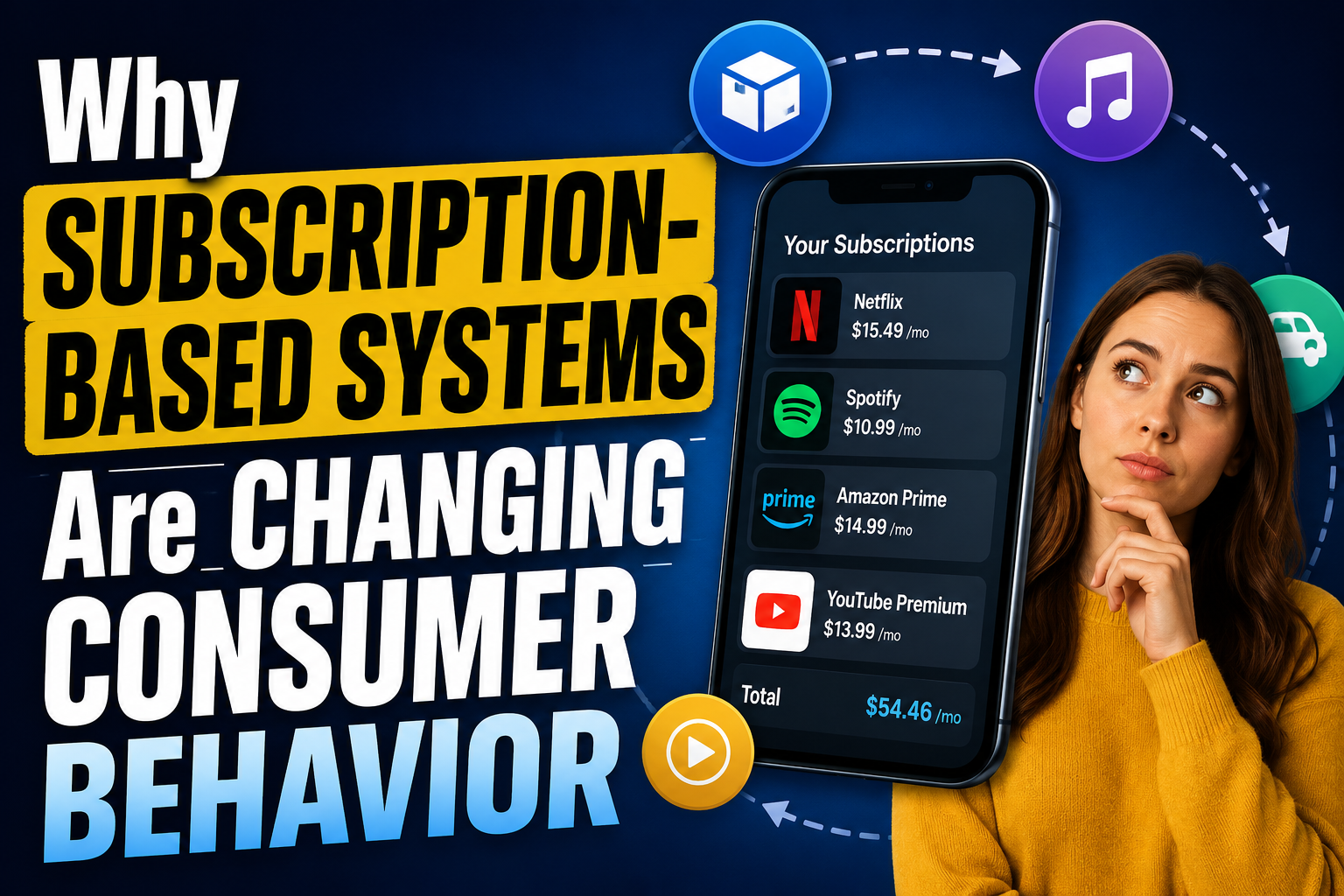
Why Subscription-Based Systems Are Changing Consumer Behavior
The way people buy products and services has changed dramatically over the past decade. In the past, consumers were accustomed to making one time purchases. Whether it was buying a movie, purchasing software, subscribing to a newspaper, or even joining a gym, the transaction was usually straightforward. A customer paid once and gained ownership or access. Today, however, a different model has taken center stage. Subscription based systems are rapidly becoming the preferred method for delivering products and services across numerous industries, and their influence is fundamentally changing consumer behavior.
From streaming platforms and cloud software to meal delivery services and digital education platforms, subscriptions have become deeply embedded in everyday life. Consumers now pay recurring fees for continuous access rather than making large upfront purchases. While this shift may seem like a simple change in payment structure, it is actually transforming the way people think about spending, ownership, value, convenience, and commitment.
One of the biggest reasons subscription based systems are changing consumer behavior is the reduction of financial barriers. Instead of paying a large amount of money upfront, consumers can access products and services for a smaller monthly fee. This creates an illusion of affordability that encourages more people to subscribe. A service that might cost hundreds of dollars as a one time purchase suddenly appears accessible when offered at a low monthly rate. As a result, consumers are more willing to try products and services they might have previously avoided due to cost concerns.
This shift has also altered how people evaluate purchases. In traditional buying models, consumers often focused heavily on whether a product was worth the total purchase price. With subscriptions, the focus moves toward whether the monthly cost feels manageable. A person may hesitate to spend one hundred dollars at once but may have little difficulty agreeing to ten dollars per month. This psychological difference significantly impacts purchasing decisions and contributes to the growing popularity of recurring payment models.
Another major factor driving behavioral change is convenience. Subscription systems remove much of the friction associated with repeated purchases. Consumers no longer need to remember renewal dates, revisit stores, or manually place orders. Services are automatically renewed and products can be delivered regularly without any additional effort from the customer. This convenience creates a seamless experience that many consumers find difficult to abandon once they become accustomed to it.
The power of convenience extends beyond physical products. Digital subscriptions allow consumers to access vast libraries of content, tools, and resources instantly. Instead of buying individual movies, songs, or software licenses, users gain access to extensive collections through a single subscription. This changes the way people consume content because they are no longer limited by individual purchase decisions. Consumers often explore more options and consume more content simply because it is readily available.
Subscription based systems have also changed perceptions of ownership. Historically, ownership was considered a primary goal of consumption. People purchased books, movies, software, and other products because they wanted permanent possession. Today, many consumers prioritize access over ownership. They are more interested in the ability to use a product whenever needed rather than possessing it indefinitely.
This shift is particularly evident in digital industries. Streaming services have largely replaced physical media ownership for millions of consumers. Cloud based software has replaced traditional software purchases. Consumers increasingly view access as sufficient, provided the service remains reliable and affordable. This change reflects a broader transformation in consumer priorities and expectations.
Another important behavioral change involves spending habits. Subscription models encourage recurring financial commitments that often feel insignificant individually but can accumulate substantially over time. Many consumers now manage multiple subscriptions simultaneously, including entertainment services, software platforms, fitness memberships, cloud storage solutions, and online learning programs.
Because subscription payments are often automated, they can become less visible than traditional purchases. This reduces the psychological pain associated with spending money. Consumers may continue paying for services they rarely use simply because the recurring charge feels small or goes unnoticed. As a result, subscription based systems have introduced new challenges in personal financial management and budgeting.
Businesses understand the psychological principles behind recurring payments and often design their offerings to maximize long term customer retention. Free trials, introductory discounts, personalized recommendations, and loyalty incentives encourage consumers to remain subscribed for extended periods. Once consumers integrate a service into their daily routines, cancellation becomes less likely because the perceived inconvenience of losing access outweighs the monthly cost.
Subscription systems also influence consumer expectations regarding value. In traditional purchase models, customers often evaluated value based on the quality of a single product. In subscription environments, value is increasingly measured by ongoing experiences, continuous updates, and regular improvements. Consumers now expect services to evolve over time rather than remain static after purchase.
This expectation has encouraged businesses to focus on long term customer satisfaction rather than one time sales. Companies continuously update features, improve user experiences, and introduce new content to maintain subscriber engagement. As a result, consumers have become accustomed to receiving ongoing enhancements and increasingly expect constant innovation from the brands they support.
The rise of subscription based systems has also created stronger relationships between businesses and consumers. Traditional transactions often ended once a purchase was completed. Subscription models, however, establish ongoing interactions that may last months or years. Businesses collect data, monitor usage patterns, and personalize experiences based on customer behavior.
This increased personalization can significantly influence purchasing decisions. Consumers are more likely to remain loyal to services that understand their preferences and provide tailored recommendations. Personalized experiences create a sense of relevance and convenience that strengthens customer retention while shaping future consumption habits.
Technology has played a critical role in accelerating the growth of subscription systems. Mobile apps, digital payment platforms, cloud computing, and automated billing systems have made recurring payments easier than ever before. Consumers can subscribe to services with just a few clicks and manage their accounts from virtually anywhere.
The widespread adoption of smartphones has further strengthened this trend. Mobile devices provide constant access to subscription services, making them an integral part of daily life. Whether streaming entertainment, accessing productivity tools, reading digital publications, or participating in online courses, consumers can engage with subscription based services at any time.
The influence of subscription systems extends beyond digital products. Industries such as transportation, healthcare, food delivery, beauty products, and even automotive services have adopted subscription models. Consumers are increasingly embracing recurring payment arrangements for products and services that were traditionally purchased individually.
This evolution reflects a broader shift toward predictable consumption patterns. Subscription systems provide consistency for both consumers and businesses. Customers enjoy uninterrupted access while companies benefit from recurring revenue streams. This mutually beneficial arrangement has contributed significantly to the widespread adoption of subscription models across diverse sectors.
However, the rise of subscriptions is not without challenges. Subscription fatigue has become a growing concern as consumers accumulate multiple recurring commitments. What initially appears affordable can become expensive when combined with numerous other subscriptions. As monthly expenses increase, consumers become more selective about which services provide sufficient value.
This growing awareness is forcing businesses to compete more aggressively for consumer attention and loyalty. Companies must continually demonstrate value, improve customer experiences, and differentiate themselves from competitors. Consumers are becoming more willing to cancel subscriptions that fail to meet expectations, creating an environment where ongoing value delivery is essential for survival.
The future of consumer behavior will likely continue to be shaped by subscription based systems. Younger generations have grown up in an environment where subscriptions are normal and often preferred. Their purchasing habits reflect a strong preference for flexibility, convenience, and access over traditional ownership models.
As technology continues to advance and consumer preferences evolve, subscription systems are expected to expand into new industries and become even more integrated into daily life. Businesses will continue refining their approaches to customer retention while consumers become increasingly sophisticated in evaluating recurring expenses.
Ultimately, subscription based systems are changing consumer behavior because they alter the fundamental relationship between people and the products they use. They reduce upfront costs, prioritize convenience, encourage continuous engagement, shift perceptions of ownership, and create long term relationships between businesses and customers. What began as a simple payment model has evolved into a powerful force that influences how consumers spend money, consume content, evaluate value, and make purchasing decisions. As subscriptions become more prevalent across industries, their impact on consumer behavior will continue to shape the future of commerce and redefine the way people interact with products and services around the world.

EarnSmartOnline.com.ng is dedicated to helping readers make smarter financial decisions through practical guides on online income, personal finance, technology, digital business, and wealth creation. Our goal is to provide reliable, easy-to-understand, and actionable content that empowers individuals to earn smarter, build sustainable income streams and achieve long-term financial success.
Recommended: Start Earning Online
- Ultimate Affiliate Marketing Program — learn affiliate marketing with a done-for-you sales system ($15). Check it out
- The Newbie Affiliate Guide — the beginner-friendly starter guide (~$6.68). Check it out
- Easy Dollar Maker — earn in dollars uploading AI images and videos from your phone ($17). Check it out
Disclosure: These are affiliate links. If you buy through them, I may earn a commission at no extra cost to you.