
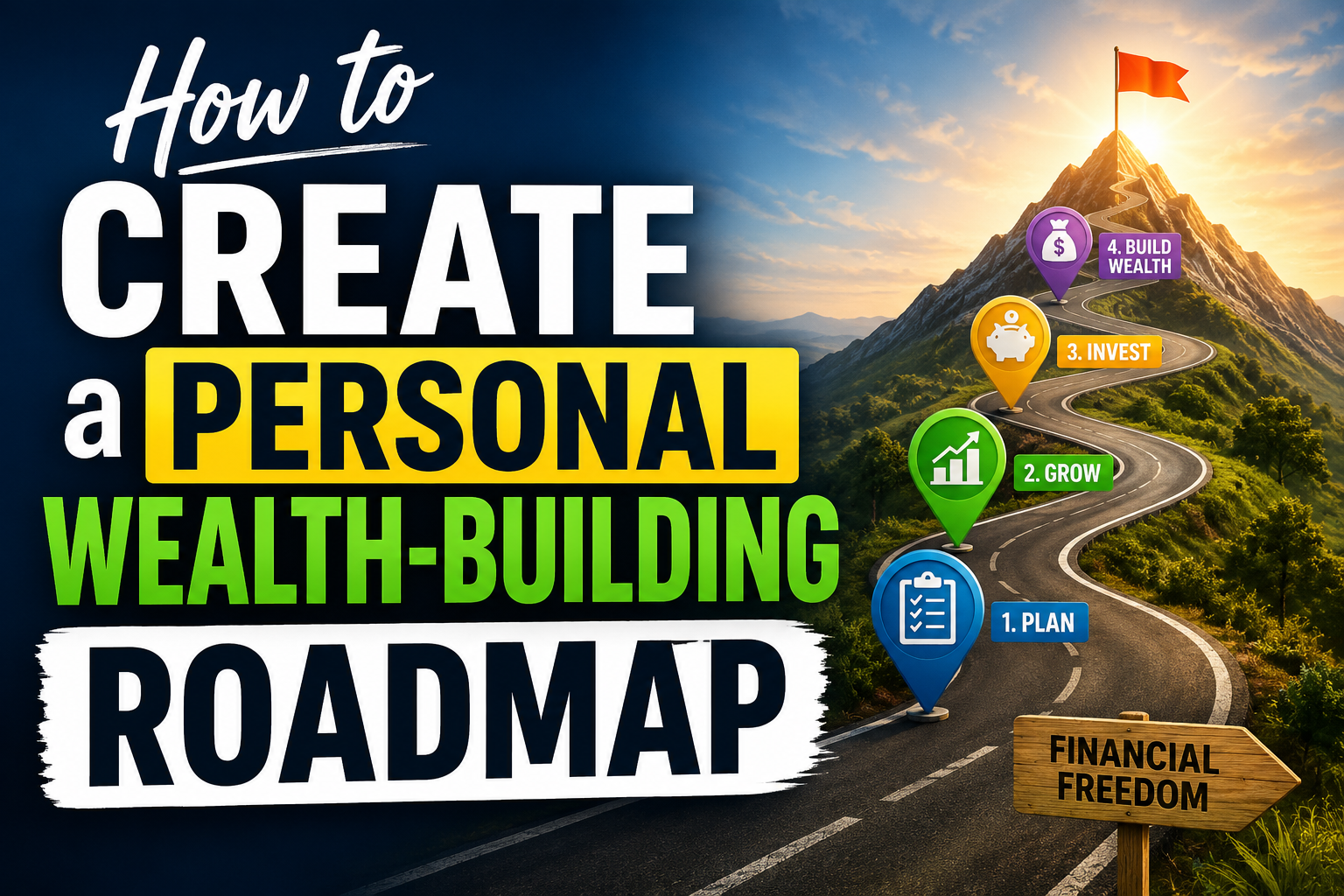
How to Create a Personal Wealth-Building Roadmap
Creating a personal wealth-building roadmap is one of the most important financial decisions any individual can make, especially in a world where income alone is no longer enough to guarantee stability or long-term security. Many people work hard every day, earn salaries, run small businesses, or engage in side hustles, yet still find themselves living paycheck to paycheck.
The difference between those who remain financially stuck and those who eventually achieve financial freedom is rarely luck or background. It is clarity, structure, and a deliberate plan for building wealth over time. A personal wealth-building roadmap is not just a financial document or a theoretical idea; it is a practical life system that guides how you earn, spend, save, invest, and grow your money in a way that aligns with your long-term goals.
The first step in creating this roadmap is understanding your current financial position with absolute honesty. Most people avoid this stage because it can be uncomfortable. It requires you to face your income level, debts, spending habits, and financial mistakes without denial. You cannot build wealth effectively if you do not know where you currently stand. This means calculating your total monthly income, listing all your expenses, identifying unnecessary spending, and understanding how much money you actually retain at the end of each month. For many people, this exercise alone is eye-opening because it reveals that money is not necessarily the problem, but the lack of structure in managing it is.
Once you have a clear understanding of your current situation, the next phase is defining what financial success actually means to you. Wealth is not a one-size-fits-all concept. For some people, it means achieving financial independence where they no longer rely on a monthly salary. For others, it means building enough passive income to cover basic living expenses or being able to support their family without financial stress. Without a clear definition of what you are working toward, your financial decisions will always feel random and inconsistent. A wealth-building roadmap requires clarity of destination because direction determines strategy.
After defining your financial goals, the next step is to break them into measurable and realistic targets. One of the biggest mistakes people make is setting vague goals like “I want to be rich” or “I want financial freedom.” These statements are emotionally driven but practically useless. A proper roadmap converts these ideas into specific numbers and timelines. For example, instead of saying you want to be financially free, you define what financial freedom looks like in monetary terms such as monthly expenses multiplied by a specific number of months or years. This turns your dream into something measurable, trackable, and achievable.
At this stage, income becomes a critical focus area. A wealth-building roadmap is incomplete without a strategy for increasing income over time. Relying on a single source of income is one of the biggest financial risks in today’s economy. Your roadmap should include plans for improving your primary income as well as developing additional income streams. This could involve learning high-income skills such as digital marketing, software development, writing, design, or data analysis. It could also include starting a side business or engaging in freelance work. The goal is not just to earn more money, but to build income resilience so that your financial stability is not dependent on a single source.
However, increasing income alone does not guarantee wealth. Many people earn more but still remain financially unstable because their spending increases at the same rate or even faster than their income. This is why the next critical part of your roadmap is expense control. You must develop a system for managing your lifestyle in a way that does not destroy your financial progress. This includes budgeting, prioritizing essential expenses, reducing impulsive spending, and consciously avoiding lifestyle inflation. Lifestyle inflation is one of the silent killers of wealth because it gives the illusion of progress while preventing actual financial growth.
Once income and spending are under control, saving becomes the foundation of your wealth-building structure. Saving is not just about keeping money aside; it is about building financial security and creating capital for future opportunities. Your roadmap should clearly define how much you intend to save regularly, even if the amount is small. The consistency of saving is far more important than the size at the beginning. Over time, these savings become the foundation for investments, emergency funds, and business opportunities. Without savings, financial stability remains fragile and vulnerable to unexpected events.
The next phase in your wealth-building roadmap is investment. This is where money begins to work for you instead of you working only for money. Investments can take many forms depending on your knowledge, risk tolerance, and financial environment. It may include stocks, mutual funds, real estate, business ownership, or digital investments. The key principle is that your money should not remain idle. It should be actively growing through assets that appreciate or generate income over time. Many people delay investing because they believe they need large capital, but in reality, consistency and knowledge are more important than initial size.
Risk management is another essential part of a strong financial roadmap. Wealth building is not just about growth; it is also about protection. Without proper risk management, a single financial mistake or unexpected event can wipe out years of progress. This includes having an emergency fund, avoiding high-risk speculative schemes, and ensuring that your investments are diversified. A well-structured roadmap anticipates uncertainty and builds protection into the system rather than reacting to problems after they occur.
Another important aspect of building a wealth roadmap is financial education. Your financial growth is directly tied to your knowledge. The more you understand money, investing, and economic behavior, the better your decisions become. Many people remain financially stagnant not because they lack opportunities, but because they lack understanding. Continuous learning should be part of your financial plan. This includes reading financial books, following credible financial educators, and staying informed about economic trends that affect your income and investments.
Discipline is the invisible force behind every successful wealth-building journey. Without discipline, even the best financial roadmap will fail. Discipline ensures that you stick to your budget, maintain your savings habit, continue investing, and avoid emotional financial decisions. It is what keeps you consistent when motivation fades. Wealth is not built through occasional effort but through repeated actions over time. Your roadmap must therefore include habits and routines that support long-term consistency.
Another critical element is time. Wealth building is not an overnight process. It requires patience and long-term thinking. Many people abandon their financial plans because they expect fast results. However, real wealth is built gradually through compounding, consistency, and reinvestment. Your roadmap should reflect realistic timelines and remove the pressure of instant success. Understanding that time is your ally rather than your enemy changes how you approach financial decisions.
Accountability also plays a major role in executing your wealth-building roadmap. Many people fail financially because they operate in isolation without tracking their progress or being accountable to anyone or anything. Your roadmap should include regular financial reviews where you evaluate your income, expenses, savings, and investments. This helps you identify mistakes early and make necessary adjustments before they become serious problems.
Ultimately, a personal wealth-building roadmap is not just about money. It is about creating a structured life system that gives you control over your financial future. It transforms money from something unpredictable into something manageable and intentional. It shifts your mindset from survival to growth and from dependency to independence. When properly designed and consistently followed, it becomes a powerful tool that guides every financial decision you make and gradually leads you toward long-term financial freedom.
Building wealth is not reserved for a select few. It is available to anyone willing to think differently, plan intentionally, and act consistently. A roadmap simply provides direction, but the journey depends on execution. The earlier you start building your financial structure, the sooner you move from uncertainty to stability and from stability to true financial freedom.

EarnSmartOnline.com.ng is dedicated to helping readers make smarter financial decisions through practical guides on online income, personal finance, technology, digital business, and wealth creation. Our goal is to provide reliable, easy-to-understand, and actionable content that empowers individuals to earn smarter, build sustainable income streams and achieve long-term financial success.
Recommended: Start Earning Online
- Ultimate Affiliate Marketing Program — learn affiliate marketing with a done-for-you sales system ($15). Check it out
- The Newbie Affiliate Guide — the beginner-friendly starter guide (~$6.68). Check it out
- Easy Dollar Maker — earn in dollars uploading AI images and videos from your phone ($17). Check it out
Disclosure: These are affiliate links. If you buy through them, I may earn a commission at no extra cost to you.



