
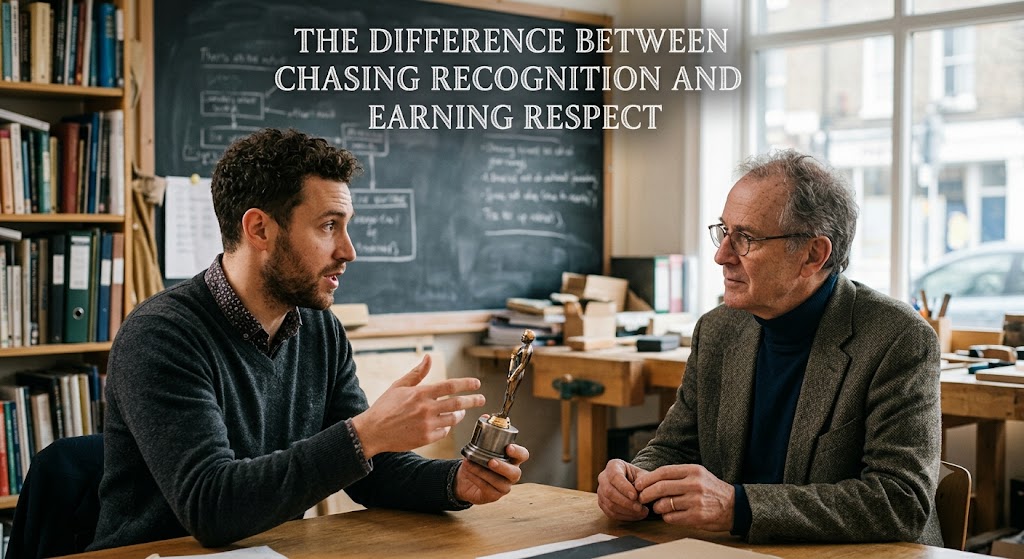
The Difference Between Chasing Recognition and Earning Respect is one of the most important lessons anyone can learn in life. Many people spend years trying to be noticed, applauded, celebrated, and admired, only to discover that recognition can disappear as quickly as it arrives. Respect, however, has a much stronger foundation. It is built slowly through consistent actions, genuine character, reliability, and integrity. While recognition often depends on what people see, respect depends on who you truly are, even when nobody is watching.
We live in a world where visibility has become easier than ever. Social media platforms have created opportunities for people to become famous overnight. A single video, photograph, opinion, or trend can attract millions of views within hours. Because of this, many people have begun to confuse popularity with value. They believe that being recognised automatically means being respected. Unfortunately, these two ideas are not the same. Someone may have millions of followers yet receive very little genuine respect from those who truly know them. Another person may live a quiet life with no public attention at all, yet command deep respect from colleagues, family members, neighbours, and friends.
Recognition is often external. It depends largely on the opinions, attention, and approval of other people. Respect, on the other hand, is internal before it becomes external. It grows from the values a person lives by every day. Recognition can be given for talent, beauty, wealth, influence, or even controversy. Respect is earned through honesty, responsibility, humility, consistency, and the ability to treat others with dignity.
One of the biggest mistakes people make is allowing their self-worth to depend entirely on recognition. They constantly seek applause, compliments, likes, shares, awards, promotions, and validation. Every achievement becomes less about personal growth and more about how others will react. When recognition becomes the primary goal, disappointment is almost inevitable because public attention is unpredictable. Today’s hero can become tomorrow’s forgotten name. Public opinion changes quickly, and people who build their happiness on constant recognition often find themselves emotionally exhausted.
Respect operates differently. It does not require constant applause to survive. A respected individual does not need to remind everyone of their achievements because their character speaks louder than their words. They understand that lasting influence comes from how they consistently behave rather than how loudly they announce their successes. People naturally trust individuals whose actions match their promises.
The Difference Between Chasing Recognition and Earning Respect becomes obvious when observing people’s motivations. Those chasing recognition often ask questions like, “How can I become famous?” “How can I get people to notice me?” “How can I receive more praise?” Their focus is directed outward. Those seeking respect ask different questions. They wonder, “How can I improve myself?” “How can I become more dependable?” “How can I add value to others?” Their attention is directed inward first before affecting the outside world.
There is nothing wrong with being recognised. Recognition itself is not the problem. It becomes dangerous only when it replaces purpose. Recognition should be the by-product of meaningful work rather than the reason for doing the work. Many successful entrepreneurs, teachers, doctors, artists, engineers, and community leaders became recognised because they first focused on solving problems. Their attention remained on excellence instead of applause. Ironically, people who stop chasing recognition often receive it naturally because genuine excellence attracts attention over time.
Respect requires patience because it cannot be bought or demanded. Titles alone do not create respect. Wealth alone does not guarantee respect. Authority alone does not command respect. Even power cannot force genuine respect. People may obey someone because of fear or position, but respect only exists when people willingly admire another person’s character and judgement.
A manager may have employees who greet them every morning because company policy requires professionalism. That does not automatically mean those employees respect the manager. If the manager is unfair, dishonest, arrogant, or inconsistent, people may simply pretend to show respect while secretly losing confidence in them. Another manager who listens carefully, admits mistakes, supports the team, and treats everyone fairly may earn genuine respect even without demanding it.
Families also demonstrate this difference clearly. Some parents believe respect comes solely from authority. They expect obedience without building trust. Other parents earn respect by living the values they teach. Their children see honesty, sacrifice, discipline, kindness, and consistency in everyday life. Even after those children become adults, they continue respecting their parents because respect was earned rather than forced.
The workplace provides countless examples of this principle. Employees who constantly seek recognition may take credit for team efforts, exaggerate achievements, or compete unnecessarily with colleagues. Their goal becomes standing out regardless of how it affects others. Those who earn respect usually support teammates, share knowledge, acknowledge others’ contributions, and remain dependable even when nobody is supervising them. Over time, people naturally prefer working with individuals they respect rather than individuals who simply seek attention.
Another major difference lies in how each responds to criticism. People chasing recognition often become defensive because criticism threatens the image they have carefully built. Their identity depends on constant approval, so even constructive feedback feels like an attack. People focused on earning respect usually view criticism differently. They understand that growth requires correction. Instead of protecting their ego, they look for opportunities to improve. This willingness to learn actually increases the respect others have for them.
Social media has amplified the temptation to chase recognition. Many users carefully design every post to maximise engagement. Some measure personal success by the number of likes, comments, shares, or followers received. While there is nothing inherently wrong with enjoying positive feedback, problems arise when online attention becomes more valuable than real-life character. It is possible to appear inspirational online while behaving dishonestly offline. Recognition may continue for a while, but respect eventually depends on the truth.
History repeatedly shows that many highly recognised individuals eventually lose public admiration because recognition without integrity cannot survive forever. At the same time, countless people who never sought fame left lasting legacies because they earned deep respect through service, sacrifice, and unwavering principles. Their influence continued long after public attention shifted elsewhere.
The Difference Between Chasing Recognition and Earning Respect also appears in friendships. Someone seeking recognition may constantly interrupt conversations to talk about personal achievements, possessions, or experiences. They want to remain the centre of attention. A respected friend listens as much as they speak. They celebrate others’ victories without jealousy. They keep confidential information private. They remain loyal during difficult seasons rather than disappearing when life becomes inconvenient. Such friendships become stronger because respect creates trust.
Business leaders who understand this principle usually build stronger organisations. Companies led by individuals obsessed with personal recognition often develop unhealthy workplace cultures. Employees may fear speaking honestly because leadership values image over truth. Mistakes become hidden instead of corrected. Innovation suffers because people avoid taking responsible risks. Leaders who earn respect encourage transparency, accountability, and continuous learning. Employees feel safe contributing ideas because they know fairness matters more than appearances.
One fascinating aspect of respect is that it usually grows quietly. There are often no dramatic announcements when someone becomes respected. Instead, it develops gradually through repeated positive interactions. A person keeps their promises. They admit mistakes. They remain calm under pressure. They help others without expecting immediate rewards. They demonstrate competence consistently. Eventually people begin recommending them, trusting them, consulting them, and defending their reputation even when they are absent. This is respect in action.
Recognition can be temporary because it often depends on trends. Respect tends to endure because it depends on principles. Trends change every season. Principles remain valuable across generations. Fashion changes. Technology evolves. Public interests shift. Integrity, honesty, responsibility, humility, compassion, and courage never become outdated.
Young people entering adulthood frequently face pressure to become recognised as quickly as possible. Society often celebrates overnight success stories while overlooking the years of preparation behind genuine achievement. This creates unrealistic expectations. Many become discouraged when immediate recognition does not arrive. They mistakenly assume they have failed. In reality, they may simply be building the kind of character that eventually earns lifelong respect.
Successful careers rarely depend solely on talent. Technical ability may open doors, but respect keeps those doors open. Employers promote individuals they trust. Customers remain loyal to businesses they respect. Communities support leaders they respect. Families remain united through mutual respect. Relationships survive because of respect. In almost every area of life, respect creates stability that recognition alone cannot provide.
Humility plays an important role in earning respect. Humble people acknowledge that they do not know everything. They appreciate contributions from others. They give credit generously instead of collecting it selfishly. Ironically, humility often attracts greater admiration than constant self-promotion. People naturally appreciate those who demonstrate confidence without arrogance.
Another significant difference involves long-term satisfaction. Recognition provides emotional excitement, but it often fades quickly. A promotion, award, viral post, or public compliment may create temporary happiness, yet the feeling eventually disappears. This sometimes leads people to chase even greater recognition in an endless cycle. Respect offers deeper fulfilment because it reflects genuine relationships built on trust rather than temporary applause.
Character becomes especially visible during difficult moments. Anyone can appear admirable when life is comfortable. Challenges reveal true priorities. During financial hardship, professional setbacks, personal disappointment, or public criticism, those focused only on recognition may compromise their values to protect their image. Those committed to earning respect continue acting with integrity even when doing so costs them opportunities or popularity. Such moments often become the foundation upon which lasting respect is built.
There is also a profound difference in legacy. Recognition asks whether people remember your name. Respect asks whether people remember your impact. A recognised individual may be discussed for years because of achievements or publicity. A respected individual is remembered because lives were improved through their presence. One leaves headlines. The other leaves transformed people.
Parents should teach children this distinction early. Praising children only for winning, outperforming others, or receiving awards may unintentionally encourage recognition-seeking behaviour. Teaching children honesty, kindness, perseverance, responsibility, empathy, and accountability helps them understand that who they become matters far more than how much attention they receive.
Educational institutions, workplaces, and communities also benefit from rewarding character alongside performance. Excellence should certainly be celebrated, but integrity deserves equal recognition. A society that values respect over mere visibility becomes healthier because people focus more on contributing meaningfully than on appearing impressive.
The Difference Between Chasing Recognition and Earning Respect ultimately comes down to where a person places their priorities. Recognition asks, “Will people notice me?” Respect asks, “Can people trust me?” Recognition asks, “How impressive do I appear?” Respect asks, “How dependable am I?” Recognition often seeks admiration from strangers. Respect is earned from people who know your true character.
Many individuals spend enormous amounts of energy managing appearances while neglecting the habits that create genuine credibility. They polish their image but ignore their integrity. They perfect their presentation but neglect their principles. Eventually the gap between appearance and reality becomes impossible to hide. Respect disappears whenever character fails to support reputation.
Those who consistently earn respect usually share several qualities. They keep their word even when inconvenient. They apologise sincerely when wrong. They remain respectful toward people regardless of social status. They honour commitments. They continue learning instead of pretending to know everything. They remain reliable under pressure. They seek solutions rather than excuses. They value honesty above temporary advantage. These habits may not always produce immediate recognition, but they steadily build an unshakable reputation.
One of life’s greatest ironies is that people who desperately chase recognition often struggle to gain lasting respect, while those who quietly pursue excellence, integrity, and service frequently become recognised without actively seeking it. Their influence expands because others naturally recommend trustworthy people. Respect becomes the foundation upon which meaningful recognition is built.
The most successful life is not measured by how many people know your name but by how many people trust your word. It is not determined by how loudly the crowd applauds but by how confidently people rely on your character. Recognition can open doors, but respect keeps them open. Recognition may introduce you to opportunities, but respect determines whether those opportunities become lasting achievements. Recognition may fill a room with applause for a moment, but respect fills a lifetime with trust, influence, meaningful relationships, and a legacy that continues long after the applause has faded.

EarnSmartOnline.com.ng is dedicated to helping readers make smarter financial decisions through practical guides on online income, personal finance, technology, digital business, and wealth creation. Our goal is to provide reliable, easy-to-understand, and actionable content that empowers individuals to earn smarter, build sustainable income streams and achieve long-term financial success.
Recommended: Start Earning Online
- Ultimate Affiliate Marketing Program — learn affiliate marketing with a done-for-you sales system ($15). Check it out
- The Newbie Affiliate Guide — the beginner-friendly starter guide (~$6.68). Check it out
- Easy Dollar Maker — earn in dollars uploading AI images and videos from your phone ($17). Check it out
Disclosure: These are affiliate links. If you buy through them, I may earn a commission at no extra cost to you.



