
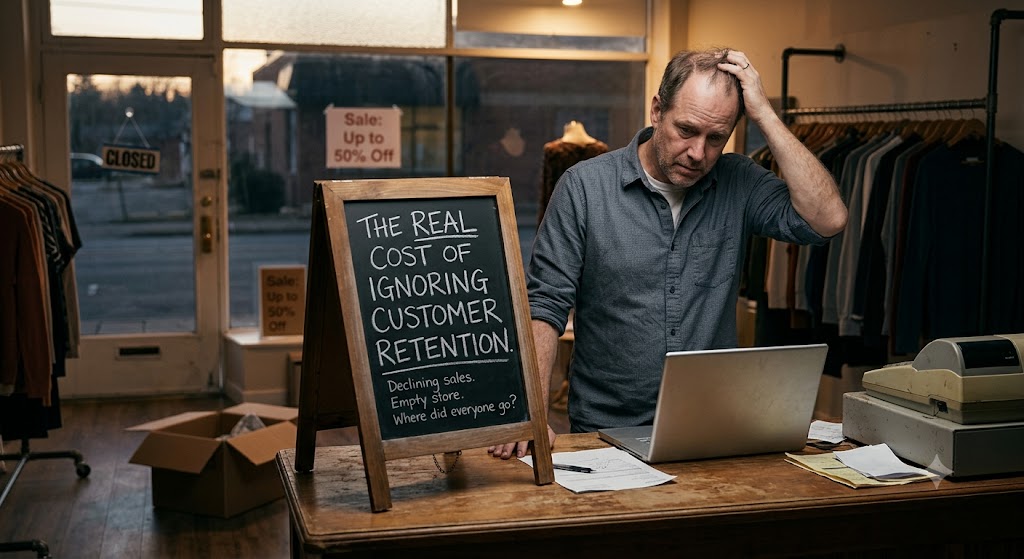
The Real Cost of Ignoring Customer Retention
Many businesses spend countless hours trying to attract new customers while paying very little attention to the people who have already bought from them. They invest heavily in advertisements, social media campaigns, search engine optimisation, influencers, promotions, and discounts, all in the hope of bringing fresh faces through the door. Yet, once those customers make a purchase, communication often stops. Follow-up messages disappear, appreciation is forgotten, and the relationship slowly fades away. This is one of the biggest mistakes businesses make because customer retention is often far more valuable than customer acquisition. The real cost of ignoring customer retention is not always obvious in the beginning, but over time it quietly destroys revenue, weakens brand reputation, reduces profitability, and creates an endless cycle of chasing new customers just to replace the old ones.
Customer retention simply means keeping existing customers happy enough to continue doing business with you. It is the ability of a company to encourage buyers to return repeatedly instead of purchasing once and disappearing forever. A retained customer trusts your business, understands your products, and is more likely to buy additional services without requiring expensive marketing efforts. Ignoring this important aspect of business creates hidden losses that many entrepreneurs never calculate. They see sales coming in but fail to realise how much money is leaking out through customers who never come back.
One of the biggest financial costs of ignoring customer retention is the constant need to spend more on acquiring new customers. Advertising is becoming more expensive every year. Whether you promote your business through Google Ads, Facebook Ads, Instagram, TikTok, YouTube, newspapers, radio, or billboards, attracting a new customer usually requires a significant investment. If those customers never return after making a single purchase, your marketing budget keeps growing while your profits remain small. Instead of building a loyal customer base that continues generating income, you find yourself trapped in an endless race of replacing customers who have quietly left.
Many successful businesses understand that their existing customers are their greatest assets. They know that someone who has already purchased once is more likely to purchase again compared to someone who has never heard of the brand before. Trust has already been established. The customer already knows what to expect. Payment methods have been tested. Questions have been answered. Every additional sale to that customer often requires far less effort than convincing a complete stranger to buy for the first time.
Ignoring customer retention also increases the lifetime cost of every customer you lose. Imagine spending money on advertisements, paying sales representatives, investing in product packaging, and offering introductory discounts just to convince someone to buy. If that customer disappears immediately after the first purchase because they had a poor experience or simply forgot about your business, all those acquisition costs are spread across only one transaction. However, if that same customer buys ten times over several years, the original marketing investment becomes much more profitable. The longer customers stay with your business, the more valuable they become.
Businesses that neglect customer retention often underestimate the power of familiarity. Human beings naturally prefer what they already know. People return to restaurants where they enjoyed good meals. They continue shopping at stores that treated them well. They subscribe to services that consistently solve their problems. Every positive experience strengthens loyalty. Unfortunately, businesses that ignore this psychological principle create opportunities for competitors to capture dissatisfied customers with better service and stronger relationships.
Customer retention directly influences business stability. Companies that depend almost entirely on new customers experience unpredictable income. Some months may produce excellent sales while other months become disappointingly slow. Loyal customers create consistency because they continue buying regardless of seasonal fluctuations. Their repeat purchases provide predictable cash flow, allowing businesses to plan expansion, hire employees, manage inventory, and invest confidently in future growth.
Another hidden cost of poor customer retention is the damage to your reputation. Unhappy customers rarely keep their disappointment to themselves. They share negative experiences with friends, family members, colleagues, and increasingly on social media. One disappointed customer can influence dozens or even hundreds of potential buyers. Online reviews remain visible for years, affecting future purchasing decisions. Businesses that focus only on attracting new customers without satisfying existing ones gradually accumulate negative public perception that becomes increasingly difficult to reverse.
Satisfied returning customers often become unpaid ambassadors for your business. They recommend your products without expecting commissions. They defend your reputation during criticism. They share their experiences online. They bring family members and colleagues. This kind of organic marketing is incredibly valuable because people generally trust recommendations from real customers more than advertisements. Ignoring customer retention means losing this powerful source of free promotion.
Customer retention also affects employee morale. Employees enjoy working for businesses where customers are friendly, familiar, and appreciative. Regular customers often build relationships with staff, creating a pleasant working environment. On the other hand, businesses constantly dealing with complaints, dissatisfied first-time buyers, and high customer turnover create stressful workplaces. Employees become frustrated, motivation declines, and staff retention eventually suffers as well.
The financial impact becomes even greater when businesses fail to understand the concept of customer lifetime value. Every customer represents far more than a single purchase. Someone buying a modest product today may purchase premium products next year. They may recommend several friends. They may continue spending money with your business for decades. Looking only at today’s transaction causes businesses to underestimate each customer’s true worth. Losing one loyal customer may actually mean losing hundreds or thousands of pounds in future revenue.
Many businesses mistakenly believe that offering low prices alone guarantees customer loyalty. While competitive pricing certainly matters, it is rarely the only factor influencing repeat purchases. Customers remember how they were treated. They remember whether problems were resolved quickly. They remember whether promises were kept. They remember how easy it was to contact customer support. A slightly more expensive business with exceptional service often retains customers far better than the cheapest competitor in the market.
Communication plays a critical role in customer retention. Businesses that disappear after making a sale gradually fade from customers’ memories. Regular newsletters, helpful tips, personalised recommendations, birthday messages, loyalty rewards, and follow-up emails remind customers that your business values the relationship beyond the initial transaction. These small gestures strengthen emotional connections that competitors find difficult to break.
Ignoring customer retention also limits opportunities for upselling and cross-selling. Existing customers are generally more receptive to additional products because they already trust the business. A customer who bought a laptop may later purchase accessories, software, maintenance services, or extended warranties. Someone satisfied with one service may eventually upgrade to premium packages. Businesses focused only on attracting new customers miss these highly profitable opportunities.
The digital age has made customer retention both easier and more important than ever before. Businesses now have access to customer relationship management software, email automation, loyalty programmes, online communities, personalised marketing, and behavioural analytics. These tools allow companies to understand customer preferences and deliver highly personalised experiences. Ignoring these opportunities means falling behind competitors who use technology to strengthen customer relationships.
Businesses often focus intensely on generating traffic while forgetting that traffic alone does not build sustainable companies. Thousands of website visitors are meaningless if most never return. Similarly, a crowded store means little if shoppers make one purchase and never come back. Sustainable growth comes from transforming first-time buyers into repeat customers and repeat customers into loyal advocates.
Another overlooked consequence of poor customer retention is increased price sensitivity. Loyal customers are generally less concerned about small price increases because they value reliability, trust, and consistent quality. New customers, however, often compare businesses primarily on price. Companies constantly chasing new buyers become trapped in price wars that reduce profit margins. Retaining customers allows businesses to compete on value rather than simply offering the cheapest prices.
Customer retention also encourages valuable feedback. Long-term customers understand your products deeply and often provide practical suggestions for improvement. They identify weaknesses before they become major problems. Businesses ignoring customer relationships lose access to this valuable source of market intelligence. Instead of learning directly from loyal buyers, they rely on expensive research or discover problems only after losing significant market share.
Trust grows gradually but disappears quickly. Every interaction contributes to the customer’s perception of your business. Delivering products on time, responding professionally to complaints, honouring guarantees, and maintaining consistent quality all strengthen trust. Ignoring these details slowly weakens relationships until customers quietly leave for competitors. Many businesses are surprised when loyal customers disappear, failing to realise that trust had been declining long before the final purchase.
One major misconception is believing that customers always complain before leaving. In reality, many dissatisfied customers simply disappear without saying anything. They choose another business and never explain why. The company assumes everything is fine because complaints are few, unaware that silent customer departures are steadily reducing long-term profitability. This makes proactive customer retention strategies essential because businesses cannot rely solely on complaints to identify dissatisfaction.
Emotional connection is another powerful driver of customer loyalty. People enjoy supporting businesses that make them feel appreciated, respected, and understood. Simple gestures like remembering customer names, responding personally to enquiries, celebrating milestones, or expressing genuine gratitude can create lasting impressions. Businesses that treat customers like transaction numbers rather than valued individuals struggle to build enduring relationships.
Ignoring customer retention becomes especially dangerous during economic downturns. When consumers reduce spending, loyal customers often continue supporting businesses they trust, even if they purchase less frequently. Businesses relying entirely on new customer acquisition suffer much greater declines because hesitant consumers become more cautious about trying unfamiliar companies. Strong customer loyalty provides resilience during difficult economic periods.
Customer retention also influences business valuation. Investors and potential buyers closely examine repeat purchase rates, customer loyalty, subscription renewals, and recurring revenue when evaluating businesses. A company with thousands of loyal customers is generally considered far more valuable than one generating similar revenue from constantly changing buyers. Stable customer relationships demonstrate predictable future income, making the business more attractive for investment or acquisition.
The hospitality industry offers an excellent example of customer retention in action. Hotels, restaurants, and resorts understand that returning guests are among their most profitable customers. They introduce loyalty programmes, personalised greetings, special discounts, complimentary upgrades, and reward points because they recognise the enormous value of repeat visits. Businesses in every industry can learn from this approach by creating memorable experiences that encourage customers to return.
Online businesses face unique customer retention challenges because competitors are only one click away. If customers encounter confusing websites, slow customer support, hidden charges, or disappointing service, switching to another provider is remarkably easy. This makes user experience, website speed, transparent communication, and responsive support essential components of successful customer retention strategies.
Small businesses sometimes believe customer retention strategies are only necessary for large corporations. This is far from true. In fact, small businesses often have greater opportunities to build meaningful relationships because they can provide personalised service that larger companies struggle to match. Remembering regular customers, responding personally, and showing genuine appreciation create memorable experiences that encourage long-term loyalty.
Ignoring customer retention also reduces opportunities for community building. Loyal customers often enjoy interacting with brands through social media groups, newsletters, events, webinars, or exclusive communities. These interactions strengthen emotional attachment while encouraging customers to remain engaged with the business. Communities transform ordinary customers into passionate supporters who actively contribute to business growth.
Businesses should also recognise that customer retention begins before the first purchase is completed. Clear communication, honest marketing, realistic expectations, smooth ordering processes, and transparent pricing all contribute to long-term satisfaction. Overpromising to secure immediate sales often creates disappointment later, damaging customer relationships from the very beginning.
Another significant cost of ignoring customer retention is reduced resilience against competition. Competitors can easily copy products, lower prices, or imitate marketing campaigns. However, genuine customer loyalty built through years of excellent service is much harder to replicate. Businesses with strong customer relationships possess a competitive advantage that extends beyond products themselves.
Retention strategies do not always require expensive investments. Simple improvements often produce remarkable results. Responding quickly to enquiries, thanking customers sincerely, solving problems efficiently, requesting feedback, delivering consistent quality, and maintaining honest communication can significantly strengthen customer loyalty without dramatically increasing operating costs.
Businesses should regularly measure customer retention rather than assuming everything is working well. Tracking repeat purchase rates, customer lifetime value, churn rates, referral rates, satisfaction surveys, and online reviews provides valuable insights into relationship strength. Data helps identify weaknesses early before customer losses become financially damaging.
One overlooked aspect of customer retention involves admitting mistakes honestly. Every business occasionally experiences problems. Orders arrive late. Products develop faults. Employees make errors. What distinguishes exceptional businesses is not perfection but responsibility. Customers often forgive mistakes when companies acknowledge problems promptly, apologise sincerely, and provide fair solutions. Attempting to hide errors usually destroys trust much faster than the original mistake itself.
Personalisation has become increasingly important in modern customer retention. Customers appreciate businesses that understand their preferences rather than treating everyone identically. Personalised recommendations, customised offers, relevant content, and thoughtful communication demonstrate genuine attention to individual needs. Technology now makes personalisation accessible even for smaller businesses.
Businesses ignoring customer retention frequently experience declining profitability despite increasing sales. This appears confusing until hidden costs are analysed carefully. Rising advertising expenses, increasing promotional discounts, customer acquisition costs, staff workload, and operational inefficiencies gradually consume profits. Retaining customers reduces many of these costs while increasing average revenue per customer.
Consistency remains one of the strongest foundations of customer loyalty. Customers return because they expect reliable experiences every time. Whether purchasing products, visiting restaurants, staying in hotels, or subscribing to digital services, predictable quality creates confidence. Businesses delivering excellent service only occasionally struggle to retain customers because inconsistency creates uncertainty.
Long-term relationships also create opportunities for premium pricing. Customers who deeply trust a business often focus less on price and more on reliability, expertise, convenience, and peace of mind. This allows companies with strong customer retention to maintain healthier profit margins than competitors competing solely on discounts.
Ignoring customer retention ultimately transforms business growth into a never-ending struggle. Every month begins with replacing lost customers before generating genuine growth. Marketing budgets expand continuously while customer loyalty remains weak. Employees spend more time attracting strangers than serving loyal supporters. Revenue becomes unpredictable. Competition feels increasingly intense. Growth slows despite constant effort.
In contrast, businesses prioritising customer retention create positive momentum. Loyal customers purchase repeatedly, recommend friends, provide valuable feedback, forgive occasional mistakes, spend more over time, and strengthen brand reputation. Marketing becomes more efficient because satisfied customers generate referrals. Profitability improves because acquisition costs decrease. Employees enjoy stronger relationships with customers. Investors recognise stable recurring revenue. Business owners gain confidence knowing future income is supported by genuine customer loyalty rather than constant advertising.
The most successful businesses rarely view sales as isolated transactions. Instead, they see every purchase as the beginning of a relationship. Their objective extends beyond earning today’s payment. They aim to earn tomorrow’s purchase, next year’s recommendation, and perhaps decades of continued loyalty. This long-term mindset transforms ordinary businesses into trusted brands that survive changing markets and increasing competition.
Every entrepreneur eventually faces an important decision. One path focuses almost entirely on chasing new customers through increasingly expensive marketing campaigns while accepting high customer turnover as normal. The other path balances customer acquisition with deliberate customer retention, recognising that existing customers often represent the greatest opportunity for sustainable growth. History repeatedly shows that businesses choosing the second path build stronger reputations, healthier finances, more predictable revenue, and greater long-term success.
The real cost of ignoring customer retention cannot always be measured by the customers who leave today. Its true cost appears gradually through lost opportunities, wasted marketing budgets, shrinking profit margins, weakened brand loyalty, declining referrals, unstable revenue, and reduced business value. Every customer who leaves without returning represents far more than a single lost sale. They represent future purchases never made, recommendations never given, relationships never strengthened, and trust never fully realised. Businesses that understand this truth invest not only in finding customers but also in keeping them, because they know that lasting success is built one loyal customer at a time.

EarnSmartOnline.com.ng is dedicated to helping readers make smarter financial decisions through practical guides on online income, personal finance, technology, digital business, and wealth creation. Our goal is to provide reliable, easy-to-understand, and actionable content that empowers individuals to earn smarter, build sustainable income streams and achieve long-term financial success.
Recommended: Start Earning Online
- Ultimate Affiliate Marketing Program — learn affiliate marketing with a done-for-you sales system ($15). Check it out
- The Newbie Affiliate Guide — the beginner-friendly starter guide (~$6.68). Check it out
- Easy Dollar Maker — earn in dollars uploading AI images and videos from your phone ($17). Check it out
Disclosure: These are affiliate links. If you buy through them, I may earn a commission at no extra cost to you.



