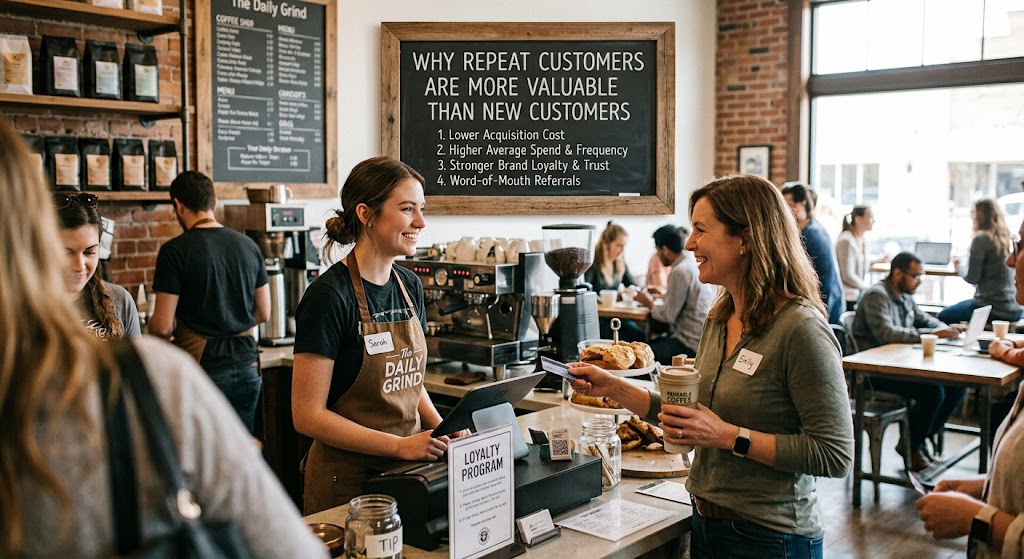
Why Repeat Customers Are More Valuable Than New Customers
When people think about growing a business, they often imagine attracting thousands of new customers through advertising, social media campaigns, search engine optimisation, influencer marketing, and promotional offers. While bringing in new customers is an important part of business growth, many businesses make the costly mistake of focusing almost all their attention on acquisition while neglecting the customers they already have. The truth is that repeat customers are often the real foundation of long-term business success. Businesses that understand this simple principle usually enjoy more stable income, stronger brand loyalty, lower marketing costs, and higher profitability than businesses that are constantly chasing new buyers.
Every successful business eventually discovers that earning a customer’s trust is far more difficult than making another sale to someone who already believes in the brand. A first-time customer is uncertain. They have questions, doubts, and alternatives. They compare prices, read reviews, seek recommendations, and often hesitate before making a purchase. A repeat customer has already crossed that bridge. They know your products, understand your service, and have experienced your reliability. This makes future buying decisions much easier and much faster.
One of the greatest misconceptions in business is believing that more customers automatically mean more profit. While increasing customer numbers can certainly increase revenue, profit depends on many other factors, especially the cost of acquiring those customers. Advertising costs continue to rise across digital platforms. Competition becomes stronger every year. Businesses spend significant amounts on search engine marketing, social media advertisements, email campaigns, influencers, billboards, radio commercials, and promotions simply to convince strangers to make a first purchase. All these expenses reduce the profit earned from new customers.
Repeat customers, on the other hand, usually require far less marketing investment. Once they have had a positive experience, they often return without needing expensive persuasion. A simple email, text message, loyalty reward, or product update may be enough to encourage another purchase. This dramatically improves the return on marketing investment and allows businesses to retain a larger percentage of every sale as profit.
Customer trust has become one of the most valuable business assets in today’s marketplace. Consumers have endless choices. Almost every product has multiple alternatives. Every service has competitors. What often separates one business from another is not necessarily price or product quality alone but trust. Repeat customers represent trust that has already been earned. They have confidence that your business will deliver on its promises. This confidence removes many of the barriers that prevent first-time buyers from making purchasing decisions.
Trust also shortens the buying cycle. A new customer may spend several days or even weeks researching before making a purchase. A repeat customer may place another order within minutes because they already know what to expect. Faster buying decisions translate into more consistent cash flow and greater business stability.
Another reason repeat customers are more valuable is that they often spend more money over time. During the first purchase, customers tend to be cautious. They may buy only one product to test the business. Once satisfied, they become more comfortable buying larger quantities, higher-priced products, premium services, or additional items they previously ignored. As confidence grows, so does the average order value.
Many businesses observe that their most loyal customers gradually become their highest spenders. Someone who initially bought a basic product may later upgrade to premium versions, purchase accessories, subscribe to recurring services, or recommend the business to family members while continuing to make personal purchases. The lifetime value of such a customer can become many times greater than that of someone who buys only once.
Customer lifetime value is one of the most important measurements every business should understand. Rather than focusing only on the profit from a single sale, successful businesses calculate the total revenue a customer is likely to generate throughout the entire relationship. A customer who spends £20 once is worth exactly that amount. A customer who spends £20 every month for five years is worth over £1,200 before considering referrals or additional purchases. The second customer is clearly far more valuable despite making the same first purchase.
This explains why businesses often invest heavily in customer satisfaction after the first sale. They understand that keeping customers happy today creates opportunities for future income that far exceed the value of the initial transaction.
Repeat customers also provide businesses with more predictable revenue. Companies that depend entirely on attracting new customers constantly face uncertainty. Sales fluctuate based on advertising performance, seasonal demand, market competition, and changing consumer behaviour. This unpredictability makes financial planning difficult.
Businesses with a strong base of loyal repeat customers enjoy more consistent monthly income. They can forecast revenue with greater confidence because they know a certain percentage of customers will return. Predictable income helps businesses plan inventory, manage staff, expand operations, and invest in future growth without relying entirely on unpredictable advertising campaigns.
Customer loyalty also creates emotional stability for business owners. Entrepreneurs who constantly worry about finding the next customer often experience significant stress. Loyal customers reduce this pressure because they create recurring business that supports daily operations.
One overlooked advantage of repeat customers is the valuable feedback they provide. New customers may leave a review after one purchase, but loyal customers often offer deeper insights based on repeated experiences. They notice patterns, suggest improvements, identify weaknesses, and recommend new products because they genuinely want the business to succeed.
Businesses that actively listen to repeat customers frequently improve faster than competitors. Their loyal buyers become an informal research and development team, providing practical advice that helps refine products and services.
Repeat customers are also much more forgiving when occasional mistakes happen. No business is perfect. Orders may be delayed. Products may have defects. Staff may make errors. First-time customers who experience problems often disappear permanently because they have no established relationship with the business.
Loyal customers usually give businesses another chance because their previous positive experiences outweigh temporary disappointments. They understand that mistakes can happen and judge businesses based on how problems are resolved rather than simply the fact that problems occurred. This forgiveness gives businesses valuable opportunities to recover relationships that would otherwise be lost.
Word-of-mouth marketing remains one of the most powerful forms of advertising, and repeat customers are often its greatest source. People naturally recommend businesses they trust to friends, family, colleagues, and neighbours. Personal recommendations carry far more credibility than paid advertisements because they come from genuine experience rather than promotional messaging.
Every satisfied repeat customer has the potential to become a voluntary brand ambassador. Without receiving payment, they share their positive experiences online and offline. Their recommendations bring in new customers who already have a level of trust before making their first purchase. This creates a cycle where loyal customers help generate even more customers.
The rise of online reviews has amplified the influence of repeat customers even further. Positive reviews on Google, Facebook, hotel directories, marketplaces, and other platforms significantly affect purchasing decisions. Businesses with consistent positive reviews often attract customers more easily than competitors with aggressive advertising but poor customer satisfaction.
Repeat customers are also more likely to defend businesses against unfair criticism. When negative reviews appear, loyal customers frequently share their positive experiences, helping potential buyers see a balanced picture. This organic defence strengthens the business’s online reputation without requiring official responses to every criticism.
Businesses often underestimate how much easier it is to sell new products to existing customers than to strangers. When launching a new product, loyal customers already trust the brand and are willing to try something new. Their early purchases generate valuable sales, reviews, testimonials, and feedback that support broader product launches.
This is why many successful companies build extensive customer databases. Rather than starting every product launch from zero, they first introduce new offerings to existing customers who already believe in the business.
Email marketing demonstrates this principle perfectly. Businesses with loyal customer lists often generate significant revenue simply by announcing new products or limited-time offers. Existing customers respond because trust has already been established. Cold audiences rarely produce the same conversion rates.
Repeat customers also reduce price sensitivity. New customers often compare prices across multiple businesses before making purchasing decisions. Loyal customers are less likely to leave simply because another business offers slightly lower prices. They value reliability, convenience, customer service, product quality, and overall experience alongside price.
Competing solely on price creates dangerous business conditions. Businesses trapped in price wars often experience shrinking profit margins and financial instability. Loyal customers help businesses escape this trap by recognising value beyond the lowest price available.
Many premium brands demonstrate this clearly. Customers continue purchasing from trusted brands despite cheaper alternatives because they value consistency and reliability. This pricing power contributes significantly to long-term profitability.
The emotional connection between businesses and repeat customers should never be underestimated. Humans naturally form habits. Once customers find businesses that consistently satisfy their needs, many prefer maintaining familiar relationships rather than taking risks with unfamiliar alternatives.
This emotional loyalty extends beyond products. Customers often remain loyal because they appreciate friendly staff, personalised service, convenient ordering processes, fast delivery, or simply feeling recognised and valued. These emotional experiences are difficult for competitors to replicate.
Personalisation further increases customer loyalty. Businesses that remember customer preferences, previous purchases, birthdays, anniversaries, or special requirements make customers feel important. Modern technology allows businesses to personalise communication, recommendations, and offers in ways that strengthen long-term relationships.
People naturally appreciate being remembered. Simple gestures such as personalised emails, exclusive offers, loyalty rewards, or thanking customers for continued support create emotional connections that encourage repeat business.
Customer retention also supports operational efficiency. Serving existing customers is often simpler than educating new ones. Loyal customers understand ordering processes, payment methods, product usage, return policies, and communication channels. Staff spend less time answering basic questions, allowing businesses to operate more efficiently.
Reduced customer support requirements save both time and money. Existing customers often require less guidance because they already know how the business operates. This improves productivity while reducing service costs.
Repeat customers frequently become valuable sources of business stability during economic downturns. When financial uncertainty causes consumers to reduce spending, people tend to continue buying from businesses they trust while becoming more cautious about trying unfamiliar brands.
Economic challenges often expose the difference between businesses built on customer loyalty and businesses built solely on aggressive advertising. Loyal customers provide resilience during difficult periods by continuing to support trusted businesses whenever possible.
Subscription-based businesses understand the importance of repeat customers perhaps better than any other industry. Their entire business model depends on retaining customers month after month rather than constantly replacing those who leave. Whether offering streaming services, software, membership programmes, meal deliveries, or maintenance contracts, recurring revenue depends entirely on customer satisfaction and retention.
Even businesses without formal subscriptions can benefit from encouraging repeat purchasing through loyalty programmes, memberships, rewards, exclusive discounts, and excellent customer experiences.
Loyalty programmes work because they reward continued engagement rather than one-time transactions. Customers appreciate receiving benefits for their ongoing support, while businesses increase retention rates and lifetime customer value. Successful loyalty programmes focus not only on discounts but also on recognition, exclusivity, convenience, and personalised experiences.
Small businesses especially benefit from prioritising repeat customers. Unlike large corporations with enormous advertising budgets, small businesses often compete through relationships rather than marketing spend. Personal attention, exceptional customer service, and genuine appreciation create loyalty that larger competitors may struggle to match.
Many family-owned businesses survive for generations because they cultivate deep relationships with customers rather than relying solely on advertising. Entire families continue supporting the same businesses across multiple generations because trust has been consistently earned.
Technology has made customer retention easier than ever before. Businesses can use customer relationship management systems to track purchasing history, automate follow-up messages, send personalised recommendations, and maintain regular communication. These tools help businesses stay connected without requiring constant manual effort.
Social media also provides opportunities to nurture existing customer relationships. Rather than using every post to attract strangers, businesses can share valuable content, celebrate loyal customers, answer questions, and maintain ongoing conversations with people who already support the brand.
Content marketing contributes to customer retention by keeping businesses visible between purchases. Educational articles, helpful videos, newsletters, tutorials, and expert advice remind customers why they chose the business while reinforcing its credibility. Customers who regularly receive useful information are more likely to return when future needs arise.
Excellent customer service remains one of the strongest drivers of repeat business. Customers remember how businesses make them feel. Fast responses, respectful communication, problem resolution, honesty, and genuine care often influence loyalty more than products themselves. A business that consistently exceeds expectations creates memorable experiences customers want to repeat.
Businesses should also understand that loyalty cannot be demanded. It must be earned continuously. Every customer interaction either strengthens or weakens the relationship. One excellent purchase experience may create interest, but consistent excellence creates loyalty.
This means businesses should never become complacent simply because customers have returned several times. Competitors constantly seek opportunities to attract dissatisfied customers. Maintaining loyalty requires ongoing commitment to quality, innovation, customer service, and value.
Listening carefully to repeat customers helps businesses stay relevant. Customer needs evolve over time. Preferences change. Markets shift. Businesses that adapt based on loyal customer feedback remain competitive while strengthening existing relationships.
Another overlooked benefit of repeat customers is their willingness to participate in product testing, surveys, interviews, and pilot programmes. Because they already trust the business, they are more likely to contribute constructive feedback that improves future offerings. This collaboration strengthens both product development and customer relationships.
Many successful brands intentionally build communities around their loyal customers. Online forums, exclusive events, newsletters, social media groups, and membership communities create stronger emotional connections than simple transactions. Customers become part of something larger than individual purchases, increasing both satisfaction and retention.
Businesses should also recognise that every repeat customer represents proof of value. A first purchase may occur because of advertising, curiosity, or promotional pricing. A second, third, or tenth purchase indicates genuine satisfaction. Repeat business is one of the strongest indicators that a company consistently delivers value.
Investors, lenders, and potential business partners also pay close attention to customer retention. Businesses with strong repeat customer rates are generally viewed as more stable and less risky than businesses that depend entirely on expensive customer acquisition. High retention demonstrates product quality, customer satisfaction, and sustainable business operations.
For online businesses, repeat customers improve website performance in several ways. They increase direct traffic by returning to the website without searching elsewhere. They spend more time browsing familiar products. They engage with email campaigns, social media content, and promotional offers at higher rates than first-time visitors. These positive engagement signals often contribute indirectly to stronger overall digital performance.
Search engine optimisation also benefits from loyal audiences. Customers who repeatedly search for a brand, share content, link to articles, leave reviews, and recommend websites contribute to stronger online authority. While search rankings depend on many factors, genuine customer engagement supports long-term visibility.
The hospitality industry provides one of the clearest examples of repeat customer value. Hotels invest heavily in guest satisfaction because returning guests reduce marketing costs while increasing occupancy rates. A traveller who repeatedly books the same hotel often becomes far more profitable than constantly attracting first-time visitors through expensive booking platforms and promotional campaigns.
Restaurants experience similar benefits. Regular diners create dependable income, recommend establishments to friends, and often become familiar faces that contribute to the atmosphere of the business. Restaurant owners know that loyal customers frequently sustain operations during slower seasons.
Service-based businesses such as consultants, mechanics, salons, healthcare providers, and software companies also thrive on repeat business. Long-term relationships allow these professionals to understand customer preferences better, deliver more personalised service, and generate predictable income over many years.
Perhaps the greatest lesson businesses can learn is that every first-time customer represents only the beginning of a relationship rather than the end of a sales process. Too many businesses celebrate the first purchase and then immediately shift their attention towards finding someone new. Truly successful businesses understand that the first purchase is merely an introduction. The real opportunity lies in earning the second purchase, the third purchase, and every purchase that follows.
This mindset changes how businesses operate. Customer service becomes more important than quick sales. Product quality becomes more valuable than temporary promotions. Honest communication replaces exaggerated marketing claims. Long-term relationships become more valuable than short-term profits.
In a world where competition grows every day and advertising becomes increasingly expensive, businesses that consistently nurture customer loyalty build powerful competitive advantages that cannot easily be copied. Repeat customers generate reliable revenue, lower acquisition costs, stronger word-of-mouth marketing, better feedback, higher lifetime value, greater resilience during economic uncertainty, and deeper emotional connections with the brand.
While attracting new customers will always remain an essential part of business growth, sustainable success belongs to businesses that master the art of keeping customers coming back. Every satisfied repeat customer is more than another sale. They are proof that the business delivers genuine value. They become advocates, supporters, contributors, and long-term partners in the company’s journey. Businesses that invest in earning loyalty instead of merely chasing attention often discover that their greatest source of future growth has been with them all along.

EarnSmartOnline.com.ng is dedicated to helping readers make smarter financial decisions through practical guides on online income, personal finance, technology, digital business, and wealth creation. Our goal is to provide reliable, easy-to-understand, and actionable content that empowers individuals to earn smarter, build sustainable income streams and achieve long-term financial success.
Recommended: Start Earning Online
- Ultimate Affiliate Marketing Program — learn affiliate marketing with a done-for-you sales system ($15). Check it out
- The Newbie Affiliate Guide — the beginner-friendly starter guide (~$6.68). Check it out
- Easy Dollar Maker — earn in dollars uploading AI images and videos from your phone ($17). Check it out
Disclosure: These are affiliate links. If you buy through them, I may earn a commission at no extra cost to you.