
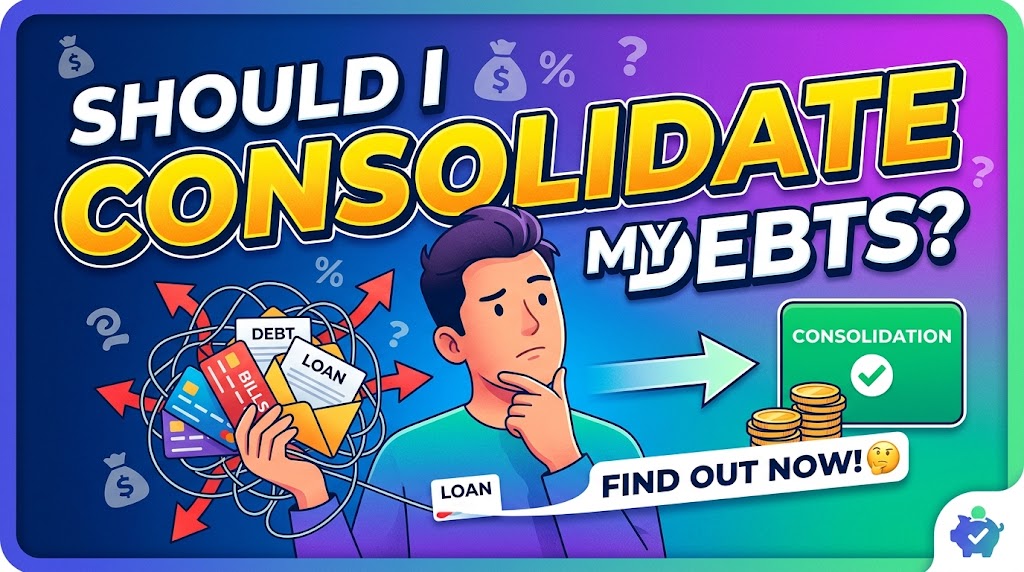
Should I consolidate my debts?
Should I consolidate my debts? This is one of the most common financial questions asked by individuals who are struggling to keep up with multiple loan repayments, credit card balances, personal debts, and other financial obligations. When debt begins to feel overwhelming, many people start searching for a solution that can simplify their finances and help them regain control of their money. Debt consolidation is often presented as a practical answer, but before making any decisions, it is important to understand what debt consolidation means, how it works, its advantages, its disadvantages, and whether it is truly the right choice for your financial situation.
When people ask, “Should I consolidate my debts?” they are usually looking for relief from the stress of managing multiple payments every month. Debt consolidation involves combining several debts into a single loan or repayment plan. Instead of paying different creditors separately, you make one payment towards the consolidated debt. The goal is often to simplify repayment, reduce interest costs, lower monthly payments, or make debt management easier.
Imagine having three credit card debts, a personal loan, and an outstanding overdraft. Each debt has its own interest rate, due date, and repayment requirement. Keeping track of all these obligations can be difficult and stressful. Debt consolidation allows you to combine them into one larger loan with a single repayment schedule. This can reduce confusion and help you stay organised.
One of the biggest reasons people consider debt consolidation is the possibility of lowering interest rates. High-interest debts, particularly credit card balances, can make it difficult to reduce the principal amount owed because a significant portion of every payment goes towards interest charges. If you qualify for a consolidation loan with a lower interest rate, more of your payment will go towards reducing the actual debt. This can potentially save money over time and help you become debt-free faster.
Another reason people ask, “Should I consolidate my debts?” is because they want lower monthly payments. Consolidation loans often extend the repayment period, which can reduce the amount you pay each month. This can provide immediate financial breathing room for individuals whose monthly budgets are stretched thin. Lower payments can make it easier to cover essential expenses such as housing, food, transportation, healthcare, and education while still making progress towards paying off debt.
The convenience of a single payment is another major advantage. Managing multiple debts increases the risk of missing payments, incurring late fees, and damaging your credit score. With debt consolidation, you only have one payment to remember. This simplification can reduce stress and improve financial organisation, making it easier to maintain a consistent repayment schedule.
However, while debt consolidation offers several benefits, it is not a magic solution. Asking “Should I consolidate my debts?” requires a careful examination of your financial habits and circumstances. Consolidating debt does not eliminate the debt itself. It simply restructures how the debt is managed. If the underlying spending habits that created the debt remain unchanged, it is possible to accumulate new debts even after consolidation.
For example, someone might use a consolidation loan to pay off several credit cards. After the balances are cleared, they may feel a sense of financial relief and begin using the credit cards again. If this behaviour continues, they could end up with both the consolidation loan and new credit card debt. This situation often leaves borrowers in a worse financial position than before.
Understanding the different types of debt consolidation is essential when evaluating whether it is the right option. One common method is a debt consolidation loan. This involves borrowing enough money to pay off existing debts and then repaying the new loan according to agreed terms. Personal loans are frequently used for this purpose.
Another method involves balance transfer credit cards. Some credit card providers offer promotional periods with low or zero interest rates on transferred balances. This can be beneficial if you can pay off the debt during the promotional period. However, if the balance remains after the promotion ends, interest rates may increase significantly.
Homeowners sometimes use home equity loans or refinancing options to consolidate debt. These approaches may offer lower interest rates because they are secured by property. While this can reduce borrowing costs, it also increases risk because failure to make payments could potentially result in losing the property used as collateral.
Debt management plans offered by credit counselling agencies are another form of debt consolidation. These plans involve negotiating with creditors to create a structured repayment programme. The debtor makes one payment to the agency, which then distributes the funds to creditors. This approach can simplify repayment and may result in reduced interest rates or waived fees.
When deciding whether debt consolidation is appropriate, it is important to evaluate your current debt situation. Start by listing all outstanding debts, including balances, interest rates, monthly payments, and repayment terms. This provides a clear picture of your financial obligations and helps identify which debts are costing the most money.
If your debts carry very high interest rates, consolidation may provide significant savings. Conversely, if your existing loans already have relatively low interest rates, consolidation may offer little benefit. Comparing the total cost of your current debts with the proposed consolidation option is essential before making any decisions.
Your credit score also plays an important role. Individuals with strong credit scores often qualify for better consolidation loans with lower interest rates and favourable terms. Those with poor credit may struggle to obtain affordable financing and could end up paying higher rates than expected. In some cases, debt consolidation may not be the most effective solution if credit challenges limit access to favourable loan terms.
Income stability is another critical consideration. A consolidation loan creates a new financial commitment that must be honoured consistently. Before proceeding, assess whether your income is reliable enough to support the required payments. Unexpected income disruptions can create difficulties and increase financial stress.
One important benefit of debt consolidation that is often overlooked is the psychological advantage. Financial stress can affect mental health, relationships, work performance, and overall quality of life. Managing multiple creditors can create feelings of anxiety and overwhelm. Consolidation can simplify financial responsibilities and provide a clearer path towards becoming debt-free. This sense of structure and control can improve confidence and motivation.
Despite these advantages, there are potential drawbacks that should not be ignored. Some consolidation loans come with fees, including origination fees, balance transfer fees, administrative costs, or early repayment penalties. These expenses can reduce or eliminate potential savings. Carefully reviewing all costs associated with consolidation is essential before signing any agreement.
Longer repayment terms can also increase the total amount paid over time. Although lower monthly payments may provide short-term relief, extending the loan period often means paying more interest overall. Borrowers should consider both monthly affordability and long-term cost when evaluating consolidation options.
Another potential concern is the temptation to view consolidation as a quick fix rather than part of a broader financial strategy. Debt problems often result from a combination of factors, including overspending, insufficient savings, unexpected emergencies, or inadequate budgeting. Consolidation addresses the structure of the debt but does not automatically solve the behaviours or circumstances that contributed to it.
Creating a realistic budget is essential regardless of whether you consolidate your debts. A budget helps track income, monitor spending, and identify opportunities to reduce expenses. Successful debt repayment requires discipline, consistency, and a commitment to living within your means. Consolidation works best when combined with sound financial habits.
Emergency savings are equally important. Many people fall into debt because they lack funds to cover unexpected expenses. Medical bills, vehicle repairs, job loss, or family emergencies can quickly lead to borrowing. Building an emergency fund reduces reliance on credit and helps prevent future debt accumulation.
Financial education can also improve outcomes. Understanding concepts such as interest rates, loan terms, credit scores, and budgeting empowers individuals to make informed decisions. The more knowledge you have about personal finance, the better equipped you will be to evaluate debt consolidation and other financial strategies.
If you are asking, “Should I consolidate my debts?” because you are struggling to make minimum payments, it may be wise to seek professional guidance. Financial advisers and credit counsellors can assess your situation objectively and recommend appropriate solutions. They can help determine whether consolidation, debt management, debt settlement, or another approach is best suited to your circumstances.
It is important to recognise that debt consolidation is not suitable for everyone. Individuals with relatively small debts that can be paid off quickly may not benefit significantly from consolidation. Similarly, those who are already managing their debts effectively may gain little advantage from restructuring their obligations.
On the other hand, people with multiple high-interest debts, a stable income, and a commitment to changing financial habits often find debt consolidation beneficial. The combination of lower interest rates, simplified payments, and a structured repayment plan can create a manageable pathway towards financial recovery.
Timing also matters. Consolidating debt before financial problems become severe may provide greater flexibility and access to better loan terms. Waiting until debts become unmanageable can limit available options and make qualification more difficult. Taking action early often increases the likelihood of a successful outcome.
When evaluating consolidation offers, compare multiple lenders and repayment options. Look beyond the advertised monthly payment and examine the annual percentage rate, repayment term, fees, and total repayment amount. The cheapest monthly payment is not always the most cost-effective choice over the life of the loan.
Technology can assist in managing debt repayment. Budgeting applications, financial tracking tools, and automated payment systems can help borrowers stay organised and avoid missed payments. Combining these tools with a consolidation strategy can improve financial discipline and accountability.
Many people who successfully eliminate debt through consolidation describe the experience as a turning point in their financial lives. The process encourages greater awareness of spending habits and creates an opportunity to establish healthier financial practices. While the journey requires effort and commitment, the long-term rewards can be substantial.
The question “Should I consolidate my debts?” ultimately depends on your individual financial circumstances, goals, and behaviour patterns. Debt consolidation can be a powerful tool when used correctly. It can simplify repayment, reduce interest costs, lower monthly obligations, and provide a clear path towards financial stability. However, it is not a cure-all solution and should be approached thoughtfully.
Before making a decision, carefully analyse your debts, compare available options, calculate the total costs, and evaluate your ability to maintain responsible financial habits. Consider seeking professional advice if you are uncertain about the best course of action. Remember that the success of debt consolidation depends not only on the loan or repayment plan itself but also on your commitment to managing money wisely.
For many people, debt consolidation represents an opportunity to regain control, reduce stress, and move closer to financial freedom. For others, alternative strategies may be more appropriate. The key is to make an informed decision based on a realistic assessment of your financial situation rather than relying solely on promises of quick relief. By understanding the benefits, risks, and responsibilities involved, you can determine whether debt consolidation is the right step towards achieving your long-term financial goals and building a more secure financial future.

EarnSmartOnline.com.ng is dedicated to helping readers make smarter financial decisions through practical guides on online income, personal finance, technology, digital business, and wealth creation. Our goal is to provide reliable, easy-to-understand, and actionable content that empowers individuals to earn smarter, build sustainable income streams and achieve long-term financial success.
Recommended: Start Earning Online
- Ultimate Affiliate Marketing Program — learn affiliate marketing with a done-for-you sales system ($15). Check it out
- The Newbie Affiliate Guide — the beginner-friendly starter guide (~$6.68). Check it out
- Easy Dollar Maker — earn in dollars uploading AI images and videos from your phone ($17). Check it out
Disclosure: These are affiliate links. If you buy through them, I may earn a commission at no extra cost to you.



