
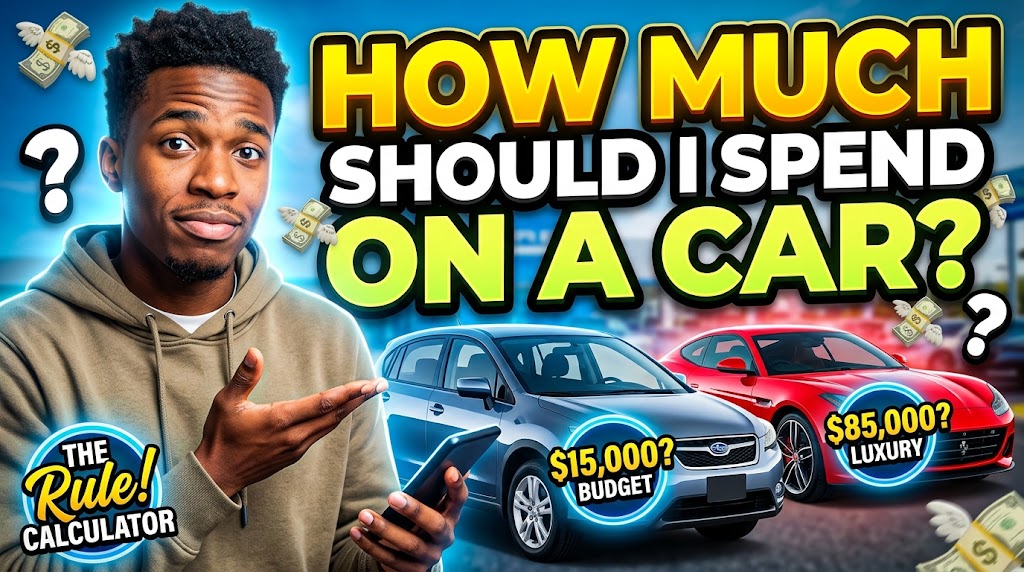
How much should I spend on a car?
One question I have learned not to answer too quickly is, “How much should I spend on a car?” At first, it sounds like a simple question. You look at your income, check the price of the car you like, calculate what you can afford to pay each month, and then make your decision. But after thinking about the real cost of owning a car, I realized that the price written on the vehicle is only one part of the story.
A car can be affordable to buy and expensive to own. It can also be expensive to buy but relatively manageable to maintain. That is why I believe the better question is not simply, “How much does this car cost?” but “How much can I comfortably spend on this car without damaging my finances?”
This became clearer to me when I started looking at cars beyond the excitement of owning one. There is something about seeing a beautiful car that can make you start calculating your finances differently. You begin to imagine yourself behind the steering wheel, driving to work, attending events and moving around without depending on public transport. Before long, the question changes from “Can I afford this?” to “How can I make this car happen?”
That is where I think many people get into trouble.
When asking how much should I spend on a car, I would first look at my total financial situation rather than my emotions. A car should fit into my life, not force my entire life to revolve around paying for it.
One of the simplest principles I have found useful is to avoid spending so much on a car that it prevents me from taking care of other important financial responsibilities. Your income has several jobs. You may need to pay rent or mortgage, feed yourself and your family, pay bills, support relatives, save money, invest, handle emergencies and possibly build a business. The car is only one part of the picture.
If buying a particular car means I will struggle to pay my other bills every month, then the car is probably too expensive for me, regardless of how much I love it.
This is why I would never determine my car budget simply by looking at my monthly salary. Someone earning ₦300,000 per month does not necessarily have the same car budget as another person earning ₦300,000 per month. Their responsibilities may be completely different.
One person may have no debt, live with family and have relatively low monthly expenses. Another person may pay rent, support children, contribute to family expenses and have several financial obligations. Their incomes are identical, but their disposable incomes are completely different.
So when I ask myself how much should I spend on a car, I have to ask a more important question first: how much money do I actually have available after taking care of my essential responsibilities?
Another lesson I would consider is the difference between being able to buy a car and being able to afford a car.
These two things are not the same.
I might have enough money in my account to buy a particular vehicle today, but that does not automatically mean I can afford it. If spending that money leaves me without an emergency fund, without money for important commitments or without capital for an income producing opportunity, then the purchase could create a financial problem.
Imagine someone has ₦10 million available and sees a car for ₦8 million. Technically, the person can buy the car. But after buying it, only ₦2 million remains. Then the person still has to deal with fuel, servicing, insurance, repairs, tyres, registration and unexpected expenses.
The question is no longer whether the person can buy the car.
The question is whether spending ₦8 million on the car was sensible within the person’s broader financial situation.
This is one reason I prefer to think about the total cost of ownership rather than the purchase price.
When I calculate how much should I spend on a car, I want to know what the vehicle is likely to cost me after I drive it out of the dealership or complete the purchase from the seller.
Fuel is an obvious expense. Depending on how much I drive, fuel can become one of the biggest recurring costs of owning a car. A vehicle that looks affordable at the point of purchase may become expensive if it consumes a lot of fuel and I use it every day.
Maintenance is another consideration.
A used luxury vehicle can sometimes look like an incredible bargain. You may see a car that originally cost a significant amount of money being sold at a much lower price and think you have found an opportunity. But the fact that the vehicle has become cheaper to buy does not necessarily mean its parts, maintenance or repairs have become cheap.
That was one of the things I learned to pay attention to when thinking about vehicle ownership. A car does not become inexpensive simply because someone is selling it cheaply.
Tyres wear out. Batteries eventually need replacement. Oil needs changing. Brake components wear down. Suspension components can fail. Electrical problems can appear. Air conditioning systems can develop faults. Sometimes a seemingly minor problem can become expensive if it is ignored.
This means my car budget should include money for maintenance rather than assuming the vehicle will require nothing after I buy it.
Insurance and other ownership costs also deserve attention. Depending on the type of vehicle and where you live, there can be registration costs, insurance expenses, inspection requirements and other administrative costs.
This is why I would be careful about using every available naira to purchase the vehicle itself.
If I have ₦5 million available for a car, I would not automatically assume that my entire ₦5 million should go towards the purchase price. I would want to leave room for the immediate expenses that come with putting the car on the road and keeping it operational.
The same thinking applies when buying a car on finance.
A monthly payment can make an expensive car look affordable because the full price is no longer staring at you. Instead, you see a number that appears manageable every month.
For example, someone may say, “I can comfortably pay ₦250,000 every month.”
But that is only part of the calculation.
The person still has fuel expenses, maintenance, insurance, repairs and other financial obligations. If the car payment consumes too much of the person’s monthly cash flow, the vehicle can become a financial burden.
This is why I would never ask only, “Can I make the monthly payment?”
I would ask, “Can I make the monthly payment while comfortably handling everything else I need to handle?”
That distinction can save someone from a lot of financial stress.
Another mistake I would avoid is allowing other people’s cars to determine my car budget.
This is surprisingly difficult because cars can become social symbols. You see someone you know driving a particular vehicle and naturally begin wondering why you cannot have something similar.
Social media can make this even worse.
You can scroll through your feed and see people displaying new cars, expensive SUVs and luxury vehicles. What you cannot see is the financial story behind those vehicles. You do not know whether the car was purchased with savings, financed through debt, provided by a company, inherited, leased or purchased after years of financial preparation.
Comparing my financial situation with someone else’s visible lifestyle can lead me into decisions that do not make sense for me.
I have therefore come to believe that the right car budget is personal.
For someone with a modest income and substantial responsibilities, a practical used vehicle may be the most appropriate choice. For someone with a much higher income, strong savings and substantial investments, a more expensive vehicle may fit comfortably within their finances.
The important thing is that the car should serve the person’s financial situation rather than destroy it.
I would also consider what the car is supposed to do for me.
If I need a vehicle primarily to commute to work, carry out business activities and handle everyday transportation, I may not need the most expensive vehicle I can afford. A reliable, economical car could accomplish the purpose without placing unnecessary pressure on my finances.
On the other hand, someone whose business depends heavily on transportation may have different priorities. A vehicle could potentially help that person generate income, transport equipment, meet customers or expand their operations.
In that situation, I would still look at the numbers carefully, but the vehicle becomes more than a lifestyle purchase. It becomes part of the person’s economic activity.
That distinction matters.
I also think about opportunity cost whenever I consider a major purchase. If I spend a large amount of money on a car, what else could that money have done?
Could some of it have gone into an emergency fund?
Could I have invested in my business?
Could I have purchased equipment?
Could I have paid down expensive debt?
Could I have invested in education or a skill?
Could I have strengthened my savings?
There is nothing wrong with buying a car. A reliable vehicle can make life easier and, in some circumstances, can be an important tool for earning money. But every large financial decision competes with other possible uses of the same money.
This is why I would be cautious about buying a car simply because I have finally reached the amount required to purchase it.
Reaching the purchase price does not necessarily mean I have reached the financial readiness required to own it.
I would also inspect the vehicle properly before buying, particularly when considering a used car. A cheap vehicle with serious mechanical problems can become more expensive than a more carefully selected vehicle that costs more initially.
I would want to know the condition of the engine, transmission, suspension, electrical systems, tyres, air conditioning and other important components. I would also verify the vehicle’s documents and history as far as possible and, where appropriate, have a qualified mechanic inspect it.
Saving money on the purchase price is not much of a victory if I immediately spend a large amount repairing problems I could have discovered before buying.
So, how much should I spend on a car?
My answer is that there is no single amount that works for everyone.
Instead, I would determine my car budget by looking at my income, essential expenses, existing debt, savings, emergency reserves, expected running costs and financial goals. I would then choose a vehicle that leaves enough breathing room for the rest of my life.
If buying the car requires me to stop saving, borrow excessively, delay important financial goals or struggle with basic expenses every month, I would consider a cheaper vehicle.
If I can comfortably purchase and maintain the vehicle while continuing to save, invest and meet my responsibilities, then the purchase may fit better within my financial situation.
One of the biggest lessons I have taken from thinking about car ownership is that financial freedom is not about being able to buy everything you want. It is about having enough control over your money to make choices without constantly putting yourself under financial pressure.
A car should ideally improve your life, not become the reason you are financially trapped.
Sometimes the smartest car purchase is not the car that impresses the most people. It is the car that does what you need, fits your budget and allows you to continue building your financial future.
That is why, whenever I hear someone ask, “How much should I spend on a car?” I think the answer begins with another question: “What can I comfortably afford without sacrificing the financial future I am trying to build?”
Once that question is answered honestly, the car budget becomes much easier to determine.
I would rather drive a modest car and have money left for emergencies, investments, business opportunities and important responsibilities than drive an impressive car while constantly worrying about the next repair bill or monthly payment.
A vehicle is an asset for transportation, but depending on how it is purchased and maintained, it can also become a significant financial commitment. Understanding that difference can change the way we shop for cars.
The goal should not simply be to own a car.
The goal should be to own a car that makes sense for your circumstances.
Before making the purchase, I would therefore write down my monthly income, essential expenses, existing debt payments, savings contributions, estimated fuel costs, maintenance expenses, insurance and other vehicle related costs. Then I would look at what remains.
That simple exercise can reveal whether the car I want is genuinely affordable or whether I am allowing excitement to make the financial decision for me.
And perhaps that is the most important lesson.
When it comes to buying a car, the question should not be, “How expensive a car can I somehow manage to buy?”
It should be, “How much should I spend on a car while still protecting the financial future I am working so hard to build?”
For me, that is the question that changes everything.
The right car is not necessarily the most expensive car I can afford. It is the vehicle whose purchase and ownership fit comfortably into my overall financial plan.
Because at the end of the day, I do not want my car to own me.
I want to own the car while remaining in control of my money.

EarnSmartOnline.com.ng is dedicated to helping readers make smarter financial decisions through practical guides on online income, personal finance, technology, digital business, and wealth creation. Our goal is to provide reliable, easy-to-understand, and actionable content that empowers individuals to earn smarter, build sustainable income streams and achieve long-term financial success.
Recommended: Start Earning Online
- Ultimate Affiliate Marketing Program — learn affiliate marketing with a done-for-you sales system ($15). Check it out
- The Newbie Affiliate Guide — the beginner-friendly starter guide (~$6.68). Check it out
- Easy Dollar Maker — earn in dollars uploading AI images and videos from your phone ($17). Check it out
Disclosure: These are affiliate links. If you buy through them, I may earn a commission at no extra cost to you.



