
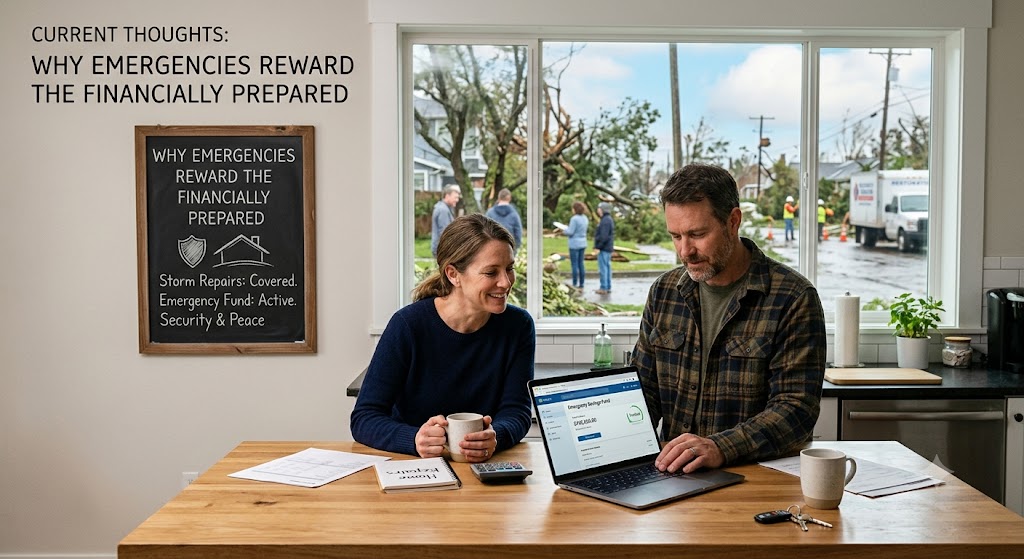
Why Emergencies Reward the Financially Prepared
Life has a way of reminding us that certainty is often an illusion. One day everything appears stable, predictable, and under control. The next day an unexpected medical bill arrives, a business loses its biggest client, a company announces layoffs, a vehicle breaks down, a natural disaster disrupts an entire community, or a global economic crisis changes the financial outlook for millions of people. Emergencies do not send invitations, and they rarely arrive when it is convenient. This is why understanding why emergencies reward the financially prepared is one of the most valuable financial lessons anyone can learn. Financial preparation is not about living in fear or expecting the worst. It is about recognizing that uncertainty is part of life and choosing to be ready instead of being surprised.
Many people believe financial preparation is only necessary for wealthy individuals, but the truth is exactly the opposite. Those with limited financial resources often suffer the greatest consequences when emergencies occur because they have fewer options available. A single unexpected expense can create a chain reaction that leads to debt, missed payments, damaged credit, emotional stress, and even long-term financial instability. Meanwhile, someone who has planned ahead may face the same emergency but recover much faster because they built a financial cushion before trouble arrived.
The difference between financial preparedness and financial panic is rarely determined by luck. It is usually determined by habits developed long before the emergency appeared. Every emergency reveals the financial decisions that were made months or even years earlier. Savings, budgeting, insurance, emergency funds, diversified income, and responsible spending may not seem exciting during ordinary times, but they become priceless when life takes an unexpected turn.
Financial preparation begins with accepting a simple truth. Emergencies are not rare events that happen only to other people. They are normal parts of life. Cars eventually need repairs. Homes require maintenance. Businesses experience slow seasons. Medical issues arise without warning. Technology fails. Economic recessions happen. Inflation reduces purchasing power. Family responsibilities suddenly increase. None of these events should be considered impossible. They should be considered possibilities that deserve preparation.
One of the greatest mistakes people make is assuming that future income will always solve future problems. Many individuals spend every paycheck because they expect another paycheck to arrive on schedule. This assumption creates a fragile financial life where any interruption immediately creates hardship. Losing a job for even one month becomes a crisis instead of an inconvenience because there is no financial buffer between income and expenses.
Financially prepared people understand that income is important, but savings create stability. Income pays today’s bills, while savings protect tomorrow’s opportunities. When emergencies happen, cash reserves provide something more valuable than money alone. They provide options. Options reduce stress because they allow thoughtful decisions instead of desperate reactions.
Imagine two individuals earning exactly the same salary. The first spends every dollar each month, upgrading their lifestyle whenever income increases. The second consistently saves a portion of every paycheck and gradually builds an emergency fund covering six months of living expenses. If both suddenly lose their jobs, their experiences will be dramatically different. The first person immediately begins worrying about rent, groceries, transportation, and debt payments. The second person still experiences concern, but panic does not control every decision because preparation has bought valuable time.
Time is one of the greatest rewards of financial preparedness. Money saved before an emergency purchases time during an emergency. Instead of accepting the first job available regardless of quality, financially prepared individuals can search for better opportunities. Instead of selling valuable assets at discounted prices, they can wait until conditions improve. Instead of borrowing at extremely high interest rates, they can use their emergency savings while developing a long-term solution.
Emergency funds represent one of the simplest yet most powerful financial tools available. An emergency fund exists for genuine emergencies rather than vacations, shopping, entertainment, or impulse purchases. It serves as a financial shock absorber that prevents unexpected expenses from becoming financial disasters. Even starting with a modest goal can significantly improve financial resilience. Small amounts saved consistently often grow into meaningful protection over time.
Many people postpone saving because they believe they need a large amount before beginning. Unfortunately, this mindset delays progress indefinitely. Financial preparation does not begin when someone becomes wealthy. It begins when someone decides to save consistently regardless of income level. Even small emergency funds reduce dependence on expensive borrowing during difficult situations.
Debt often transforms manageable emergencies into overwhelming crises. When monthly income is already committed to loan payments, credit card balances, and other financial obligations, unexpected expenses have nowhere to fit. This frequently forces individuals to borrow even more money simply to survive. High-interest debt creates a cycle where emergencies continue affecting finances long after the original problem has been solved.
Financial preparation also involves reducing unnecessary financial obligations before emergencies occur. Living below one’s means creates flexibility that becomes extremely valuable during uncertain periods. Lower monthly expenses require smaller emergency funds and allow people to recover more quickly from income disruptions.
Insurance represents another important aspect of financial preparedness. While no one enjoys paying insurance premiums, appropriate coverage transfers certain financial risks that would otherwise be impossible for most individuals to handle independently. Health insurance, home insurance, vehicle insurance, business insurance, and life insurance all exist because certain emergencies are simply too expensive for the average person to absorb without assistance. Choosing adequate coverage should be viewed as protecting future financial stability rather than merely satisfying legal requirements.
Diversifying income also strengthens emergency preparedness. Relying entirely on one employer, one customer, one investment, or one source of revenue increases financial vulnerability. Multiple income streams reduce dependence on any single source and create greater resilience during economic uncertainty. Side businesses, freelance work, investments, rental income, royalties, or digital products can all contribute to financial stability when primary income becomes uncertain.
Preparation extends beyond money itself. Financially prepared individuals usually maintain organized financial records, understand their monthly expenses, know where important documents are stored, and regularly review their financial situation. During emergencies, clear information enables faster and better decision-making. Confusion wastes valuable time when quick action may be necessary.
Inflation provides another example of why financial preparation matters. Rising prices reduce purchasing power over time, making everyday expenses more expensive. Individuals living paycheck to paycheck often struggle the most because they have little flexibility when costs increase. Financially prepared people may still feel inflation’s effects, but savings, investments, and thoughtful budgeting help soften its impact.
Business owners especially benefit from financial preparedness. Every successful business eventually encounters challenges including changing customer preferences, economic slowdowns, supply chain disruptions, increased competition, or unexpected operational expenses. Businesses maintaining cash reserves and responsible financial management often survive difficult periods that force less prepared competitors to close permanently. Preparation frequently determines which businesses remain standing after economic storms pass.
Families also experience tremendous benefits from financial readiness. Financial emergencies affect more than bank accounts. They influence relationships, emotional well-being, children’s education, and overall quality of life. Constant financial stress often creates tension within households, while preparation provides greater peace of mind. Knowing that essential expenses can still be paid during difficult times reduces anxiety and allows families to focus on solving problems rather than simply surviving them.
One overlooked reward of financial preparedness is improved decision-making. Fear rarely produces excellent financial choices. People under extreme financial pressure often accept unfavorable loan terms, sell investments during market downturns, withdraw retirement savings prematurely, or agree to employment situations that do not support their long-term goals. Financial preparation reduces desperation, allowing decisions based on logic instead of panic.
Preparedness also creates opportunities during economic uncertainty. History repeatedly demonstrates that recessions, market downturns, and financial crises often create valuable investment opportunities for individuals with available cash. While others are forced to sell assets to generate immediate income, financially prepared people may be able to purchase quality investments at reduced prices. This does not mean emergencies are desirable, but preparation allows individuals to respond strategically instead of react emotionally.
Financial education strengthens emergency preparedness because knowledge improves decision-making before crises occur. Understanding budgeting, investing, debt management, taxes, insurance, and cash flow enables individuals to build stronger financial foundations over time. Education transforms financial preparation from guesswork into intentional planning.
Children benefit enormously when parents model financial preparedness. Young people who observe responsible saving, thoughtful spending, emergency planning, and disciplined financial habits often carry these behaviors into adulthood. Financial preparedness therefore becomes a gift that extends across generations rather than benefiting only the current household.
Technology has also changed how people prepare financially. Automatic savings transfers, budgeting applications, investment platforms, digital banking, and financial planning tools make consistent saving easier than ever before. Automation removes much of the temptation to spend money intended for future security by prioritizing savings immediately after income is received.
One important misconception is that financial preparedness eliminates all stress during emergencies. This is unrealistic. Emergencies remain difficult regardless of preparation. The difference is that prepared individuals usually experience manageable stress rather than overwhelming panic. Problems still require solutions, but financial preparation provides the resources necessary to pursue those solutions effectively.
Financial preparedness also encourages long-term thinking. Instead of focusing exclusively on today’s desires, prepared individuals consider future possibilities. They recognize that every financial decision either strengthens or weakens their ability to handle uncertainty. This perspective influences spending habits, saving behavior, career choices, investment decisions, and overall financial priorities.
Discipline remains central to financial preparedness. Building emergency savings often requires saying no to immediate gratification in favor of future security. Choosing to save instead of spending may seem difficult during ordinary times because the benefits remain invisible. However, when emergencies arrive, years of disciplined decisions suddenly become obvious advantages.
Another overlooked aspect of preparedness involves maintaining valuable skills. Financial resilience depends not only on savings but also on earning potential. Individuals who continually improve their knowledge, professional abilities, and adaptability often recover more quickly from job losses because they remain competitive in changing labor markets. Investing in personal development represents another form of financial preparation.
Prepared individuals also understand that reviewing financial plans regularly is essential. Life changes continuously. Marriage, children, career advancement, relocation, business ownership, retirement planning, and aging all affect financial needs. Emergency plans should evolve alongside changing circumstances to remain effective.
Community support also becomes stronger when individuals practice financial responsibility. Families with stable finances are often better positioned to help relatives, friends, or neighbors during difficult periods. Financial preparedness therefore benefits not only individuals but also entire communities by increasing collective resilience during widespread emergencies.
Some people delay preparation because they believe emergencies are too unpredictable to plan for effectively. While specific emergencies cannot always be predicted, financial resilience can certainly be developed. No one knows exactly what challenge may arrive next, but nearly every emergency becomes easier to manage when adequate savings, responsible budgeting, manageable debt, and diversified income already exist.
Perhaps the greatest reward of financial preparedness is peace of mind. Constant financial anxiety drains emotional energy and reduces quality of life even when no emergency exists. Knowing that unexpected expenses will not immediately destroy financial stability allows people to sleep better, make clearer decisions, and approach the future with greater confidence.
Building financial preparedness is not an overnight achievement. It develops gradually through thousands of ordinary decisions made consistently over many years. Choosing to save instead of overspend, reducing unnecessary debt, investing in education, maintaining insurance, diversifying income, reviewing financial goals, and living below one’s means may appear ordinary individually. Together they create extraordinary resilience when life becomes unpredictable.
Emergencies reveal what preparation has quietly built. They expose whether financial decisions were based on temporary pleasure or long-term wisdom. While no one can prevent every unexpected event, everyone can improve their ability to respond effectively. Financial preparedness transforms emergencies from life-changing catastrophes into temporary challenges that can be overcome with confidence, discipline, and thoughtful planning.
The future will always contain uncertainty. Economies will change, industries will evolve, unexpected expenses will arise, and personal circumstances will shift. The question is not whether emergencies will happen, but whether we will be prepared when they do. Every dollar saved, every debt reduced, every skill learned, every wise investment made, and every thoughtful financial decision contributes to greater resilience. Emergencies do indeed reward the financially prepared because preparation provides what panic never can: choices, stability, confidence, and the ability to move forward when others are forced to stand still. That is why financial preparedness is not merely a personal finance strategy. It is one of the greatest investments anyone can make in securing a stronger, more stable, and more hopeful future.

EarnSmartOnline.com.ng is dedicated to helping readers make smarter financial decisions through practical guides on online income, personal finance, technology, digital business, and wealth creation. Our goal is to provide reliable, easy-to-understand, and actionable content that empowers individuals to earn smarter, build sustainable income streams and achieve long-term financial success.
Recommended: Start Earning Online
- Ultimate Affiliate Marketing Program — learn affiliate marketing with a done-for-you sales system ($15). Check it out
- The Newbie Affiliate Guide — the beginner-friendly starter guide (~$6.68). Check it out
- Easy Dollar Maker — earn in dollars uploading AI images and videos from your phone ($17). Check it out
Disclosure: These are affiliate links. If you buy through them, I may earn a commission at no extra cost to you.



