
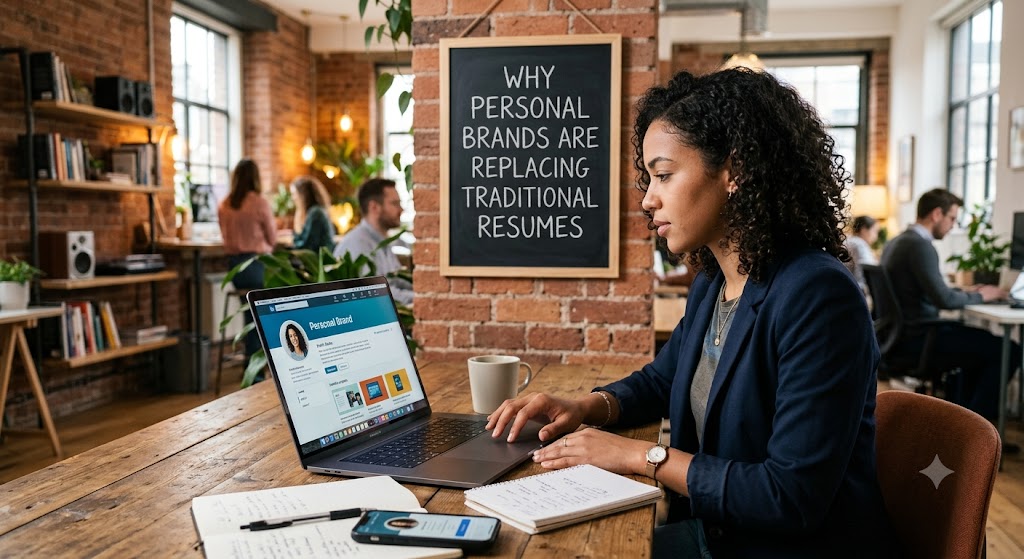
Why Personal Brands Are Replacing Traditional Resumes
There was a time when a traditional resume was the most important document anyone needed to secure a good job or attract professional opportunities. People spent hours polishing their qualifications, listing previous employers, highlighting educational achievements, and hoping that a recruiter would be impressed enough to schedule an interview. While resumes are still useful in many industries, the professional world has changed dramatically. Today, employers, clients, investors, collaborators, and even customers want to know much more than what fits on one or two pages. They want to know who you are, what you stand for, what you have accomplished publicly, how you communicate, and whether other people trust your expertise. This shift has made personal branding one of the most valuable career assets anyone can build.
The idea that personal brands are replacing traditional resumes is no longer a prediction. It is already happening across industries. From software developers and graphic designers to marketers, consultants, entrepreneurs, writers, photographers, teachers, coaches, and business executives, people are discovering that their online reputation often opens more doors than a carefully written curriculum vitae. Employers now search candidates on Google before inviting them for interviews. Clients browse social media profiles before signing contracts. Investors examine founders’ online presence before investing in startups. In many situations, your digital footprint becomes your first interview long before anyone requests your resume.
A personal brand is not simply about becoming famous on social media. It is the reputation you intentionally create through your knowledge, values, communication style, consistency, and public work. It is the answer people give when someone asks about you even when you are not present. Your personal brand communicates your expertise, credibility, reliability, and uniqueness. Unlike a resume, which often tells people what you claim to have done, a personal brand demonstrates your abilities through visible evidence that anyone can verify.
Traditional resumes are limited by space. They summarize years of experience into a few bullet points and short descriptions. A personal brand has no such limitation. Your articles, videos, podcasts, interviews, online courses, presentations, projects, testimonials, community involvement, and professional conversations continuously build a much richer picture of your capabilities. Instead of asking employers to believe your claims, you allow them to observe your knowledge in action.
The digital economy has accelerated this transformation. The internet has removed many barriers that once prevented professionals from showcasing their expertise. Years ago, publishing your ideas required newspaper columns, magazine features, or television appearances. Today, anyone with valuable knowledge can publish articles, create videos, host webinars, participate in podcasts, or build an audience through professional networking platforms. This accessibility means employers have more information than ever before when evaluating candidates.
One major reason personal brands are replacing traditional resumes is trust. Trust has become one of the most valuable currencies in business and employment. A resume may state that someone possesses leadership skills, communication abilities, or technical expertise. However, a strong personal brand provides evidence. A manager who regularly shares thoughtful leadership insights demonstrates leadership. A software engineer who contributes to open-source projects proves technical competence. A marketing professional who consistently publishes valuable marketing analysis demonstrates industry knowledge. People naturally trust demonstrated ability more than written claims.
Search engines have also changed hiring behavior. Before making important decisions, many employers search applicants online. They examine LinkedIn profiles, personal websites, social media accounts, blog posts, published interviews, conference presentations, portfolios, and even comments on professional discussions. This research often shapes first impressions before a formal application is reviewed. In some cases, candidates with impressive personal brands receive opportunities without ever submitting resumes because decision-makers already understand their value.
Networking has evolved alongside personal branding. Traditional networking depended heavily on physical events, business cards, conferences, and personal introductions. While these methods remain valuable, digital networking has expanded professional visibility beyond geographical boundaries. Someone living in Lagos can collaborate with companies in London, New York, Toronto, Sydney, or Singapore simply because their expertise is visible online. Personal branding transforms networking from occasional interactions into continuous relationship building.
Another important difference between resumes and personal brands is discoverability. A resume only reaches employers after you apply for a position. A personal brand allows opportunities to find you. Recruiters actively search LinkedIn, professional communities, industry blogs, YouTube, GitHub, Behance, Medium, and other platforms for talented individuals. Many professionals receive job offers because employers discover their content rather than because they submitted applications.
The rise of freelancing has further strengthened the importance of personal branding. Clients hiring freelancers rarely ask for formal resumes. Instead, they review portfolios, testimonials, case studies, social proof, online reviews, published work, and communication style. They want confidence that the person can deliver results. A powerful personal brand reduces uncertainty by showcasing previous successes and demonstrating expertise consistently.
Entrepreneurs benefit enormously from personal branding because customers increasingly buy from people before buying from businesses. Consumers trust founders who openly share insights, educate audiences, discuss industry trends, and communicate transparently. Whether selling software, consulting services, educational products, books, or physical goods, entrepreneurs with strong personal brands often outperform competitors relying solely on corporate branding.
The creator economy has also contributed to this shift. Millions of professionals now generate income through educational content, digital products, memberships, newsletters, podcasts, consulting, coaching, affiliate marketing, sponsorships, and online communities. In this environment, personal brands become income-generating assets independent of traditional employment. The stronger your reputation, the more opportunities become available.
Authenticity plays a central role in effective personal branding. People increasingly prefer authentic professionals over polished corporate personalities. They appreciate honesty, transparency, consistency, and genuine expertise. Building a personal brand does not require pretending to know everything. In fact, acknowledging limitations often strengthens credibility because audiences value honesty over perfection.
Consistency matters far more than occasional visibility. Publishing one excellent article each month for several years usually creates stronger authority than publishing daily for one month before disappearing. Personal branding is built through repeated demonstrations of competence, generosity, and reliability. Every helpful article, educational video, thoughtful social media post, podcast appearance, workshop, webinar, or presentation adds another layer of credibility.
Education has become democratized through personal branding. Professionals no longer need prestigious institutions to validate every skill. Self-taught programmers, designers, writers, marketers, photographers, analysts, and entrepreneurs often build exceptional careers because their work publicly demonstrates competence. Employers increasingly prioritize demonstrated skills over formal credentials, especially in technology, marketing, design, media, and entrepreneurship.
The rise of artificial intelligence has made personal branding even more valuable. AI can generate resumes, cover letters, and application documents within minutes. As resumes become easier to produce, they become less effective at differentiation. Authentic personal brands remain difficult to replicate because they represent years of original thinking, unique experiences, consistent communication, and genuine relationships.
Thought leadership is another important advantage of personal branding. Professionals who regularly share valuable insights become recognised authorities within their industries. They receive invitations to speak at conferences, appear on podcasts, contribute to publications, participate in expert panels, mentor younger professionals, and advise organisations. These opportunities rarely emerge from resumes alone.
A personal website has become one of the strongest personal branding tools. Unlike social media platforms where algorithms determine visibility, a website provides complete control over your professional story. It can include your biography, portfolio, testimonials, articles, case studies, publications, speaking engagements, contact information, achievements, and professional philosophy. A well-maintained website serves as a living resume that evolves continuously rather than remaining static.
Content creation has become one of the most powerful methods of building personal brands. Writing insightful articles, publishing educational videos, recording podcasts, sharing research, analysing industry developments, and answering common questions establish credibility over time. Valuable content demonstrates generosity while simultaneously showcasing expertise. Every piece of useful content becomes another opportunity for potential employers or clients to discover your knowledge.
Social proof significantly strengthens personal branding. Testimonials, recommendations, endorsements, client reviews, published interviews, media mentions, awards, certifications, successful collaborations, and measurable results all reinforce credibility. Unlike self-written resume statements, third-party validation carries greater persuasive power because it reflects independent opinions.
Personal branding also encourages lifelong learning. Since public expertise requires continuous relevance, professionals invest more consistently in improving their knowledge and adapting to industry changes. This continuous development benefits both career progression and personal growth. Instead of updating resumes every few years, professionals update their knowledge constantly.
Many employers now prioritise cultural fit alongside technical competence. Personal branding allows candidates to communicate their values, communication style, interests, leadership philosophy, and professional personality. This deeper understanding helps organisations identify individuals who align with their culture more effectively than resumes alone.
The future of recruitment will likely rely increasingly on observable performance rather than written descriptions. Digital portfolios, online communities, professional discussions, collaborative projects, published work, and measurable contributions provide stronger evidence than static documents. Employers want confidence that candidates can perform, not simply claim competence.
However, this does not mean traditional resumes have become obsolete. Many organisations still require resumes during formal recruitment processes. Instead, resumes are becoming supporting documents rather than primary decision-making tools. The strongest candidates combine professional resumes with compelling personal brands that reinforce every claim through visible evidence.
Building a personal brand does not require becoming an internet celebrity. It begins with identifying your expertise, understanding your audience, communicating consistently, solving real problems, and sharing valuable insights regularly. Even professionals with small but highly engaged audiences often generate remarkable career opportunities because relevance matters more than popularity.
Professionals should also remember that personal branding extends beyond online activity. How you communicate in meetings, respond to emails, treat colleagues, honour commitments, solve problems, and behave during challenging situations all contribute to your reputation. Digital visibility amplifies existing character rather than replacing it.
Another misconception is that personal branding is only for extroverts. Introverted professionals often build exceptional personal brands through thoughtful writing, research, educational resources, podcasts, newsletters, books, technical documentation, and carefully crafted online content. Effective branding depends on value creation rather than personality type.
The global workforce continues becoming increasingly competitive. Remote work allows companies to recruit talent worldwide, meaning professionals compete beyond local markets. Personal branding helps individuals stand out by highlighting specialised expertise, unique perspectives, and consistent contributions. Rather than competing solely on qualifications, professionals compete on demonstrated value.
For students and recent graduates, personal branding offers enormous advantages. Instead of waiting years to build experience, they can publish educational content, document learning journeys, contribute to open-source projects, volunteer, build portfolios, participate in competitions, and engage with industry communities. By graduation, many already possess visible professional reputations exceeding what resumes alone could communicate.
The same principle applies to career changers. Instead of relying exclusively on previous employment history, they can demonstrate new competencies publicly through projects, certifications, articles, portfolios, and practical work. Personal branding reduces uncertainty by showing commitment to the new field rather than merely expressing interest.
One of the greatest benefits of personal branding is ownership. Jobs change. Companies close. Industries evolve. Economic conditions fluctuate. A personal brand remains your own asset regardless of where you work. Every article published, every relationship built, every presentation delivered, and every project completed strengthens an asset that travels with you throughout your career.
As technology continues reshaping employment, adaptability becomes increasingly important. Personal brands evolve naturally because they reflect continuous learning and changing expertise. Resumes often become outdated quickly, while active personal brands demonstrate ongoing relevance.
Ultimately, the growing importance of personal branding reflects a broader shift from credentials to credibility. Employers, clients, investors, partners, and audiences increasingly seek proof rather than promises. They want to observe knowledge, evaluate communication, verify expertise, and understand character before making decisions. A resume introduces you, but a personal brand convinces people to trust you.
The professionals who thrive in the coming years will not simply possess impressive qualifications. They will intentionally cultivate reputations built on expertise, integrity, consistency, generosity, and authentic value creation. They will understand that every interaction, every published insight, every completed project, and every relationship contributes to a larger professional identity that extends far beyond a single document.
Traditional resumes will likely remain part of recruitment for many years, but they are no longer sufficient on their own. In an increasingly connected digital world, your reputation has become your real resume. Your visible work, trusted relationships, demonstrated expertise, and consistent contribution speak louder than any list of qualifications ever could. Those who invest in building genuine personal brands today are not simply improving their chances of getting hired. They are creating long-term career assets that generate opportunities, attract trust, expand influence, and remain valuable regardless of how the job market continues to evolve.

EarnSmartOnline.com.ng is dedicated to helping readers make smarter financial decisions through practical guides on online income, personal finance, technology, digital business, and wealth creation. Our goal is to provide reliable, easy-to-understand, and actionable content that empowers individuals to earn smarter, build sustainable income streams and achieve long-term financial success.
Recommended: Start Earning Online
- Ultimate Affiliate Marketing Program — learn affiliate marketing with a done-for-you sales system ($15). Check it out
- The Newbie Affiliate Guide — the beginner-friendly starter guide (~$6.68). Check it out
- Easy Dollar Maker — earn in dollars uploading AI images and videos from your phone ($17). Check it out
Disclosure: These are affiliate links. If you buy through them, I may earn a commission at no extra cost to you.



