
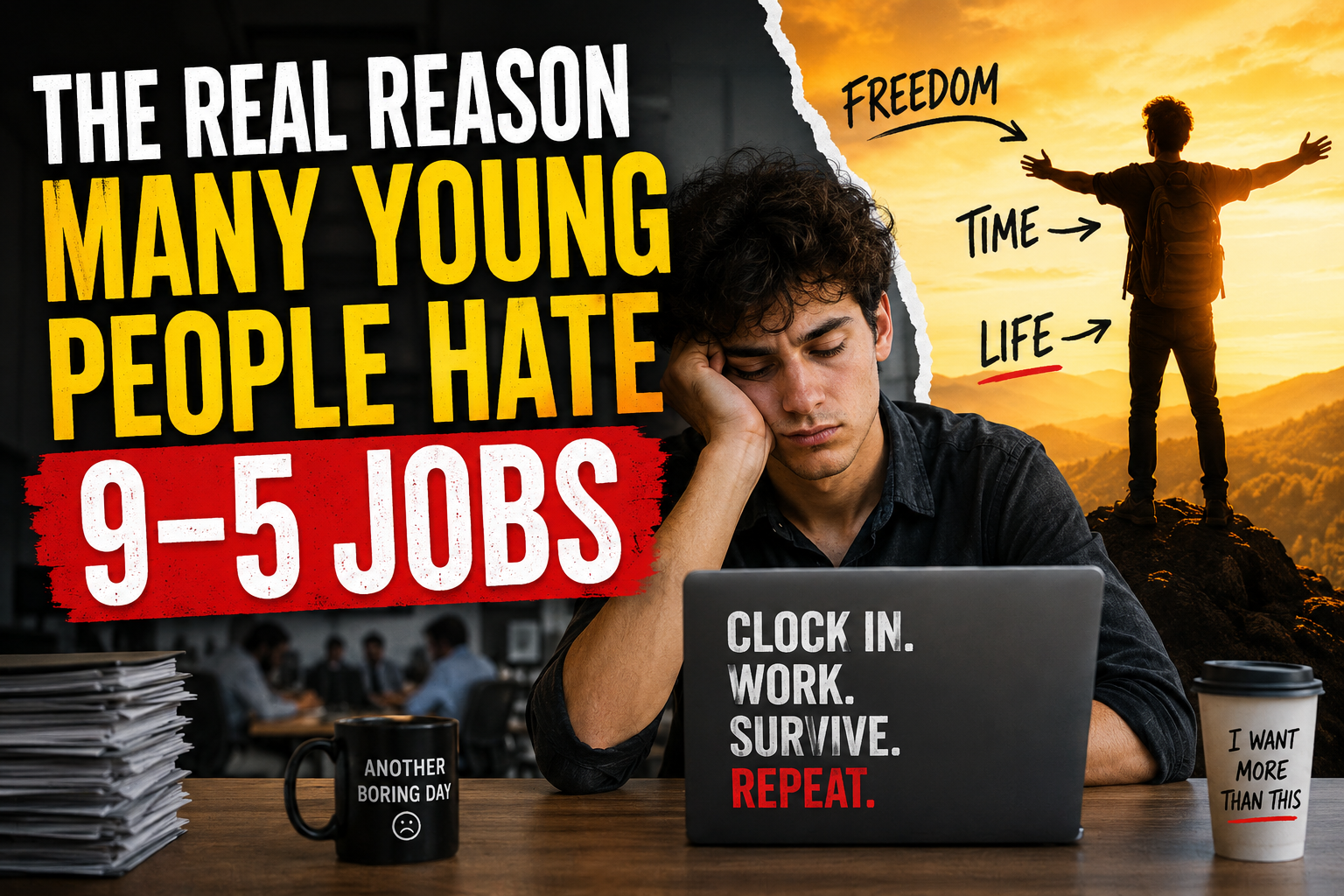
The Real Reason Many Young People Hate 9–5 Jobs
A lot of older people think young people hate 9–5 jobs because they are lazy.
That is the most common accusation.
Anytime a young person complains about work, somebody quickly says, “Your generation just doesn’t want to work hard.”
But the truth is deeper than that.
Many young people do not actually hate work. What they hate is the feeling of being trapped, underpaid, overworked, and mentally drained while still struggling to survive. That is the real issue nobody wants to admit.
Years ago, a regular 9–5 job could build a decent life.
A person could work one stable job, pay rent, feed a family, buy land gradually, and still have peace of mind. These days, many young people work full time and still cannot afford basic comfort. Salaries disappear before the middle of the month. Transportation is expensive. Rent is high. Food prices keep rising. Yet employers still expect workers to act grateful for salaries that barely solve anything.
This is one of the biggest reasons resentment keeps growing.
Another uncomfortable truth is that many workplaces treat employees like machines instead of human beings. Some bosses believe stress equals productivity. Some companies celebrate overworking people like it is an achievement. Workers are expected to sacrifice sleep, health, family time, and personal happiness just to “prove commitment.”
People are tired.
Young people grew up hearing things like, “Go to school, get a good job, and life will become stable.” Many followed that exact advice. They got degrees. Some even earned multiple certifications. Yet after all the stress, they entered a job market where experience is demanded for entry-level positions and salaries do not match the cost of living.
That disappointment changed how many people see traditional employment.
Social media also played a huge role. Years ago, workers had fewer comparisons. Today, young people constantly see others making money online through freelancing, content creation, tech, remote jobs, online businesses, crypto, affiliate marketing, and digital skills. Whether all those lifestyles are real or exaggerated is another discussion entirely. But the exposure changed people’s mindset forever.
Now many workers sit inside offices wondering why they spend almost their entire day making money for someone else while barely having time to enjoy their own lives.
Some people also hate how repetitive 9–5 life feels. Wake up early. Sit in traffic. Work all day. Return home exhausted. Sleep. Repeat the cycle again for years. For many young people, that routine feels depressing. They do not want a life where every week feels the same until retirement.
Older generations sometimes misunderstand this frustration because survival was their main focus. Many young people today are asking different questions. They want freedom, flexibility, purpose, and peace of mind, not just survival alone.
Another reason many workers are frustrated is because loyalty no longer guarantees anything. In the past, employees stayed in companies for decades and were rewarded with stability and respect. Today, some workers give everything to companies only to be replaced instantly when convenient. One email can end years of dedication. Seeing this happen repeatedly destroyed emotional loyalty to jobs.
That is why many young people now prioritize themselves first.
Some employers also refuse to adapt. They still use outdated management styles based on fear and control. They want workers physically present even when the job can be done remotely. Some managers confuse professionalism with intimidation. Instead of motivating workers, they create toxic environments filled with pressure, office politics, gossip, and emotional exhaustion.
Then they wonder why employees quietly quit mentally before resigning physically.
To be fair, not every 9–5 job is terrible. Some people genuinely enjoy structure, stability, teamwork, and predictable income. Some companies treat workers very well. But the growing dislike for traditional jobs did not come from nowhere. It came from years of frustration, economic pressure, burnout, and broken expectations.
The controversial truth is this: many young people are no longer willing to suffer endlessly just because previous generations normalized suffering.
That mindset shift makes many older people uncomfortable.
Young workers watched parents sacrifice everything for jobs and still end up stressed, financially unstable, or easily discarded after retirement. They saw hardworking people remain poor despite decades of loyalty. Naturally, many started questioning the system itself.
And honestly, can you blame them?
At the end of the day, most young people are not running away from work. They are running away from exploitation disguised as “hard work.” They want income, but they also want freedom. They want success, but they also want mental peace. They want careers that allow them to actually enjoy life, not merely survive it.
Whether society likes it or not, that mentality is not disappearing anytime soon.

EarnSmartOnline.com.ng is dedicated to helping readers make smarter financial decisions through practical guides on online income, personal finance, technology, digital business, and wealth creation. Our goal is to provide reliable, easy-to-understand, and actionable content that empowers individuals to earn smarter, build sustainable income streams and achieve long-term financial success.
Recommended: Start Earning Online
- Ultimate Affiliate Marketing Program — learn affiliate marketing with a done-for-you sales system ($15). Check it out
- The Newbie Affiliate Guide — the beginner-friendly starter guide (~$6.68). Check it out
- Easy Dollar Maker — earn in dollars uploading AI images and videos from your phone ($17). Check it out
Disclosure: These are affiliate links. If you buy through them, I may earn a commission at no extra cost to you.



