
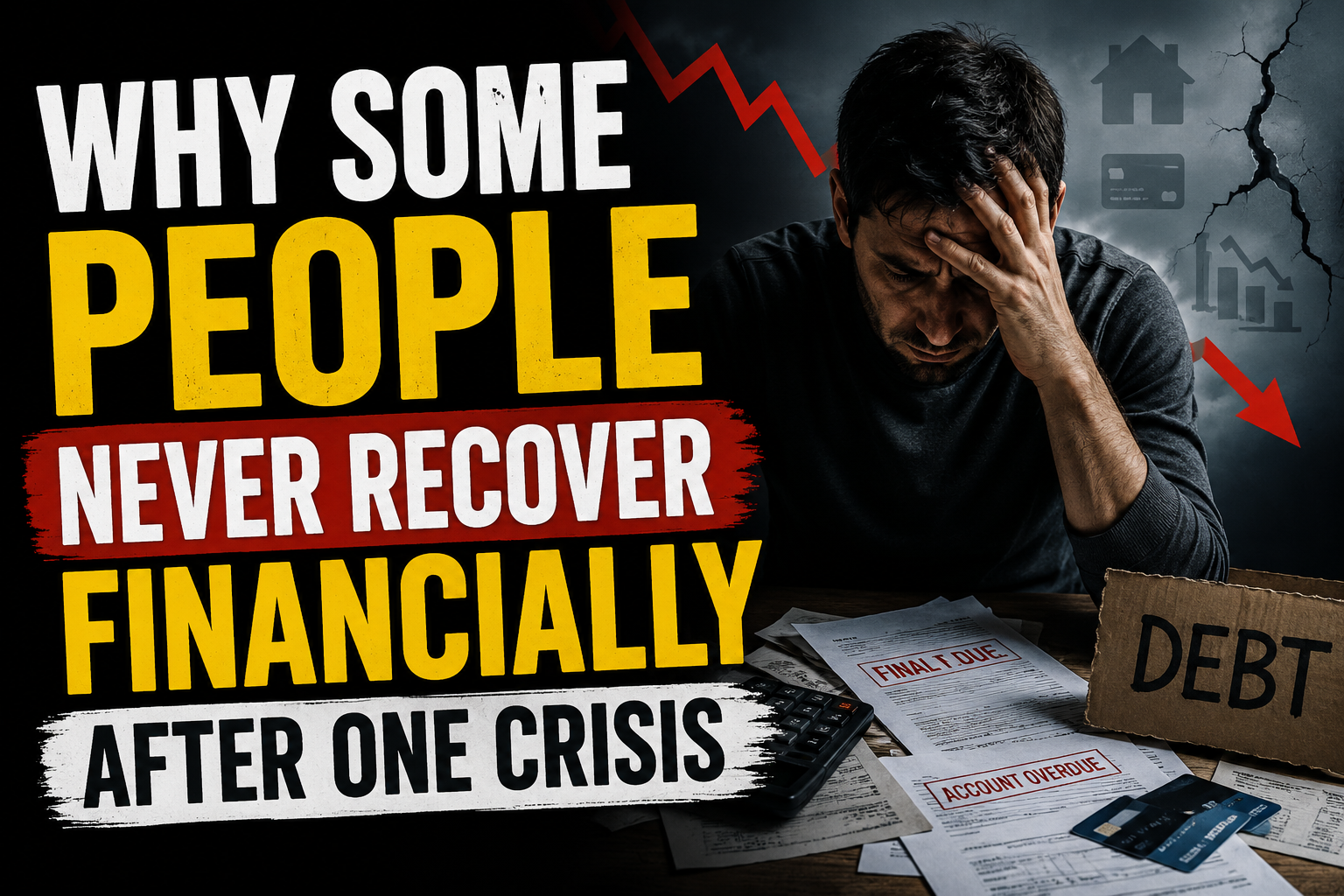
Why Some People Never Recover Financially After One Crisis
Financial crises are one of the most overlooked turning points in a person’s life. For some people, a crisis is just a temporary setback. They lose money, adjust, recover, and continue building their lives. For others, however, a single crisis becomes the beginning of long-term financial struggle that can last for years or even a lifetime. The difference is not always about how much money they had before the crisis, but how they respond to it, the financial systems they have in place, and the habits they develop afterward.
One of the main reasons people fail to recover financially after a crisis is the absence of a financial cushion. Many individuals live their entire lives without an emergency fund, meaning they are always one unexpected event away from collapse. When a medical emergency, job loss, business failure, or family obligation occurs, they are forced to borrow money at high interest rates or sell valuable assets quickly at a loss. Once this happens, recovery becomes harder because they are not just dealing with the original crisis, but also the burden of debt or depleted resources that follow.
Another major factor is emotional decision making during financial stress. Crises create fear, and fear often leads to poor financial choices. Instead of carefully evaluating options, people panic. They take loans without understanding repayment terms, withdraw long term savings, or sell income generating assets like land, equipment, or business inventory. These decisions may solve immediate problems but create deeper financial damage that takes years to repair. In many cases, people never regain the same financial foundation they had before the crisis.
Lack of financial knowledge also plays a major role. Many individuals are never taught how money actually works beyond earning and spending. Concepts like budgeting, risk management, insurance, investment diversification, and debt control are often missing from their financial understanding. As a result, when a crisis hits, they have no structured system to fall back on. They treat every financial problem as an emergency that requires immediate spending or borrowing, instead of applying strategic solutions that could reduce long term damage.
Another overlooked reason is dependence on a single source of income. People who rely entirely on salaries or one business are extremely vulnerable. Once that income stream is disrupted, everything else collapses quickly. Without alternative income sources, even a short crisis can create long term instability. This is why some people never recover fully; they spend years trying to rebuild from zero because they never created financial backup systems such as side income, savings investments, or skills that can generate money independently.
Lifestyle pressure after recovery attempts also prevents financial healing. After surviving a crisis, many people try to “catch up” quickly. They return to the same or even higher spending habits to compensate for lost time. This includes unnecessary upgrades, social pressure spending, and emotional purchases meant to restore a sense of normalcy. Unfortunately, this slows down recovery because instead of rebuilding financial stability, they are still operating with pre crisis habits that drained them in the first place.
Debt is another silent factor that keeps people trapped. After a crisis, borrowing becomes common, but without proper repayment planning, debt accumulates faster than income can handle. High interest loans, credit obligations, and informal borrowing from family or friends can create a financial chain that limits future opportunities. A person in debt often loses flexibility, meaning they cannot take advantage of new opportunities or invest in recovery strategies because every income source is tied to repayment obligations.
Psychological impact is equally important. A financial crisis does not only affect the wallet, it affects confidence, motivation, and decision making ability. Some people become overly cautious after a crisis, avoiding any form of financial risk even when opportunities are available. Others become discouraged and stop planning altogether. This mental shift prevents them from taking the necessary steps needed to rebuild wealth, such as learning new skills, starting small businesses, or investing gradually.
Another reason recovery fails is lack of structured rebuilding. Many people assume recovery happens naturally with time, but financial stability requires intentional rebuilding. This includes re establishing income sources, rebuilding savings, clearing debts strategically, and developing better financial habits. Without a clear plan, people drift financially for years, moving from one unstable situation to another without ever fully recovering.
Inflation and economic conditions also worsen the situation. When a crisis drains savings or assets, the value of money continues to decrease over time. This means that even if a person tries to rebuild later, the cost of living and investment entry points may have increased significantly. Without early recovery action, the gap between financial stability and instability continues to widen, making it harder to return to the previous financial level.
Social expectations can also delay recovery. Many people feel pressure to appear financially stable even after a crisis. They may prioritize appearance over actual recovery, spending money on things that signal success while ignoring essential rebuilding activities. This creates a cycle where outward appearance hides internal financial struggle, making recovery even slower and more difficult.
A key turning point for those who eventually recover is mindset change. People who successfully bounce back often adopt a survival plus growth mindset. They reduce unnecessary expenses, focus on building multiple income streams, and prioritize long term stability over short term comfort. They treat the crisis as a reset point rather than a permanent setback. Unfortunately, those who never recover often remain emotionally tied to their pre crisis lifestyle and expectations, making adaptation difficult.
Another hidden factor is lack of financial protection tools. Insurance, emergency planning, and risk diversification are often ignored until it is too late. People who have no protective systems in place are forced to absorb the full impact of a crisis directly. In contrast, those with even basic financial protection can recover faster because part of the damage is absorbed by systems designed to handle risk.
Ultimately, the reason some people never recover financially after one crisis is not a single factor but a combination of poor preparation, emotional decision making, weak financial habits, lack of income diversity, and absence of structured recovery planning. A financial crisis exposes weaknesses that already exist in a person’s financial life. For those who are prepared, it becomes a temporary setback. For those who are not, it becomes a long term trap.
The most important lesson is that financial resilience is built before a crisis, not during it. Once a crisis occurs, options become limited and recovery becomes harder. Building emergency savings, developing multiple income streams, managing debt wisely, and improving financial education are all essential steps that determine whether a crisis becomes a lesson or a lifelong burden.
In the end, financial recovery is possible for everyone, but it requires discipline, awareness, and deliberate action. The people who never recover are often not unlucky; they are simply unprepared for the realities of financial instability.

EarnSmartOnline.com.ng is dedicated to helping readers make smarter financial decisions through practical guides on online income, personal finance, technology, digital business, and wealth creation. Our goal is to provide reliable, easy-to-understand, and actionable content that empowers individuals to earn smarter, build sustainable income streams and achieve long-term financial success.
Recommended: Start Earning Online
- Ultimate Affiliate Marketing Program — learn affiliate marketing with a done-for-you sales system ($15). Check it out
- The Newbie Affiliate Guide — the beginner-friendly starter guide (~$6.68). Check it out
- Easy Dollar Maker — earn in dollars uploading AI images and videos from your phone ($17). Check it out
Disclosure: These are affiliate links. If you buy through them, I may earn a commission at no extra cost to you.



