
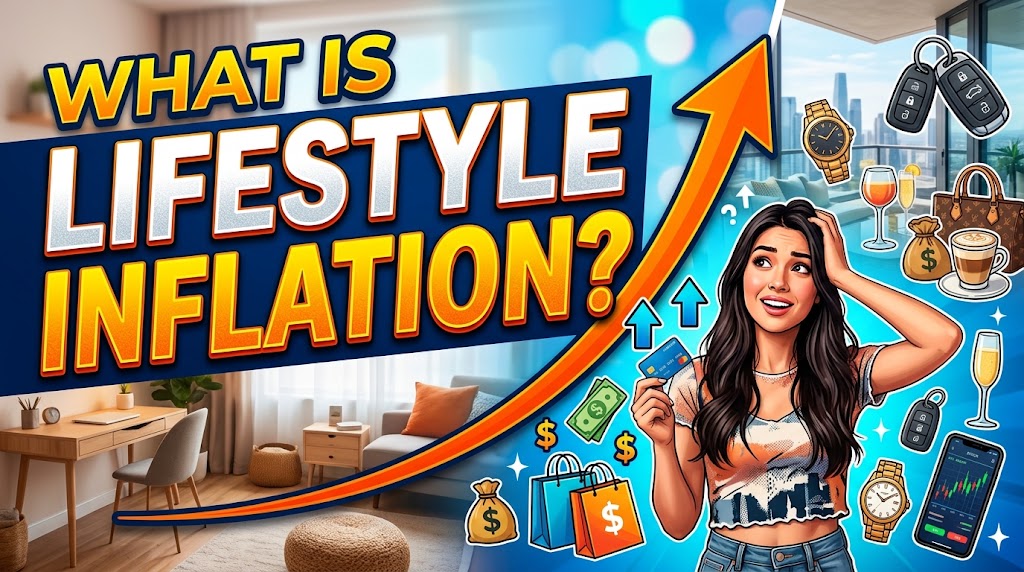
What is lifestyle inflation?
What is lifestyle inflation? It is a question that has become increasingly important in a world where income levels are rising for many people, yet financial stress remains surprisingly common. Many individuals dream of earning more money because they believe a higher income will automatically solve their financial problems. While earning more can certainly improve financial security and create new opportunities, it does not always lead to greater wealth. In many cases, people who receive salary increases, business profits, bonuses, or additional income streams find themselves spending more money just as quickly as they earn it. This phenomenon is known as lifestyle inflation.
When people first begin their careers or businesses, they often live within strict financial limits. They carefully consider every purchase because their income allows little room for unnecessary spending. As their earnings increase, they naturally seek greater comfort, convenience, and enjoyment. There is nothing inherently wrong with this. The problem arises when spending increases at the same pace as income or even faster. Instead of becoming financially stronger, individuals simply upgrade their lifestyles while remaining trapped in the same cycle of financial dependence.
Understanding What is lifestyle inflation? requires recognising that it is not merely about buying expensive things. Lifestyle inflation is the gradual increase in spending that occurs as income rises. It happens when a person who once lived comfortably on a modest income begins spending significantly more after receiving a pay rise, promotion, business growth, or any other increase in earnings. The additional income that could have been saved, invested, or used to build wealth is instead directed towards a more expensive lifestyle.
The process often starts subtly. A person receives a salary increase and decides to move into a larger apartment. After a few months, they purchase a newer car. Later, they begin dining at more expensive restaurants, buying premium subscriptions, upgrading electronic devices more frequently, taking costlier holidays, and purchasing luxury items they once considered unnecessary. Each individual decision may seem reasonable on its own. However, the combined effect can leave the person with little financial progress despite earning significantly more money than before.
One of the reasons lifestyle inflation is so dangerous is that it often feels like success. Society frequently associates visible consumption with achievement. Larger homes, expensive cars, designer clothing, premium gadgets, and luxury experiences are often viewed as symbols of financial accomplishment. As a result, people may feel pressure to upgrade their lifestyles whenever their income increases. They may believe they deserve these rewards because they have worked hard to earn more money.
This emotional connection between spending and success plays a major role in lifestyle inflation. When someone receives a promotion or grows a successful business, they may feel entitled to spend more because they have earned it. While rewarding oneself occasionally is perfectly reasonable, problems emerge when every increase in income is accompanied by a permanent increase in expenses.
Another important aspect of understanding What is lifestyle inflation? involves social comparison. Human beings naturally compare themselves to others. As income rises, people often begin associating with individuals who have higher spending habits. They may see friends purchasing luxury vehicles, living in exclusive neighbourhoods, travelling frequently, or wearing expensive brands. Over time, these lifestyles begin to appear normal. What once seemed extravagant may now feel ordinary.
Social media has amplified this effect dramatically. Every day, people are exposed to carefully curated images of wealth and success. Luxury holidays, expensive meals, high end fashion, premium gadgets, and luxurious homes appear constantly on social platforms. These images can create unrealistic expectations and encourage spending decisions driven by appearance rather than genuine financial priorities.
The psychology behind lifestyle inflation is deeply connected to human adaptation. People tend to become accustomed to improvements in their circumstances surprisingly quickly. A person who upgrades from a basic car to a luxury vehicle may experience excitement initially. However, after a few months, the luxury car becomes normal. The same pattern applies to larger homes, premium services, expensive clothing, and countless other purchases.
This phenomenon is often referred to as hedonic adaptation. It describes the tendency for people to return to a relatively stable level of happiness despite positive or negative changes in their circumstances. In practical terms, the pleasure derived from a lifestyle upgrade often fades much faster than expected. Once the excitement disappears, people may seek additional upgrades to recreate that feeling. This cycle can continue indefinitely, resulting in ever increasing expenses without a corresponding increase in long term satisfaction.
One of the most common examples of lifestyle inflation occurs when individuals upgrade their housing. Housing is typically the largest expense in most household budgets. A modest increase in income can tempt someone to move into a larger or more luxurious property. While there may be legitimate reasons for moving, higher housing costs can consume a significant portion of additional income.
The challenge is that housing expenses often extend beyond rent or mortgage payments. Larger homes usually involve higher utility bills, maintenance costs, insurance expenses, furnishing costs, and property related expenses. What initially appears to be a manageable upgrade can create a long term financial commitment that limits future flexibility.
Transportation is another area where lifestyle inflation frequently appears. Many people dream of owning a better vehicle when their income increases. While upgrading from an unreliable car to a safer and more dependable one may be sensible, lifestyle inflation often goes much further. Individuals may purchase vehicles primarily to reflect status rather than practical needs.
The financial consequences can be significant. More expensive vehicles often come with higher loan payments, insurance costs, maintenance expenses, fuel costs, and depreciation losses. Over several years, the total cost of ownership can consume a substantial amount of income that could have been invested elsewhere.
Lifestyle inflation also affects daily spending habits. As earnings rise, people may become less concerned about small purchases. Coffee from premium cafés, frequent restaurant meals, food delivery services, impulse purchases, entertainment subscriptions, and convenience spending can gradually increase. Individually, these expenses may appear insignificant. Collectively, they can absorb thousands of pounds, dollars, or naira annually.
One particularly dangerous aspect of lifestyle inflation is that it often disguises itself as affordability. A person may justify a purchase by focusing on the monthly payment rather than the total cost. They may reason that a larger mortgage, luxury car payment, or premium subscription is affordable because their income has increased. While this may be technically true, affordability does not necessarily mean the purchase supports long term financial goals.
Understanding What is lifestyle inflation? also requires examining its impact on wealth building. Wealth is not determined solely by how much money a person earns. It is heavily influenced by how much money they keep, save, and invest. Two individuals with identical incomes can have dramatically different financial outcomes depending on their spending habits.
Consider two people who both receive substantial salary increases. One immediately upgrades their lifestyle, increasing housing costs, transportation expenses, and discretionary spending. The other maintains a similar lifestyle while directing the majority of additional income towards investments and savings. After several years, the second individual may possess significantly greater financial security and wealth despite earning the same income.
This illustrates an important truth about personal finance. Income creates opportunities, but spending habits determine outcomes. High earners can remain financially vulnerable if expenses rise alongside earnings. Conversely, moderate earners can build considerable wealth by controlling lifestyle inflation.
Another consequence of lifestyle inflation is reduced financial resilience. When fixed expenses increase, financial flexibility decreases. If income declines due to job loss, economic downturns, business challenges, or unexpected circumstances, individuals with inflated lifestyles may struggle to adjust quickly.
High housing costs, vehicle payments, subscriptions, and other recurring expenses create financial obligations that must be met regardless of income changes. This can lead to stress, debt accumulation, and financial instability during difficult periods.
Lifestyle inflation can also delay major financial goals. Many people aspire to achieve objectives such as purchasing property, building an emergency fund, starting a business, funding education, supporting family members, or achieving financial independence. These goals require resources.
When additional income is consistently consumed by higher spending, progress towards these objectives slows significantly. Years may pass without meaningful advancement despite substantial income growth. This can create frustration and confusion because individuals may wonder why they are not accumulating wealth despite earning more money than ever before.
Recognising lifestyle inflation requires honesty and self awareness. Many people assume that financial problems stem from insufficient income when the real issue lies in spending patterns. Conducting a thorough review of expenses can reveal how much lifestyle inflation has occurred over time.
Comparing current spending habits to those from several years earlier can be eye opening. Individuals may discover that numerous expenses have increased gradually without deliberate planning. What began as occasional upgrades may have evolved into permanent financial commitments.
Avoiding lifestyle inflation does not mean living in deprivation or refusing to enjoy the benefits of increased income. Financial success should improve quality of life. The key is intentionality. Rather than automatically increasing spending whenever income rises, individuals can make deliberate decisions about how additional earnings will be used.
One effective strategy is allocating a portion of every income increase towards savings and investments before adjusting lifestyle expenses. For example, if someone receives a pay rise, they might decide to invest half of the increase while using the remaining portion for lifestyle improvements. This approach allows enjoyment of financial progress while ensuring long term wealth building continues.
Another valuable strategy is maintaining awareness of financial goals. People who clearly understand what they want to achieve financially are often better equipped to resist unnecessary spending. Whether the goal is home ownership, retirement, financial independence, business development, or educational funding, having a meaningful objective can provide motivation to prioritise long term benefits over short term gratification.
Practising gratitude can also reduce the temptation towards lifestyle inflation. Many spending decisions are driven by dissatisfaction or comparison rather than genuine need. Appreciating existing possessions and achievements can lessen the desire for constant upgrades and encourage more mindful consumption.
It is equally important to distinguish between value and status. Some purchases genuinely improve quality of life, productivity, health, or happiness. Others are primarily motivated by a desire to impress others or conform to social expectations. Learning to recognise this difference can lead to more effective financial decision making.
Technology and marketing further complicate the issue. Companies invest heavily in persuading consumers to upgrade continuously. New smartphones, vehicles, fashion trends, subscription services, and luxury products are marketed as essential improvements. Consumers are encouraged to believe that happiness, success, and social acceptance depend on acquiring the latest products.
Developing financial discipline involves questioning these messages and evaluating purchases based on personal priorities rather than external influences. This does not require rejecting modern conveniences or aspirations. Instead, it involves ensuring that spending decisions align with long term goals and genuine needs.
The question What is lifestyle inflation? ultimately leads to a broader understanding of personal finance and wealth creation. Lifestyle inflation is not simply about spending more money. It is about allowing income growth to dictate spending growth without considering the long term consequences.
Many people spend years pursuing higher incomes while overlooking the importance of managing expenses. They assume that financial freedom will arrive automatically once they earn enough money. In reality, financial freedom depends not only on earning more but also on maintaining control over spending habits.
The most financially successful individuals are often not those who earn the highest incomes. They are frequently those who understand the relationship between income, spending, saving, and investing. They recognise that every increase in income presents a choice. The additional money can be used to expand lifestyle indefinitely, or it can be used strategically to build long term financial security.
Lifestyle inflation becomes problematic when spending increases without purpose or awareness. It becomes manageable when individuals consciously decide how much of their income growth should improve their current lifestyle and how much should strengthen their future financial position.
The goal is not to avoid enjoying success. The goal is to ensure that success creates lasting financial benefits rather than merely larger monthly expenses. By understanding What is lifestyle inflation?, individuals can make more informed decisions, protect themselves from unnecessary financial pressure, and build a stronger foundation for long term wealth and financial independence.
In the end, earning more money is valuable, but keeping more of it is what truly changes lives. Those who learn to control lifestyle inflation often discover that financial freedom is not determined by how much they spend, but by how much flexibility, security, and opportunity they create for their future.

EarnSmartOnline.com.ng is dedicated to helping readers make smarter financial decisions through practical guides on online income, personal finance, technology, digital business, and wealth creation. Our goal is to provide reliable, easy-to-understand, and actionable content that empowers individuals to earn smarter, build sustainable income streams and achieve long-term financial success.
Recommended: Start Earning Online
- Ultimate Affiliate Marketing Program — learn affiliate marketing with a done-for-you sales system ($15). Check it out
- The Newbie Affiliate Guide — the beginner-friendly starter guide (~$6.68). Check it out
- Easy Dollar Maker — earn in dollars uploading AI images and videos from your phone ($17). Check it out
Disclosure: These are affiliate links. If you buy through them, I may earn a commission at no extra cost to you.



