
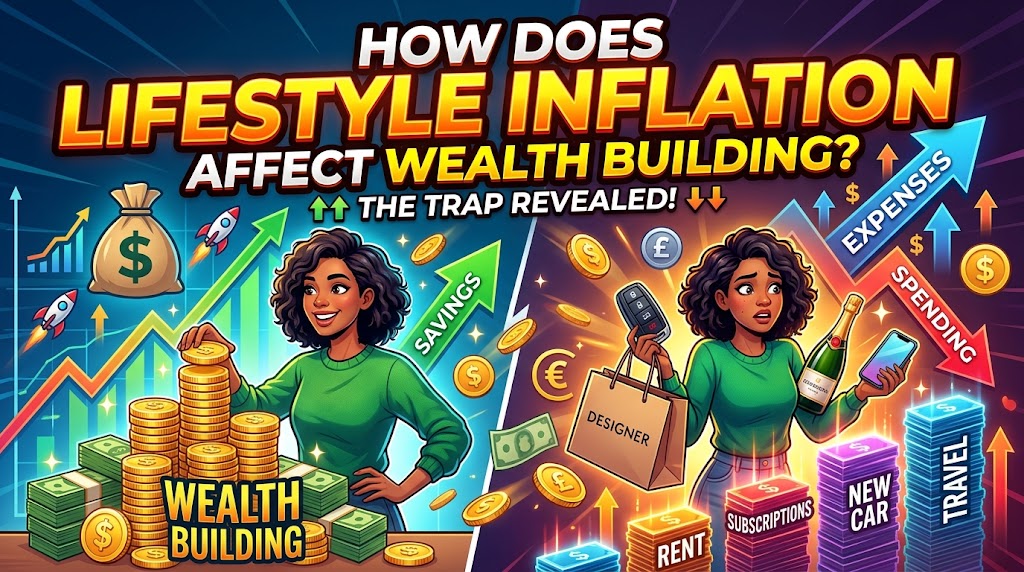
How does lifestyle inflation affect wealth building?
How does lifestyle inflation affect wealth building? This is a question that many people fail to ask until they find themselves earning significantly more money than they did a few years earlier yet somehow feeling no closer to financial freedom. It is one of the most overlooked obstacles to long term wealth creation because it often disguises itself as progress. A larger house, a newer car, more expensive gadgets, premium subscriptions, frequent dining out, luxury holidays, designer clothing and upgraded lifestyles can all feel like evidence of success. However, when spending rises at the same pace as income, wealth building can become much slower than expected.
Lifestyle inflation occurs when a person’s spending increases as their income increases. Instead of using additional earnings to save, invest or build assets, the extra money is absorbed into a more expensive way of living. While there is nothing inherently wrong with improving one’s quality of life, the problem emerges when every income increase leads to a proportional increase in expenses. Over time, this pattern can prevent individuals from accumulating meaningful wealth despite earning substantial amounts of money.
Many people imagine that earning more money automatically leads to becoming wealthier. In reality, income and wealth are not the same thing. Income is what you earn, while wealth is what you keep and grow. A person earning a modest salary who consistently saves and invests may build more wealth over time than someone earning several times as much but spending nearly everything they make. Understanding this distinction is essential when examining how does lifestyle inflation affect wealth building.
One reason lifestyle inflation is so powerful is that it happens gradually. Few people wake up one morning and decide to dramatically increase their spending. Instead, the changes occur little by little. A promotion at work leads to a nicer apartment. A salary increase justifies a newer car. A bonus encourages more expensive shopping habits. Each individual decision seems reasonable on its own. However, when combined over several years, these decisions can significantly increase monthly expenses.
Human psychology plays a major role in lifestyle inflation. People naturally adapt to improvements in their circumstances. What once felt luxurious eventually becomes normal. The excitement of a new purchase fades, and the upgraded lifestyle becomes the new baseline. This psychological process is often referred to as hedonic adaptation. Once people become accustomed to a higher standard of living, they no longer experience the same level of satisfaction from it. As a result, they seek further upgrades, creating a cycle of continually increasing expenses.
This cycle can have serious consequences for wealth building. Every pound, dollar or naira spent on maintaining a more expensive lifestyle is money that cannot be invested elsewhere. Wealth creation relies heavily on the ability to direct resources towards appreciating assets such as businesses, stocks, real estate or other investments. When increased income is consumed rather than invested, opportunities for long term growth are reduced.
The impact becomes even more significant when compound growth is considered. Money invested today has the potential to generate returns, which can then generate additional returns over time. This compounding effect is one of the most powerful forces in wealth building. However, money spent on lifestyle upgrades cannot compound. Once it is spent, the opportunity for future growth is largely lost.
Consider two individuals who both receive a substantial pay rise. The first person increases their spending to match their new income. They move into a more expensive home, purchase a luxury vehicle and expand their entertainment budget. The second person maintains much of their previous lifestyle while directing most of the additional income into investments. After several years, the difference in wealth between these two individuals can become enormous, even though they earned similar incomes during that period.
Another important aspect of how does lifestyle inflation affect wealth building is the way it increases financial dependence. A person with a low cost lifestyle requires less income to maintain their standard of living. This creates flexibility and financial resilience. In contrast, someone whose expenses continually expand may find themselves trapped by their own lifestyle. They need increasingly higher income simply to maintain their current way of living.
This dependence can create stress and limit personal freedom. Individuals may feel unable to change careers, start businesses, reduce working hours or pursue personal goals because their expenses require a high level of income. Instead of wealth creating freedom, lifestyle inflation can create a form of financial captivity where earning more money becomes necessary just to sustain existing obligations.
Social comparison also contributes significantly to lifestyle inflation. Humans are social creatures who often evaluate their success relative to others. As income increases, people may begin comparing themselves with a different social group. Instead of comparing themselves with those earning less, they compare themselves with colleagues, neighbours or friends who appear wealthier. This can create pressure to match spending habits even when doing so is financially unwise.
Social media has intensified this phenomenon. People are constantly exposed to carefully curated images of luxury lifestyles, expensive holidays, high end vehicles and extravagant purchases. These images can create unrealistic expectations about what success should look like. The desire to project success externally can encourage spending decisions that undermine long term wealth building goals.
Another reason lifestyle inflation affects wealth building is that many recurring expenses become permanent. A luxury purchase made once may have a limited impact on finances, but recurring expenses can create long term financial commitments. Moving into a more expensive home often leads to higher rent or mortgage payments, increased utility costs and greater maintenance expenses. Purchasing a luxury vehicle may result in higher insurance premiums, servicing costs and fuel expenses. These recurring costs continue long after the initial excitement has faded.
The danger lies in the fact that recurring expenses reduce future financial flexibility. Income may increase today, but economic circumstances can change unexpectedly. Job losses, business downturns, health issues or economic recessions can reduce income. Individuals who have allowed lifestyle inflation to dramatically increase their expenses may find it difficult to adapt during challenging periods.
Lifestyle inflation can also delay important financial milestones. People often dream of achieving financial independence, retiring early, purchasing investment properties or building substantial investment portfolios. However, these goals require consistent saving and investing over time. When lifestyle inflation consumes the majority of income increases, progress towards these objectives slows considerably.
One of the most surprising answers to the question of how does lifestyle inflation affect wealth building is that it can affect high earners just as much as low earners. In fact, some high income professionals struggle financially despite earning impressive salaries. Their spending rises in proportion to their income, leaving little room for meaningful wealth accumulation. Meanwhile, individuals earning far less may quietly build substantial wealth through disciplined financial habits and consistent investing.
The relationship between lifestyle inflation and debt is also worth examining. Increased spending often encourages increased borrowing. Individuals may take on larger mortgages, finance expensive vehicles or rely on credit to maintain an upgraded lifestyle. Debt obligations reduce cash flow and limit the amount of money available for investing. High levels of consumer debt can significantly slow the wealth building process.
Furthermore, lifestyle inflation can create the illusion of financial success without delivering actual financial security. A person may appear wealthy because of their possessions and lifestyle, yet have little savings, significant debt and minimal investments. True wealth is often less visible than many people realise. It consists of assets, investments and financial resources that provide long term security and opportunities rather than simply funding consumption.
This does not mean people should never enjoy the benefits of increased income. Financial success should improve quality of life. The key issue is balance. There is a significant difference between intentional spending and automatic lifestyle inflation. Intentional spending involves consciously choosing which areas of life deserve additional resources while continuing to prioritise saving and investing. Automatic lifestyle inflation occurs when spending increases simply because income has increased.
One effective strategy for avoiding excessive lifestyle inflation is to establish clear financial goals. When individuals know exactly what they are working towards, it becomes easier to resist unnecessary spending. Whether the goal is financial independence, early retirement, business ownership, property investment or long term security, having a compelling objective can help maintain financial discipline.
Another useful approach is to increase savings and investments automatically whenever income rises. Instead of allowing additional income to flow directly into spending, a portion can be redirected towards wealth building activities before it becomes part of everyday spending habits. This approach allows individuals to enjoy some lifestyle improvements while ensuring that a meaningful percentage of income increases contributes to long term financial growth.
Tracking expenses is another valuable practice. Many people underestimate the extent of their lifestyle inflation because spending increases gradually over time. Reviewing expenses regularly can reveal patterns that might otherwise go unnoticed. Small increases across multiple categories can collectively have a substantial impact on overall financial health.
It is also helpful to distinguish between genuine value and status driven spending. Some lifestyle upgrades genuinely improve quality of life and may be worth the additional cost. Others are primarily motivated by social expectations or the desire to impress others. Understanding the difference can lead to more intentional financial decisions.
Patience is another crucial factor in wealth building. Modern culture often encourages immediate gratification, but significant wealth is usually built through consistent actions repeated over many years. Delaying certain lifestyle upgrades can provide investments with more time to grow. The rewards of patience can be substantial when viewed over decades rather than months.
The question of how does lifestyle inflation affect wealth building ultimately comes down to opportunity cost. Every financial decision involves trade offs. Money spent today cannot simultaneously be invested for future growth. While occasional indulgences and lifestyle improvements are part of enjoying life, excessive lifestyle inflation can silently erode the financial advantages that come with increased income.
Many financially successful individuals understand this principle well. Despite having the ability to spend far more, they maintain a lifestyle that is significantly below what they can afford. This does not necessarily mean living cheaply or denying themselves enjoyment. Rather, it means making conscious decisions about spending and prioritising asset accumulation over constant consumption.
Financial freedom is often achieved not by earning extraordinary amounts of money but by creating a gap between income and expenses. The larger this gap becomes, the more resources are available for saving, investing and wealth creation. Lifestyle inflation narrows this gap, while disciplined financial habits expand it.
Perhaps the most important lesson is that wealth building is not determined solely by how much money enters your bank account. It is determined by what happens to that money after it arrives. Income creates opportunity, but financial behaviour determines outcomes. Two people with identical incomes can experience dramatically different financial futures based on how they manage lifestyle inflation.
In a world where consumer culture constantly encourages bigger, newer and more expensive purchases, resisting unnecessary lifestyle inflation requires awareness and discipline. Yet the rewards can be tremendous. Greater financial security, increased investment growth, reduced stress, more personal freedom and faster progress towards long term goals are all potential benefits of maintaining control over spending.
So, how does lifestyle inflation affect wealth building? It affects wealth building by reducing the amount of money available for saving and investing, limiting the power of compound growth, increasing financial dependence, delaying major financial goals and creating the illusion of prosperity without necessarily producing genuine wealth. Understanding this relationship is essential for anyone who wants to transform rising income into lasting financial success. The individuals who build substantial wealth are often not those who earn the most, but those who consistently ensure that their growing income serves their future rather than simply financing an ever expanding lifestyle.

EarnSmartOnline.com.ng is dedicated to helping readers make smarter financial decisions through practical guides on online income, personal finance, technology, digital business, and wealth creation. Our goal is to provide reliable, easy-to-understand, and actionable content that empowers individuals to earn smarter, build sustainable income streams and achieve long-term financial success.
Recommended: Start Earning Online
- Ultimate Affiliate Marketing Program — learn affiliate marketing with a done-for-you sales system ($15). Check it out
- The Newbie Affiliate Guide — the beginner-friendly starter guide (~$6.68). Check it out
- Easy Dollar Maker — earn in dollars uploading AI images and videos from your phone ($17). Check it out
Disclosure: These are affiliate links. If you buy through them, I may earn a commission at no extra cost to you.



