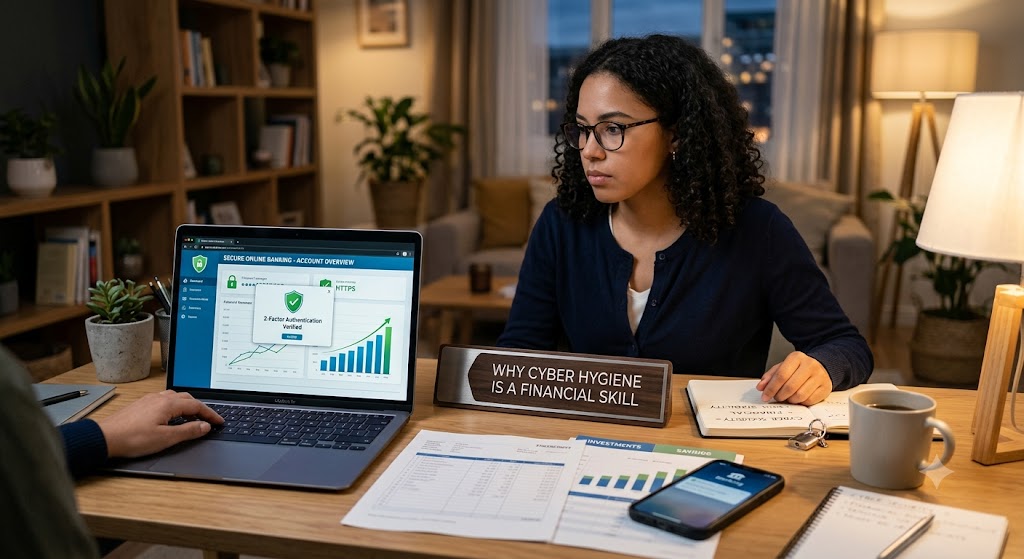
Why Cyber Hygiene Is a Financial Skill
Most people think of cyber hygiene as something only hackers, IT professionals or large corporations need to worry about. They believe cybersecurity begins and ends with antivirus software, complicated passwords, or expensive security systems. That assumption is becoming more dangerous every year. In today’s digital economy, cyber hygiene is no longer just a technology issue. It is a financial skill. The way you protect your devices, accounts, passwords, emails, and personal information can directly determine whether you build wealth or lose it overnight.
Money has changed. Decades ago, wealth was stored mostly in physical cash, paper documents, and bank passbooks locked inside safes. Today, salaries arrive electronically, businesses operate online, investments are managed through apps, and personal identities exist across dozens of digital platforms. A single smartphone can provide access to bank accounts, retirement funds, investment portfolios, cryptocurrency wallets, business finances, tax records, and confidential documents. This convenience has created tremendous opportunities, but it has also created enormous risks.
Financial literacy has traditionally focused on budgeting, saving, investing, reducing debt, and building assets. These remain essential skills. However, protecting those assets has become equally important. A person who saves diligently for twenty years can lose everything through a successful phishing attack, identity theft, SIM swap fraud, ransomware, or unauthorized access to financial accounts. Building wealth without practicing cyber hygiene is like constructing a beautiful house while leaving every door and window unlocked.
Cyber hygiene refers to the everyday habits and practices that keep your digital life secure. Just as personal hygiene prevents illness, cyber hygiene prevents digital infections, financial theft, and identity compromise. These habits include creating strong passwords, enabling multi-factor authentication, updating software regularly, recognizing phishing attempts, backing up important data, securing home networks, avoiding suspicious downloads, and monitoring financial accounts for unusual activity. Individually, these actions may seem small. Collectively, they form a protective shield around your financial life.
One reason cyber hygiene deserves recognition as a financial skill is because cybercriminals no longer focus exclusively on wealthy corporations. Ordinary individuals have become valuable targets because they often possess weaker security. Criminals understand that thousands of small thefts can produce enormous profits. They also know many people underestimate digital risks until it is too late. Every unsecured email account, every reused password, every outdated phone, and every careless click represents a potential financial opportunity for someone with malicious intent.
Passwords illustrate this problem perfectly. Many people reuse the same password across multiple websites because it feels convenient. Unfortunately, convenience often creates vulnerability. If one website suffers a data breach, criminals immediately test those same login credentials across banks, online stores, email accounts, investment platforms, and social media. One compromised password can unlock an entire digital life. Creating unique passwords for different accounts may require a little more effort, but that effort protects years of financial progress.
Email security is another overlooked financial issue. Email accounts function as the master key to countless online services. Most password reset links arrive through email. If criminals gain access to your email account, they may reset passwords for banking apps, online payment systems, investment platforms, and business services before you even realize what has happened. Protecting your primary email account with a strong password and multi-factor authentication should be considered one of the highest financial priorities in the digital age.
Phishing attacks continue to grow because they exploit human psychology rather than technological weaknesses. A phishing message may appear to come from your bank, your employer, a government agency, a delivery company, or even a trusted friend. The message creates urgency by claiming your account has been suspended, your payment has failed, or your package cannot be delivered. The goal is simple. Convince you to reveal passwords, banking details, or verification codes before you have time to think carefully.
Financial discipline requires resisting emotional spending. Cyber hygiene requires resisting emotional clicking. In both cases, patience protects money. Criminals succeed because people react emotionally instead of verifying information calmly. Taking thirty seconds to inspect an email address, verify a website, or contact an organization directly can prevent financial losses worth thousands of dollars.
Software updates often seem annoying. Many people postpone them for days, weeks, or even months. Yet software updates frequently contain security patches designed to close vulnerabilities already discovered by cybercriminals. Delaying updates gives attackers more time to exploit known weaknesses. Keeping operating systems, browsers, banking applications, and security software current is not merely a technical recommendation. It is an investment in protecting financial assets.
Multi-factor authentication has become one of the most effective security tools available to ordinary users. Even if someone steals your password, they still need a second verification factor before accessing your account. This additional layer dramatically reduces unauthorized access. The few extra seconds required during login are insignificant compared to the financial damage prevented by blocking account takeovers.
Public Wi-Fi networks present another hidden financial danger. Coffee shops, airports, hotels, shopping malls, and restaurants often provide free internet access. While convenient, unsecured public networks expose users to various risks. Sensitive financial activities such as online banking, investment trading, or shopping should ideally be avoided on public Wi-Fi unless protected through secure methods. Many people unknowingly expose personal information simply because they prioritize convenience over security.
Identity theft demonstrates why cyber hygiene extends far beyond stolen money. Criminals who obtain enough personal information may open credit accounts, apply for loans, commit tax fraud, or impersonate victims for months before detection. Repairing financial identity damage often requires hundreds of hours, legal documentation, communication with banks, and ongoing credit monitoring. The emotional stress can equal or exceed the financial loss itself.
Small business owners face even greater responsibility. Many entrepreneurs believe cybercriminals target only multinational corporations. In reality, smaller businesses often lack dedicated cybersecurity resources, making them attractive targets. A successful ransomware attack can freeze operations, destroy customer trust, interrupt revenue, and create legal liabilities. Customer databases, payment systems, invoices, payroll records, supplier information, and financial documents all require careful protection.
The rise of digital banking has simplified financial management while increasing personal responsibility. Traditional banking relied heavily on physical branches, paper documentation, and face-to-face verification. Modern banking emphasizes mobile applications, online transfers, digital wallets, and electronic authentication. Customers now control far more financial activities independently. This independence provides convenience but also demands stronger cyber hygiene habits.
Social engineering remains one of the most dangerous forms of cybercrime because it manipulates people instead of technology. Attackers may impersonate bank representatives, customer service agents, company executives, family members, or government officials. They create believable stories designed to trigger fear, excitement, sympathy, or urgency. Understanding these psychological tactics is as important as understanding interest rates or investment returns because emotional manipulation often precedes financial theft.
Children and teenagers also require cyber hygiene education. Many young people begin using smartphones, online gaming platforms, digital payment systems, and social media before understanding financial security. Teaching cyber hygiene alongside financial literacy prepares the next generation to manage money responsibly in an increasingly digital economy. Knowing how to recognize scams should become as fundamental as understanding saving or budgeting.
Remote work has expanded cybersecurity responsibilities into millions of homes worldwide. Employees now access sensitive company systems from personal devices and home internet connections. Weak passwords, unsecured routers, or infected personal computers can create financial consequences for both individuals and employers. Cyber hygiene has therefore become part of professional responsibility as well as personal financial management.
Cloud storage has transformed how people store important financial records, contracts, receipts, tax documents, insurance policies, and investment information. While cloud services offer convenience and backup protection, users remain responsible for securing access through strong authentication and account monitoring. Simply uploading files does not eliminate the need for security awareness.
Backing up important information deserves greater attention than it usually receives. Hardware failure, ransomware, accidental deletion, theft, or natural disasters can destroy valuable financial records within seconds. Maintaining secure backups ensures that financial history, business documents, family records, and legal information remain recoverable even after unexpected events. Recovery capability represents an often overlooked aspect of financial resilience.
Cryptocurrency has introduced entirely new dimensions of financial responsibility. Unlike traditional banking, many cryptocurrency systems place full security responsibility on users. Losing private keys, recovery phrases, or wallet credentials may result in permanent financial loss with little possibility of recovery. Cyber hygiene becomes absolutely essential because there is often no customer service department capable of reversing transactions or restoring access.
Online shopping continues growing every year. Consumers purchase everything from groceries to vehicles using digital platforms. Unfortunately, fake online stores, counterfeit websites, fraudulent payment portals, and deceptive advertisements also continue expanding. Practicing cyber hygiene includes verifying retailers, examining website security, avoiding suspicious offers, and using secure payment methods. Every purchase becomes both a financial transaction and a cybersecurity decision.
Artificial intelligence has introduced remarkable opportunities while also strengthening cybercriminal capabilities. Fraudulent emails now contain fewer grammatical errors. Voice cloning can imitate trusted individuals. Fake videos appear increasingly realistic. Scammers can personalize attacks using publicly available information from social media. These developments make critical thinking even more valuable. Cyber hygiene increasingly depends on questioning unexpected requests, verifying identities independently, and avoiding assumptions.
Social media deserves careful financial consideration because oversharing personal information creates opportunities for identity theft, password guessing, and targeted scams. Birthdays, family names, schools attended, favorite pets, travel plans, and workplace information often appear harmless individually. Combined together, however, they may provide criminals with enough information to bypass security questions or craft convincing fraud attempts.
Cyber hygiene also influences insurance costs. Many cyber insurance providers evaluate security practices before determining coverage eligibility or premiums. Businesses demonstrating stronger cybersecurity controls may qualify for better coverage terms, while poor security practices increase financial risk. As cyber insurance expands, good digital habits will likely produce measurable financial benefits.
One of the most overlooked principles of cyber hygiene is recognizing that every digital account represents an asset requiring management. Many people create accounts and never revisit them. Old email addresses, unused shopping websites, abandoned forums, and forgotten subscriptions accumulate over time. These neglected accounts often contain outdated passwords and personal information that can become security liabilities. Regularly reviewing, updating, or deleting unused accounts reduces unnecessary exposure.
Financial resilience increasingly depends on recovery planning as much as prevention. No security system guarantees absolute protection. Therefore, knowing how to respond after suspicious activity becomes equally important. Monitoring bank statements regularly, reviewing credit reports, enabling account notifications, reporting unauthorized transactions immediately, changing compromised passwords, and maintaining emergency contact information all contribute to minimizing financial damage.
Businesses increasingly evaluate cybersecurity when selecting partners, suppliers, and contractors. Companies with strong cyber hygiene practices appear more trustworthy because they reduce operational risk. In this way, cybersecurity contributes directly to reputation, customer confidence, and commercial opportunities. Good cyber hygiene therefore becomes a competitive advantage as well as a protective measure.
Many people believe cybercrime only affects large cities or technologically advanced countries. The reality is that internet connectivity has created global exposure. Anyone with a smartphone, internet connection, digital payment account, or email address can become a target regardless of geographic location. Cyber hygiene has become a universal financial requirement rather than a specialized technical concern.
Governments worldwide continue strengthening cybersecurity regulations because economic stability increasingly depends on digital trust. Banking systems, payment networks, healthcare providers, educational institutions, transportation systems, and energy infrastructure all rely on secure digital operations. Individual cyber hygiene contributes to broader economic resilience by reducing opportunities for widespread cybercrime.
One valuable mindset shift involves viewing cybersecurity expenses as investments instead of costs. Password managers, secure backup solutions, reliable antivirus software, hardware security devices, professional security training, and encrypted storage all require financial resources. However, these investments often cost far less than recovering from identity theft, business interruption, ransomware attacks, or stolen savings. Protecting wealth deserves the same seriousness as creating wealth.
Families should discuss cyber hygiene openly rather than assuming everyone understands digital risks. Elderly relatives often face sophisticated scams targeting retirement savings. Young adults may encounter investment fraud through social media. Children can accidentally expose family information while using online platforms. Shared awareness strengthens collective financial protection.
The future promises even greater integration between finance and technology. Digital currencies, biometric authentication, smart devices, artificial intelligence, connected vehicles, wearable technology, and internet-enabled household systems will continue expanding the digital landscape. Each innovation introduces new opportunities alongside new responsibilities. Cyber hygiene will become increasingly essential because financial activity will become even more digitally connected.
Ultimately, wealth creation and wealth protection are inseparable. A person who earns wisely, saves consistently, invests carefully, and manages debt responsibly has already mastered important financial principles. Yet all those achievements remain vulnerable without strong digital security habits. Cyber hygiene bridges the gap between earning money and keeping it.
The most successful financial plans are not built solely on increasing income or maximizing investment returns. They are built on preserving what has already been earned. Every strong password, every software update, every backup, every verified transaction, every cautious click, and every moment spent questioning suspicious activity contributes to long-term financial stability. These actions may seem ordinary, but their cumulative value is extraordinary.
Cyber hygiene is therefore far more than a technical checklist. It is a modern financial discipline. It protects income, safeguards assets, preserves identities, strengthens businesses, secures families, and supports long-term wealth creation. In a world where money increasingly exists in digital form, protecting your digital life is no different from protecting your financial future. Those who recognize cyber hygiene as a financial skill will not only reduce their exposure to cybercrime but also position themselves to build wealth with greater confidence, resilience, and peace of mind in an increasingly connected world.

EarnSmartOnline.com.ng is dedicated to helping readers make smarter financial decisions through practical guides on online income, personal finance, technology, digital business, and wealth creation. Our goal is to provide reliable, easy-to-understand, and actionable content that empowers individuals to earn smarter, build sustainable income streams and achieve long-term financial success.
Recommended: Start Earning Online
- Ultimate Affiliate Marketing Program — learn affiliate marketing with a done-for-you sales system ($15). Check it out
- The Newbie Affiliate Guide — the beginner-friendly starter guide (~$6.68). Check it out
- Easy Dollar Maker — earn in dollars uploading AI images and videos from your phone ($17). Check it out
Disclosure: These are affiliate links. If you buy through them, I may earn a commission at no extra cost to you.