
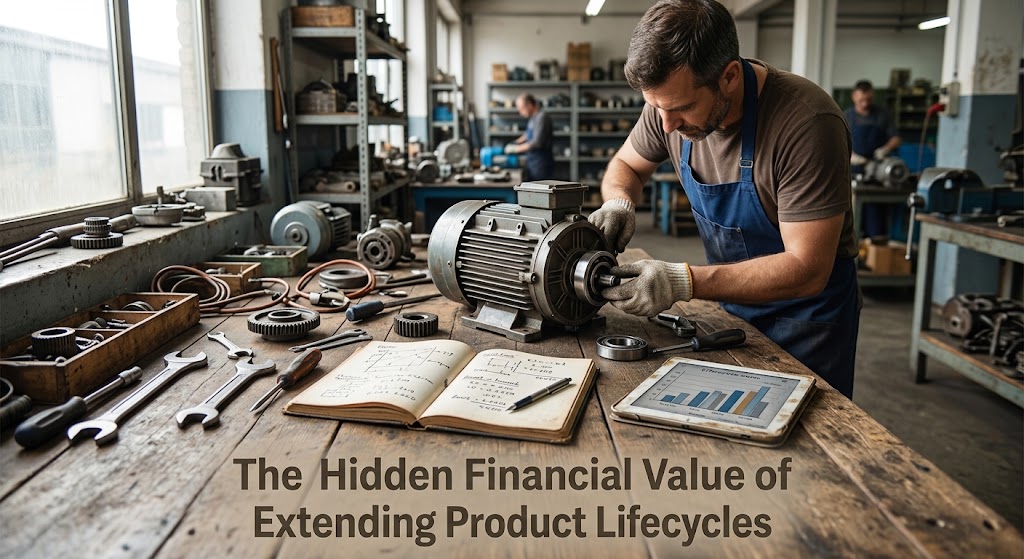
The Hidden Financial Value of Extending Product Lifecycles
Most people think saving money is all about earning more, cutting expenses, finding discounts, or investing wisely. While those strategies certainly matter, there is another powerful financial habit that quietly separates financially disciplined people from those who constantly struggle with money. It is the ability to extend the useful life of the things they already own. The hidden financial value of extending product lifecycles is one of the least discussed yet most practical wealth-building principles available to anyone, regardless of income level.
Modern society has conditioned people to believe that newer automatically means better. Every year, companies release updated smartphones, laptops, televisions, kitchen appliances, cars, furniture, clothing, and countless other products designed to tempt consumers into replacing perfectly functional items. Through aggressive advertising, influencer marketing, seasonal promotions, and carefully crafted psychological triggers, many people begin to feel that replacing products frequently is a normal part of life. What often goes unnoticed is the enormous financial cost of this habit over many years.
Extending product lifecycles simply means maximizing the useful lifespan of an item before replacing it. It involves proper maintenance, timely repairs, responsible usage, careful storage, and making replacement decisions based on actual need rather than emotional desire. Although this idea appears simple, its financial impact compounds over decades in remarkable ways.
Every product you own represents money that has already been spent. Once purchased, the goal should shift from acquiring something new to extracting the maximum possible value from that investment. Imagine buying a refrigerator that serves your family for twenty years instead of replacing it every ten years because of poor maintenance. Imagine keeping a reliable laptop for eight years instead of replacing it every three years simply because a newer model was released. Imagine wearing quality shoes for several years through proper care rather than buying multiple cheap replacements every few months. These decisions may seem small individually, but together they can preserve thousands or even millions of naira over a lifetime.
One of the biggest enemies of financial stability is unnecessary replacement. Many households unknowingly spend a significant portion of their income replacing items that could have lasted much longer with basic care. Sometimes a loose screw, a worn battery, a simple software update, or a minor repair costing only a fraction of the replacement price could restore an item to excellent working condition. Unfortunately, convenience often wins over careful thinking.
Consumer culture encourages instant replacement because replacement fuels business profits. Manufacturers naturally benefit when products are purchased more frequently. Retailers depend on continuous consumer demand. Marketing campaigns are carefully designed to create dissatisfaction with perfectly functional products. A phone that still performs well suddenly feels outdated because a newer camera has been introduced. A television that still displays excellent pictures suddenly appears obsolete because another model offers slightly brighter colours. A perfectly comfortable sofa begins to feel old simply because home decoration trends have changed.
None of these changes necessarily improve financial wellbeing. In fact, they often reduce it.
Financially successful individuals tend to evaluate purchases differently. Instead of asking whether something is new, they ask whether the existing product still performs its intended function. This subtle difference in thinking protects wealth. It shifts purchasing decisions from emotion to logic.
Every product has an economic lifespan and a psychological lifespan. The economic lifespan refers to how long the product can continue performing its intended purpose efficiently. The psychological lifespan refers to how long the owner remains emotionally satisfied with it. In today’s consumer economy, psychological lifespans have become much shorter than economic lifespans. Products that could easily last another five years are discarded because the owner’s perception changes long before the product actually wears out.
Understanding this distinction allows consumers to make far better financial decisions.
Another hidden financial benefit of extending product lifecycles is the reduction of depreciation losses. Many products lose significant value immediately after purchase. Cars are among the best-known examples, but electronics, appliances, furniture, and even luxury goods experience similar patterns. Every time you replace an item early, you voluntarily absorb additional depreciation costs that could have been avoided simply by using the product longer.
The mathematics behind this principle are surprisingly powerful. Consider two people who each buy the same laptop for one million naira. One replaces it after four years while the other maintains it carefully and uses it for eight years. Over sixteen years, the first individual purchases four laptops while the second purchases only two. Assuming prices remain relatively stable, the second individual saves two million naira without sacrificing much productivity. If those savings are invested wisely, the financial gap becomes even larger because of compound growth.
Maintenance is often misunderstood as an expense when it is actually an investment. Changing engine oil regularly, cleaning air conditioning filters, servicing generators, updating computer software, polishing leather shoes, washing cars properly, protecting furniture from moisture, and storing equipment correctly all extend useful life. The small cost of maintenance frequently prevents much larger replacement expenses later.
Many people avoid repairs because they focus only on the immediate cost rather than the future savings. A washing machine repair costing twenty thousand naira may seem expensive until compared with buying a new machine costing several hundred thousand naira. The true financial comparison is not between spending twenty thousand naira and spending nothing. It is between spending twenty thousand naira today or several hundred thousand naira tomorrow.
There is also a psychological benefit associated with extending product lifecycles. People who constantly chase newer possessions often experience temporary satisfaction followed by renewed dissatisfaction. This endless cycle creates financial stress because desires expand faster than income. Those who learn contentment with functional products experience greater financial peace because their purchasing decisions become intentional rather than emotional.
Financial freedom is rarely destroyed by one massive purchase alone. More often, it disappears through repeated unnecessary upgrades accumulated over many years. Every unnecessary replacement reduces savings potential, investment opportunities, emergency reserves, and future financial security.
Technology provides one of the clearest examples of this challenge. Smartphone manufacturers introduce new devices annually, often highlighting relatively minor improvements. Faster processors, slightly improved cameras, brighter displays, and additional software features generate excitement. While these improvements have value for certain professionals, many ordinary users primarily use their phones for messaging, calls, internet browsing, banking, navigation, photography, and entertainment. A well-maintained phone several years old can usually perform these tasks effectively.
Replacing such devices annually or every two years significantly increases lifetime ownership costs without delivering equivalent financial benefits. Extending usage by even two additional years dramatically reduces annual technology expenses.
Clothing offers another practical example. Fast fashion encourages frequent purchases of inexpensive garments that deteriorate quickly. Higher-quality clothing, combined with proper washing, careful storage, and timely repairs, often costs less over many years despite higher initial purchase prices. Buying fewer but better products frequently produces stronger long-term financial outcomes than repeatedly purchasing low-quality alternatives.
Home appliances also reward careful ownership. Refrigerators, freezers, microwaves, fans, air conditioners, generators, ovens, and washing machines all respond positively to preventive maintenance. Cleaning filters, removing dust, checking electrical connections, lubricating moving parts, and following manufacturer recommendations significantly extend useful life while improving energy efficiency.
Vehicle ownership demonstrates perhaps the largest financial impact of lifecycle extension. Regular servicing, careful driving habits, timely replacement of worn components, proper tyre inflation, and responsible storage reduce long-term ownership costs substantially. Neglecting basic maintenance often leads to expensive mechanical failures that could have been prevented.
Extending product lifecycles also improves financial resilience during economic uncertainty. Inflation continuously increases replacement costs. A product that costs five hundred thousand naira today may cost seven hundred thousand or even one million naira several years later. Every additional year extracted from an existing product delays exposure to rising prices. This hidden protection against inflation becomes increasingly valuable during periods of economic instability.
There is another overlooked benefit. Longer product lifecycles reduce financial pressure to generate additional income merely to support replacement spending. Instead of constantly working harder to fund unnecessary upgrades, individuals gain greater flexibility to save, invest, learn new skills, or spend time with family. Wealth is not measured solely by income but also by how efficiently income is preserved.
Many financially disciplined families pass down this mindset across generations. Children raised in homes where products are maintained rather than casually discarded often develop stronger financial habits as adults. They learn respect for resources, delayed gratification, responsible ownership, and appreciation for quality. These lessons frequently influence spending behaviour long after childhood.
Businesses understand this principle exceptionally well. Successful companies invest heavily in maintaining machinery, vehicles, computer systems, buildings, and production equipment because replacing major assets prematurely destroys profitability. Preventive maintenance programmes exist precisely because extending asset lifecycles increases financial performance. Individual households can benefit from adopting similar thinking.
Environmental sustainability is another indirect financial advantage. Although the primary goal may be personal financial improvement, extending product lifecycles naturally reduces waste generation, manufacturing demand, transportation costs, and resource consumption. Sustainable behaviour often aligns remarkably well with financially responsible behaviour.
Consumers should also become skilled at distinguishing genuine innovation from marketing-driven upgrades. Some technological improvements truly justify replacement because they deliver significant efficiency gains, lower operating costs, improved safety, or essential new capabilities. Others offer only marginal improvements that provide little practical value. Learning this distinction protects consumers from unnecessary spending.
Planning replacement schedules instead of making impulsive purchases further strengthens financial health. Knowing the approximate expected lifespan of major household items allows families to budget gradually rather than relying on expensive loans or emergency borrowing when replacements eventually become necessary.
One overlooked strategy involves buying products specifically designed for longevity. Although durable products sometimes require higher initial investment, their annual ownership cost is frequently much lower. A quality office chair lasting fifteen years often proves cheaper than purchasing three low-quality chairs during the same period. The same principle applies to tools, furniture, cookware, footwear, luggage, mattresses, bicycles, and numerous other products.
Repair skills themselves possess financial value. Learning simple maintenance tasks, replacing basic components, cleaning equipment properly, updating software, sewing loose clothing, tightening fittings, or changing filters reduces dependence on professional services while extending product life. Even modest practical knowledge can generate substantial long-term savings.
The emotional relationship people develop with consumption deserves careful examination. Many purchases satisfy emotional needs rather than practical ones. Boredom, social comparison, stress, insecurity, advertising exposure, and peer influence frequently drive replacement decisions. Recognising these emotional triggers helps consumers regain control over spending habits.
Minimalism has gained popularity partly because it encourages extracting greater value from existing possessions instead of continuously acquiring more. Although minimalism is often associated with lifestyle design, it also represents sound financial management. Fewer possessions generally receive better care, require less maintenance, occupy less storage space, and reduce replacement frequency.
Financial independence depends not only on increasing income but equally on slowing unnecessary outflows. Extending product lifecycles accomplishes exactly that. Every month without replacing a functioning product preserves cash that can strengthen emergency savings, reduce debt, fund investments, support education, or create new business opportunities.
Many people underestimate how much wealth disappears through convenience. Throwing away rather than repairing, replacing rather than maintaining, upgrading rather than evaluating, and consuming rather than preserving all create invisible financial leakage. Because each individual decision appears relatively small, the cumulative lifetime cost remains hidden.
The principle becomes even more powerful when combined with intentional purchasing. Buying products with proven durability, available spare parts, reliable warranties, strong repair networks, and positive long-term performance records creates even longer ownership cycles. Research before purchasing frequently produces greater financial returns than searching only for the lowest price.
Delayed replacement also improves decision quality. Consumers who avoid impulse upgrades have more time to evaluate alternatives, compare prices, wait for discounts, and choose products carefully when replacement genuinely becomes necessary. Urgency often leads to expensive mistakes, while patience encourages smarter purchasing decisions.
There is wisdom in remembering that ownership does not end after purchase. Purchase marks the beginning of a financial relationship between the owner and the product. Every cleaning session, maintenance routine, careful usage habit, protective storage decision, and timely repair contributes to extracting greater lifetime value from the original investment.
The hidden financial value of extending product lifecycles ultimately reflects a broader philosophy of stewardship. Responsible ownership recognises that resources are limited, money represents time and effort, and every unnecessary replacement carries opportunity costs extending far beyond the purchase itself. Money saved through longer product lifecycles can finance education, retirement, business ventures, property ownership, charitable giving, family security, or personal freedom.
True financial wisdom is rarely found in dramatic gestures. It usually appears through countless ordinary decisions repeated consistently over many years. Choosing to maintain rather than neglect, repair rather than replace, preserve rather than waste, and maximise value rather than chase novelty quietly transforms financial outcomes. The wealthiest habit is not always earning more. Sometimes it is simply learning how to make what you already own serve you for as long as possible.
In a world constantly encouraging faster consumption, extending product lifecycles is a quiet act of financial intelligence. It protects purchasing power, reduces wasteful spending, improves long-term budgeting, strengthens financial resilience, supports wealth accumulation, and cultivates a mindset that values stewardship over impulse. Those who master this overlooked discipline often discover that lasting financial success depends less on acquiring more possessions and more on extracting maximum value from the possessions they already have.

EarnSmartOnline.com.ng is dedicated to helping readers make smarter financial decisions through practical guides on online income, personal finance, technology, digital business, and wealth creation. Our goal is to provide reliable, easy-to-understand, and actionable content that empowers individuals to earn smarter, build sustainable income streams and achieve long-term financial success.
Recommended: Start Earning Online
- Ultimate Affiliate Marketing Program — learn affiliate marketing with a done-for-you sales system ($15). Check it out
- The Newbie Affiliate Guide — the beginner-friendly starter guide (~$6.68). Check it out
- Easy Dollar Maker — earn in dollars uploading AI images and videos from your phone ($17). Check it out
Disclosure: These are affiliate links. If you buy through them, I may earn a commission at no extra cost to you.



