
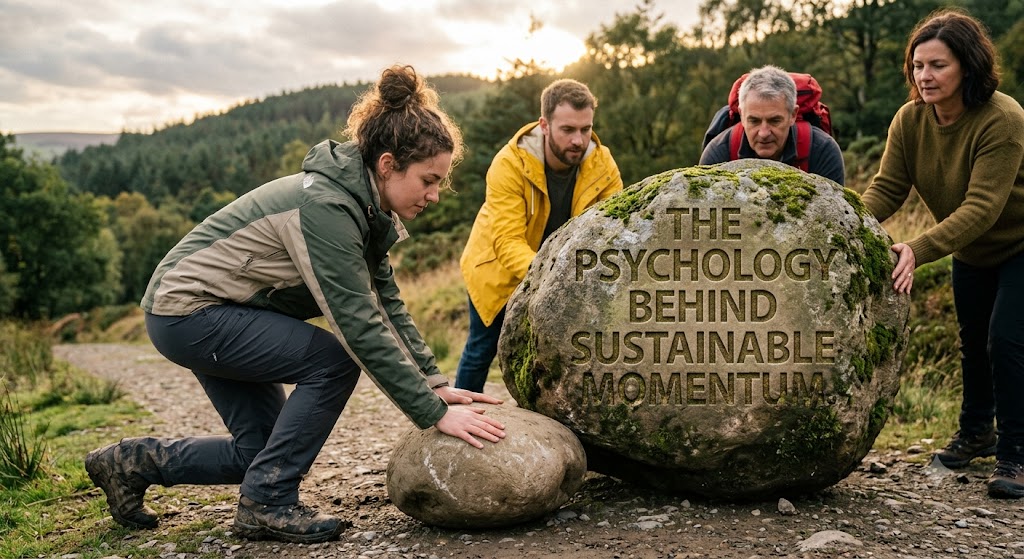
The Psychology Behind Sustainable Momentum
The psychology behind sustainable momentum is one of the most overlooked factors in achieving long-term success. Many people begin new goals with excitement, determination, and a surge of motivation, only to lose interest after a few days or weeks. This pattern is common in business, education, fitness, career development, and personal growth. While motivation often receives the spotlight, sustainable momentum is what separates people who achieve lasting success from those who repeatedly start over. Understanding the psychology behind sustainable momentum can help anyone build consistent progress regardless of changing emotions or external circumstances.
Sustainable momentum is not about working harder every single day. Instead, it is about creating a mental and behavioral system that encourages continuous progress over a long period. Unlike temporary motivation, which rises and falls based on emotions, sustainable momentum depends on habits, identity, consistency, and realistic expectations. People who understand this principle are less likely to quit when challenges arise because they are driven by established routines rather than fleeting feelings.
One of the biggest psychological barriers to sustainable momentum is the expectation of immediate results. Human beings naturally seek quick rewards because the brain responds positively to instant gratification. This explains why many people abandon worthwhile goals after failing to see rapid improvement. They mistake slow progress for failure when, in reality, meaningful achievements often require months or even years of consistent effort. The mind becomes discouraged when expectations are unrealistic, making it difficult to maintain momentum.
Delayed gratification plays a powerful role in maintaining sustainable momentum. People who learn to postpone immediate pleasure for greater future rewards often outperform those who constantly seek instant satisfaction. Every small action completed today contributes to larger outcomes tomorrow. Although these actions may seem insignificant individually, they accumulate over time and eventually produce remarkable results. This understanding reduces frustration and strengthens long-term commitment.
Identity also influences sustainable momentum more than most people realize. Many individuals focus only on achieving a particular outcome rather than becoming the type of person capable of producing that outcome repeatedly. Someone who says, “I want to become financially successful,” may struggle if their daily identity remains unchanged. However, someone who begins to see themselves as a disciplined learner, a responsible investor, or a consistent entrepreneur naturally develops behaviors that support financial growth. Lasting momentum begins when actions become part of personal identity rather than temporary obligations.
Habits provide another psychological foundation for sustainable momentum. Motivation requires emotional energy, but habits require much less mental effort because they become automatic through repetition. Once a positive habit is established, the brain performs it with minimal resistance. This explains why highly productive individuals often rely on routines instead of waiting until they feel inspired. Sustainable momentum becomes easier when desirable behaviors are repeated consistently until they become part of everyday life.
Decision fatigue is another hidden enemy of consistency. Every decision consumes mental energy. When people constantly decide whether or not to exercise, study, save money, or work on their goals, they gradually exhaust their willpower. Successful individuals reduce unnecessary decisions by creating structured routines. They schedule important activities at fixed times, prepare in advance, and eliminate distractions. These systems reduce mental resistance and allow momentum to continue with less psychological effort.
Self-efficacy also contributes significantly to sustainable momentum. Self-efficacy refers to a person’s belief in their ability to succeed. Individuals who believe they can overcome challenges are more likely to persist through setbacks. This confidence does not develop from positive thinking alone. It grows through repeated experiences of solving problems, overcoming obstacles, and achieving small victories. Every completed task reinforces the belief that future challenges can also be handled successfully.
Small wins create powerful psychological reinforcement. Many people underestimate the importance of completing simple tasks because they focus only on major achievements. However, every completed action releases a sense of accomplishment that encourages further effort. Completing one productive task often leads naturally to another. Over time, these small victories build confidence and strengthen momentum. Waiting for massive breakthroughs can actually delay progress because the brain receives fewer opportunities for positive reinforcement.
Consistency is often misunderstood as perfection. In reality, sustainable momentum allows room for mistakes, setbacks, and temporary failures. The people who maintain progress over many years are not those who avoid failure completely. Instead, they recover quickly whenever they fall behind. Missing one workout, one study session, or one productive day does not destroy momentum. Repeatedly giving up after small failures does. The ability to resume quickly after interruptions is one of the strongest indicators of long-term success.
Environmental design also affects human psychology more than many people recognize. People often rely entirely on self-control while ignoring the influence of their surroundings. A cluttered workspace encourages distraction. Constant smartphone notifications interrupt concentration. Negative social circles reduce motivation. By creating environments that support productive behavior, individuals reduce psychological resistance and make consistency much easier to maintain. Successful people frequently design their surroundings to encourage good decisions automatically.
Emotional regulation is another essential component of sustainable momentum. Life naturally includes disappointment, uncertainty, criticism, and unexpected setbacks. People who depend entirely on positive emotions struggle whenever circumstances become difficult. Emotional maturity allows individuals to continue making progress regardless of temporary feelings. They understand that emotions are temporary while meaningful goals require long-term commitment. This emotional stability creates resilience that supports continuous improvement.
Purpose provides another powerful psychological advantage. Goals connected to meaningful personal values are far easier to sustain than goals based solely on external rewards. Someone pursuing wealth only to impress others may eventually lose motivation. However, someone building wealth to create security for their family or gain personal freedom often demonstrates greater persistence. Purpose transforms routine work into meaningful progress, making consistency easier even during difficult periods.
The psychology behind sustainable momentum also involves accepting boredom. Modern society encourages constant excitement, novelty, and entertainment. Unfortunately, meaningful progress usually requires repeating ordinary activities consistently. Studying, practicing, saving money, writing, exercising, and learning rarely feel exciting every single day. People who understand this reality stop expecting constant excitement. They learn to appreciate discipline instead of chasing motivation. This mindset allows progress to continue even when tasks become repetitive.
Comparison with others often destroys sustainable momentum. Social media presents carefully selected highlights that create unrealistic expectations. Constant comparison produces frustration, discouragement, and self-doubt. Instead of measuring progress against others, successful individuals compare themselves with their previous performance. This internal measurement creates healthier motivation because improvement becomes the primary objective rather than competition.
Patience remains one of the most valuable psychological assets for sustaining momentum. Every worthwhile achievement experiences periods where visible progress appears slow. During these phases, many people mistakenly conclude that their efforts are ineffective. In reality, progress often accumulates beneath the surface before becoming obvious. Businesses experience slow growth before expansion. Investments compound gradually before accelerating. Skills improve quietly before becoming noticeable. Patience allows people to remain committed during these invisible stages of development.
Reflection strengthens sustainable momentum by allowing continuous improvement. Instead of blindly repeating the same behaviors, reflective individuals regularly evaluate what works and what does not. They identify obstacles, adjust strategies, and celebrate improvements without becoming complacent. Reflection transforms experience into wisdom and prevents repeated mistakes. It also renews motivation by reminding individuals how far they have already progressed.
Supportive relationships significantly influence psychological resilience. People surrounded by encouraging mentors, positive friends, and responsible colleagues often maintain momentum longer than those facing challenges alone. Healthy relationships provide accountability, constructive feedback, emotional encouragement, and fresh perspectives during difficult moments. Human beings are naturally social creatures, and positive environments strengthen long-term commitment.
Another overlooked factor is managing expectations realistically. Many people underestimate how difficult worthwhile goals will be while overestimating how quickly results should appear. When reality fails to match these expectations, disappointment sets in. Sustainable momentum becomes much easier when individuals accept that obstacles, delays, mistakes, and temporary failures are normal parts of every meaningful journey. Realistic expectations reduce emotional frustration and increase perseverance.
Ultimately, the psychology behind sustainable momentum teaches that extraordinary success rarely depends on extraordinary effort performed once. Instead, it grows from ordinary actions performed consistently over long periods. Every habit, every decision, every small improvement, and every recovery from failure contributes to future achievements. Momentum becomes self-reinforcing because consistent action builds confidence, confidence encourages further action, and repeated progress strengthens identity.
The people who achieve remarkable success are rarely those with endless motivation. They are the individuals who build systems that keep them moving when motivation disappears. They understand that sustainable momentum is not fueled by emotion but by psychology, habits, discipline, purpose, and patience. When these elements work together, progress becomes steady, resilience increases, and long-term success becomes far more achievable. Anyone willing to understand and apply these psychological principles can build momentum that lasts not just for weeks or months, but for an entire lifetime.

EarnSmartOnline.com.ng is dedicated to helping readers make smarter financial decisions through practical guides on online income, personal finance, technology, digital business, and wealth creation. Our goal is to provide reliable, easy-to-understand, and actionable content that empowers individuals to earn smarter, build sustainable income streams and achieve long-term financial success.
Recommended: Start Earning Online
- Ultimate Affiliate Marketing Program — learn affiliate marketing with a done-for-you sales system ($15). Check it out
- The Newbie Affiliate Guide — the beginner-friendly starter guide (~$6.68). Check it out
- Easy Dollar Maker — earn in dollars uploading AI images and videos from your phone ($17). Check it out
Disclosure: These are affiliate links. If you buy through them, I may earn a commission at no extra cost to you.



