
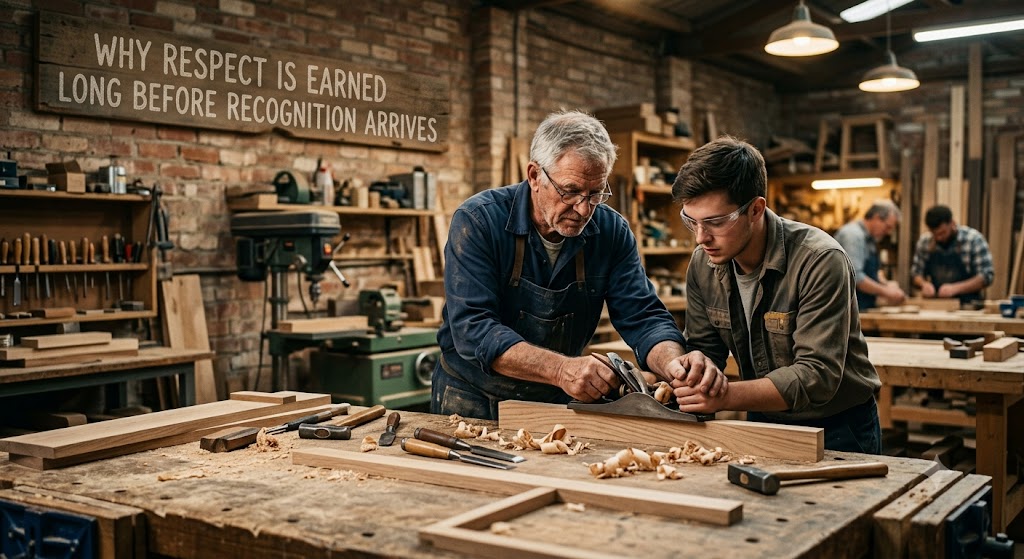
Why Respect Is Earned Long Before Recognition Arrives
Respect is one of the few things in life that cannot be demanded, purchased, borrowed, inherited, or manufactured through appearances. It is built quietly through consistent actions, honest character, dependable behaviour, and the willingness to do what is right even when nobody is watching. Recognition, on the other hand, is often public. It comes with applause, promotions, awards, praise, followers, or influence. The mistake many people make is believing that recognition creates respect, when in reality genuine respect is usually earned long before recognition ever arrives. The people who are eventually admired by others often spent years building a reputation that very few people noticed. Long before the spotlight found them, they had already become the kind of individuals worthy of trust and admiration.
This truth explains why some people become successful yet never truly earn the respect of those around them, while others remain unknown for years but command deep admiration from everyone who knows them personally. Respect has little to do with titles and everything to do with character. It is not measured by the number of people who know your name but by the confidence people have in your integrity when your name is mentioned.
Many people spend enormous amounts of time chasing visibility. They want their work to be seen immediately. They want recognition for every effort. They expect quick appreciation after every sacrifice. Social media has only intensified this mindset. Every achievement is expected to receive instant validation. Every opinion seeks likes. Every project hopes for immediate attention. While there is nothing wrong with wanting appreciation, there is a danger in allowing recognition to become the primary motivation behind your efforts. When recognition becomes the goal, people often begin compromising the very qualities that earn lasting respect.
Respect grows in silence. It develops through countless ordinary moments that rarely receive applause. It is built when someone keeps promises that nobody else remembers. It grows when an employee continues producing quality work even when the manager is absent. It develops when a business owner treats customers fairly despite having opportunities to exploit them. It strengthens when a student studies diligently without cheating even when shortcuts seem easier. Every unseen decision becomes another brick in the foundation of a respected character.
History repeatedly demonstrates that recognition usually arrives after long seasons of unnoticed effort. Inventors spend years refining ideas before receiving credit. Writers produce countless drafts before publishing successful books. Athletes train relentlessly before standing on podiums. Entrepreneurs face repeated failures before building admired companies. Musicians perform before tiny audiences long before selling out stadiums. In every field, respect begins accumulating through discipline before recognition catches up.
The reason respect comes first is because it is rooted in habits rather than outcomes. Outcomes can change quickly. Someone can become famous overnight. Wealth can appear suddenly. A viral video can make an unknown individual instantly recognisable. However, respect cannot be accelerated in the same way because it depends on observing consistency over time. People trust patterns more than moments. One impressive achievement may earn attention, but repeated demonstrations of honesty, competence, humility, and responsibility earn lasting respect.
Many people confuse popularity with respect. These are not the same thing. Popularity often depends on visibility, trends, entertainment, or public opinion. Respect depends on reliability, wisdom, fairness, and integrity. Popularity can disappear as quickly as it appears because public attention constantly shifts. Respect, however, often remains even when circumstances change because it is attached to character instead of temporary success.
Consider the people you admire most deeply in your own life. Chances are you respect them not because they became famous but because they consistently displayed admirable qualities. Perhaps it was a teacher who genuinely cared about students beyond the classroom. Maybe it was a parent who sacrificed personal comfort for the wellbeing of the family. It could have been a colleague who always accepted responsibility instead of making excuses. These individuals may never become household names, yet they command immense respect because of the lives they consistently lived.
Respect also grows through adversity. Anyone can appear impressive when life is easy. Character becomes visible when circumstances become difficult. How someone behaves during disappointment, failure, criticism, financial hardship, or personal loss reveals far more than how they behave during success. This is why many respected individuals earned admiration during seasons when they possessed very little recognition. Their resilience, honesty, and grace under pressure quietly built reputations that later opened unexpected opportunities.
Recognition often follows trust. Employers promote people they trust. Customers recommend businesses they trust. Communities support leaders they trust. Investors back entrepreneurs they trust. Trust itself is built upon repeated demonstrations of reliability. Therefore, the path towards meaningful recognition usually passes through the much longer journey of earning respect.
Patience becomes essential because respect cannot be rushed. Many people become discouraged because their efforts seem invisible. They compare themselves with others who appear more successful or more celebrated. Yet comparisons ignore the hidden years that most respected individuals experienced before recognition became public. Every successful story contains chapters that nobody saw. Those invisible chapters often matter more than the visible ones because they shaped the character capable of handling future recognition responsibly.
Recognition without respect creates fragile success. People may applaud achievements while privately questioning integrity. This creates unstable influence because admiration based only on accomplishments eventually weakens when challenges arise. Respect, however, provides stability because people continue trusting individuals whose character has already been proven. This explains why some leaders survive difficult seasons while others quickly lose credibility. Character sustains influence longer than popularity ever can.
Humility plays an enormous role in earning respect. Truly respected individuals rarely spend time reminding others of their accomplishments. They allow their work and conduct to speak for themselves. Humility demonstrates confidence because it removes the need for constant validation. Ironically, people who constantly seek attention often receive less respect, while those who quietly focus on excellence naturally attract admiration over time.
Integrity remains one of the strongest foundations of respect. Integrity means doing the right thing regardless of convenience or public visibility. It means refusing dishonest shortcuts even when they promise immediate rewards. It means keeping commitments despite inconvenience. Integrity often appears costly in the short term because dishonest alternatives may seem more profitable or more efficient. However, integrity consistently produces long-term trust, and trust eventually becomes one of life’s greatest assets.
Competence also contributes significantly to respect. Good intentions matter, but they must be supported by genuine ability. People respect individuals who continually improve their skills, honour their responsibilities, and strive for excellence. Competence reflects dedication rather than perfection. Nobody expects flawless performance, but consistent effort towards improvement inspires confidence. Every skill developed behind closed doors becomes visible when opportunities eventually arise.
There is also tremendous value in respecting others before expecting respect yourself. People who genuinely honour others regardless of status usually build stronger relationships than those who only respect influential individuals. Treating cleaners, security staff, receptionists, junior employees, customers, strangers, and executives with equal dignity reveals authentic character. Respect given freely often returns unexpectedly because people remember how they were treated long after conversations end.
Modern culture frequently celebrates instant success while overlooking patient preparation. Social media timelines display achievements without revealing the years of discipline behind them. This creates unrealistic expectations. Young professionals may assume they deserve leadership after minimal experience. New entrepreneurs may expect immediate profitability. Content creators may become frustrated when audiences grow slowly. Yet sustainable respect develops gradually because lasting credibility requires time.
Failure itself often becomes an important teacher in earning respect. Individuals who learn from mistakes rather than denying them demonstrate maturity. Accepting responsibility instead of blaming circumstances reflects emotional strength. People naturally trust those who admit weaknesses honestly because transparency builds credibility. Nobody respects perfection that appears artificial, but many respect authenticity supported by continual growth.
Another overlooked aspect of respect is consistency. Extraordinary actions performed occasionally cannot compensate for unreliable behaviour most of the time. People evaluate consistency because it predicts future behaviour. Showing kindness only when convenient does not build trust. Being dependable only during easy seasons creates uncertainty. Consistency assures others that your values remain stable regardless of changing situations.
Respect also grows through service. The individuals remembered most positively often focused on creating value rather than seeking admiration. They solved problems, encouraged others, mentored beginners, shared knowledge, and contributed positively without demanding immediate rewards. Service shifts attention away from personal recognition towards meaningful impact. Ironically, those who concentrate on serving others often receive more recognition than those primarily seeking it.
Emotional maturity further strengthens respect. Life inevitably brings disagreements, criticism, misunderstandings, and disappointment. Responding with patience instead of uncontrolled anger demonstrates strength. Listening before reacting reflects wisdom. Remaining calm under pressure inspires confidence. Emotional discipline communicates that someone can be trusted even during uncertainty.
One reason recognition arrives later than respect is because society needs time to observe patterns. A single achievement proves ability in one moment. Years of consistent integrity prove reliability across changing circumstances. Organisations, communities, and relationships all value predictability because dependable individuals reduce uncertainty. This is why promotions, partnerships, leadership positions, and significant opportunities often go to people whose reputations have already been quietly established.
Young people sometimes underestimate the power of reputation because its rewards are not immediately visible. Every interaction contributes to the story people gradually tell about your character. Being punctual communicates respect for other people’s time. Meeting deadlines demonstrates responsibility. Speaking honestly builds credibility. Helping others without expecting rewards reveals generosity. These seemingly ordinary actions accumulate into a powerful reputation that opens doors long before qualifications alone can.
Recognition should never become the measure of personal worth. Many remarkable individuals never receive widespread public acknowledgement despite making profound differences within families, workplaces, schools, neighbourhoods, and communities. A parent raising responsible children, a teacher inspiring lifelong curiosity, a nurse offering compassionate care, or a volunteer serving quietly may never become famous, yet their influence extends through countless lives. Respect often reaches deeper than recognition because it transforms people rather than merely attracting attention.
The workplace provides countless examples of this principle. Two employees may possess similar technical abilities, yet one consistently demonstrates honesty, teamwork, accountability, and professionalism. Managers notice these qualities even if promotions take time. Colleagues begin trusting that person with important responsibilities. Clients become comfortable relying on them. By the time formal recognition eventually arrives, respect has already existed for years.
Entrepreneurship follows the same pattern. Businesses earn loyal customers through consistent quality, ethical practices, reliable service, and genuine care rather than clever marketing alone. Advertising may create awareness, but respect keeps customers returning. A respected brand survives competition because trust becomes difficult for competitors to replicate quickly.
Leadership especially depends upon respect preceding recognition. Anyone can receive a leadership title. Not everyone becomes a respected leader. Titles provide authority, but character earns influence. Employees willingly follow leaders they trust because respect creates commitment beyond formal obligation. Without respect, leadership relies primarily upon position and control. With respect, leadership inspires voluntary cooperation and loyalty.
Families also understand this principle deeply. Children may obey parents because of authority while young, but lasting influence depends upon earned respect. Parents who model honesty, kindness, responsibility, and consistency shape values that continue influencing children into adulthood. Recognition from society becomes secondary compared to the respect cultivated within everyday relationships.
One of the greatest tests of character is continuing to pursue excellence when nobody appears to notice. It is easy to become discouraged when appreciation feels absent. However, unseen effort is never truly wasted. Every skill improved, every promise honoured, every obstacle overcome, and every act of integrity strengthens the person you are becoming. Even if recognition takes years to arrive, respect is already forming within those who consistently observe your conduct.
Delayed recognition often protects people from the dangers of premature success. Recognition increases responsibility. Public influence magnifies both strengths and weaknesses. Individuals who first develop humility, discipline, resilience, and integrity are better prepared to handle opportunities wisely. Without these qualities, recognition may expose character flaws rather than achievements.
The digital age tempts many individuals to build appearances before building substance. Carefully edited profiles may project success that reality cannot sustain. Yet appearances eventually collide with truth. Genuine respect survives scrutiny because it rests upon authentic character instead of carefully managed perception. While appearances may attract attention initially, substance determines whether admiration endures.
Mentorship offers another powerful example. Experienced mentors rarely choose individuals based solely upon talent. They often invest in those who demonstrate reliability, curiosity, teachability, humility, and perseverance. Technical skills can usually be taught more easily than character. Respect therefore becomes a valuable currency that creates opportunities invisible to those focused only on recognition.
It is equally important to understand that respect does not require universal approval. Even individuals of exceptional character will encounter criticism and disagreement. Attempting to satisfy everyone often leads people away from integrity because values become compromised for acceptance. Respect grows from remaining faithful to sound principles rather than chasing widespread approval. Recognition may fluctuate with public opinion, but character should remain steady.
There are moments when it feels unfair watching less deserving people receive attention while hardworking individuals remain unnoticed. Such situations can easily create bitterness. Yet bitterness damages character far more than delayed recognition ever could. Continuing to work faithfully despite temporary injustice demonstrates maturity. Over time, consistent excellence often outlasts temporary popularity.
The marketplace increasingly rewards trust because information spreads rapidly. Businesses known for honesty develop loyal communities. Professionals recognised for reliability receive referrals. Content creators who consistently provide value build devoted audiences. Employers retain dependable employees. Trust repeatedly translates into opportunities because respect encourages long-term relationships rather than temporary transactions.
Self respect should also be considered. People who consistently honour their own values develop inner confidence independent of public applause. They know they acted honestly, fulfilled responsibilities, and treated others fairly. This internal confidence becomes remarkably stable because it does not depend upon external validation. Recognition becomes enjoyable but no longer necessary for maintaining personal identity.
Every meaningful achievement eventually rests upon invisible disciplines. Successful authors first respected the writing process before readers recognised their books. Great athletes respected training before fans celebrated victories. Exceptional musicians respected practice before audiences applauded performances. Trusted business leaders respected ethical principles before profits reflected their decisions. Every lasting accomplishment began with quiet commitment rather than public celebration.
Respect also attracts the right kind of relationships. Genuine friendships, valuable partnerships, loyal customers, trustworthy employees, and wise mentors are naturally drawn towards individuals whose character has been consistently demonstrated. Recognition may attract attention from many people, but respect attracts the people who genuinely matter for long-term success.
One encouraging reality is that everyone has the opportunity to begin earning respect today regardless of current circumstances. Wealth is not required. Fame is unnecessary. Expensive education is not essential. Respect begins with daily choices. It starts by keeping your word. It grows through honesty. It strengthens with responsibility. It deepens through kindness. It expands through competence. It matures through perseverance. Every ordinary day presents opportunities to strengthen these qualities.
When recognition finally arrives after years of faithful effort, it carries a different meaning. Instead of becoming the source of identity, it becomes confirmation of a reputation already established. Others are simply discovering publicly what character has quietly demonstrated for years. Recognition then becomes sustainable because it rests upon foundations capable of supporting it.
Life has a remarkable way of rewarding those who focus more on becoming than appearing. Becoming honest matters more than appearing honest. Becoming dependable matters more than appearing successful. Becoming disciplined matters more than appearing productive. Becoming wise matters more than appearing intelligent. Character developed privately eventually becomes visible publicly, often in ways impossible to predict.
The most admired individuals are rarely those who demanded respect. They earned it patiently through years of faithful living. They understood that every conversation, every decision, every promise, every challenge, and every opportunity contributed to the reputation they were building. Long before awards decorated their shelves or achievements filled their biographies, respect had already taken root in the hearts of those who knew them best.
Why respect is earned long before recognition arrives is ultimately because recognition is an event, while respect is a process. Recognition may happen in a single day, but respect is accumulated over countless days of integrity, discipline, humility, excellence, and service. Recognition shines a light on what already exists. It does not create greatness. It simply reveals it. Therefore, rather than spending your energy chasing applause, invest your time becoming someone worthy of trust. Build character when nobody is watching. Honour your commitments even when they go unnoticed. Continue improving your skills even when progress feels slow. Treat people with dignity regardless of what they can offer you. In time, recognition may or may not arrive in the form you expect, but respect will already have become one of the most valuable assets you possess, opening doors that talent alone can never unlock and leaving a legacy that lasts far beyond temporary applause.

EarnSmartOnline.com.ng is dedicated to helping readers make smarter financial decisions through practical guides on online income, personal finance, technology, digital business, and wealth creation. Our goal is to provide reliable, easy-to-understand, and actionable content that empowers individuals to earn smarter, build sustainable income streams and achieve long-term financial success.
Recommended: Start Earning Online
- Ultimate Affiliate Marketing Program — learn affiliate marketing with a done-for-you sales system ($15). Check it out
- The Newbie Affiliate Guide — the beginner-friendly starter guide (~$6.68). Check it out
- Easy Dollar Maker — earn in dollars uploading AI images and videos from your phone ($17). Check it out
Disclosure: These are affiliate links. If you buy through them, I may earn a commission at no extra cost to you.



