
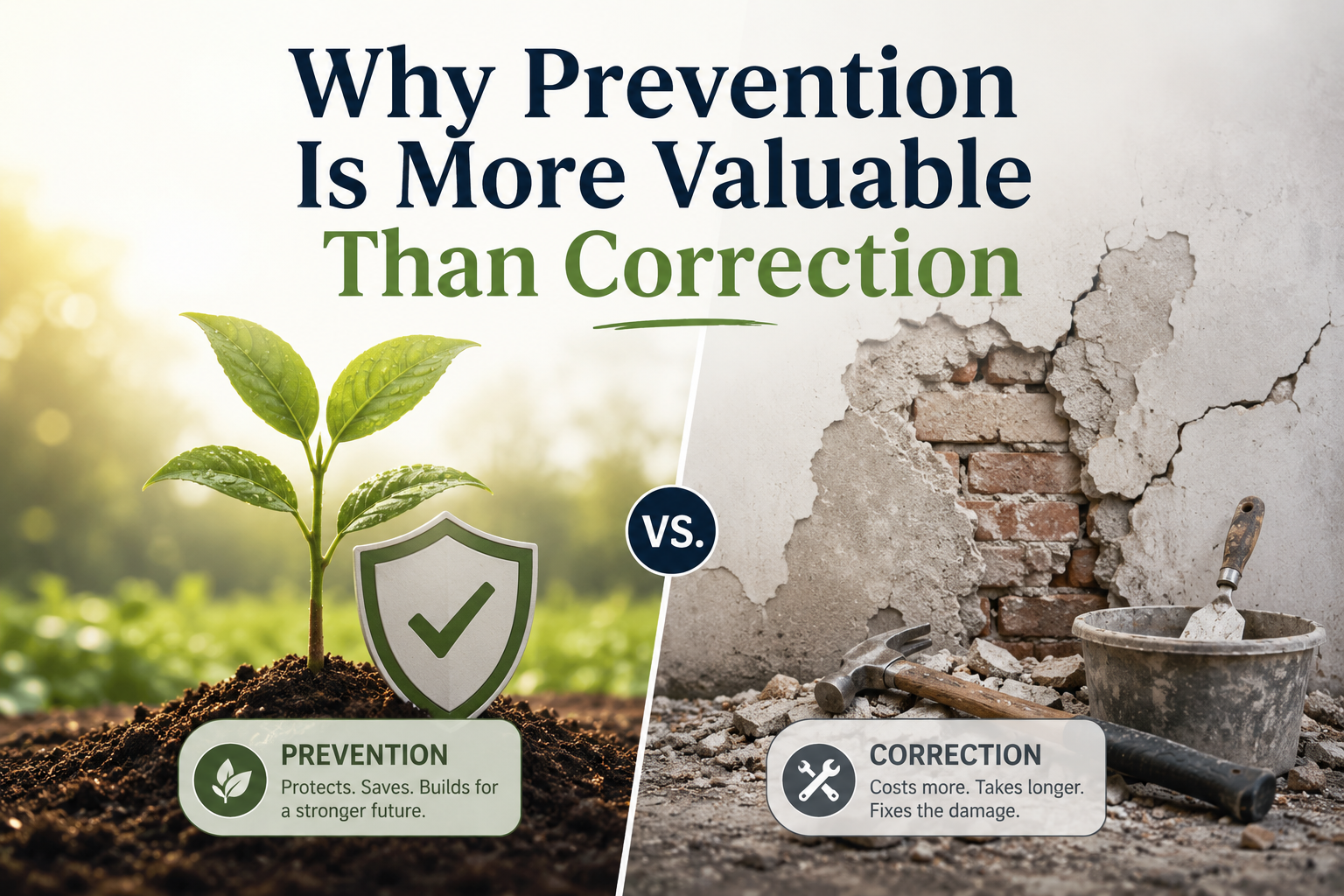
Why Prevention Is More Valuable Than Correction
One of the most overlooked truths in life is that prevention is almost always more valuable than correction. People often spend enormous amounts of time, money, energy, and emotional strength fixing problems that could have been avoided with a little foresight. Whether in health, finances, relationships, business, education, or personal development, prevention consistently proves to be cheaper, easier, and more effective than dealing with the consequences of mistakes after they occur.
Human nature often pushes people toward correction rather than prevention. Many individuals do not take action until they are forced to. They ignore warning signs, delay important decisions, and assume that problems can always be fixed later. Unfortunately, some problems become much more difficult, expensive, or even impossible to correct once they have developed. This is why understanding the value of prevention can transform the quality of life and help people avoid unnecessary hardship.
Consider health as one of the clearest examples. Most people understand the importance of eating healthy foods, exercising regularly, getting enough sleep, and attending medical checkups. Yet many ignore these simple preventive measures. They continue unhealthy habits because the consequences are not immediately visible. Years later, they may find themselves dealing with illnesses that require expensive treatments, medication, surgeries, or lifestyle changes that are far more difficult than the preventive habits they once avoided.
A person who spends a few minutes exercising daily may prevent years of health complications. Someone who visits a doctor for regular screenings may detect a condition early before it becomes life threatening. Prevention allows problems to be addressed while they are still small and manageable. Correction often occurs after the damage has already been done.
The same principle applies to personal finance. Many people fail to save money during stable periods because they assume their income will always be available. They spend everything they earn and leave no room for emergencies. When unexpected expenses arise, they are forced into debt, financial stress, or difficult sacrifices.
Building an emergency fund may seem unnecessary when everything is going well. However, that preventive step can protect a person from major financial hardship in the future. Saving consistently, creating a budget, avoiding unnecessary debt, and planning for the future are preventive actions that reduce the likelihood of financial crises. Correcting financial mistakes later often requires years of effort, discipline, and recovery.
Relationships also demonstrate the power of prevention. Many friendships, marriages, and family bonds break down not because of one major event but because of small unresolved issues that accumulate over time. Lack of communication, dishonesty, neglect, and disrespect can gradually weaken relationships.
Preventive actions such as open communication, active listening, mutual respect, and regular appreciation help maintain strong relationships. Addressing concerns early prevents misunderstandings from growing into serious conflicts. Once trust has been broken, repairing it can take months or even years. In some cases, correction may never fully restore what was lost.
In business, prevention often determines long term success. Companies that identify risks early, maintain quality standards, and create efficient systems are less likely to experience major failures. Successful organizations understand that preventing problems is more profitable than constantly fixing them.
A business that invests in employee training can prevent costly mistakes. A company that maintains its equipment regularly can avoid expensive breakdowns. Organizations that monitor customer feedback can address issues before they damage their reputation. The cost of prevention is usually far lower than the cost of recovering from a crisis.
Education provides another powerful example. Students who study consistently throughout a semester rarely face the same pressure as those who wait until the last minute. Preventive effort spread over time creates better results and reduces stress. Cramming before an examination is often an attempt to correct months of neglect. While correction may sometimes help, it rarely produces results equal to consistent preventive action.
The concept of prevention extends beyond practical matters into personal development. Many people struggle with habits, addictions, and behaviors that gradually undermine their goals. These issues rarely appear overnight. They often begin as small choices repeated over time.
Preventing negative habits is usually easier than breaking them later. Establishing positive routines early creates a foundation for success. Once destructive behaviors become deeply ingrained, correcting them requires significant effort, patience, and determination. Prevention allows individuals to avoid battles they would otherwise need to fight later.
One reason prevention is so valuable is that it protects resources. Every problem consumes resources when correction becomes necessary. These resources include time, money, energy, attention, and emotional strength. Preventive measures often require only a fraction of those resources.
Imagine a small leak in a roof. Addressing it immediately may require a minor repair. Ignoring it for months could lead to water damage, structural problems, mold growth, and expensive renovations. The longer a problem is allowed to grow, the greater the resources required to fix it.
Another advantage of prevention is that it reduces uncertainty. Problems create unpredictability. They disrupt plans, create stress, and force people into reactive decision making. Prevention increases stability and control by reducing the likelihood of unexpected crises.
People who plan ahead generally experience fewer emergencies. They are not necessarily luckier than others. They simply understand that many difficulties can be avoided through preparation and awareness. Their preventive mindset allows them to anticipate challenges before they become overwhelming.
Prevention also supports long term growth. Constantly correcting mistakes consumes attention that could otherwise be used for progress. Individuals and organizations trapped in a cycle of correction often struggle to move forward because they are always repairing damage from the past.
When problems are prevented, resources can be redirected toward improvement, innovation, and achievement. Instead of spending energy fixing avoidable mistakes, people can focus on creating new opportunities and building a better future.
A major obstacle to prevention is that its benefits are often invisible. When prevention works, nothing dramatic happens. A disease is avoided. A financial crisis never occurs. A relationship remains healthy. A business problem never develops. Because the negative outcome never appears, people may underestimate the value of the preventive action that made the difference.
Correction, on the other hand, is highly visible. It often involves urgent action, dramatic changes, and obvious results. This can create the false impression that correction is more important than prevention. In reality, prevention quietly eliminates problems before they have the chance to cause damage.
Another reason people neglect prevention is the tendency to prioritize immediate comfort over future benefits. Preventive actions often require discipline today for rewards that may not be visible until much later. Exercising regularly, saving money, maintaining relationships, and developing skills all require consistent effort without immediate gratification.
However, those who embrace prevention understand that future success is often built on present discipline. They recognize that small actions performed consistently can prevent large problems and create significant advantages over time.
History repeatedly demonstrates the value of prevention. Nations invest in security measures to prevent conflicts. Engineers design safety systems to prevent accidents. Technology companies implement cybersecurity measures to prevent data breaches. These examples show that proactive action is generally more effective than reactive solutions.
The same lesson applies to everyday life. Paying attention to warning signs, acting early, and maintaining good habits can prevent countless difficulties. Prevention is not about living in fear or expecting the worst. It is about recognizing that thoughtful preparation creates resilience and reduces vulnerability.
People who adopt a preventive mindset often experience greater peace of mind. They spend less time dealing with avoidable crises and more time pursuing meaningful goals. They understand that success is not only about solving problems but also about preventing unnecessary ones from appearing in the first place.
Ultimately, prevention is more valuable than correction because it preserves resources, reduces stress, protects opportunities, and supports long term success. While correction will always have a place in life, it should never replace prevention as a guiding principle. The smartest individuals, strongest relationships, healthiest lifestyles, and most successful organizations are often built not on their ability to fix problems but on their commitment to preventing them.
The next time a small warning sign appears, remember that addressing it today may save you from a much larger challenge tomorrow. Prevention may not always be exciting or visible, but its impact is profound. In many cases, the best solution to a problem is ensuring that the problem never has the chance to exist.

EarnSmartOnline.com.ng is dedicated to helping readers make smarter financial decisions through practical guides on online income, personal finance, technology, digital business, and wealth creation. Our goal is to provide reliable, easy-to-understand, and actionable content that empowers individuals to earn smarter, build sustainable income streams and achieve long-term financial success.
Recommended: Start Earning Online
- Ultimate Affiliate Marketing Program — learn affiliate marketing with a done-for-you sales system ($15). Check it out
- The Newbie Affiliate Guide — the beginner-friendly starter guide (~$6.68). Check it out
- Easy Dollar Maker — earn in dollars uploading AI images and videos from your phone ($17). Check it out
Disclosure: These are affiliate links. If you buy through them, I may earn a commission at no extra cost to you.



