
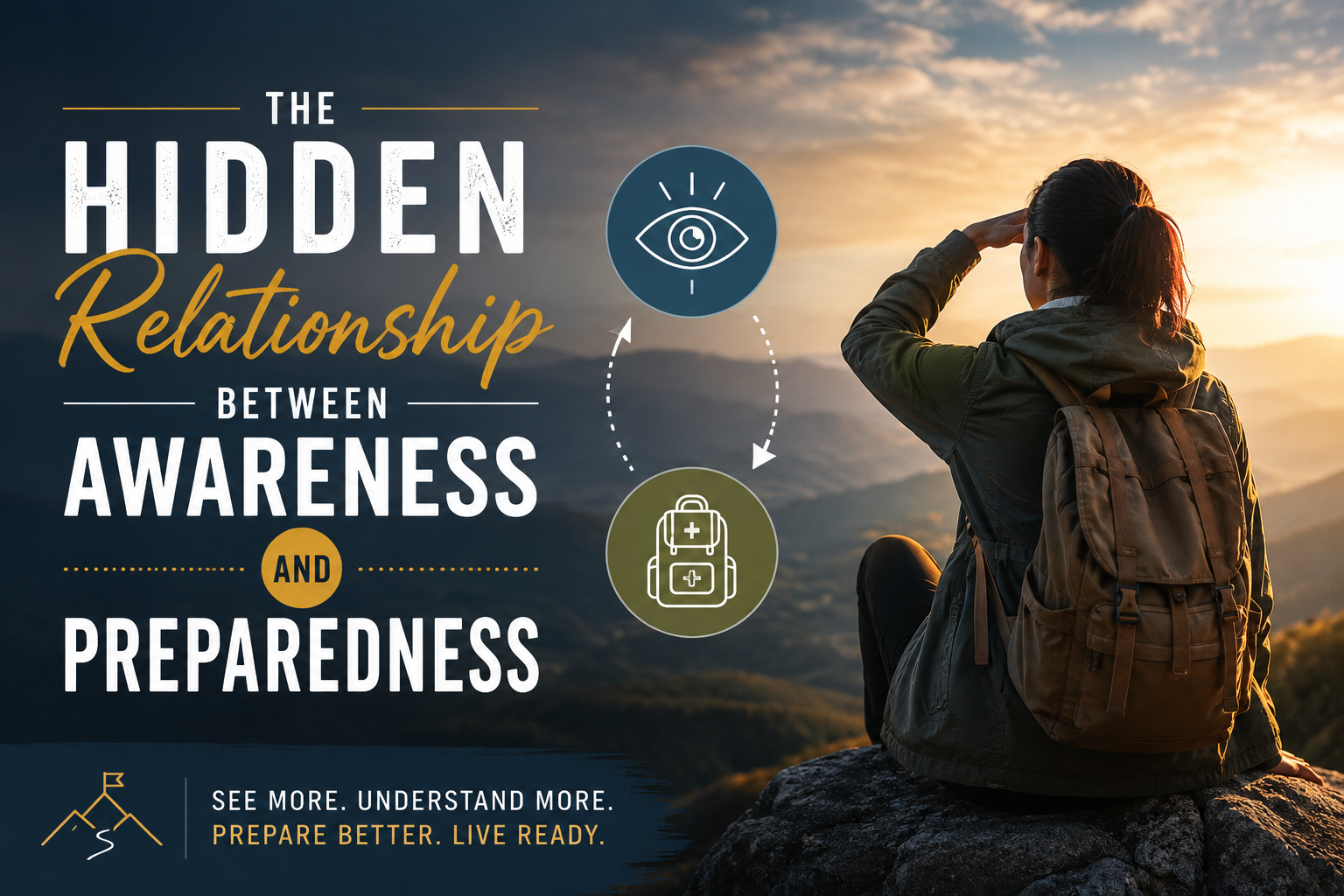
The Hidden Relationship Between Awareness and Preparedness
The hidden relationship between awareness and preparedness is one of the most overlooked principles in personal development, financial success, career growth, and even survival. Most people focus heavily on preparation after a problem appears, but few realize that true preparedness begins long before action is required. It starts with awareness. Awareness is the ability to recognize realities, patterns, risks, opportunities, and changes before they become obvious to everyone else. Preparedness is the ability to respond effectively when those realities, risks, opportunities, and changes finally arrive. Without awareness, preparedness becomes impossible. Without preparedness, awareness becomes useless.
Many of life’s biggest failures can be traced back to a lack of awareness. People lose jobs because they fail to notice changes in their industry. Businesses collapse because owners ignore warning signs in the market. Families face financial hardship because they overlook indicators of future challenges. Relationships break down because people become blind to growing problems. In almost every situation, the disaster itself is rarely the first event. The first event is usually a failure to notice what was happening long before the crisis appeared.
Awareness acts like an early warning system. It allows people to detect signals before they become emergencies. Imagine driving a car without paying attention to the road. The danger is not the obstacle itself but your inability to see it in time. In the same way, life constantly provides signals about future outcomes. Economic trends, personal habits, social changes, technological advancements, and market shifts all send messages. Those who remain aware can prepare accordingly. Those who ignore these signals often find themselves reacting instead of responding.
Preparedness is often misunderstood. Many people think preparedness means stockpiling resources or creating backup plans. While those actions are important, preparedness is much deeper. It involves building the skills, habits, systems, knowledge, and mindset needed to face uncertainty. True preparedness is not simply about having solutions. It is about developing the ability to adapt when circumstances change unexpectedly.
Awareness is the foundation upon which preparedness is built. Before someone can prepare for a challenge, they must first become aware of its existence. A person cannot prepare for inflation if they are unaware of economic realities. A worker cannot prepare for industry disruption if they ignore technological developments. A business owner cannot prepare for changing customer preferences if they fail to observe market trends. Every act of preparation begins with an act of awareness.
One reason many people struggle with preparedness is because awareness requires attention. Modern life constantly competes for attention. Social media, entertainment, endless notifications, and daily distractions consume mental energy. As a result, many individuals become reactive rather than proactive. They focus on immediate pleasures while ignoring long-term realities. They become experts at responding to urgent matters but remain blind to important ones.
The most prepared people in society are often not the most intelligent or the most talented. They are the most observant. They pay attention to details that others dismiss. They notice patterns before they become trends. They ask questions when others make assumptions. They remain curious about the world around them. This heightened awareness gives them a significant advantage because they can prepare before circumstances force them to act.
Financial preparedness provides a clear example of this relationship. Individuals who are aware of economic uncertainty often create emergency funds, diversify income streams, reduce unnecessary debt, and develop valuable skills. They understand that financial stability is not guaranteed. Their awareness motivates preparation. Meanwhile, those who assume that current conditions will continue indefinitely often find themselves vulnerable when unexpected expenses or economic downturns occur.
The same principle applies to health. People who become aware of the long-term consequences of poor nutrition, inactivity, and chronic stress are more likely to adopt healthier habits. They understand that today’s choices create tomorrow’s outcomes. Their awareness encourages preparation through exercise, proper nutrition, regular medical checkups, and stress management. In contrast, those who ignore warning signs often face preventable health challenges later in life.
Career success also depends heavily on the relationship between awareness and preparedness. Industries evolve rapidly. New technologies emerge. Consumer demands change. Skills that are valuable today may become less relevant tomorrow. Professionals who stay aware of these developments continuously improve their knowledge and capabilities. They invest in learning and adaptation before change becomes unavoidable. Their preparedness positions them to thrive while others struggle to catch up.
One of the greatest benefits of awareness is that it expands perspective. People often make poor decisions because they focus only on immediate circumstances. Awareness encourages a broader view. It helps individuals understand that actions have consequences beyond the present moment. A person who is aware of long-term implications is more likely to make decisions that support future success rather than temporary comfort.
Preparedness does not eliminate uncertainty, but it reduces vulnerability. Life will always contain unexpected events. Economic crises, technological disruptions, health challenges, and personal setbacks are inevitable realities. However, prepared individuals are better equipped to handle these situations because they have already considered possible outcomes. Their preparation allows them to respond with confidence rather than panic.
There is also a psychological dimension to preparedness. Awareness creates mental readiness. When people understand potential challenges, they are less likely to be overwhelmed when difficulties arise. They have already thought about possible scenarios. They have mentally rehearsed responses. This preparation strengthens resilience and reduces fear because uncertainty becomes more manageable.
Many successful leaders demonstrate exceptional awareness. They monitor trends, study human behavior, evaluate risks, and anticipate future developments. Their preparedness often appears effortless to outsiders, but it is usually the result of continuous observation and learning. They recognize that opportunities and threats rarely arrive without warning. The signs are often present long before the event itself.
Awareness also improves decision-making. Decisions are only as good as the information upon which they are based. The more aware a person becomes, the better they understand the context surrounding their choices. They can identify hidden risks, recognize valuable opportunities, and evaluate alternatives more effectively. This increased clarity leads to stronger preparation and better outcomes.
One common mistake is confusing awareness with anxiety. Awareness is not about living in fear. It is not about constantly expecting disaster. True awareness is balanced and objective. It acknowledges reality without exaggeration. It focuses on understanding rather than worrying. In fact, awareness often reduces anxiety because preparation creates confidence. People tend to fear situations they feel unprepared to handle.
The relationship between awareness and preparedness becomes even more important in an increasingly complex world. Technological innovation, global interconnectedness, economic volatility, and social transformation create constant change. Individuals who remain unaware may find themselves repeatedly surprised by events that were actually predictable. Those who cultivate awareness gain the ability to anticipate change and prepare accordingly.
Developing awareness requires intentional effort. It involves paying attention to information beyond immediate concerns. It means reading widely, observing carefully, listening actively, and questioning assumptions. It requires curiosity about how systems work and how trends develop. Awareness grows when people move beyond passive consumption and actively engage with reality.
Preparedness also requires consistent effort. It involves translating awareness into action. Knowledge alone is not enough. Understanding a risk without preparing for it provides little benefit. Similarly, recognizing an opportunity without taking action often leads to regret. Effective preparedness bridges the gap between understanding and execution.
Perhaps the most important lesson is that awareness and preparedness create a cycle of improvement. Greater awareness leads to better preparation. Better preparation increases confidence and resilience. Increased resilience allows individuals to remain calm and observant during uncertainty. This calmness further enhances awareness, creating a positive feedback loop that strengthens over time.
The people who navigate life most effectively are not necessarily those who avoid challenges. Rather, they are those who recognize challenges early and prepare for them wisely. They understand that opportunities and problems rarely appear without warning. The signs are often visible to those who are paying attention. Awareness allows them to see what others miss. Preparedness allows them to act when others hesitate.
The hidden relationship between awareness and preparedness is ultimately a relationship between observation and action. Awareness helps individuals understand reality as it is. Preparedness helps them respond effectively to that reality. Together, they form a powerful combination that improves decision-making, strengthens resilience, enhances success, and reduces vulnerability. In a world filled with uncertainty, cultivating awareness and preparedness may be one of the most valuable investments a person can make. The future belongs not merely to those who work hard, but to those who pay attention, anticipate change, and prepare before circumstances force them to do so.

EarnSmartOnline.com.ng is dedicated to helping readers make smarter financial decisions through practical guides on online income, personal finance, technology, digital business, and wealth creation. Our goal is to provide reliable, easy-to-understand, and actionable content that empowers individuals to earn smarter, build sustainable income streams and achieve long-term financial success.
Recommended: Start Earning Online
- Ultimate Affiliate Marketing Program — learn affiliate marketing with a done-for-you sales system ($15). Check it out
- The Newbie Affiliate Guide — the beginner-friendly starter guide (~$6.68). Check it out
- Easy Dollar Maker — earn in dollars uploading AI images and videos from your phone ($17). Check it out
Disclosure: These are affiliate links. If you buy through them, I may earn a commission at no extra cost to you.



