
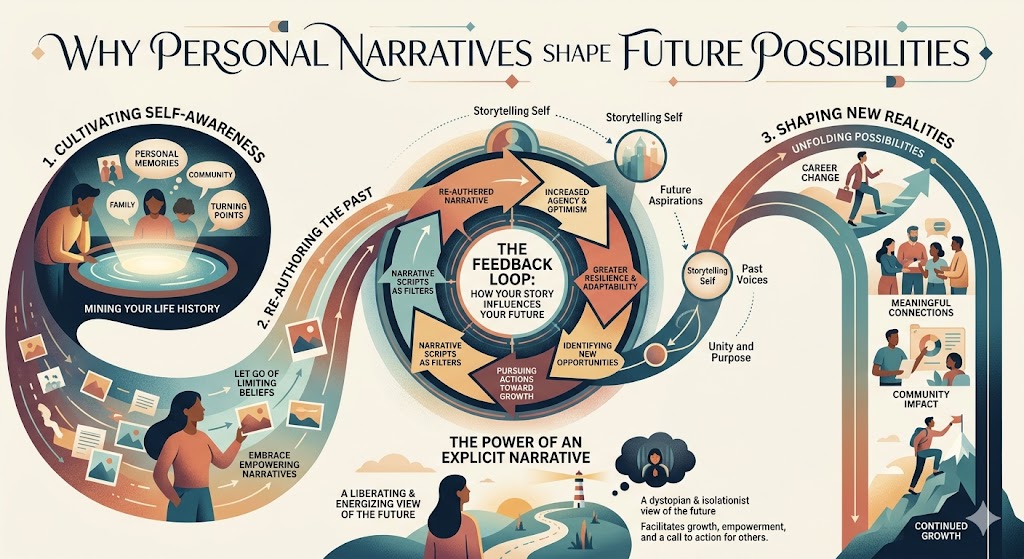
Why Personal Narratives Shape Future Possibilities
Every person carries an invisible story. It is not written in a book, displayed on a screen, or announced to the world, yet it quietly influences almost every decision they make. This story is known as a personal narrative. It is the explanation people create about who they are, where they come from, what they deserve, and what they believe is possible for their future. While many people focus on external circumstances as the primary force shaping their lives, personal narratives often play an even greater role. The stories individuals tell themselves become the lens through which they view opportunities, challenges, relationships, success, failure, and personal growth.
The concept of personal narratives is powerful because human beings naturally seek meaning. People do not simply experience events. They interpret them. Two individuals can go through the same hardship and emerge with entirely different beliefs about themselves and their futures. One person may conclude that life is unfair and that success is reserved for others. Another may see the same experience as evidence of resilience and strength. The difference lies not in the event itself but in the narrative attached to it.
From childhood, people begin collecting experiences and transforming them into stories. A child who receives constant encouragement may develop a narrative that says, “I am capable of learning and improving.” Another child who faces repeated criticism may form a narrative that says, “I am not good enough.” Over time, these narratives become deeply rooted beliefs that influence behavior. They affect confidence levels, risk tolerance, ambition, and the willingness to pursue opportunities.
One of the most important reasons personal narratives shape future possibilities is that they influence expectations. Expectations often determine actions. A person who believes they are destined to fail may avoid taking chances, applying for better jobs, starting businesses, or pursuing meaningful goals. Their narrative creates a mental ceiling that limits what they believe is achievable. On the other hand, someone who believes growth is possible will often continue trying despite setbacks. Their narrative encourages persistence, and persistence frequently leads to opportunities that would otherwise remain hidden.
Personal narratives also shape how people interpret failure. Failure is an unavoidable part of life, yet people respond to it differently based on the stories they tell themselves. Some view failure as proof that they are incapable. Others see failure as feedback and an opportunity to learn. When individuals believe their mistakes define them, they become trapped by fear. When they believe mistakes are part of growth, they become more willing to experiment, adapt, and improve. The narrative determines whether failure becomes a prison or a teacher.
Another powerful aspect of personal narratives is their influence on decision making. Every day, people make choices that either expand or limit their future possibilities. These choices are rarely random. They are guided by beliefs about identity and potential. Someone who sees themselves as disciplined is more likely to maintain productive habits. Someone who sees themselves as financially responsible is more likely to save and invest wisely. Someone who views themselves as a lifelong learner is more likely to seek knowledge and skill development. The narrative acts as an internal guide, directing behavior in subtle but significant ways.
Relationships are also heavily influenced by personal narratives. The stories people tell themselves affect what they expect from others and what they believe they deserve. An individual who carries a narrative of worthiness and self respect is more likely to establish healthy boundaries and pursue positive relationships. Conversely, someone who believes they are unworthy may tolerate unhealthy situations because their narrative convinces them that better outcomes are beyond reach. Over time, these relationship choices can significantly impact emotional well being, career opportunities, and overall life satisfaction.
The workplace provides another clear example of how personal narratives shape future possibilities. Employees who believe they have the ability to grow often seek promotions, take on new responsibilities, and develop valuable skills. They see challenges as opportunities for advancement. Those with limiting narratives may avoid visibility, reject opportunities, or remain in positions that no longer serve their goals. The difference is not always intelligence or talent. Often, it is the story they believe about themselves.
Financial success is also closely tied to personal narratives. Many people unknowingly carry beliefs about money that were formed during childhood. Some grow up hearing that wealthy people are dishonest, that financial success is impossible, or that poverty is permanent. These narratives can influence spending habits, investment decisions, and attitudes toward wealth creation. Conversely, people who develop narratives centered around responsibility, learning, and opportunity are often more willing to acquire financial knowledge and take constructive steps toward financial stability.
Personal narratives do not only influence individual behavior. They can affect entire communities and generations. Families often pass down stories about struggle, success, resilience, and identity. These narratives shape how younger generations perceive the world and their place within it. A family narrative that emphasizes perseverance can inspire future achievement. A narrative centered on limitation and hopelessness can discourage ambition. This demonstrates how stories can extend beyond individuals and influence collective outcomes.
The good news is that personal narratives are not fixed. They can be examined, challenged, and rewritten. Many people assume their internal stories are objective truths when, in reality, they are interpretations of past experiences. A person who has experienced setbacks may conclude that they are incapable of success. However, another interpretation might be that they have gained valuable lessons that can contribute to future achievement. Changing a narrative does not require denying reality. It requires viewing experiences through a more empowering and constructive lens.
Self awareness is the first step in rewriting a personal narrative. People must become conscious of the stories they repeatedly tell themselves. Questions such as “What do I believe about myself?” and “Where did this belief come from?” can reveal hidden assumptions. Once these narratives are identified, individuals can evaluate whether they are serving their goals or limiting their potential.
Another effective approach involves gathering evidence that challenges limiting beliefs. Someone who believes they are incapable of learning new skills can examine past situations where they successfully acquired knowledge or adapted to change. By focusing on evidence rather than assumptions, people can gradually replace limiting narratives with more accurate and empowering ones.
The influence of personal narratives can also be observed in many successful individuals throughout history. Countless entrepreneurs, athletes, leaders, and innovators faced obstacles that could have reinforced negative stories about their abilities. Instead, they adopted narratives centered on growth, persistence, and possibility. Their success was not simply the result of talent or favorable circumstances. It was also shaped by the stories they chose to believe.
Modern psychology increasingly supports the importance of personal narratives. Research suggests that the way people interpret their life experiences influences mental health, resilience, motivation, and overall well being. Individuals who construct coherent and empowering narratives often demonstrate greater emotional stability and adaptability. This does not mean ignoring challenges or pretending difficulties do not exist. It means framing experiences in ways that support growth rather than defeat.
The future is never entirely predictable. External circumstances, economic conditions, and unexpected events will always play a role in shaping outcomes. However, personal narratives determine how people respond to these factors. They influence whether individuals see obstacles as permanent barriers or temporary challenges. They affect whether opportunities are recognized or ignored. They shape the confidence required to pursue meaningful goals despite uncertainty.
Ultimately, the stories people tell themselves become the foundation upon which their futures are built. Every decision, habit, and action is influenced by an underlying narrative about identity and possibility. While circumstances matter, personal narratives often determine how those circumstances are interpreted and addressed. By consciously examining and improving these internal stories, individuals can expand their vision of what is possible and create pathways to opportunities that once seemed unreachable.
Why personal narratives shape future possibilities is therefore not merely a psychological question. It is a practical reality that affects every area of life. The stories people believe today influence the opportunities they pursue tomorrow. Those who learn to develop empowering narratives give themselves permission to grow, adapt, and succeed. In many cases, the difference between a limited future and an extraordinary one begins with a single change in the story a person chooses to tell themselves.

EarnSmartOnline.com.ng is dedicated to helping readers make smarter financial decisions through practical guides on online income, personal finance, technology, digital business, and wealth creation. Our goal is to provide reliable, easy-to-understand, and actionable content that empowers individuals to earn smarter, build sustainable income streams and achieve long-term financial success.
Recommended: Start Earning Online
- Ultimate Affiliate Marketing Program — learn affiliate marketing with a done-for-you sales system ($15). Check it out
- The Newbie Affiliate Guide — the beginner-friendly starter guide (~$6.68). Check it out
- Easy Dollar Maker — earn in dollars uploading AI images and videos from your phone ($17). Check it out
Disclosure: These are affiliate links. If you buy through them, I may earn a commission at no extra cost to you.



