
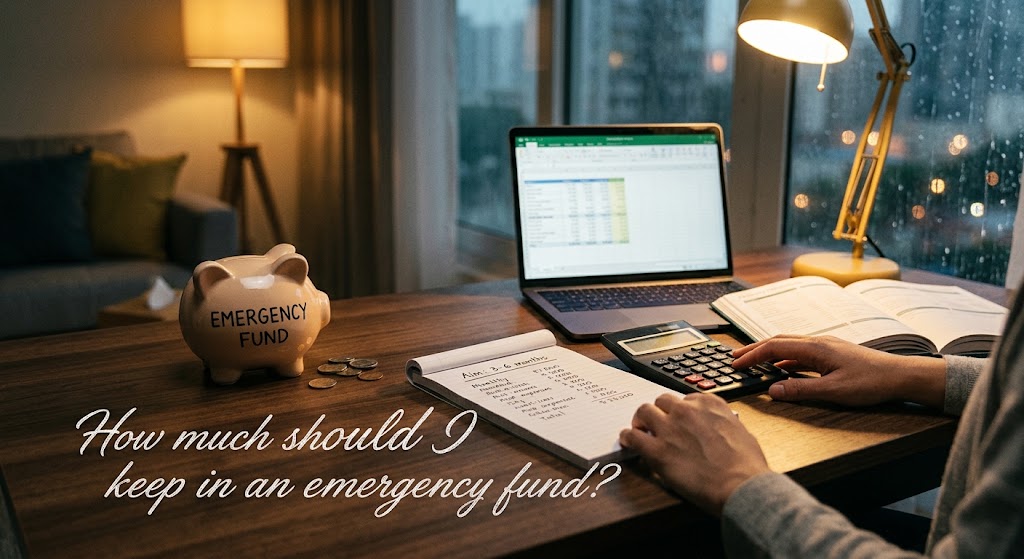
How much should I keep in an emergency fund? It is one of the most common personal finance questions people ask, and for good reason. Life is unpredictable. No matter how carefully you plan your finances, unexpected events can happen when you least expect them. A sudden job loss, a medical emergency, urgent home repairs, vehicle breakdowns, family crises, or unexpected bills can quickly disrupt your financial stability. This is why understanding the answer to the question, “How much should I keep in an emergency fund?” is one of the most important steps towards achieving financial security.
Many people assume an emergency fund is simply a savings account with a few extra pounds, dollars, or naira sitting in it. While that is technically true, an emergency fund serves a much bigger purpose. It acts as a financial safety net that protects you from being forced into debt when unexpected expenses arise. Instead of borrowing money, using high-interest credit cards, or taking loans during difficult times, you can rely on your emergency savings to cover the cost.
The challenge is determining the right amount to save. There is no single figure that works for everyone because financial circumstances vary from person to person. A university student living at home will have different financial obligations from a married parent supporting a family. Someone with a stable government job may require a different emergency fund size than a self-employed entrepreneur whose income changes from month to month.
Financial experts often recommend keeping between three and six months of essential living expenses in an emergency fund. This guideline has become popular because it provides a balance between security and practicality. Three to six months of expenses can give most people enough time to recover from a financial setback without immediately falling into serious hardship.
To understand what this means, you first need to calculate your essential monthly expenses. These are the costs you must pay regardless of whether you are working or earning income. They typically include housing costs, food, utilities, transportation, insurance, healthcare, education expenses, debt repayments, and other necessary obligations. Luxury spending, entertainment, and discretionary purchases are usually excluded because they are not essential during a financial emergency.
For example, if your essential monthly expenses total £1,500, then a three-month emergency fund would be £4,500 while a six-month emergency fund would be £9,000. If your monthly expenses are ₦300,000, then a three-month emergency fund would be ₦900,000 and a six-month emergency fund would be ₦1.8 million. The exact numbers will differ depending on your lifestyle and obligations, but the principle remains the same.
The reason financial experts recommend using expenses rather than income is because emergencies affect your ability to meet financial obligations, not necessarily your ability to maintain your normal lifestyle. During a crisis, your priority is survival and stability. Your emergency fund should cover the essentials that keep your life functioning while you recover.
However, the traditional three-to-six-month rule is not always enough for everyone. Some people may need a larger emergency fund. If your income is irregular, seasonal, or dependent on business performance, a bigger financial cushion can provide greater protection. Freelancers, entrepreneurs, commission-based workers, and self-employed professionals often experience income fluctuations that salaried employees may not face.
For these individuals, saving six to twelve months of essential expenses may be more appropriate. The additional savings can help manage periods of low income, slow business activity, or unexpected market downturns. While building such a large emergency fund takes time, the added financial security can be worth the effort.
Job stability also plays a major role in determining how much should I keep in an emergency fund. Someone working in a highly secure profession may feel comfortable with three months of expenses. On the other hand, individuals working in industries prone to layoffs or economic uncertainty may prefer a larger reserve. The more difficult it would be to replace your income after a job loss, the more important it becomes to maintain a larger emergency fund.
How much should I keep in an emergency fund?
Family responsibilities are another important consideration. A single individual with few dependants may have lower financial risks than someone supporting a spouse, children, or elderly relatives. When other people depend on your income, the consequences of financial disruption become more serious. A larger emergency fund can help ensure that everyone continues to have their essential needs met during difficult periods.
Location can also influence the answer to the question, “How much should I keep in an emergency fund?” Living costs vary significantly between cities, regions, and countries. People living in expensive areas may require larger emergency funds simply because their monthly expenses are higher. Rent, transportation, healthcare, and food costs can vary dramatically depending on where you live.
Many people delay building an emergency fund because they believe they need to save thousands before starting. This mindset often prevents progress. The reality is that any emergency fund is better than none. Even a modest amount can provide valuable protection against small financial shocks.
Someone who has never saved before might begin by setting a goal of £500, £1,000, or the equivalent in their local currency. Reaching this first milestone creates momentum and confidence. Once that initial target is achieved, they can continue building towards three months of expenses and eventually six months or more.
Starting small is often more effective than waiting for the perfect opportunity. Financial security is built gradually through consistent saving habits rather than dramatic one-time efforts. Even setting aside a small amount from each pay cheque can lead to significant progress over time.
One common mistake people make is confusing an emergency fund with general savings. While both involve setting money aside, they serve different purposes. Money saved for holidays, gadgets, weddings, home improvements, or future purchases should not be considered part of your emergency fund. Emergency savings should be reserved exclusively for genuine financial emergencies.
This distinction is important because it protects the purpose of the fund. If you frequently withdraw money from your emergency savings for non-emergency spending, the fund loses its effectiveness. When a real crisis occurs, the money may no longer be available.
Another mistake is investing emergency fund money in high-risk assets. While investing is an excellent way to grow wealth over the long term, emergency savings should prioritise accessibility and stability. The purpose of an emergency fund is not to generate high returns. Its purpose is to be available when needed.
If your emergency savings are invested in volatile assets, there is a risk that their value could decline precisely when you need the money. An emergency fund should typically be kept in a secure, easily accessible account where the principal value is protected.
Liquidity is one of the most important characteristics of an emergency fund. During a financial crisis, you may need immediate access to cash. Funds tied up in long-term investments, property, or assets that take time to sell may not provide the protection you need. This is why many financial planners recommend keeping emergency savings in readily accessible accounts.
The psychological benefits of having an emergency fund are often overlooked. Financial security is not only about numbers. It is also about peace of mind. Knowing that you have money set aside for unexpected situations can reduce stress, anxiety, and financial worry.
People with emergency funds often feel more confident making important life decisions. They may feel more comfortable changing jobs, starting a business, relocating, pursuing education, or taking calculated risks because they know they have a financial safety net. This confidence can have a positive impact on both personal and professional growth.
An emergency fund also helps prevent bad financial decisions made under pressure. Financial emergencies often force people into difficult choices. Without savings, someone may resort to expensive loans, high-interest credit cards, or borrowing from friends and family. These solutions can create long-term financial problems that persist long after the original emergency has passed.
With an emergency fund, the immediate crisis can be addressed without creating additional debt. This allows recovery to begin more quickly and reduces the risk of falling into a cycle of financial hardship.
Economic uncertainty has made emergency funds more important than ever. Recent years have demonstrated how quickly circumstances can change. Global events, economic downturns, inflation, and employment disruptions have reminded people that financial stability should never be taken for granted.
Many individuals who previously believed they did not need emergency savings discovered the value of having a financial cushion during unexpected challenges. Those with emergency funds often found themselves in a stronger position to manage uncertainty than those living pay cheque to pay cheque.
Inflation presents another reason to regularly review your emergency fund. As prices increase, the amount needed to cover essential expenses also rises. A fund that covered six months of expenses several years ago may no longer provide the same level of protection today. Periodically reassessing your savings target ensures that your emergency fund remains adequate.
Building an emergency fund requires discipline, but the process can be made easier by automating savings. Setting up automatic transfers into a dedicated savings account removes the need to make repeated decisions. Consistency often matters more than the size of individual contributions. Small amounts saved regularly can grow into substantial reserves over time.
Some people choose to save a fixed amount each month, while others save a percentage of their income. The specific approach is less important than maintaining a consistent habit. Progress may seem slow initially, but every contribution strengthens your financial safety net.
The question, “How much should I keep in an emergency fund?” ultimately depends on your personal circumstances, financial obligations, income stability, and risk tolerance. For some people, three months of expenses may provide sufficient security. Others may feel more comfortable with six months, nine months, or even a full year of expenses.
What matters most is creating a fund that aligns with your unique situation and provides genuine protection against unexpected events. Financial security is not about reaching a universal number. It is about ensuring that you have enough resources to weather challenges without jeopardising your long-term financial goals.
Many people spend years focusing on investments, income growth, and wealth-building strategies while neglecting the foundation of financial stability. Yet an emergency fund often serves as the cornerstone upon which all other financial goals are built. Without it, even the most carefully planned financial strategy can be vulnerable to unexpected disruptions.
The next time you ask yourself, “How much should I keep in an emergency fund?” remember that the answer is not merely a mathematical calculation. It is a reflection of your lifestyle, responsibilities, risks, and financial priorities. Whether your goal is three months of expenses or a full year of financial protection, the most important step is to begin building that safety net today.
Emergencies are inevitable. Financial crises, however, are often preventable. An emergency fund provides the buffer that allows you to absorb life’s unexpected challenges without derailing your financial future. It may not be the most exciting aspect of personal finance, but it is undoubtedly one of the most valuable.
The amount you keep in your emergency fund should be enough to help you sleep peacefully at night, knowing that if life throws an unexpected challenge your way, you have the resources to handle it. That peace of mind alone makes every contribution worthwhile.

EarnSmartOnline.com.ng is dedicated to helping readers make smarter financial decisions through practical guides on online income, personal finance, technology, digital business, and wealth creation. Our goal is to provide reliable, easy-to-understand, and actionable content that empowers individuals to earn smarter, build sustainable income streams and achieve long-term financial success.
Recommended: Start Earning Online
- Ultimate Affiliate Marketing Program — learn affiliate marketing with a done-for-you sales system ($15). Check it out
- The Newbie Affiliate Guide — the beginner-friendly starter guide (~$6.68). Check it out
- Easy Dollar Maker — earn in dollars uploading AI images and videos from your phone ($17). Check it out
Disclosure: These are affiliate links. If you buy through them, I may earn a commission at no extra cost to you.



