
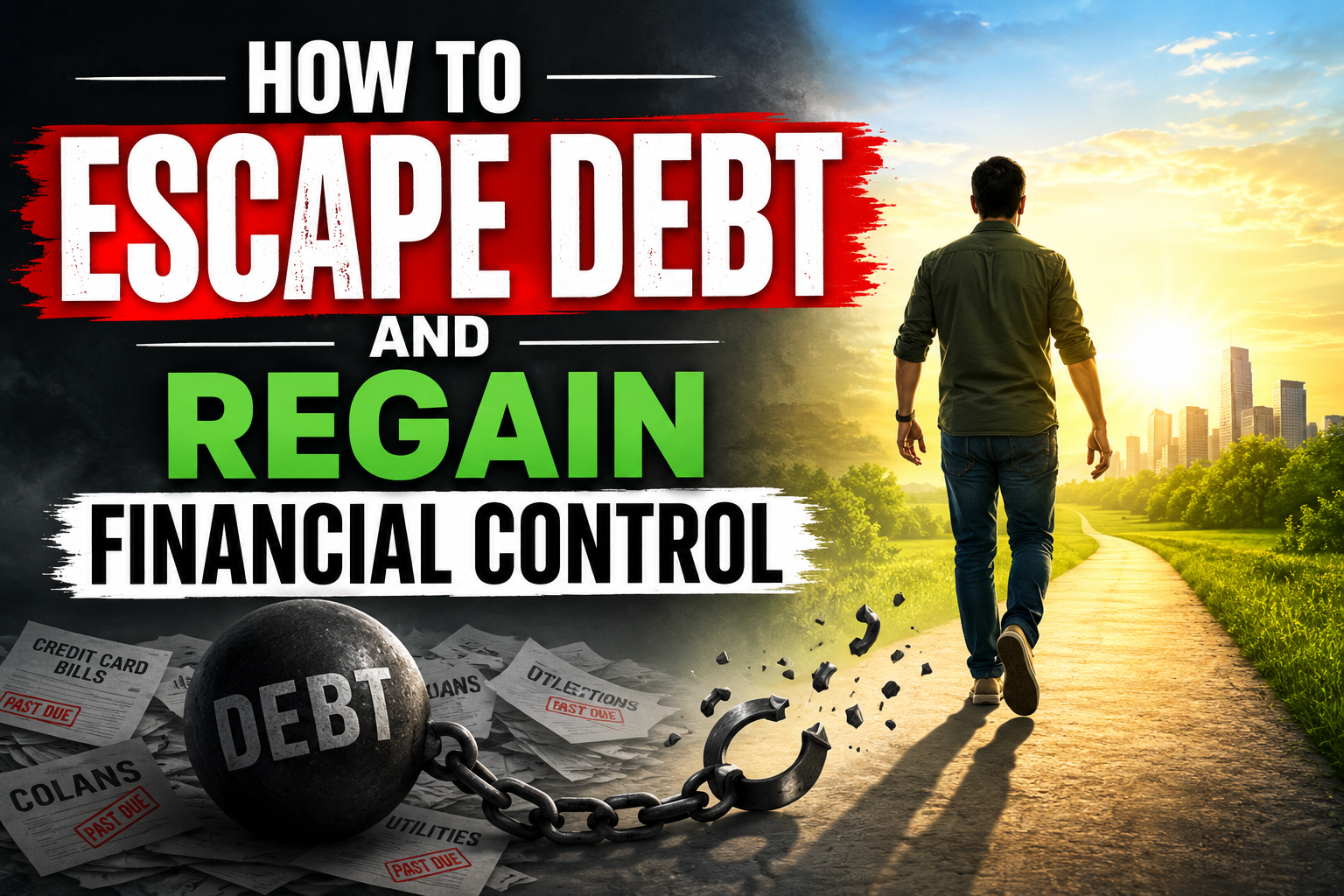
How to Escape Debt and Regain Financial Control
Debt is one of the most silent but powerful forces that controls the lives of millions of people. It does not always announce itself loudly, yet it slowly affects decisions, limits opportunities, increases stress, and keeps individuals in a cycle where they constantly feel like they are working but never truly progressing. For many people, especially in developing economies like Nigeria, debt has become a normal part of survival rather than a financial exception. But the truth is, debt does not have to define your life. It can be managed, reduced, and completely escaped with the right mindset, structure, and discipline.
Escaping debt is not just about money; it is about behavior, awareness, and control. Many people believe that earning more income automatically solves debt problems, but that is not always true. Without financial discipline, increased income often leads to increased spending, and the cycle continues. The first step in regaining financial control is understanding that debt is not just a financial problem but a lifestyle pattern that must be corrected from the root.
One of the most important realities about debt is that it grows quietly when ignored. Small debts from credit facilities, loans, borrowed money from friends, or even unpaid bills can accumulate into a heavy burden over time. Interest rates, penalties, and emotional pressure make the situation worse. Many people avoid confronting their debt because it feels overwhelming, but avoidance only strengthens the problem. The moment you decide to face your debt situation honestly, you have already taken the first step toward freedom.
Regaining financial control begins with clarity. You cannot fix what you do not fully understand. This means you need to list every single debt you owe, no matter how small. Include the amount, the interest rate if any, and the repayment timeline. This exercise may feel uncomfortable, but it is necessary. Many people underestimate how much they actually owe because they mentally avoid the full picture. When everything is written down clearly, it becomes easier to develop a repayment strategy.
After gaining clarity, the next step is prioritization. Not all debts are equal. Some carry higher interest rates and grow faster than others. These are the debts that should be targeted first. At the same time, smaller debts can be cleared quickly to build motivation and psychological momentum. This combination of tackling high-interest debts while clearing small ones helps to create progress that is both strategic and emotional.
Another important part of escaping debt is stopping the behavior that created it in the first place. This is where many people struggle. If spending habits do not change, debt will always return even after it is cleared. It is important to identify what is driving overspending. For some people, it is emotional spending. For others, it is lifestyle pressure, social expectations, or lack of budgeting skills. Understanding your trigger points allows you to regain control over your financial decisions instead of reacting emotionally.
Budgeting is one of the most powerful tools in debt recovery, yet many people underestimate it. A simple budget does not have to be complicated. It is simply a plan for how money should be spent before it arrives. Without a budget, money disappears unpredictably, making it difficult to allocate repayment consistently. A good budgeting approach ensures that debt repayment is treated as a priority, not an afterthought. Even when income is small, consistency matters more than size.
Another critical step in escaping debt is controlling new borrowing. Many people remain trapped because while trying to repay old debts, they continue taking new ones. This creates a cycle that becomes impossible to break. Financial recovery requires discipline to pause unnecessary borrowing until stability is restored. This may require sacrifices in lifestyle, but temporary discomfort leads to long term freedom.
Increasing income also plays a major role in regaining financial control, but it must be done strategically. Instead of relying only on one source of income, exploring additional streams can accelerate debt repayment. This could include freelancing, small online work, digital skills, or side businesses depending on your situation. However, additional income without discipline will still disappear. The key is to direct extra income specifically toward debt reduction, not lifestyle expansion.
One powerful but often ignored strategy is negotiation. Many creditors are willing to restructure or reduce repayment pressure if approached honestly. Extending repayment timelines or negotiating reduced interest can make debt more manageable. People often avoid these conversations out of fear, but financial institutions and lenders prefer repayment over default, so communication is usually beneficial.
Emotional control is another essential factor in escaping debt. Debt creates stress, and stress often leads to poor financial decisions. Some people respond to financial pressure by spending more, either for comfort or distraction. This only worsens the situation. Learning to stay calm and focused during financial stress is part of regaining control. Financial discipline is not only about numbers; it is also about emotional strength.
Another important concept is delayed gratification. Many people remain in debt because they prioritize immediate satisfaction over long term stability. Learning to delay unnecessary purchases helps redirect money toward debt repayment. This shift in mindset is what separates those who remain stuck from those who eventually break free.
Building a simple emergency fund, even while in debt, can also help prevent falling back into borrowing. Many people go into debt because of unexpected expenses. Having a small financial buffer reduces the need to borrow again when emergencies arise. It does not have to be large; even a small consistent savings habit creates protection over time.
Consistency is the foundation of debt freedom. There is no quick fix or overnight solution. The process requires steady repayment, disciplined spending, and continuous financial awareness. Over time, as debts reduce, confidence increases, and financial stress begins to fade. This emotional transformation is just as important as the financial one.
It is also important to surround yourself with financial awareness. The environment you stay in influences your money habits. If you constantly engage in conversations, lifestyles, or content that promote overspending, it becomes harder to change. On the other hand, learning from financial education sources, reading about money management, and following practical financial advice helps reinforce better habits.
Escaping debt is not just about becoming debt free; it is about becoming financially stable. Stability means you are no longer controlled by debt, emergencies, or poor financial planning. It means your income begins to serve you instead of constantly disappearing. It means you have control over your financial direction rather than being controlled by financial pressure.
In conclusion, debt is not a permanent condition. It is a situation that can be reversed with awareness, discipline, and structure. The journey begins with honesty, followed by planning, behavioral change, and consistent execution. While the process may take time, every step taken toward repayment is a step toward freedom. Financial control is not reserved for a few people; it is achievable for anyone willing to change their habits and commit to the process. Over time, what once felt like financial pressure can transform into financial confidence and stability, allowing you to rebuild your life on a stronger and more secure foundation.

EarnSmartOnline.com.ng is dedicated to helping readers make smarter financial decisions through practical guides on online income, personal finance, technology, digital business, and wealth creation. Our goal is to provide reliable, easy-to-understand, and actionable content that empowers individuals to earn smarter, build sustainable income streams and achieve long-term financial success.
Recommended: Start Earning Online
- Ultimate Affiliate Marketing Program — learn affiliate marketing with a done-for-you sales system ($15). Check it out
- The Newbie Affiliate Guide — the beginner-friendly starter guide (~$6.68). Check it out
- Easy Dollar Maker — earn in dollars uploading AI images and videos from your phone ($17). Check it out
Disclosure: These are affiliate links. If you buy through them, I may earn a commission at no extra cost to you.



