
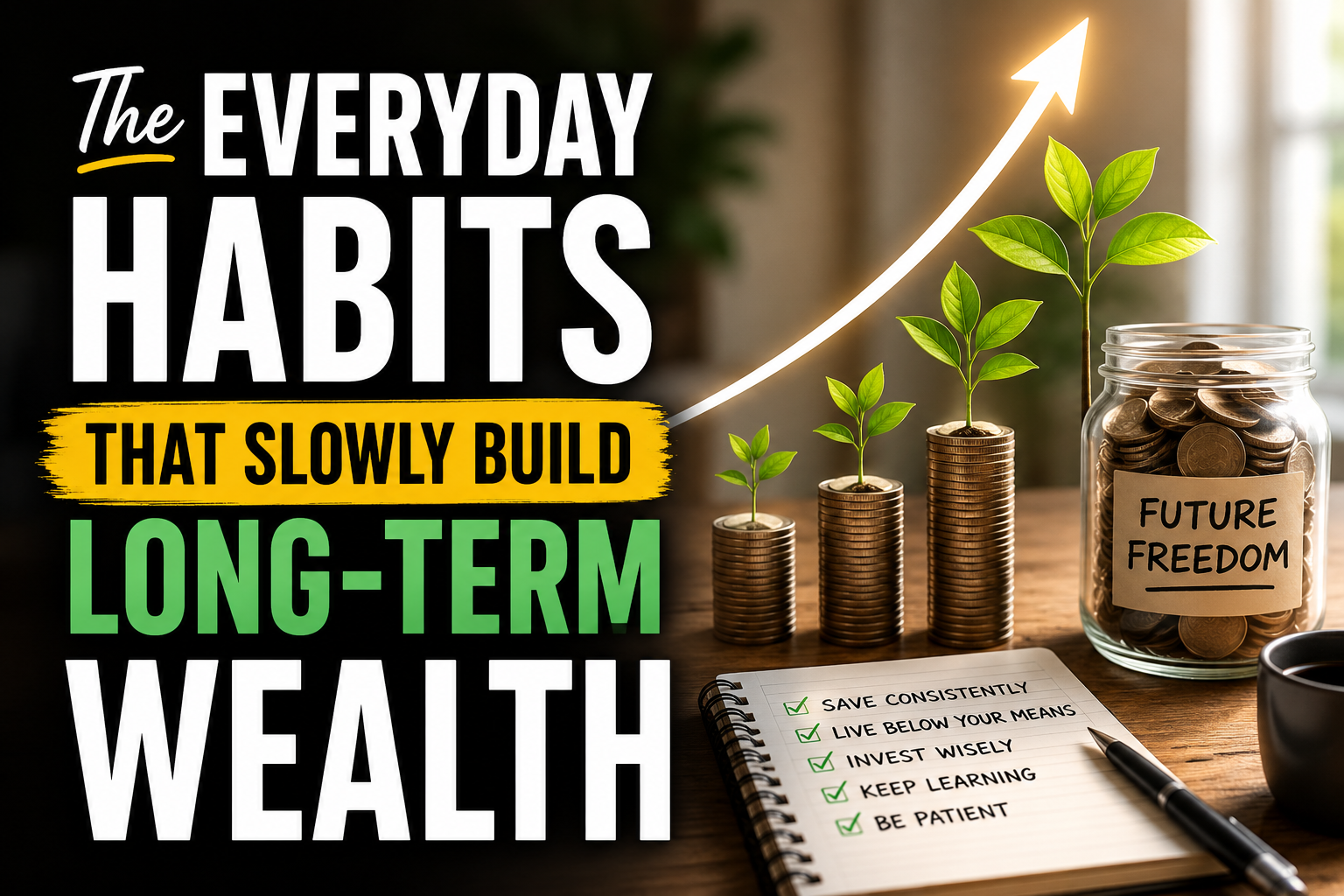
The Everyday Habits That Slowly Build Long-Term Wealth
In a world where most people are chasing quick money, viral success, and overnight breakthroughs, it is easy to overlook the quiet power of consistency. Wealth is not always built in dramatic moments or sudden financial windfalls. In most cases, it is the result of small, almost invisible habits repeated over time. The truth is that long term wealth is less about how much you earn at once and more about how you behave with money every single day. People often imagine wealth as something reserved for the lucky, the highly educated, or the already privileged, but in reality, many financially stable individuals simply follow habits that seem ordinary but compound significantly over years.
One of the most important everyday habits that builds long term wealth is intentional spending. Many people spend money emotionally rather than strategically. They buy things to feel better, to impress others, or simply out of impulse. Over time, these small emotional decisions quietly drain financial potential. People who build wealth learn to slow down their spending decisions. They ask themselves whether a purchase is necessary, whether it adds long term value, or whether it is simply a short term desire. This simple mental pause creates a gap between income and expenses, and that gap becomes the foundation of savings and investment. Wealth begins to form the moment spending becomes deliberate instead of reactive.
Another powerful habit is consistent saving, no matter how small the amount. Many people delay saving because they believe their income is too low. However, wealth building does not start with large amounts. It starts with discipline. Even saving a small percentage of income regularly creates a psychological shift. It teaches the mind that money is something to be managed, not just consumed. Over time, this habit grows stronger. As income increases, the saving habit naturally scales with it. What matters is not the size of the savings but the consistency. Consistency is what transforms saving from an occasional action into a financial identity.
Closely connected to saving is the habit of budgeting. A budget is not a restriction; it is a direction. Without a budget, money flows freely without control or purpose. Many people wonder where their income disappears to each month, and the answer is usually lack of structure. Budgeting forces awareness. It shows exactly how much is coming in and where it is going. People who build wealth do not guess their financial situation; they measure it. They assign roles to their money before spending it, ensuring that every unit of income has a purpose. Over time, this habit reduces waste and increases financial clarity.
Another everyday habit that builds wealth is living below your means. This is one of the most misunderstood principles in personal finance. Many assume that earning more automatically leads to wealth, but that is not true. Without controlled spending, higher income often leads to higher lifestyle expenses. Wealthy individuals tend to avoid this trap by maintaining a gap between what they earn and what they spend. This gap becomes the fuel for investment, emergency funds, and future opportunities. Living below your means does not mean suffering or deprivation; it means choosing stability over constant upgrade pressure.
Learning and self improvement also play a major role in long term wealth building. The world changes quickly, and financial opportunities evolve with it. People who commit to daily learning tend to adapt faster and identify opportunities earlier. This could include learning a digital skill, understanding basic investment principles, or improving financial literacy. Knowledge compounds in the same way money does. The more you learn, the more capable you become of making better financial decisions. Over time, this leads to better income opportunities and smarter money management.
Another habit that quietly builds wealth is tracking expenses. Many people underestimate how powerful awareness can be. When spending is not tracked, money tends to disappear in small, unnoticed amounts. These small expenses may seem insignificant individually, but collectively they form a large portion of wasted income. Tracking expenses creates accountability. It reveals patterns that would otherwise remain hidden. People often discover that a large percentage of their income goes into non essential items they do not even remember purchasing. Once this awareness is created, financial behavior naturally improves.
Avoiding unnecessary debt is another critical habit. Debt itself is not always bad, but uncontrolled debt becomes a financial trap. Many people enter debt for consumption instead of investment, which leads to long term financial pressure. Wealth building requires careful evaluation before borrowing money. If a debt does not generate income or long term value, it often becomes a burden rather than a tool. Financially stable individuals tend to use debt cautiously, ensuring that it supports growth rather than consumption.
Another important habit is building multiple streams of income gradually. Relying on a single source of income is risky in today’s economy. Jobs can change, businesses can fluctuate, and unexpected events can disrupt financial stability. People who build wealth often explore additional income streams over time. This does not mean doing everything at once, but rather starting small and expanding gradually. It could be freelancing, digital work, small side businesses, or investments. The goal is to reduce dependency on a single source of income and increase financial resilience.
Patience is also a powerful but often overlooked habit. Many people expect quick financial results and become discouraged when progress is slow. Wealth, however, is a long term process. It requires time for habits to compound and investments to grow. People who remain consistent even when results are not immediately visible tend to achieve stronger financial outcomes. Patience prevents impulsive decisions and allows strategies to mature properly.
Another habit that supports long term wealth is surrounding yourself with financially aware individuals. Environment influences behavior more than most people realize. When you are surrounded by people who spend recklessly, it becomes easier to adopt similar habits. On the other hand, being around individuals who value saving, investing, and financial discipline naturally improves your own mindset. Conversations, behaviors, and shared experiences shape financial thinking over time.
Delaying gratification is another essential habit. In a world of instant satisfaction, the ability to wait is a financial advantage. People who delay unnecessary spending today often have more resources to invest in future opportunities. This habit strengthens discipline and helps prioritize long term benefits over short term pleasure. It is one of the strongest indicators of financial maturity.
Finally, reviewing financial progress regularly helps maintain direction. Wealth building is not a one time effort but an ongoing process. Without reflection, it is easy to repeat mistakes or lose track of goals. Regular financial review helps identify what is working and what needs adjustment. It keeps financial behavior aligned with long term objectives.
In conclusion, long term wealth is not built through dramatic actions or sudden luck. It is built through simple, repeatable habits practiced daily. Intentional spending, consistent saving, budgeting, living below your means, continuous learning, expense tracking, avoiding bad debt, building income streams, patience, environment selection, delayed gratification, and financial review all work together over time. Individually, they may seem small, but collectively they create a powerful financial foundation. Anyone willing to adopt these habits consistently can gradually move from financial instability to long term financial confidence.

EarnSmartOnline.com.ng is dedicated to helping readers make smarter financial decisions through practical guides on online income, personal finance, technology, digital business, and wealth creation. Our goal is to provide reliable, easy-to-understand, and actionable content that empowers individuals to earn smarter, build sustainable income streams and achieve long-term financial success.
Recommended: Start Earning Online
- Ultimate Affiliate Marketing Program — learn affiliate marketing with a done-for-you sales system ($15). Check it out
- The Newbie Affiliate Guide — the beginner-friendly starter guide (~$6.68). Check it out
- Easy Dollar Maker — earn in dollars uploading AI images and videos from your phone ($17). Check it out
Disclosure: These are affiliate links. If you buy through them, I may earn a commission at no extra cost to you.



