
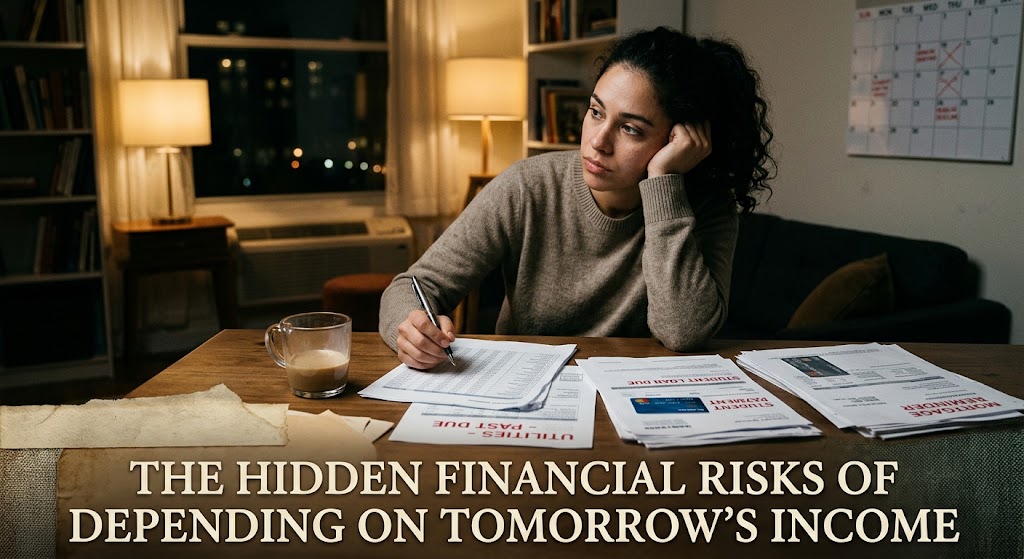
The Hidden Financial Risks of Depending on Tomorrow’s Income
Most people rarely think about tomorrow’s income until tomorrow suddenly fails to arrive. It is one of the greatest financial assumptions made by millions of people around the world. Every day, people make spending decisions based not on the money they currently have but on the money they expect to receive in the future. They buy expensive items because payday is a few days away. They borrow money because they believe next month’s salary will solve today’s problems. They increase their lifestyle because they assume their business will continue growing. They delay saving because they believe there will always be another opportunity to earn. This silent dependence on future income appears harmless until something unexpected happens. A delayed salary, a lost client, an economic downturn, a medical emergency, a company restructuring, an accident, inflation, or even a global crisis can instantly expose how fragile financial confidence built on tomorrow’s earnings truly is. The Hidden Financial Risks of Depending on Tomorrow’s Income.
The hidden danger is not simply the possibility of losing income. The real danger is building an entire financial life around income that has not yet been earned. Tomorrow is never guaranteed, yet countless financial decisions are based on guarantees that do not exist. While optimism is important for growth, financial wisdom requires balancing hope with preparation. Depending entirely on future earnings creates a false sense of security that encourages unnecessary risks and weakens financial resilience.
One of the biggest reasons people become financially vulnerable is because regular income creates predictable behaviour. Receiving money every week or every month conditions people to believe the cycle will continue forever. Bills are scheduled around payday. Loans are taken with confidence. Shopping habits expand with every salary increase. New subscriptions are added because future earnings appear certain. Over time, people stop asking whether they can truly afford something and begin asking whether next month’s income can cover it.
This mindset slowly changes the relationship between money and decision making. Instead of using current resources wisely, people begin spending tomorrow’s income before it arrives. Credit cards, salary advances, buy now pay later services and personal loans all encourage this behaviour. Although these financial tools can be useful when used responsibly, they become dangerous when they create a habit of living ahead of earned income rather than behind it.
One delayed salary can trigger a chain reaction. Rent becomes overdue. Utility bills accumulate. Loan repayments attract penalties. Stress increases. Relationships become strained. Productivity declines. All because financial commitments were based on income that had not yet reached the bank account. The problem was never the delayed income itself. The problem was assuming that future income was already available.
Many people mistakenly believe that having a good job eliminates financial risk. Employment certainly provides stability, but no employer can promise absolute certainty. Companies close. Industries change. Automation replaces workers. Economic recessions reduce hiring. Even highly qualified professionals sometimes experience unexpected unemployment. History has repeatedly shown that secure jobs can disappear far more quickly than people expect.
Business owners face a similar challenge. A successful business today does not guarantee equal success tomorrow. Markets evolve. Consumer preferences shift. Competitors emerge. Regulations change. Technology disrupts established industries. Entrepreneurs who expand their personal spending based on temporary business success often find themselves trapped when revenue slows unexpectedly.
Freelancers and self employed professionals experience this risk even more directly. One month may produce exceptional income while the following month brings very little. Yet many freelancers increase spending immediately after high earning periods without preparing for slower seasons. Depending on tomorrow’s clients instead of today’s savings creates unnecessary financial pressure.
Human psychology contributes greatly to this problem. People naturally assume that positive trends will continue. A person who has earned a salary for ten years unconsciously believes another salary will arrive next month. Someone whose business has grown steadily for five years assumes next year will be even better. This optimism supports ambition, but without caution it also encourages financial complacency.
Lifestyle inflation makes the problem even worse. As income rises, expenses often rise even faster. Instead of saving additional earnings, many people immediately upgrade their homes, vehicles, gadgets, holidays and entertainment. Their standard of living becomes dependent upon maintaining current income levels indefinitely. The higher the lifestyle climbs, the more devastating any interruption becomes.
This explains why some high income earners experience severe financial stress despite earning far more than average. Their expenses have expanded to match or exceed their earnings. They possess impressive salaries but very little financial flexibility. Missing one or two pay cheques creates panic because every pound, dollar or naira has already been allocated before it arrives.
Financial independence begins when today’s expenses are supported by yesterday’s savings rather than tomorrow’s income. This subtle shift transforms financial security. Instead of depending entirely on future earnings, individuals begin building reserves capable of absorbing unexpected disruptions.
Emergency funds represent one of the simplest yet most overlooked financial protections. Many financial experts recommend saving enough to cover several months of essential expenses. While this advice is widely repeated, relatively few people actually maintain such reserves. Saving money often feels less exciting than buying something new, yet an emergency fund quietly purchases something far more valuable than possessions. It buys peace of mind.
An emergency fund changes decision making. Losing a job no longer creates immediate desperation. Medical emergencies become manageable rather than catastrophic. Unexpected repairs become inconveniences instead of financial disasters. Opportunities can be evaluated carefully rather than accepted out of panic. The presence of savings transforms fear into flexibility.
Another hidden danger of depending on tomorrow’s income is the loss of negotiating power. Financial desperation forces poor decisions. Employees remain in unhealthy workplaces because they cannot survive without the next salary. Business owners accept unprofitable contracts because cash flow has become urgent. Freelancers underprice their services because immediate income feels more important than long term value.
People with financial reserves negotiate from strength rather than fear. They can reject poor offers, wait for better opportunities and make decisions based on value instead of urgency. Money stored today protects choices tomorrow.
Debt amplifies dependence on future income. Every loan repayment assumes future earnings will remain available. Mortgages, car loans, personal loans, student loans and credit card balances all represent future obligations. While borrowing is sometimes necessary and can be beneficial when managed wisely, excessive debt reduces financial flexibility by committing future income before it has been earned.
Inflation introduces another hidden complication. Even if income continues arriving consistently, its purchasing power may decline significantly over time. Prices often rise faster than salaries. A person relying entirely on future income may discover that tomorrow’s earnings purchase less than today’s expenses require. Without savings, investments or additional income sources, inflation quietly erodes financial security.
Technological disruption presents another growing challenge. Artificial intelligence, automation and digital transformation continue changing labour markets worldwide. Entire professions evolve rapidly while new industries emerge. Depending exclusively on future employment income without continually upgrading skills exposes workers to unnecessary risk.
Health remains another unpredictable variable. A sudden illness or accident can temporarily or permanently reduce earning ability. Medical costs may increase precisely when income decreases. Financial plans built solely around continuous employment rarely account adequately for such possibilities.
Family circumstances also change unexpectedly. Caring for ageing parents, supporting children, relationship breakdowns or unexpected relocations all influence financial stability. Individuals who have prepared financially adapt more successfully than those relying exclusively on uninterrupted future earnings.
Another overlooked consequence of depending on tomorrow’s income is the emotional burden it creates. Constantly waiting for the next pay cheque encourages anxiety. Every month begins with financial pressure and ends with temporary relief before the cycle repeats again. This pattern becomes exhausting over time.
Financial security is not simply about numbers in a bank account. It also affects mental wellbeing. People with savings often sleep better, experience lower stress and make clearer decisions. Their confidence comes not from believing tomorrow will always provide but from knowing they have prepared if tomorrow becomes difficult.
Multiple income streams reduce this dependence significantly. Rental income, dividends, royalties, digital products, investments and side businesses create financial resilience because they reduce reliance on a single source. If one income stream weakens, others may continue supporting financial stability.
Building additional income takes time and effort, but the long term benefits extend beyond higher earnings. Multiple income sources reduce emotional dependence on any single employer, client or customer. They provide flexibility during uncertainty and create opportunities for future growth.
Another effective strategy involves living below one’s means regardless of income level. This principle remains powerful because it creates room for savings and investment without requiring extraordinary earnings. Wealth is often built not by earning the highest income but by consistently spending less than one earns.
People frequently confuse income with wealth, yet they represent very different realities. Income measures what enters your account. Wealth measures what remains after spending. High earners without savings remain financially fragile. Moderate earners with disciplined saving often enjoy greater long term security.
Planning for uncertainty does not represent pessimism. It represents wisdom. Seat belts are worn not because accidents are expected every day but because unexpected events happen. Insurance exists because certainty does not. Emergency savings follow the same principle. They acknowledge life’s unpredictability without surrendering to fear.
Children also benefit from learning this lesson early. Financial education should extend beyond earning money. Young people should understand delayed gratification, budgeting, saving, investing and risk management before entering adulthood. Developing these habits early prevents years of unnecessary financial mistakes.
Businesses follow similar principles. Successful organisations build cash reserves despite profitable operations. They understand that revenue fluctuates while unexpected expenses arise. Companies with healthy reserves survive downturns that bankrupt competitors living entirely on expected future revenue.
Economic history repeatedly reinforces this lesson. Recessions, pandemics, financial crises and technological revolutions consistently remind society that stable conditions can change rapidly. Those who prepared beforehand often recover faster than those who assumed tomorrow would resemble yesterday.
One of the greatest financial misconceptions is believing that earning more automatically creates security. Higher income certainly provides greater potential, but only disciplined financial management converts potential into lasting stability. Without intentional planning, higher earnings simply finance higher expenses.
True financial confidence comes from preparation rather than prediction. Nobody can predict tomorrow’s economy, employment market or personal circumstances with complete accuracy. Preparation therefore becomes more valuable than forecasting. Saving regularly, investing wisely, reducing unnecessary debt, diversifying income and maintaining financial discipline provide protection regardless of future uncertainty.
Patience also plays an essential role. Building financial resilience rarely happens overnight. Small, consistent actions repeated over many years create remarkable results. Regular saving, sensible investing and controlled spending gradually replace financial vulnerability with confidence. The process may appear slow initially, but compound growth eventually transforms modest habits into substantial security.
Every financial decision ultimately answers one important question. Are you depending primarily on money you already possess or on money you hope will arrive later? Honest reflection often reveals uncomfortable truths. Many people discover they have committed far more of tomorrow’s income than they realised.
The solution is not to stop planning for the future but to stop spending it before it exists. Hope should inspire ambition, not replace preparation. Optimism should encourage growth, not justify unnecessary financial risk. The future belongs to those who prepare for uncertainty while working confidently toward opportunity.
Tomorrow’s income should always be welcomed, appreciated and invested wisely when it arrives. It should never become the sole foundation upon which today’s financial life is built. Lasting financial security grows from discipline, prudent planning, controlled spending, continuous learning and deliberate preparation. Income may create opportunity, but only wise financial stewardship transforms opportunity into enduring wealth.
The hidden financial risks of depending on tomorrow’s income rarely announce themselves in advance. They remain invisible during good times and reveal themselves only when circumstances change. Those who recognise these risks early gain an extraordinary advantage. They build reserves before emergencies arise, create flexibility before uncertainty appears and develop resilience before challenges arrive. In doing so, they replace fragile financial optimism with genuine financial confidence, ensuring that tomorrow becomes a source of opportunity rather than a necessity for survival.

EarnSmartOnline.com.ng is dedicated to helping readers make smarter financial decisions through practical guides on online income, personal finance, technology, digital business, and wealth creation. Our goal is to provide reliable, easy-to-understand, and actionable content that empowers individuals to earn smarter, build sustainable income streams and achieve long-term financial success.
Recommended: Start Earning Online
- Ultimate Affiliate Marketing Program — learn affiliate marketing with a done-for-you sales system ($15). Check it out
- The Newbie Affiliate Guide — the beginner-friendly starter guide (~$6.68). Check it out
- Easy Dollar Maker — earn in dollars uploading AI images and videos from your phone ($17). Check it out
Disclosure: These are affiliate links. If you buy through them, I may earn a commission at no extra cost to you.



