
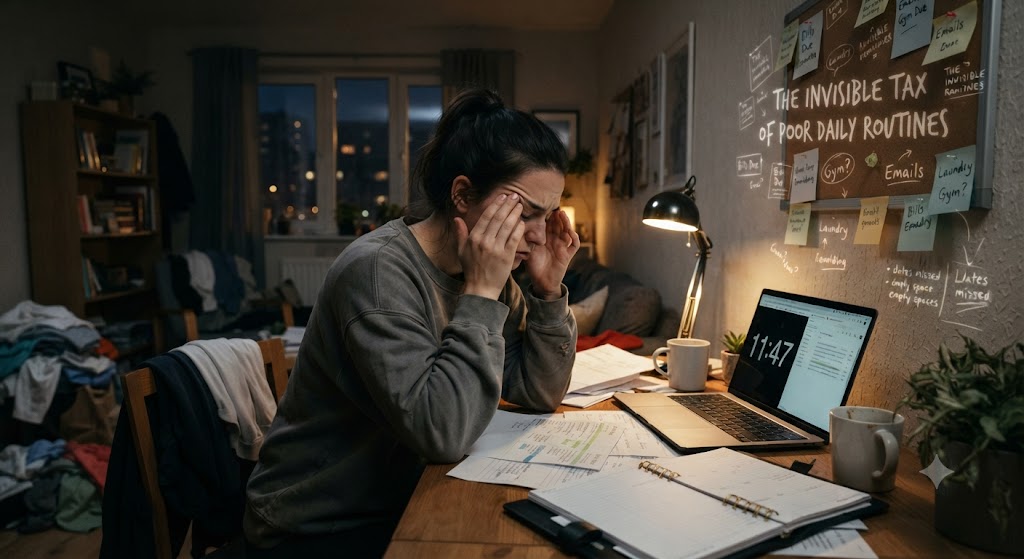
The Invisible Tax of Poor Daily Routines
Every person pays taxes in one form or another, but there is one tax that rarely appears on a bank statement, government document, or monthly bill. It is the invisible tax of poor daily routines. This silent cost is deducted from your life every single day without making a sound. It steals time, reduces productivity, weakens discipline, damages health, limits financial growth, and quietly delays success. Most people notice the consequences only after months or years have passed, making this one of the most expensive taxes anyone can ever pay.
Daily routines may seem ordinary, but they determine extraordinary outcomes. Success is rarely the result of one giant decision. Instead, it is usually the product of hundreds of small decisions repeated consistently over time. Likewise, failure is often the result of seemingly harmless habits repeated every day. Sleeping too late, waking up without a plan, procrastinating on important tasks, spending hours scrolling through social media, eating unhealthy meals, avoiding exercise, and constantly postponing responsibilities may appear insignificant on any single day. However, when these actions become routines, they begin charging an invisible tax that compounds over time.
Many people believe they need more money to improve their lives, but what they often need first is a better daily routine. Money can replace many lost possessions, but it cannot replace wasted years. Every hour spent on meaningless activities is an investment in a future you may not want. The frightening reality is that poor routines do not announce themselves as dangerous. They disguise themselves as comfort, convenience, entertainment, and temporary pleasure while quietly stealing opportunities that may never return.
One of the biggest invisible taxes of poor daily routines is lost productivity. Every morning begins with the same twenty-four hours for everyone. The difference lies in how those hours are managed. A person who starts the day with purpose, planning, and focus often accomplishes more before noon than another person achieves in an entire day. Meanwhile, someone who wakes up without direction usually spends the day reacting instead of leading. One distraction leads to another, important work is postponed, deadlines become stressful, and opportunities disappear before they are even recognized.
Poor routines also create decision fatigue. Every unnecessary decision consumes mental energy. When daily activities are not organized, the brain constantly struggles with simple choices such as when to work, what to eat, when to exercise, or what task deserves immediate attention. Successful people often simplify these decisions through consistent routines because they understand that mental energy is a valuable resource. The fewer unnecessary decisions they make, the more attention they can devote to meaningful work that creates value.
Health is another area where poor daily routines collect a heavy invisible tax. Skipping breakfast, sleeping irregularly, ignoring physical activity, consuming excessive processed foods, and living under constant stress gradually weaken the body. These habits may not produce immediate illness, but they quietly reduce energy levels, concentration, creativity, and resilience. Over time, the body begins presenting the bill through fatigue, weight gain, chronic diseases, poor immune function, and declining physical performance. Many people attempt to solve these problems with expensive treatments while ignoring the routines that created them.
Financial success is also closely connected to daily habits. Many assume wealth is determined only by income, but spending habits, learning habits, saving habits, and work habits play equally important roles. Someone who consistently wastes productive hours, delays important projects, ignores skill development, and spends impulsively is unknowingly paying a daily financial tax. Small amounts of wasted money combined with wasted time eventually become thousands of dollars and countless missed opportunities over several years.
Relationships are not immune to poor routines either. Daily neglect often destroys relationships more effectively than major conflicts. Failing to communicate, constantly prioritizing work over family, ignoring loved ones while focusing on digital devices, or refusing to invest quality time gradually weakens emotional connections. Relationships rarely collapse overnight. Instead, they deteriorate through repeated moments of inattention until trust, affection, and understanding begin to disappear.
The workplace provides another clear example of the invisible tax of poor routines. Employees who consistently arrive late, miss deadlines, avoid preparation, and fail to improve their skills often wonder why promotions never come. Employers do not simply reward intelligence. They reward reliability, consistency, discipline, and initiative. These qualities are demonstrated through daily routines rather than occasional bursts of motivation. The employee who develops dependable habits gradually becomes indispensable, while those with inconsistent routines remain replaceable.
Poor routines also damage confidence. Confidence is often misunderstood as a personality trait, but much of it comes from keeping promises to yourself. Every time you postpone your goals, skip important responsibilities, or abandon personal commitments, your subconscious mind notices. Eventually, self-trust begins to decline. On the other hand, consistently following through on small daily commitments strengthens self-belief because each completed task reinforces the belief that you are dependable.
The digital age has introduced new forms of invisible taxation through poor routines. Smartphones, endless notifications, social media feeds, streaming platforms, and constant online distractions quietly consume hours that could have been invested in learning, creating, exercising, or building relationships. Most people underestimate the cumulative effect of spending just two or three extra hours each day on low-value digital activities. Over a year, this amounts to hundreds of hours that could have been used to master valuable skills, launch a business, write a book, or improve financial stability.
Learning suffers greatly under poor routines. Knowledge compounds just like money. Reading ten pages every day may seem insignificant, yet over several years it results in dozens of completed books and an enormous expansion of knowledge. Conversely, avoiding daily learning creates an invisible knowledge gap. As industries evolve, technology advances, and new opportunities emerge, those who fail to learn consistently often find themselves struggling to remain relevant.
Another invisible tax appears through accumulated stress. Poor routines frequently produce unfinished tasks, missed deadlines, financial pressure, unhealthy lifestyles, and chaotic schedules. These unresolved issues create chronic stress that affects both physical and mental health. Stress reduces creativity, weakens decision-making, impairs memory, and increases emotional reactions. Many people blame external circumstances while failing to recognize that much of their stress originates from daily habits that could be improved.
Discipline plays a critical role in reducing these hidden costs. Contrary to popular belief, discipline does not limit freedom. It creates freedom. A disciplined routine reduces confusion, increases efficiency, and provides greater control over daily life. People with structured habits spend less time wondering what to do next because their priorities are already established. This clarity allows them to make steady progress toward meaningful goals instead of constantly reacting to distractions.
One remarkable characteristic of routines is that they compound quietly. Just as compound interest transforms small financial investments into substantial wealth, small daily improvements produce remarkable long-term results. Improving your sleep schedule by one hour, reading twenty minutes daily, exercising regularly, preparing tomorrow’s tasks each evening, limiting unnecessary screen time, and consistently saving a small percentage of your income may seem ordinary today. However, after five or ten years, these habits can dramatically transform your health, career, finances, relationships, and overall quality of life.
Poor routines also influence opportunities in unexpected ways. Opportunities often appear without warning, and only prepared individuals can fully benefit from them. A job interview, business partnership, investment opportunity, public speaking invitation, or leadership position may arrive unexpectedly. Those with disciplined routines have usually spent months or years preparing themselves without knowing exactly when the opportunity would come. Meanwhile, those with poor routines often watch opportunities pass because they are simply unprepared.
There is also an emotional tax associated with poor daily routines. Regret is one of life’s heaviest emotional burdens. Looking back and realizing that years were wasted through avoidable habits can produce deep disappointment. Many successful individuals admit that they wish they had developed better routines earlier in life because the benefits of consistent discipline become increasingly powerful over time.
Breaking poor routines is rarely easy because habits become deeply embedded through repetition. However, meaningful change rarely requires dramatic action. Small, consistent improvements often produce better long-term results than temporary bursts of extreme motivation. Waking up slightly earlier, planning each day before it begins, exercising for twenty minutes, reading consistently, reducing unnecessary screen time, preparing healthy meals, reviewing goals daily, and maintaining regular sleep patterns are manageable changes that gradually eliminate the invisible tax.
Environment also influences routines more than most people realize. Individuals surrounded by organized, disciplined, growth-oriented environments often find it easier to develop productive habits. Conversely, environments filled with distractions, negativity, and disorder constantly encourage poor routines. Making simple environmental changes such as organizing workspaces, removing unnecessary distractions, scheduling focused work periods, and surrounding yourself with motivated individuals can significantly improve daily behavior.
Consistency always outperforms intensity. Many people attempt dramatic lifestyle changes that last only a few weeks before returning to old habits. Sustainable improvement comes from routines that can be maintained for years rather than days. A moderate routine followed consistently creates far greater results than an extreme routine abandoned quickly.
The invisible tax of poor daily routines affects every area of life because routines shape character, character shapes decisions, and decisions shape destiny. Every successful person eventually realizes that extraordinary lives are built on ordinary habits repeated faithfully over long periods. The same principle applies in reverse. Ordinary neglect repeated consistently creates extraordinary problems.
The encouraging truth is that this invisible tax is completely optional. Unlike government taxes that must be paid, the tax of poor routines can be reduced or eliminated through intentional daily choices. Every productive morning, every completed task, every healthy meal, every hour spent learning, every disciplined financial decision, and every meaningful conversation becomes an investment rather than an expense.
Your future is quietly being written by today’s routines. The habits you repeat this week will influence the opportunities you receive next year. The decisions you make each morning will shape the life you experience in the coming decade. Long before success becomes visible to others, it begins as invisible routines practiced consistently behind the scenes.
The invisible tax of poor daily routines is one of the greatest obstacles to personal growth because it operates silently, compounds continuously, and often goes unnoticed until valuable time has already been lost. Recognizing its existence is the first step toward eliminating it. Every day presents a new opportunity to replace harmful routines with productive ones, turning invisible losses into lasting gains. In the end, your daily routine is not merely a schedule. It is the blueprint of your future, and the quality of that blueprint will determine whether you build a life of regret or a life of lasting success.

EarnSmartOnline.com.ng is dedicated to helping readers make smarter financial decisions through practical guides on online income, personal finance, technology, digital business, and wealth creation. Our goal is to provide reliable, easy-to-understand, and actionable content that empowers individuals to earn smarter, build sustainable income streams and achieve long-term financial success.
Recommended: Start Earning Online
- Ultimate Affiliate Marketing Program — learn affiliate marketing with a done-for-you sales system ($15). Check it out
- The Newbie Affiliate Guide — the beginner-friendly starter guide (~$6.68). Check it out
- Easy Dollar Maker — earn in dollars uploading AI images and videos from your phone ($17). Check it out
Disclosure: These are affiliate links. If you buy through them, I may earn a commission at no extra cost to you.



