
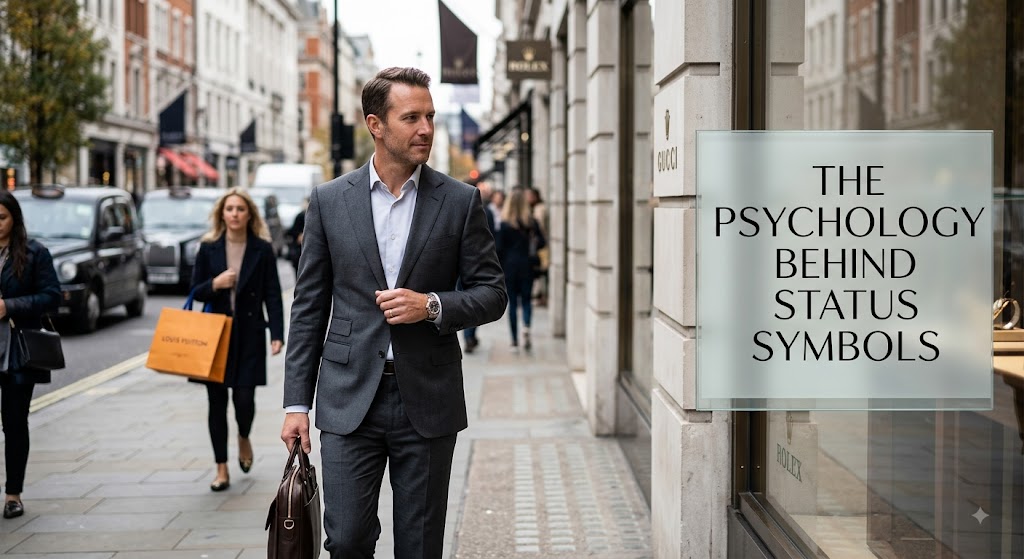
The Psychology Behind Status Symbols is a fascinating subject because status symbols are rarely just about the objects people buy, wear, drive or display. Beneath the surface, they often represent something much deeper about identity, belonging, confidence, insecurity, ambition and the human desire to be recognised. A luxury watch may tell the time, an expensive car may provide transportation and a designer handbag may carry personal belongings, but the psychological meaning attached to these objects can be far greater than their practical functions. People often use possessions to communicate messages about who they are, where they belong and how they want others to perceive them.
The Psychology Behind Status Symbols helps explain why human beings sometimes spend extraordinary amounts of money on things that perform functions that cheaper alternatives can perform almost equally well. If a basic watch can tell time accurately, why would someone spend thousands on a luxury timepiece? If an ordinary car can take someone from one location to another, why does owning a premium vehicle feel so different? If a simple shirt can provide comfort and protection, why can a recognisable designer logo make the same basic item significantly more desirable? The answer lies partly in psychology. Humans do not simply consume products for their practical benefits. We also consume meanings.
From childhood, people learn that objects can carry social meaning. Children may notice which toys are considered popular, which trainers attract attention or which gadgets make someone appear fashionable. As people grow older, these lessons become more sophisticated. Clothing, cars, homes, phones, jewellery, watches, holidays, restaurants and even social media posts can become signals of success and social position. Society continuously teaches people that certain things represent achievement, sophistication, wealth, taste or influence. Over time, individuals can internalise these messages and begin associating particular possessions with personal worth.
One of the strongest forces behind status symbols is the human need for social recognition. People generally want to feel valued, respected and significant. Recognition from other people can provide emotional satisfaction because humans are inherently social beings. Throughout history, belonging to a group has been closely connected to survival. Being accepted by a community could mean access to resources, protection and opportunities. Although modern societies are vastly different from ancient communities, the psychological desire for acceptance has not disappeared. It has simply found new ways to express itself.
Status symbols can therefore function as social signals. When someone wears an expensive watch, drives a luxury vehicle or lives in an impressive house, other people may interpret those possessions as evidence of financial success or social achievement. The object becomes a form of communication. The owner may not say, “I have achieved a certain level of success,” but the possession may communicate that message indirectly.
This is particularly important because people often make rapid judgements about others. Before having a meaningful conversation with someone, we may notice their clothing, appearance, accessories, vehicle or surroundings. These visible signals can influence our assumptions. A person wearing expensive clothing may be perceived as successful even when we know nothing about their finances. Someone driving an impressive car may be perceived as wealthy even if the vehicle was purchased through substantial debt. The status symbol can therefore influence perception without necessarily reflecting reality.
This distinction between appearance and reality is one of the most important parts of The Psychology Behind Status Symbols. A status symbol communicates perceived status, not necessarily actual financial health. Someone can look wealthy while struggling financially, while another person can possess substantial wealth without displaying obvious signs of it. This is why judging financial success purely through visible consumption can be dangerously misleading.
Another psychological concept connected to status symbols is social comparison. People naturally compare themselves with others. We look at what our neighbours have, what our colleagues drive, what our friends wear and what people we follow online appear to be achieving. These comparisons can influence our own desires.
Social media has intensified this phenomenon. People are exposed to carefully selected images of other people’s lives every day. A person may see someone travelling internationally, wearing designer clothing, buying a new car or moving into an expensive home. What is often invisible is the financial reality behind those images. The audience sees the result but rarely sees the debt, stress, family support, business failure, financial sacrifice or years of work that may exist behind it.
This creates a psychological environment in which people can feel that they are falling behind. The desire for status symbols may then become less about genuine enjoyment and more about catching up. Someone buys a particular phone because everyone around them has one. Someone upgrades their car because they do not want colleagues to think they are struggling. Someone purchases expensive clothing because they fear being judged as unsuccessful. The purchase becomes a response to social pressure rather than a simple consumer choice.
The Psychology Behind Status Symbols also involves the concept of identity. People often use possessions to construct and express their identity. Clothing can communicate personality. Music choices can communicate cultural affiliation. Cars can communicate lifestyle preferences. Technology can communicate professional identity. Luxury products can communicate ambition or achievement.
This means that status symbols are not always about impressing strangers. Sometimes they are about reinforcing an individual’s own perception of themselves. A person who buys an expensive watch after achieving a major career milestone may see the watch as a physical reminder of hard work. The object becomes meaningful because it represents a personal story.
The Psychology Behind Status Symbols
This is one reason why the same object can have completely different psychological meanings for different people. To one person, a luxury car may represent unnecessary spending. To another, it may represent years of sacrifice finally paying off. To someone else, it may be a tool for attracting clients or projecting professionalism. The object itself does not contain the entire meaning. The meaning is created through the relationship between the person, the object and society.
Status symbols can also be connected to self esteem. When people feel insecure about their position in society, they may become more sensitive to external signals of acceptance and recognition. Possessions can temporarily provide reassurance. Wearing something expensive may make someone feel more confident. Driving a prestigious vehicle may make someone feel more respected. Living in an impressive home may create a sense of accomplishment.
However, the psychological benefit can become complicated when self worth becomes dependent on external possessions. If confidence comes primarily from what someone owns, maintaining that confidence may require continuous consumption. The person may need a newer phone, a more expensive car, better clothes, bigger holidays or a more impressive house because the previous purchase eventually stops producing the same emotional effect.
This phenomenon is sometimes connected to the hedonic adaptation principle. Humans often adapt to improvements in their circumstances. Something that initially feels extraordinary can eventually become normal. The first luxury purchase may create excitement and pride, but after months or years, it may become ordinary. The person may then seek another upgrade to recreate the original emotional experience.
This can create a cycle of consumption. Buy something impressive. Feel excited. Become accustomed to it. Notice someone with something better. Feel dissatisfied. Upgrade. Feel excited again. Eventually, the new possession becomes normal too.
Advertising industries understand this psychological mechanism extremely well. Marketing rarely sells only functionality. It sells identity, aspiration and emotion. A product may be presented as a symbol of freedom, sophistication, attractiveness, success, youthfulness or social importance. Consumers are encouraged to imagine not merely owning the product but becoming the person associated with it.
Luxury brands are particularly effective at creating symbolic value. Their products often communicate exclusivity. Scarcity, craftsmanship, heritage, limited availability and recognisable branding can make consumers feel that they are purchasing membership in a particular social category. The product becomes more than an object. It becomes a badge.
This helps explain why people sometimes value products more when they are difficult to obtain. Scarcity can increase perceived desirability. If everybody can easily own something, it may lose some of its ability to communicate distinction. But if access is limited by price, availability or exclusivity, ownership can become a stronger status signal.
Status competition can therefore influence consumer behaviour. People are not always competing consciously, but they may still compare their possessions with those of others. A neighbour buys a new car, so another neighbour begins considering an upgrade. A colleague purchases a luxury watch, so another colleague starts researching premium watches. A friend posts photographs from an expensive holiday, and suddenly an ordinary holiday feels less impressive.
This does not mean that everyone who buys luxury products is insecure or trying to impress others. That would be an unfair oversimplification. Many people genuinely enjoy quality, design, craftsmanship and comfort. A person can purchase an expensive product because they appreciate its features rather than because they want social approval. The psychology becomes important when the symbolic meaning of the product begins to outweigh its practical or personal value.
Culture also plays a major role in determining what counts as a status symbol. What signals prestige in one society may mean very little in another. Certain brands, professions, homes, cars, educational qualifications or lifestyles can carry different meanings across communities. Status is therefore partly constructed by collective beliefs.
In many societies, educational achievements can function as status symbols. University degrees, professional qualifications and prestigious job titles can communicate intelligence, competence and social advancement. In other contexts, entrepreneurial success may carry greater prestige. Elsewhere, family background, property ownership or community influence may matter more.
Digital technology has created an entirely new category of status symbols. Smartphones, followers, verification badges, social media engagement, expensive cameras and carefully designed online profiles can all become indicators of perceived status. Digital status is particularly interesting because it can sometimes be manufactured without corresponding financial wealth.
A person can create the appearance of an extraordinary lifestyle online without actually living that lifestyle consistently. Carefully selected photographs, borrowed luxury items, edited images and strategically chosen locations can produce an impression that is very different from everyday reality. This demonstrates how powerful perception has become in modern status competition.
The Psychology Behind Status Symbols becomes even more interesting when we consider why people sometimes hide wealth rather than display it. In some social groups, conspicuous consumption may be admired. In others, excessive display may be considered immature, arrogant or wasteful. People with substantial wealth may deliberately choose understated clothing, ordinary vehicles or discreet homes because their social environment values privacy and subtlety.
This demonstrates that status is not always about showing more. Sometimes status comes from being able to show less. A person who does not need to prove their success may communicate confidence through simplicity. In certain circles, understated possessions can themselves become status symbols because they signal sophistication and independence from mainstream consumer pressure.
There is also an important difference between status symbols and meaningful possessions. A status symbol is largely valuable because of what it communicates socially, while a meaningful possession can be valuable because of the memories and emotions attached to it. A cheap watch inherited from a parent may have enormous personal value even though it has little market value. A simple family photograph may be more emotionally significant than an expensive painting.
Understanding this distinction can help people become more conscious consumers. Instead of asking only whether they can afford something, they can ask why they want it. Is the purchase genuinely useful? Does it provide lasting happiness? Does it represent a personal achievement? Or is the person primarily trying to prove something to other people?
This question becomes particularly important in personal finance. Status consumption can quietly undermine wealth building. Someone may earn a high income but spend much of it maintaining an appearance of success. Expensive cars, designer clothing, luxury accommodation and constant lifestyle upgrades can consume resources that could otherwise be invested, saved or used to create long term financial security.
The most dangerous part is that status spending can become normalised. When people surround themselves with others who spend heavily, excessive consumption may no longer feel excessive. It simply feels normal. This is why choosing the right social environment can have significant financial consequences.
Financial independence often requires separating personal happiness from public approval. That does not mean refusing to enjoy beautiful things or pretending money does not matter. It means recognising the psychological forces influencing spending decisions. A person can enjoy luxury without becoming controlled by the need to appear luxurious.
The Psychology Behind Status Symbols also reveals something important about human nature. People want their lives to mean something. They want evidence that their effort has produced results. They want to be respected. They want to belong. They want to feel that they are progressing. Status symbols can become physical representations of these deeper desires.
The challenge is that possessions cannot permanently satisfy psychological needs. A new car can create excitement, but it cannot guarantee respect. Expensive clothing can improve appearance, but it cannot create genuine character. A large house can provide comfort, but it cannot automatically produce peace. A luxury watch can communicate success, but it cannot create meaningful achievement by itself.
True status may therefore have less to do with what people can display and more to do with what they have built. Character, competence, integrity, knowledge, relationships, discipline and contribution can create forms of respect that cannot be purchased in a shop.
This does not make material possessions meaningless. Objects can be enjoyable, useful and personally significant. The important thing is understanding what role they play in our lives. When possessions serve us, they can enhance life. When our lives become organised around proving what we possess, they can become a psychological burden.
Perhaps the most powerful lesson from The Psychology Behind Status Symbols is that people are often buying stories rather than objects. They buy the story of success, the story of belonging, the story of attractiveness, the story of achievement or the story of becoming someone important. Understanding those stories gives consumers greater control over their decisions.
Before buying the next thing designed to make you look successful, it is worth asking a simple question: would I still want this if nobody else could see it? That question can reveal a surprising amount about the real motivation behind a purchase.
If the answer is yes, perhaps the item genuinely brings personal value. If the answer is no, perhaps the purchase is primarily about perception. Neither answer automatically makes the person right or wrong, but knowing the difference creates awareness.
In a world where social media constantly displays other people’s highlights, understanding The Psychology Behind Status Symbols is more important than ever. People are surrounded by signals telling them what success should look like, what they should own and how they should present themselves. But financial success and personal fulfilment do not always look impressive from the outside.
Sometimes the person with the oldest phone has the healthiest finances. Sometimes the person driving an ordinary car has the largest investment portfolio. Sometimes the person wearing simple clothes has spent years building a successful business. Sometimes the quietest person in the room has achieved more than everyone trying desperately to prove themselves.
The real measure of success is therefore not necessarily how impressive a person’s possessions appear. It is whether those possessions support the life that person genuinely wants to live. Once people understand the psychological forces behind status symbols, they can make more deliberate decisions about money, identity and consumption.
Status symbols will always exist because humans will always communicate through objects. The goal is not to eliminate them. The goal is to recognise what they are doing psychologically. When you understand that a purchase can be a signal, an emotional reward, an identity statement or a response to social comparison, you become less vulnerable to unconscious consumption.
Ultimately, The Psychology Behind Status Symbols is really about the human desire to be seen, valued and respected. Products may change, brands may rise and fall, and social trends may evolve, but those fundamental desires remain. The healthiest approach is not to reject material success but to ensure that your possessions remain tools for expressing your values rather than substitutes for having values.
Because at the end of the day, the most powerful status symbol may not be something you can wear, drive or display. It may be the freedom to live according to your own values without constantly needing the approval of everyone watching.

EarnSmartOnline.com.ng is dedicated to helping readers make smarter financial decisions through practical guides on online income, personal finance, technology, digital business, and wealth creation. Our goal is to provide reliable, easy-to-understand, and actionable content that empowers individuals to earn smarter, build sustainable income streams and achieve long-term financial success.
Recommended: Start Earning Online
- Ultimate Affiliate Marketing Program — learn affiliate marketing with a done-for-you sales system ($15). Check it out
- The Newbie Affiliate Guide — the beginner-friendly starter guide (~$6.68). Check it out
- Easy Dollar Maker — earn in dollars uploading AI images and videos from your phone ($17). Check it out
Disclosure: These are affiliate links. If you buy through them, I may earn a commission at no extra cost to you.



