
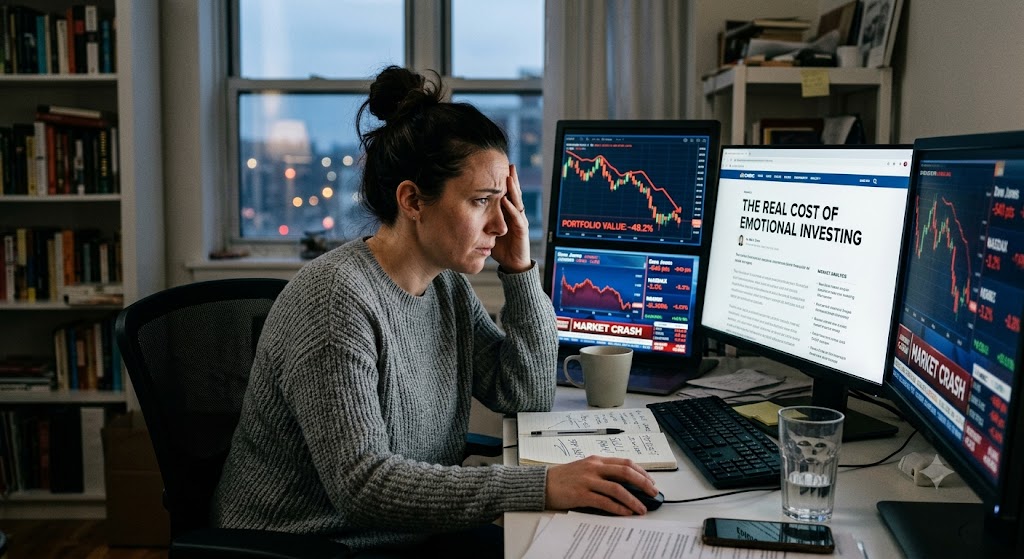
The Real Cost of Emotional Investing
It is easy to think that investing is all about numbers, charts, profits, losses, and market trends. Financial news often focuses on stock prices, cryptocurrencies, real estate values, and economic forecasts. However, behind every investment decision is a human being with emotions. Fear, excitement, greed, hope, regret, pride, and impatience influence financial decisions far more than most people realize. While many people spend years learning how markets work, very few spend enough time understanding how their own emotions work. This is one of the biggest reasons why intelligent people sometimes make terrible investment decisions. The real cost of emotional investing is not just losing money. It is losing opportunities, confidence, peace of mind, and sometimes even years of financial progress because of decisions made in moments of emotional weakness rather than careful thinking.
Emotional investing happens when decisions are driven primarily by feelings instead of facts, research, and long term planning. It occurs when someone buys an investment simply because everyone else is talking about it. It happens when an investor refuses to sell a failing investment because admitting a mistake feels too painful. It appears when fear causes someone to sell valuable assets during a market decline only to watch prices recover later. Emotional investing often feels logical while it is happening because emotions have a way of convincing people that urgent action is necessary. Unfortunately, the financial markets rarely reward emotional reactions.
One of the greatest dangers of emotional investing is fear. Fear has protected humanity for thousands of years by helping people avoid danger. In investing, however, fear often becomes the enemy. When markets fall sharply, headlines become negative, social media spreads panic, and everyone seems to predict even worse days ahead. Investors begin to imagine losing everything they have worked hard to build. Instead of following their original investment strategy, they panic and sell their investments at low prices. Ironically, many of these same investments recover months or years later, leaving emotional investors with permanent losses while patient investors enjoy the recovery.
History has repeatedly shown that markets experience periods of decline followed by recovery. Every financial crisis creates predictions that things will never improve again. Yet markets have consistently recovered over the long term despite wars, recessions, political uncertainty, global pandemics, and financial crashes. Investors who allow temporary fear to control permanent decisions often discover that their greatest losses came not from the market itself but from their own reactions.
Greed is another expensive emotion in investing. Greed whispers that more is always better. It convinces investors that ordinary returns are not enough and that massive profits are just around the corner if they take bigger risks. During market booms, greed becomes contagious. Stories of people becoming millionaires overnight spread rapidly. Social media fills with screenshots of extraordinary profits. Friends begin discussing investments they never cared about before. Suddenly everyone feels like a financial expert.
This environment makes emotional investing especially dangerous. Investors stop asking whether an investment has real value. Instead, they focus only on how much money they might make quickly. They ignore warning signs because greed makes every risk appear smaller than it really is. By the time they finally invest, prices are often already inflated. When reality eventually returns, prices fall, and emotional investors are left holding assets that are worth far less than they paid.
Another hidden cost of emotional investing is impatience. Many people enter investing expecting immediate results. They compare investing to gambling instead of wealth building. If an investment does not produce significant returns within weeks or months, they become frustrated and abandon it. They move from one investment to another searching for quick profits without giving any strategy enough time to succeed.
Successful investing usually rewards patience more than speed. Compound growth needs time. Businesses need time to expand. Real estate often appreciates over many years. Long term investments become powerful because of consistency rather than excitement. Investors who constantly switch strategies because of impatience often miss the rewards that only time can produce.
Hope is another emotion that can become costly when misunderstood. Hope is valuable in life because it encourages perseverance during difficult moments. However, hope alone is not an investment strategy. Some investors continue holding failing investments year after year because they hope prices will recover. Instead of evaluating new information objectively, they remain emotionally attached to their original decision.
There is an important difference between patience and blind hope. Patience is based on research, confidence, and long term fundamentals. Blind hope ignores evidence while waiting for miracles. Emotional investors often confuse the two, leading them to hold investments that no longer fit their financial goals.
Pride also creates expensive investment mistakes. Nobody enjoys admitting they were wrong. After spending time researching an investment and publicly telling friends about it, selling at a loss can feel embarrassing. Pride encourages investors to defend poor decisions instead of correcting them. They continue investing more money into failing opportunities simply because admitting the original mistake feels emotionally painful.
Experienced investors understand that mistakes are part of investing. Even professional fund managers, successful entrepreneurs, and billionaire investors make incorrect decisions. What separates successful investors from unsuccessful ones is not avoiding every mistake. It is recognizing mistakes early, learning from them, and moving forward without allowing pride to control future decisions.
Regret is another powerful emotion that influences financial behaviour. Investors often regret opportunities they missed. After watching an investment multiply in value, they promise themselves they will never miss another opportunity. This regret pushes them into buying investments after most of the profits have already been made. Unfortunately, buying because of regret often means purchasing at high prices just before markets cool down.
Regret also affects people who experience losses. After losing money, they become afraid to invest again. Even excellent investment opportunities are ignored because previous emotional pain remains fresh in their minds. As a result, they miss future growth while inflation slowly reduces the value of money sitting idle.
Social pressure significantly increases emotional investing. Human beings naturally compare themselves with others. Seeing friends discuss investment profits creates pressure to participate. People begin investing not because they understand the opportunity but because they fear being left behind. This fear of missing out has become even stronger in the age of social media, where financial success is often exaggerated while losses remain hidden.
Online platforms regularly display luxury lifestyles supposedly funded by investing. Expensive cars, beautiful homes, designer clothes, and international holidays are presented as evidence of investment genius. Very few people share failed investments, overwhelming debt, or financial struggles. Emotional investors compare their real lives with carefully selected highlights from strangers online, making risky financial decisions in an attempt to catch up.
The constant availability of financial news also fuels emotional investing. Investors receive notifications every hour about market movements, economic reports, political events, and expert opinions. While information can be useful, too much information often creates unnecessary anxiety. Every market fluctuation begins to feel important even when it has little impact on long term investment success.
Many successful investors deliberately avoid checking investment prices every day. They understand that constant monitoring encourages emotional reactions to short term volatility. Instead, they focus on long term objectives and review their investments periodically rather than obsessively.
Emotional investing also damages relationships. Financial stress often creates conflict between spouses, business partners, family members, and friends. Investments made without proper discussion can lead to blame when losses occur. Families sometimes experience years of tension because emotional decisions placed savings, retirement funds, or children’s education money at unnecessary risk.
Financial disagreements become even more intense when one person ignored advice or made impulsive decisions. Trust can take years to rebuild after emotional investing leads to significant financial losses. The cost extends far beyond bank balances because relationships themselves may suffer permanent damage.
Sleep is another hidden casualty of emotional investing. Investors who take excessive risks frequently experience anxiety. They constantly worry about market movements, price changes, and financial news. Every notification creates stress. Every decline creates panic. Instead of improving life, investing becomes a source of continuous emotional pressure.
Financial success should ultimately provide greater freedom and peace of mind. If investment decisions consistently create fear, sleepless nights, and constant anxiety, it may be a sign that emotions have replaced sound financial planning.
Emotional investing often causes people to abandon diversification. During periods of excitement, investors become convinced that one particular investment cannot fail. They place most or all of their money into a single company, industry, cryptocurrency, or property. Concentrating wealth in one area increases risk dramatically.
Diversification may seem less exciting because it spreads investments across different opportunities. However, diversification exists to protect investors from unpredictable events. No matter how promising an investment appears today, unexpected changes can occur tomorrow. Emotional investing ignores this reality while disciplined investing prepares for it.
Another overlooked cost is opportunity cost. Every emotional investment decision affects future opportunities. Money tied up in poor investments cannot be used elsewhere. Years spent waiting for unrealistic recoveries could have been invested in growing businesses, productive assets, or diversified portfolios generating positive returns.
Opportunity cost is often invisible because people focus only on money lost. However, money that fails to grow over many years represents an enormous hidden expense. Time and compound growth are among the most valuable assets investors possess. Emotional decisions that waste either one can have lifelong consequences.
Confirmation bias makes emotional investing even more dangerous. Once investors become emotionally attached to an investment, they begin seeking information that supports their existing beliefs while ignoring evidence that contradicts them. Positive news receives attention while negative information is dismissed as unimportant.
This selective thinking creates an illusion of certainty. Investors become increasingly confident even when objective evidence suggests caution. Emotional attachment gradually replaces critical thinking, making poor decisions appear rational.
Another psychological trap involves anchoring. Investors often become emotionally attached to the price they originally paid for an investment. Instead of evaluating its current value objectively, they refuse to sell below their purchase price. The market, however, does not know or care what someone paid. Investment decisions should be based on future potential rather than past prices.
The media also contributes to emotional investing by emphasizing dramatic stories. Headlines about market crashes attract attention. Stories about overnight millionaires generate excitement. Extreme events receive far more coverage than ordinary long term investing success. As a result, many people develop unrealistic expectations about both risks and rewards.
In reality, most successful investors build wealth gradually through discipline, patience, regular investing, and careful decision making. Their stories rarely become viral because steady progress is less dramatic than sudden gains or devastating losses.
One valuable habit that reduces emotional investing is creating a written investment plan before investing any money. A written plan defines financial goals, acceptable risk levels, investment time horizons, diversification strategies, and conditions for buying or selling investments. Having clear rules established during calm moments makes it easier to avoid emotional decisions during stressful periods.
Regular investing also helps reduce emotional pressure. Instead of trying to predict perfect market timing, many investors consistently invest fixed amounts over long periods. This approach removes much of the emotional burden associated with deciding when to buy or sell.
Education remains one of the strongest defences against emotional investing. Investors who understand market history are less likely to panic during temporary declines. They recognize that volatility is a normal part of investing rather than evidence that something has permanently gone wrong.
Reading books, studying financial history, learning about behavioural finance, and understanding investment principles all contribute to greater emotional stability. Knowledge cannot eliminate emotions completely, but it can prevent emotions from dominating important financial decisions.
It is also helpful to separate investing from entertainment. Many people follow investments the same way others follow sporting events. Daily wins and losses become exciting. Financial markets become a source of emotional highs and lows. While this may seem harmless, treating investing as entertainment often encourages unnecessary trading, excessive risk taking, and impulsive decisions.
Long term investing should be viewed as a serious financial activity rather than a source of excitement. Boring investment strategies often outperform exciting ones because they rely on discipline instead of emotion.
Successful investors also understand the importance of accepting uncertainty. No investment guarantees success. Markets will always involve risk. Economic conditions will change. Unexpected events will occur. Emotional investing often begins with the unrealistic expectation that certainty is possible.
Accepting uncertainty encourages humility. Humble investors prepare for different outcomes instead of assuming they always know what will happen next. They diversify, manage risk, remain flexible, and continue learning because they understand that nobody can predict every market movement accurately.
Another effective strategy involves delaying important investment decisions during emotional moments. If fear or excitement becomes overwhelming, waiting twenty four hours or several days before acting often allows emotions to settle. Decisions made calmly are generally better than decisions made during panic or euphoria.
Seeking objective advice can also reduce emotional investing. Trusted financial advisers, experienced mentors, or knowledgeable investors may notice emotional thinking that individuals cannot recognize themselves. External perspectives often reveal blind spots created by emotional attachment.
It is equally important to define personal financial success independently from others. Emotional investing frequently begins with comparison. Someone else buys a luxury car after investing. Another friend boasts about cryptocurrency profits. A neighbour makes money in property. Comparing every financial decision with other people’s results creates unnecessary pressure.
Financial goals should reflect personal circumstances, responsibilities, income, risk tolerance, and long term objectives. What works for someone else may not be appropriate for another investor. Emotional investing often ignores these differences while disciplined investing respects them.
Investors should also remember that protecting wealth is just as important as growing it. Chasing extraordinary returns often exposes capital to extraordinary risks. Moderate but consistent growth sustained over many years frequently produces greater wealth than repeated attempts to achieve spectacular profits through emotional decision making.
The greatest investors in history consistently emphasize discipline, patience, risk management, and emotional control. Their success rarely comes from predicting every market movement perfectly. Instead, it comes from making rational decisions repeatedly over long periods despite emotional pressures.
The real cost of emotional investing cannot always be measured immediately. Sometimes the damage appears years later when retirement savings are smaller than expected, financial goals remain unfulfilled, or opportunities have permanently disappeared. Every emotional decision creates consequences that extend beyond the present moment.
Building wealth requires more than identifying good investments. It requires developing the emotional maturity to stay committed during uncertainty, resist greed during booms, remain calm during downturns, admit mistakes when necessary, and focus on long term objectives instead of temporary emotions. Investors who master their emotions gain an advantage that no market trend, economic forecast, or investment tip can provide.
At the end of the day, financial markets test much more than mathematical ability. They test patience, discipline, humility, self awareness, and emotional resilience. Every investment decision reflects not only knowledge about markets but also knowledge about oneself. The investor who learns to control emotions rather than being controlled by them protects far more than money. They protect their future, their confidence, their opportunities, and their financial freedom. That is why the real cost of emotional investing is often far greater than any temporary market loss. It is the price paid whenever emotions replace wisdom, impulse replaces strategy, and short term feelings override long term financial success.

EarnSmartOnline.com.ng is dedicated to helping readers make smarter financial decisions through practical guides on online income, personal finance, technology, digital business, and wealth creation. Our goal is to provide reliable, easy-to-understand, and actionable content that empowers individuals to earn smarter, build sustainable income streams and achieve long-term financial success.
Recommended: Start Earning Online
- Ultimate Affiliate Marketing Program — learn affiliate marketing with a done-for-you sales system ($15). Check it out
- The Newbie Affiliate Guide — the beginner-friendly starter guide (~$6.68). Check it out
- Easy Dollar Maker — earn in dollars uploading AI images and videos from your phone ($17). Check it out
Disclosure: These are affiliate links. If you buy through them, I may earn a commission at no extra cost to you.



