
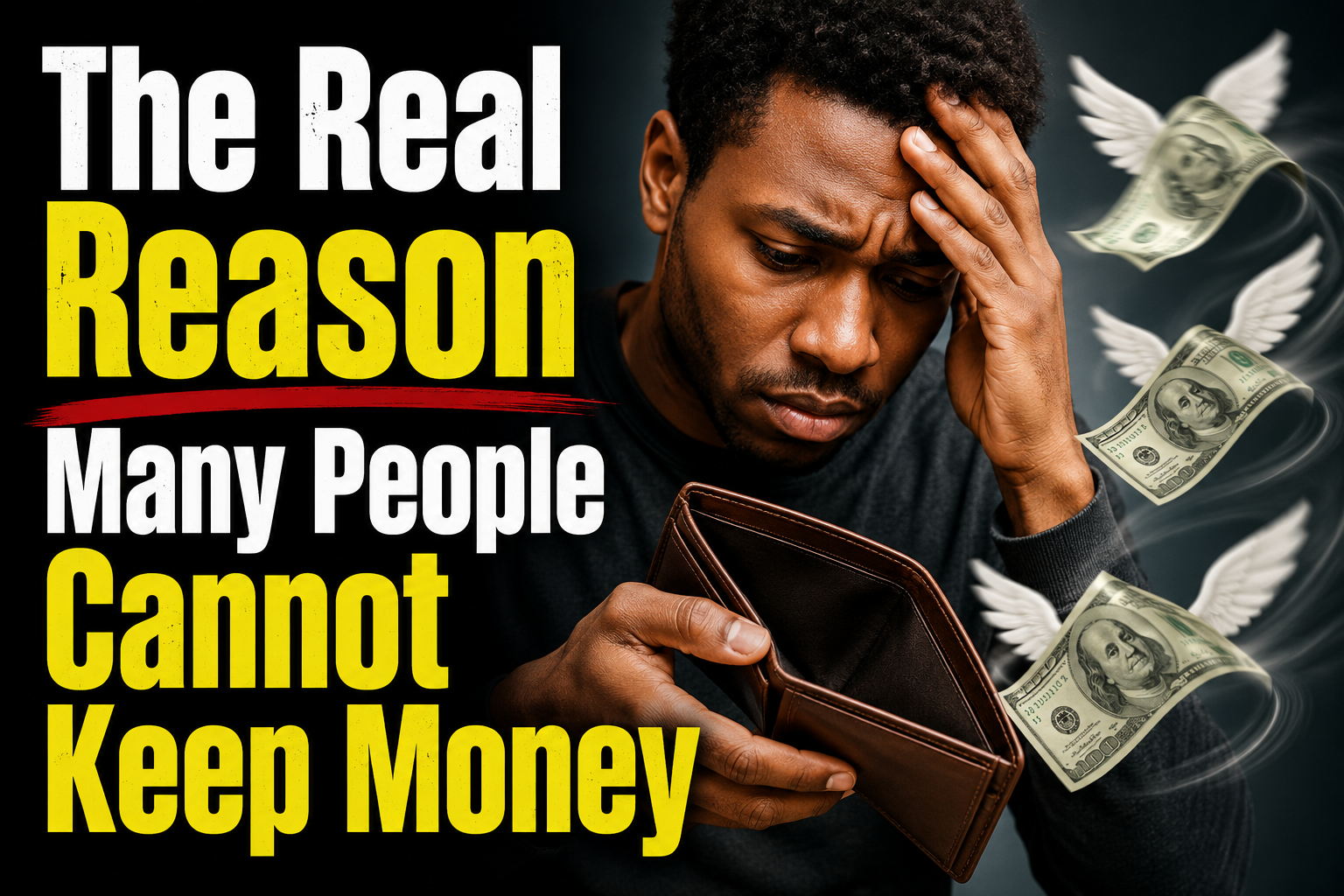
The Real Reason Many People Cannot Keep Money
Human behavior is often driven by the desire for immediate comfort. People naturally lean toward what feels good now rather than what will be beneficial later. This tendency is not random, it is deeply rooted in psychology and survival instincts. In earlier human history, seeking immediate rewards made sense because resources were uncertain and the future was unpredictable. However, in today’s structured world, this same instinct often becomes a disadvantage. The choices that bring short term pleasure can slowly accumulate into long term struggle, especially in areas like finances, health, relationships, and personal growth. The Real Reason Many People Cannot Keep Money.
Short term pleasure usually comes in the form of instant gratification. It could be impulsive spending, unhealthy eating, procrastination, avoidance of difficult tasks, or constantly seeking entertainment instead of productivity. These actions feel harmless in the moment because they reduce stress or provide enjoyment. But the hidden cost is that they delay responsibility. When responsibility is repeatedly postponed, it does not disappear. Instead, it grows and eventually becomes heavier to carry.
One of the clearest examples of this pattern is in financial behavior. Many people prefer to enjoy their income immediately rather than plan for the future. Buying unnecessary items, upgrading lifestyles too quickly, or relying on credit for comfort creates a cycle where money never feels enough. In the short term, these decisions bring satisfaction and even social approval. But over time, they lead to debt, lack of savings, and financial instability. What once felt like harmless enjoyment becomes a long term burden that limits freedom and opportunity.
The same principle applies to personal development. Growth often requires discomfort. Learning a new skill, building discipline, or working on long term goals demands patience and effort. However, short term pleasure tempts people to avoid this discomfort. Instead of studying, people scroll through social media. Instead of exercising, they choose rest. Instead of building a skill, they choose entertainment. Each individual decision seems small, but collectively they create a life where potential is never fully realized. The long term struggle here is not just external but internal, marked by regret and unrealized ability.
In relationships, short term pleasure can also create long term consequences. Choosing comfort over communication, avoiding difficult conversations, or prioritizing temporary excitement over stability can weaken emotional bonds. People may chase attention, validation, or excitement without considering emotional depth or long term compatibility. While these choices may feel fulfilling in the moment, they often lead to broken trust, emotional instability, or repeated cycles of dissatisfaction.
Another important factor is the illusion of time. Many people believe they have plenty of time to correct their habits later. This belief encourages delay and strengthens the attraction of short term pleasure. However, time does not slow down for delayed decisions. Habits compound silently. A person who wastes small amounts of time daily may not notice immediate consequences, but over months and years, the impact becomes significant. Similarly, small financial leaks, repeated procrastination, or consistent neglect of health accumulate into serious problems.
Short term pleasure is also powerful because it is emotionally rewarding. The brain releases dopamine when we experience enjoyment, which reinforces the behavior. This creates a cycle where the mind begins to prefer easy rewards over meaningful effort. Breaking this cycle requires conscious discipline, because long term success rarely provides immediate emotional payoff. Instead, it rewards consistency over time, which is harder to appreciate in the present moment.
The struggle that comes later is not always sudden. It builds gradually. A person may not feel the impact of poor decisions immediately, but eventually, the results become unavoidable. Financial stress appears when savings are gone. Health issues appear when neglect continues. Career stagnation appears when growth is avoided. Emotional dissatisfaction appears when shallow choices dominate relationships. These outcomes are not random events, they are the accumulation of repeated short term decisions.
However, it is important to understand that short term pleasure itself is not the enemy. Rest, enjoyment, and relaxation are necessary parts of life. The problem arises when they are prioritized over responsibility. Balance is the key factor. When pleasure is enjoyed after responsibility is fulfilled, it becomes rewarding without creating future struggle. But when pleasure is constantly chosen at the expense of responsibility, it becomes destructive.
Long term success requires the ability to delay gratification. This means choosing actions that may feel difficult now but produce better outcomes later. It involves sacrifice, patience, and self control. People who master this ability often achieve stability in multiple areas of life because they understand that real comfort is not found in immediate satisfaction but in future security.
Another reason short term pleasure leads to long term struggle is that it weakens resilience. When the mind becomes accustomed to comfort, even small challenges feel overwhelming. This reduces the ability to handle pressure, setbacks, or responsibilities. On the other hand, individuals who regularly choose discipline over comfort develop mental strength. They become better equipped to face difficulties without collapsing under pressure.
In the long run, life tends to reward consistency rather than intensity. Occasional bursts of effort cannot compete with steady disciplined action. Short term pleasure interrupts this consistency. Every time a person chooses immediate satisfaction over meaningful progress, they slow down their long term growth. Over time, this creates a gap between potential and reality.
Ultimately, the relationship between short term pleasure and long term struggle is a matter of cause and effect. Every choice carries consequences, even if they are not immediately visible. Understanding this connection helps individuals make more intentional decisions. It shifts focus from what feels good now to what builds a better future.
A fulfilling life is not built on constant sacrifice, but on wise prioritization. Enjoyment has its place, but it should not control direction. When individuals learn to manage their impulses and align their actions with long term goals, they reduce future struggle and increase stability. The goal is not to eliminate pleasure, but to ensure it does not come at the cost of the future.
In the end, every person faces a simple but powerful choice repeatedly. They can choose comfort that fades quickly or discipline that builds lasting strength. The accumulation of these choices determines whether life becomes a cycle of struggle or a journey of growth.

EarnSmartOnline.com.ng is dedicated to helping readers make smarter financial decisions through practical guides on online income, personal finance, technology, digital business, and wealth creation. Our goal is to provide reliable, easy-to-understand, and actionable content that empowers individuals to earn smarter, build sustainable income streams and achieve long-term financial success.
Recommended: Start Earning Online
- Ultimate Affiliate Marketing Program — learn affiliate marketing with a done-for-you sales system ($15). Check it out
- The Newbie Affiliate Guide — the beginner-friendly starter guide (~$6.68). Check it out
- Easy Dollar Maker — earn in dollars uploading AI images and videos from your phone ($17). Check it out
Disclosure: These are affiliate links. If you buy through them, I may earn a commission at no extra cost to you.



