
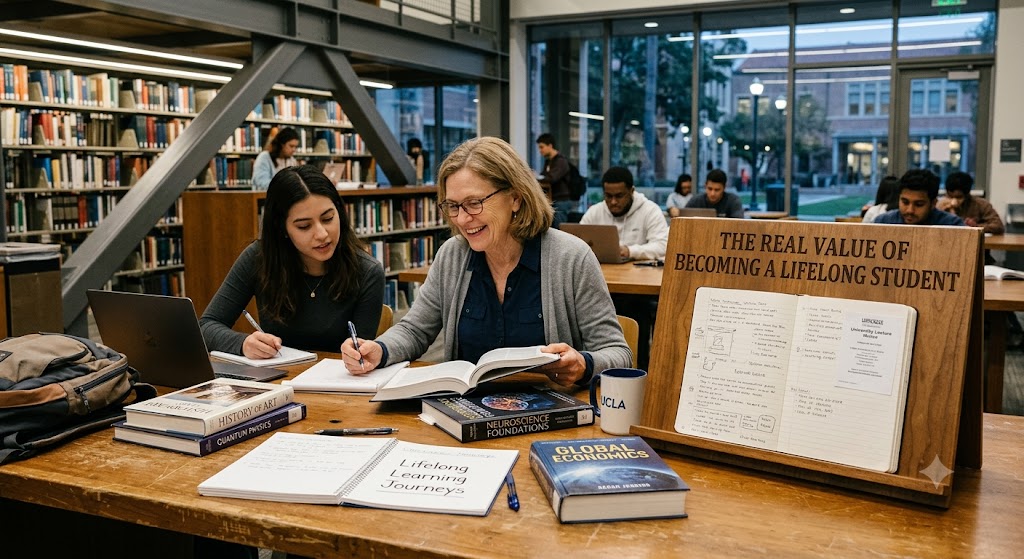
The Real Value of Becoming a Lifelong Student
Learning does not end when you graduate from school, earn a certificate, or land your first job. In reality, those milestones are only the beginning of a much longer educational journey. The world is constantly changing, industries are evolving, technology is advancing, and new opportunities are appearing every day. Those who continue learning throughout their lives are often the ones who adapt the fastest, solve problems more effectively, and create better opportunities for themselves. The real value of becoming a lifelong student is not measured by the number of books you read or courses you complete. It is measured by how much you grow, how well you adapt, and how prepared you become for whatever the future brings.
Many people mistakenly believe that education has an expiry date. They think that once they leave school, they have learned everything necessary to succeed. This mindset can quietly limit personal growth because knowledge never stands still. New discoveries are made every day, industries transform rapidly, and the skills that were valuable ten years ago may not be enough today. A lifelong student understands that learning is not an event but a continuous process that lasts for an entire lifetime.
One of the greatest advantages of lifelong learning is adaptability. Change is inevitable, whether in business, technology, finance, healthcare, or everyday life. People who embrace continuous learning are rarely caught off guard because they actively seek new information before circumstances force them to change. They develop the ability to adjust their thinking, improve their skills, and respond confidently to new challenges instead of resisting them.
The modern world rewards people who are willing to learn faster than others. Companies are constantly searching for individuals who can solve problems, embrace innovation, and contribute fresh ideas. Employers value employees who continuously improve themselves because they require less supervision and adapt more easily to changing responsibilities. Entrepreneurs who keep learning are often better equipped to identify market trends, understand customer behaviour, and build businesses that remain competitive.
Lifelong learning also strengthens confidence. Confidence does not come from pretending to know everything. It comes from knowing that you can always learn whatever you need. When you trust your ability to acquire new knowledge, unfamiliar situations become less intimidating. Instead of fearing change, you begin to see it as an opportunity to grow. This confidence creates resilience because setbacks become lessons rather than permanent failures.
One of the hidden benefits of lifelong learning is improved decision-making. Every decision you make is influenced by the information available to you. The more knowledge you acquire, the better your judgement becomes. Whether you are making financial choices, career decisions, business investments, or personal commitments, continuous learning provides a broader perspective that helps you avoid costly mistakes.
Reading remains one of the simplest and most effective ways to become a lifelong student. Books allow you to learn from experts, innovators, historians, scientists, entrepreneurs, and thinkers without having to experience every lesson firsthand. A single book can save years of trial and error by sharing knowledge gathered over decades. Every page you read expands your understanding and sharpens your ability to think critically.
Learning is no longer limited to traditional classrooms. Online courses, podcasts, webinars, documentaries, digital libraries, educational videos, and interactive communities have made quality education more accessible than ever before. Anyone with an internet connection can learn programming, marketing, investing, graphic design, public speaking, foreign languages, artificial intelligence, or almost any other skill. The barriers to education have become lower, making excuses for not learning less convincing.
Curiosity plays a central role in lifelong learning. Curious people ask questions instead of making assumptions. They investigate, explore, and seek understanding. Rather than accepting information at face value, they examine different perspectives and challenge their own beliefs. This curiosity often leads to innovation because many breakthroughs begin with a simple question that others never thought to ask.
Continuous learning also improves creativity. Creativity is rarely about inventing something entirely new. More often, it involves connecting existing ideas in unique ways. The more knowledge you accumulate across different subjects, the more mental connections you can make. Someone who studies psychology, technology, economics, and communication may discover opportunities that specialists in only one field fail to notice.
The financial benefits of lifelong learning are significant. New skills often create new income opportunities. Learning about investing can improve wealth management. Understanding digital marketing can help grow a business. Developing leadership skills can lead to promotions. Acquiring technical knowledge may open doors to higher-paying careers. Every new skill has the potential to increase your value in the marketplace.
Technology continues to reshape industries at an extraordinary pace. Artificial intelligence, automation, robotics, cloud computing, biotechnology, renewable energy, and digital commerce are transforming how people work and live. Those who refuse to learn these emerging technologies may struggle to remain competitive, while those who embrace them position themselves for future success. Lifelong learners understand that staying informed is no longer optional but necessary.
Continuous learning also improves communication. As you expose yourself to different cultures, viewpoints, disciplines, and experiences, your ability to express ideas clearly becomes stronger. You become a better listener because learning teaches humility. You recognise that every person knows something you do not, making conversations opportunities to gain new insights rather than simply defend existing opinions.
One of the greatest obstacles to lifelong learning is ego. Some people stop learning because they believe they already know enough. This mindset prevents growth because certainty often closes the door to new knowledge. Lifelong students remain humble regardless of their achievements. They understand that expertise in one area does not mean mastery in every subject. Their willingness to admit what they do not know becomes one of their greatest strengths.
Mistakes become valuable teachers when viewed through the lens of lifelong learning. Instead of treating failure as proof of incompetence, lifelong students analyse what went wrong, identify lessons, and improve their approach. This mindset transforms setbacks into stepping stones rather than permanent obstacles. Every mistake becomes another chapter in an ongoing education.
Learning from other people accelerates growth. Mentors, colleagues, friends, authors, coaches, and industry leaders all possess experiences that can shorten your learning curve. Listening carefully to those who have already travelled the path you wish to follow can save years of unnecessary struggle. Wise learners borrow experience instead of insisting on discovering every lesson through personal hardship.
Another important aspect of lifelong learning is self-awareness. As you continue learning, you gain a deeper understanding of your strengths, weaknesses, interests, and values. This awareness helps you make better career decisions, choose meaningful goals, and build a life aligned with your true potential. Self-knowledge often becomes the foundation for lasting fulfilment.
Critical thinking becomes increasingly valuable in an age of overwhelming information. Every day, people encounter news articles, social media posts, advertisements, opinions, and conflicting claims. Lifelong learners develop the ability to evaluate evidence, question assumptions, identify bias, and separate facts from misinformation. This skill protects them from manipulation and enables them to make informed decisions.
The habit of learning also improves mental health by keeping the brain active and engaged. Research consistently suggests that mentally stimulating activities help maintain cognitive function as people age. Reading, solving problems, learning languages, and mastering new skills challenge the brain in ways that support lifelong mental sharpness. Continuous learning provides both intellectual satisfaction and personal fulfilment.
Patience is another quality developed through lifelong learning. Complex subjects require time to understand, practise, and master. Learning teaches that meaningful progress often happens gradually rather than instantly. This patience extends into other areas of life, helping people remain committed to long-term goals even when immediate results are not visible.
The workplace increasingly values adaptability over static knowledge. Many jobs today did not exist twenty years ago, while others have disappeared entirely. Careers have become less predictable, making continuous education one of the most reliable forms of career security. Instead of relying solely on past qualifications, lifelong learners continuously update their skills to remain relevant in changing industries.
Parents who embrace lifelong learning also inspire future generations. Children naturally observe the habits of adults around them. When parents read books, explore new ideas, develop new skills, and display curiosity, children often adopt similar attitudes towards education. Lifelong learning therefore creates a ripple effect that benefits entire families and communities.
The internet has transformed education into a lifelong opportunity rather than a temporary phase. Universities, businesses, non-profit organisations, and independent educators now offer affordable or even free educational resources covering nearly every imaginable topic. Knowledge is more accessible than at any other point in human history. The challenge is no longer finding information but developing the discipline to use it wisely.
Lifelong learning also builds resilience during uncertainty. Economic downturns, career disruptions, technological advances, and personal challenges become easier to navigate when you possess the confidence to acquire new skills. Instead of feeling trapped by circumstances, continuous learners recognise that education provides a pathway towards new possibilities.
One common misconception is that learning always requires significant financial investment. While formal education can be expensive, many valuable learning opportunities cost little or nothing. Public libraries, educational websites, online tutorials, podcasts, professional forums, community workshops, and open-source learning platforms provide enormous value to anyone willing to invest their time and attention.
Time is often cited as another barrier to learning, yet even small daily efforts accumulate over years. Reading for twenty minutes each day can result in dozens of completed books annually. Watching one educational lecture every week introduces new perspectives throughout the year. Learning one new concept each day creates remarkable growth over time. Consistency often matters more than intensity.
Another powerful reason to remain a lifelong student is that knowledge compounds. Every new idea builds upon previous knowledge, making future learning easier and faster. As your understanding grows, you begin recognising patterns across different disciplines. Economics may help explain history, psychology may improve leadership, mathematics may strengthen logical reasoning, and communication skills may enhance business success. Knowledge becomes interconnected rather than isolated.
Humility remains one of the defining characteristics of lifelong students. The more they learn, the more they recognise the vastness of what remains unknown. This awareness encourages openness rather than arrogance. Instead of seeking to appear intelligent, they focus on becoming wiser through continuous improvement.
Lifelong learning is ultimately an investment in yourself. Unlike material possessions, knowledge cannot easily be taken away. Economic conditions may change, careers may shift, and industries may evolve, but the ability to learn remains one of the most valuable assets anyone can possess. Skills may become outdated, yet the habit of learning ensures you can always acquire new ones.
The real value of becoming a lifelong student extends far beyond professional success. It enriches relationships through better communication, strengthens financial decisions through greater understanding, improves health through informed choices, encourages creativity through diverse knowledge, and builds confidence through continuous growth. It transforms challenges into opportunities and uncertainty into possibility.
In a rapidly changing world, the individuals who thrive are rarely those who believe they know everything. They are the ones who remain curious, humble, adaptable, and eager to learn. Every book read, every skill mastered, every conversation explored, and every lesson embraced contributes to a stronger, wiser, and more capable version of yourself. Becoming a lifelong student is not simply about accumulating information. It is about building the mindset that allows you to grow continuously, contribute meaningfully, and remain relevant throughout every stage of life. The greatest investment you can ever make is in your own ability to keep learning because the returns continue paying dividends for the rest of your life.

EarnSmartOnline.com.ng is dedicated to helping readers make smarter financial decisions through practical guides on online income, personal finance, technology, digital business, and wealth creation. Our goal is to provide reliable, easy-to-understand, and actionable content that empowers individuals to earn smarter, build sustainable income streams and achieve long-term financial success.
Recommended: Start Earning Online
- Ultimate Affiliate Marketing Program — learn affiliate marketing with a done-for-you sales system ($15). Check it out
- The Newbie Affiliate Guide — the beginner-friendly starter guide (~$6.68). Check it out
- Easy Dollar Maker — earn in dollars uploading AI images and videos from your phone ($17). Check it out
Disclosure: These are affiliate links. If you buy through them, I may earn a commission at no extra cost to you.



