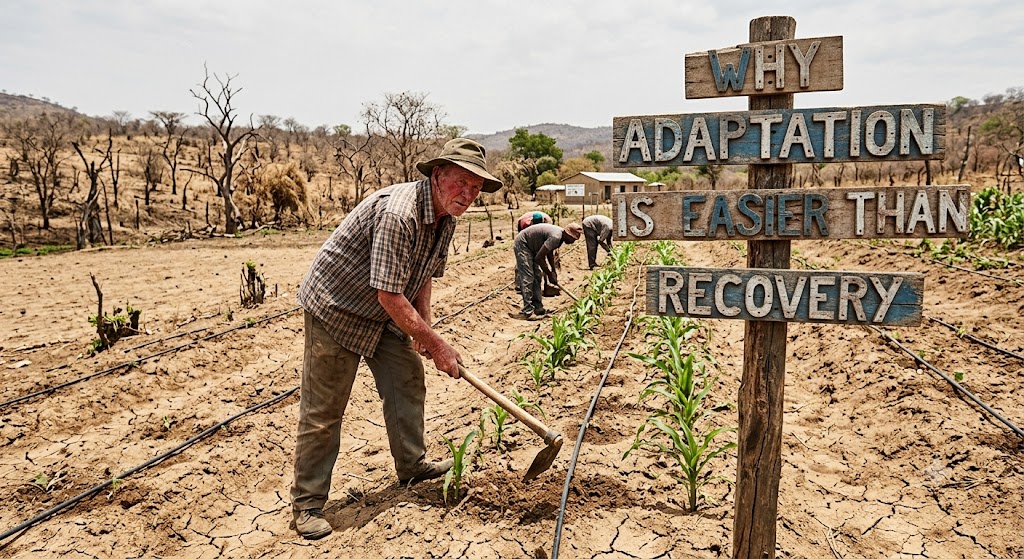
Why Adaptation Is Easier Than Recovery
Change is uncomfortable, but recovery is often far more painful. That is the simple truth behind the idea that adaptation is easier than recovery. Most people resist adapting because it requires them to leave familiar routines, learn new skills, or make difficult decisions before a crisis happens. Recovery, on the other hand, usually arrives after damage has already been done. By the time a person is trying to recover, they may be dealing with lost opportunities, financial stress, broken relationships, declining health, or a business that has already fallen behind. Adapting early feels inconvenient, but recovering later can feel overwhelming.
Think about technology. Many businesses once believed they could ignore digital transformation and continue operating the way they always had. Some delayed creating websites, ignored online marketing, and underestimated social media. For a while, nothing seemed wrong. Customers still came, sales still happened, and the old system still worked. Then the market changed. Competitors moved online, consumer behavior shifted, and suddenly those businesses were struggling to survive. At that point, they were no longer adapting. They were recovering from years of delay, and recovery required far more money, effort, and urgency than adaptation would have required earlier.
The same pattern appears in personal finance. Saving a small amount consistently may not feel exciting, but it is adaptation. It is adjusting your lifestyle before financial pressure forces you to. Waiting until debt becomes unmanageable, bills pile up, and emergencies arrive is recovery. Anyone who has experienced both knows which one is easier. Adapting might mean saying no to unnecessary spending. Recovering may mean dealing with creditors, selling assets, or rebuilding your finances from a difficult position. One requires discipline. The other often requires sacrifice.
Health offers another powerful example. Adapting means exercising regularly, eating reasonably well, sleeping enough, and paying attention to early warning signs. Recovery may involve managing chronic illness, regaining lost mobility, or rebuilding a body that has been neglected for years. The effort required to maintain health is usually far less than the effort required to restore it after serious decline. This is why many doctors emphasize prevention. The body often whispers before it screams, and adaptation listens to the whispers.
Relationships follow the same principle. Small adjustments in communication, empathy, and understanding can prevent major conflicts. Couples who adapt to each other’s changing needs often avoid problems that become much harder to repair later. Recovery after trust has been broken, resentment has accumulated, or emotional distance has grown can take years. Many relationships fail not because one dramatic event occurred, but because people ignored small signs that adaptation was needed.
One reason adaptation is easier than recovery is that adaptation happens while resources are still available. When you adapt early, you usually still have time, energy, money, and options. Recovery often begins after some of those resources have already been lost. A company adapting to industry changes may still have loyal customers and cash flow. A company recovering from collapse may have neither. A person adapting their career by learning new skills still has opportunities. A person recovering from long-term unemployment may face a much steeper climb.
Psychologically, adaptation is also less stressful. Human beings generally handle gradual change better than sudden disruption. Learning one new skill at a time feels manageable. Being forced to completely reinvent your career overnight feels frightening. Saving a little each month feels reasonable. Trying to escape a financial crisis feels exhausting. Small adjustments allow the mind to process change incrementally, while recovery often demands major changes under pressure.
There is also the issue of momentum. Positive adaptation creates positive momentum. When someone starts exercising, they often gain energy, confidence, and motivation to make other healthy choices. When a business starts improving systems early, it often becomes more efficient and competitive. Recovery usually begins with negative momentum. Problems have accumulated, confidence may be low, and progress can feel slow. Climbing uphill is harder when you are already exhausted.
Many people avoid adaptation because the benefits are not immediately visible. You may exercise for weeks before seeing dramatic results. You may save money for months before feeling wealthier. You may learn new skills before they produce higher income. Because the rewards are delayed, adaptation can feel unnecessary. Recovery feels urgent because the consequences are visible. The danger is that waiting for urgency often makes the eventual problem much larger.
Nature itself teaches this lesson. Trees that bend with strong winds are more likely to survive storms than rigid trees that refuse to move. Flexibility is not weakness; it is survival. Species that adapt to changing environments tend to persist, while those that cannot adapt often disappear. The world rewards those who can adjust without losing their core identity.
In the modern economy, adaptation has become even more important. Industries change rapidly. New technologies emerge constantly. Consumer preferences evolve. Jobs that were secure a decade ago may look very different today. People who continue learning and adapting usually have more options than those who cling to outdated methods. This does not mean abandoning everything familiar. It means staying alert enough to recognize when change is necessary.
Adaptation also protects confidence. When people make proactive changes, they feel a sense of control. They are choosing their response rather than reacting to a crisis. Recovery can sometimes create feelings of regret, guilt, or frustration because people wish they had acted sooner. While regret is natural, it is rarely productive. The better approach is to develop the habit of adapting before circumstances force dramatic action.
Consider career development. Someone who continuously learns new tools, improves communication skills, and builds a professional network is adapting. They are preparing for future opportunities and challenges. Someone who waits until their job becomes obsolete may suddenly need to compete in a market for which they are unprepared. The difference is not intelligence; it is timing.
Business owners often face the same choice. Markets rarely remain stable forever. Customer expectations change, competitors innovate, and new platforms emerge. Businesses that adapt gradually can test new ideas, learn from feedback, and improve steadily. Businesses that wait too long may find themselves making desperate changes simply to survive. Gradual evolution is usually easier than emergency transformation.
Another reason adaptation is easier than recovery is that small problems are usually cheaper to fix. A tiny leak in a roof can be repaired relatively easily. Ignore it long enough, and it may damage ceilings, walls, furniture, and electrical systems. The same principle applies to finances, health, relationships, and businesses. Early attention often prevents expensive consequences.
People sometimes confuse adaptation with fear. They think changing course means admitting weakness. In reality, adaptation is often a sign of awareness and strength. Strong people are not those who refuse to change; they are those who recognize reality and respond intelligently. A sailor does not control the wind, but a skilled sailor adjusts the sails.
Of course, recovery is still possible. Many people rebuild their lives after financial hardship, health challenges, career setbacks, or personal failures. Recovery deserves respect because it requires courage. But if we are choosing between the two, adaptation is usually the gentler path. It asks for attention, humility, and small consistent actions rather than dramatic rescue efforts later.
The most successful individuals and organizations often share one trait: they notice change early and respond before they are forced to. They do not wait for collapse before improving systems. They do not wait for exhaustion before resting. They do not wait for relationships to break before communicating. They understand that prevention is usually less painful than repair.
In practical terms, adapting may mean learning a new skill before your industry demands it, saving money before an emergency arrives, exercising before health problems appear, communicating before resentment grows, or modernizing a business before customers leave. These actions may seem small, but they create resilience.
Life will always contain unexpected challenges, and not every setback can be avoided. However, many of the hardest recoveries begin with ignored opportunities to adapt. The earlier we respond to changing realities, the more options we preserve and the less damage we must repair later.
That is why adaptation is easier than recovery. Adaptation works with time, while recovery often races against it. Adaptation uses small corrections, while recovery frequently demands major reconstruction. Adaptation preserves resources, confidence, and momentum, while recovery tries to rebuild them after loss. In the long run, the people who thrive are rarely those who never face change. They are the ones who learn to adjust before change becomes a crisis.

EarnSmartOnline.com.ng is dedicated to helping readers make smarter financial decisions through practical guides on online income, personal finance, technology, digital business, and wealth creation. Our goal is to provide reliable, easy-to-understand, and actionable content that empowers individuals to earn smarter, build sustainable income streams and achieve long-term financial success.
Recommended: Start Earning Online
- Ultimate Affiliate Marketing Program — learn affiliate marketing with a done-for-you sales system ($15). Check it out
- The Newbie Affiliate Guide — the beginner-friendly starter guide (~$6.68). Check it out
- Easy Dollar Maker — earn in dollars uploading AI images and videos from your phone ($17). Check it out
Disclosure: These are affiliate links. If you buy through them, I may earn a commission at no extra cost to you.