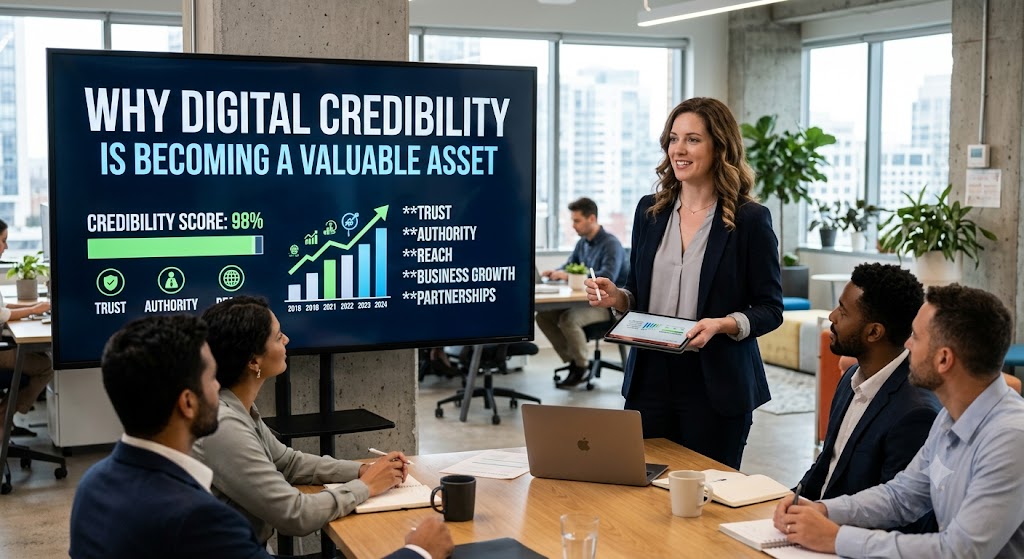
Why Digital Credibility Is Becoming a Valuable Asset
The internet has transformed from a place where people simply searched for information into a global marketplace where trust determines success. Every day, millions of people buy products, hire professionals, choose service providers, follow influencers, apply for jobs, invest in businesses, and form opinions based on what they find online. In this digital environment, credibility has become one of the most valuable assets anyone can possess. Whether you are an entrepreneur, freelancer, content creator, business owner, employee, student, or job seeker, your digital credibility can influence opportunities that may never have been possible a decade ago. It is no longer enough to claim you are trustworthy, knowledgeable, or experienced. People expect proof, and they expect to find that proof online before they decide to trust you.
Digital credibility refers to the level of confidence people have in your online identity, reputation, expertise, and authenticity. It is the trust you earn through your website, social media presence, reviews, testimonials, professional profiles, published content, and every interaction you have across digital platforms. Unlike traditional credibility, which often depended on face to face relationships or word of mouth recommendations, digital credibility operates around the clock. Even while you are asleep, potential clients, employers, customers, or business partners may be researching you online. Their decision to contact you, buy from you, or ignore you may depend entirely on what they discover within a few minutes.
One of the biggest reasons digital credibility is becoming increasingly valuable is the overwhelming amount of information available online. Every industry is more competitive than ever before. A customer searching for a web designer, accountant, photographer, lawyer, consultant, or online store will often find hundreds or even thousands of options within seconds. Since many businesses offer similar products and services, trust becomes the deciding factor. People naturally prefer to work with individuals and companies that appear reliable, transparent, and professional. A strong digital reputation instantly separates trustworthy brands from those that raise doubts.
Consumers have become more cautious than ever because online scams, fake websites, misleading advertisements, and fraudulent businesses continue to increase. Every day, people hear stories about fake investment platforms, counterfeit products, phishing attacks, identity theft, and dishonest sellers. As a result, buyers now conduct extensive research before spending their money. They check online reviews, visit official websites, examine social media activity, read customer testimonials, and compare multiple sources of information. Businesses that have invested in building digital credibility enjoy a significant advantage because they reduce the uncertainty that customers naturally feel before making a purchase.
Search engines also play an important role in strengthening digital credibility. When someone searches for your name or business, the results they see create an immediate impression. A professional website, helpful blog articles, positive customer reviews, verified business listings, active social media accounts, and mentions from respected publications all contribute to a trustworthy online image. On the other hand, outdated websites, broken links, negative reviews, missing contact information, or no online presence at all can discourage potential customers within seconds. In today’s digital economy, your search results often become your first handshake.
Content creation has become one of the strongest tools for building digital credibility. People trust experts who consistently share valuable knowledge without expecting immediate rewards. Writing informative blog posts, publishing educational videos, creating podcasts, answering frequently asked questions, and sharing practical advice demonstrate expertise in ways that traditional advertising never could. Instead of simply claiming to be an expert, you allow your knowledge to speak for itself. Over time, audiences begin to recognise your authority because they repeatedly receive value from your content.
Consistency is another critical element of digital credibility. Trust rarely develops overnight. It grows gradually through repeated positive experiences. A business that regularly publishes quality content, responds professionally to customer enquiries, updates its website, honours its promises, and maintains consistent branding naturally becomes more trustworthy than one that appears inactive or unpredictable. Every positive interaction adds another layer of confidence, while every neglected platform or broken promise slowly damages the reputation that took years to build.
Customer reviews have become one of the most powerful forms of digital credibility because modern consumers value the experiences of other buyers. Before booking a hotel, choosing a restaurant, purchasing software, or hiring a contractor, many people read reviews before making their decision. Positive reviews provide independent validation that a business delivers on its promises. Even a few detailed testimonials can significantly increase customer confidence because they reduce the perceived risk of making the wrong choice. Businesses that actively encourage satisfied customers to leave honest reviews often experience stronger growth than competitors who ignore customer feedback.
Transparency has become equally important in building online trust. Modern consumers appreciate honesty more than perfection. Businesses that openly display their contact details, explain their pricing, introduce their team members, acknowledge mistakes, and communicate clearly tend to earn greater respect than those hiding behind anonymous websites or vague promises. Authenticity creates emotional connections, and emotional connections strengthen credibility over time.
Professional websites remain one of the strongest foundations of digital credibility. While social media platforms are valuable, a well designed website demonstrates long term commitment and professionalism. A website gives complete control over branding, messaging, customer experience, and content. Visitors expect to find detailed information about products, services, company history, contact information, privacy policies, and customer support. A modern, secure, mobile friendly website signals that a business takes its online presence seriously.
Website security has also become a major trust factor. Internet users increasingly recognise security indicators such as HTTPS encryption, secure payment gateways, privacy policies, and verified certificates. Customers hesitate to enter personal information or payment details on websites that appear outdated or insecure. Investing in website security protects both customer data and business reputation while reinforcing digital credibility.
Social proof continues to influence online decisions in powerful ways. Humans naturally feel more comfortable following choices already validated by others. Large numbers of satisfied customers, positive testimonials, successful case studies, media mentions, awards, certifications, professional memberships, and partnerships with respected organisations all strengthen credibility. These signals reassure potential customers that others have already placed their trust in the business and received positive results.
Personal branding has become increasingly valuable because people often trust individuals more than companies. Business owners who actively share their expertise, personal experiences, professional achievements, and industry insights create stronger emotional connections with their audiences. Customers enjoy knowing the people behind the brand because it makes businesses feel more human and approachable. Authentic personal branding builds familiarity, and familiarity often leads to trust.
The growing influence of artificial intelligence has made digital credibility even more important. AI powered search engines, recommendation systems, and digital assistants increasingly evaluate online authority when deciding which sources to recommend. Businesses with strong reputations, high quality content, positive engagement, and trustworthy signals are more likely to appear in search results and AI generated recommendations. This creates a cycle where credibility increases visibility, and visibility creates even greater opportunities for growth.
Freelancers and remote workers have also benefited enormously from digital credibility. Many employers now hire talent from different countries without ever meeting candidates in person. Online portfolios, LinkedIn profiles, client testimonials, published work, certifications, and personal websites often replace traditional interviews as the first stage of evaluation. A strong digital reputation allows professionals to compete globally instead of being limited by geographical location.
Digital credibility also affects career advancement inside organisations. Recruiters routinely search candidates online before scheduling interviews. Hiring managers examine professional profiles, published articles, speaking engagements, industry participation, and social media activity to evaluate character, expertise, and professionalism. A positive digital footprint can strengthen job applications, while inappropriate online behaviour may quietly eliminate candidates before they even receive an interview invitation.
Educational institutions increasingly recognise the importance of digital credibility as well. Students who build professional online portfolios, publish thoughtful content, participate in academic discussions, and showcase meaningful projects demonstrate initiative beyond classroom performance. These activities help graduates stand out in competitive job markets where employers seek evidence of practical skills rather than academic qualifications alone.
Trust also influences pricing power. Businesses with strong digital credibility often command higher prices because customers associate trust with reduced risk. Buyers willingly pay premium prices when they believe they will receive reliable products, excellent service, and dependable support. Companies with weak credibility frequently compete primarily on price because customers require financial incentives to compensate for uncertainty.
Building digital credibility requires patience because trust compounds over time. Every helpful article, every satisfied customer, every positive review, every solved problem, and every fulfilled promise adds another brick to a reputation that becomes increasingly difficult for competitors to replicate. While advertising can quickly generate visibility, credibility cannot be purchased. It must be earned through consistent ethical behaviour and genuine value creation.
Negative experiences spread rapidly across digital platforms, making reputation management essential. One unresolved customer complaint, misleading advertisement, dishonest practice, or careless social media post can damage years of hard earned trust. This does not mean businesses must be perfect. Rather, they must respond responsibly when mistakes occur. Prompt communication, sincere apologies, fair resolutions, and visible accountability often strengthen credibility because customers appreciate organisations that take responsibility for their actions.
Digital credibility also influences partnerships and investment opportunities. Investors, suppliers, affiliates, and strategic partners conduct thorough online research before entering business relationships. Companies with transparent operations, professional branding, strong customer satisfaction, consistent communication, and respected leadership inspire greater confidence during negotiations. Trust reduces perceived business risk, making valuable partnerships easier to establish.
The rise of influencer marketing further demonstrates the commercial value of credibility. Successful influencers do not simply accumulate followers. They build trust with audiences over months and years. Brands choose influencers whose recommendations genuinely influence purchasing decisions because credibility creates measurable economic value. Audiences quickly recognise insincere endorsements, proving that authenticity remains essential even in highly commercial environments.
Online communities also contribute significantly to digital credibility. Participating meaningfully in professional forums, industry discussions, webinars, online conferences, and educational communities allows individuals to demonstrate expertise while building valuable relationships. Consistently offering helpful insights without excessive self promotion gradually establishes authority within specialised industries.
One overlooked aspect of digital credibility is responsiveness. Customers appreciate businesses that answer emails promptly, respond to comments professionally, resolve complaints efficiently, and maintain active communication channels. Responsiveness signals reliability and demonstrates respect for customers’ time. Businesses that ignore enquiries often appear unreliable regardless of the quality of their products.
Visual presentation also shapes digital credibility. High quality photography, consistent branding, readable typography, professional logos, organised website layouts, and polished marketing materials create positive first impressions. Although appearance alone cannot replace genuine competence, it influences how people interpret professionalism before they experience actual service quality.
Ethical behaviour remains the strongest foundation of digital credibility. Honest advertising, transparent pricing, accurate information, respect for customer privacy, responsible data handling, and fair business practices create lasting trust that survives changing technologies and market trends. Businesses that sacrifice integrity for short term profit often discover that damaged reputations are extremely difficult to repair.
Artificial intelligence, automation, virtual reality, and emerging digital technologies will continue changing how people discover information, evaluate businesses, and make purchasing decisions. Despite these technological advances, one principle remains constant. Trust will always influence human behaviour. As technology makes it easier to compare countless options instantly, credibility becomes even more valuable because it simplifies decision making. People naturally choose brands, professionals, and organisations they believe they can trust.
Building digital credibility should therefore be viewed as a long term investment rather than a marketing tactic. Every blog post, every customer interaction, every review, every social media update, every educational resource, and every business decision contributes to an online reputation that compounds in value year after year. Unlike paid advertisements that disappear when budgets end, credibility continues generating opportunities long after the initial effort has been made.
The future belongs to individuals and businesses that understand this reality. Products can be copied, prices can be matched, technologies can be duplicated, and marketing strategies can be imitated. Trust, however, remains remarkably difficult to replicate. It is earned slowly through honesty, consistency, competence, transparency, and genuine service. In an increasingly connected world where nearly every important decision begins with an online search, digital credibility has evolved from a desirable advantage into an essential business asset. Those who intentionally build and protect it today will enjoy stronger relationships, greater influence, increased opportunities, and sustainable success in the digital economy for many years to come.

EarnSmartOnline.com.ng is dedicated to helping readers make smarter financial decisions through practical guides on online income, personal finance, technology, digital business, and wealth creation. Our goal is to provide reliable, easy-to-understand, and actionable content that empowers individuals to earn smarter, build sustainable income streams and achieve long-term financial success.
Recommended: Start Earning Online
- Ultimate Affiliate Marketing Program — learn affiliate marketing with a done-for-you sales system ($15). Check it out
- The Newbie Affiliate Guide — the beginner-friendly starter guide (~$6.68). Check it out
- Easy Dollar Maker — earn in dollars uploading AI images and videos from your phone ($17). Check it out
Disclosure: These are affiliate links. If you buy through them, I may earn a commission at no extra cost to you.