
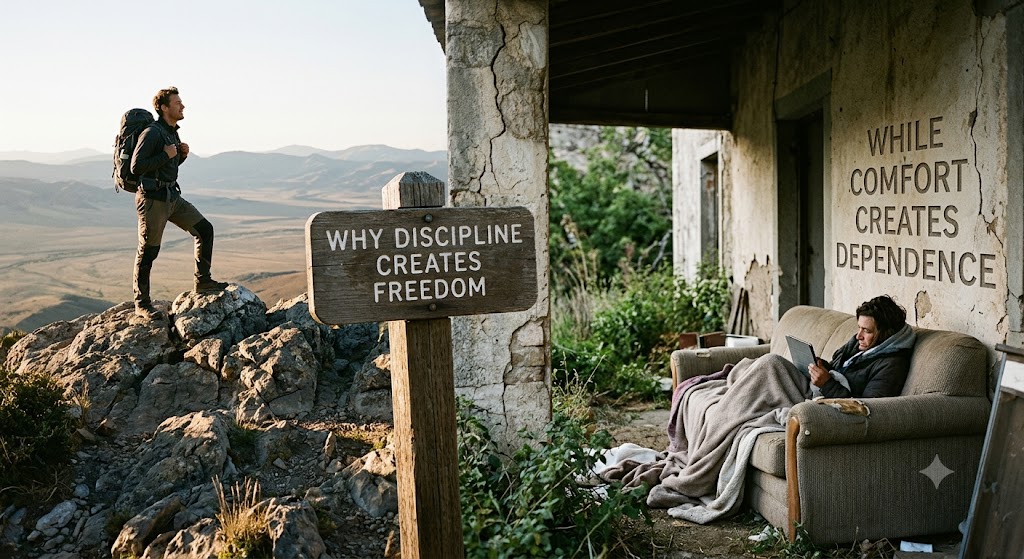
Why Discipline Creates Freedom While Comfort Creates Dependence
There is a popular belief that freedom means doing whatever you want, whenever you want, without restrictions, rules or responsibilities. Many people spend their lives chasing this version of freedom, believing that comfort is the ultimate reward and that discipline is something to escape from. Yet the longer we observe successful people, thriving families, healthy relationships and lasting businesses, the more obvious it becomes that reality works in the opposite direction. The greatest freedom is almost always built on discipline, while the deepest dependence often grows quietly inside comfort. What looks enjoyable today can become a prison tomorrow, and what feels difficult today can become the foundation of a life filled with choices, confidence and independence.
Discipline is rarely glamorous. It asks people to wake up before they feel like it. It encourages saving money instead of spending it on temporary pleasures. It demands learning when entertainment seems more attractive. It requires honesty when lying appears easier. It insists on consistency when excuses sound reasonable. Because discipline usually involves short term discomfort, many people avoid it. Comfort, on the other hand, welcomes everyone with open arms. It promises immediate satisfaction. It removes pressure. It whispers that there will always be another day to start. Unfortunately, comfort rarely tells people the full story. Every comfort that replaces discipline eventually asks for a much higher price.
The strange truth about life is that every person will experience discomfort. The only question is whether they choose the discomfort of discipline or the discomfort of regret. One lasts for a moment while the other can follow someone for years. The student who studies consistently sacrifices entertainment today but gains opportunities tomorrow. The worker who develops valuable skills sacrifices leisure today but earns career freedom later. The entrepreneur who patiently builds a business sacrifices convenience now but may eventually enjoy financial independence. The opposite is equally true. Those who constantly choose comfort may enjoy themselves briefly, but they often pay with lost opportunities, financial stress and limited choices later in life.
Freedom is not the absence of structure. It is the result of structure. A person who saves money consistently enjoys financial freedom because emergencies no longer control their decisions. Someone who exercises regularly enjoys physical freedom because their body allows them to move without constant pain or illness. A disciplined learner gains intellectual freedom because knowledge opens doors that ignorance keeps locked. Discipline removes unnecessary limitations by preparing people before challenges arrive.
Comfort often disguises itself as kindness. It convinces people that resting a little longer will not matter. It suggests that skipping one workout is harmless. It argues that spending a little more money is acceptable. Individually, these choices appear insignificant. Collectively, they become habits. Habits eventually become lifestyles, and lifestyles determine destinies. Dependence is rarely created by one major decision. It is usually built through hundreds of small comfortable decisions that slowly reduce a person’s ability to function without assistance.
One of the clearest examples can be found in physical health. Someone who consistently chooses comfort over movement gradually loses strength. Walking becomes difficult. Climbing stairs becomes exhausting. Simple daily activities require more effort than they once did. Ironically, the person who avoided temporary physical discomfort now experiences permanent physical discomfort. Meanwhile, the individual who accepted the discipline of regular exercise often enjoys greater freedom to travel, work, play and live actively for many years.
The same principle applies to finances. Every unnecessary purchase provides a brief feeling of satisfaction. New gadgets, fashionable clothing, expensive meals and impulsive spending create moments of pleasure. However, if these choices replace disciplined financial management, debt gradually increases. Savings disappear. Financial emergencies become devastating rather than inconvenient. Soon, the individual becomes dependent on loans, salary advances or financial assistance from others. Comfort quietly transformed into dependence without announcing its intentions.
Discipline creates options. Dependence removes them. A disciplined person who builds savings can choose whether to accept a poor job offer or wait for a better opportunity. Someone drowning in debt may have no choice but to accept whatever comes first. A disciplined employee who continuously develops new skills can confidently explore different career paths. Someone who refuses to learn becomes dependent on one employer, one industry or one limited source of income. Freedom is often measured by the number of choices available during difficult moments.
Modern technology has made comfort more accessible than ever before. Food arrives at the press of a button. Entertainment streams endlessly. Shopping requires only a few taps. Artificial intelligence completes tasks that once demanded effort. While these innovations provide incredible benefits, they also introduce a hidden danger. If people allow convenience to replace learning, thinking and personal responsibility, they risk becoming increasingly dependent on systems they barely understand. Technology should extend human capability rather than replace human capability.
Many people assume that wealthy individuals enjoy freedom because they possess money. Money certainly creates opportunities, but lasting financial freedom usually existed long before wealth arrived. Most financially successful people developed disciplined habits long before their bank accounts reflected success. They learned delayed gratification. They invested consistently. They controlled spending. They improved their skills continuously. Wealth was often the visible result of invisible discipline repeated over many years.
Discipline also strengthens emotional resilience. A disciplined person learns to control reactions rather than allowing emotions to control decisions. This does not mean suppressing feelings or pretending emotions do not exist. Instead, it means refusing to let temporary emotions permanently damage relationships, careers or personal goals. Comfort encourages emotional indulgence. It tells people to quit whenever something becomes difficult. It suggests abandoning commitments when excitement fades. Discipline reminds people that meaningful achievements often continue long after motivation disappears.
Relationships provide another powerful example. Healthy marriages, friendships and families are not maintained through occasional emotional highs alone. They survive because people practise disciplined communication, forgiveness, patience and responsibility. Choosing comfort may involve avoiding difficult conversations, refusing accountability or prioritising personal convenience above shared responsibilities. Initially, this feels easier. Over time, unresolved problems multiply until relationships become fragile or collapse entirely. The temporary comfort of avoidance creates long term emotional dependence and instability.
Parents frequently understand this principle even when children do not. A child naturally seeks comfort. Homework feels difficult. Household responsibilities seem unfair. Saving money appears unnecessary. Parents who lovingly introduce discipline prepare children for independence. Parents who remove every challenge may unintentionally create lifelong dependence. The goal of parenting is not permanent comfort but eventual capability. Children who learn discipline develop confidence because they know they can solve problems without constant rescue.
Education follows the same pattern. Reading books, completing assignments and mastering difficult concepts require consistent effort. Many students wonder why they should endure such discipline. Years later, those same disciplines often provide access to careers, businesses and opportunities unavailable to those who avoided the effort. Education is not merely about information. It is about training the mind to think critically, solve problems and remain curious. These abilities create lifelong freedom.
The business world rewards disciplined organisations far more consistently than comfortable ones. Companies that regularly improve products, invest in employee development, monitor finances carefully and adapt to changing markets usually remain competitive. Businesses that become comfortable with past success often decline. History contains countless examples of industry leaders who believed their position guaranteed future success. Comfort encouraged complacency. Competitors embraced discipline, innovation and continuous improvement. Eventually, leadership changed hands.
Athletes demonstrate perhaps the clearest relationship between discipline and freedom. Champions are celebrated for moments lasting seconds or minutes, but those moments are supported by years of disciplined training invisible to the public. Early mornings, strict nutrition, endless repetition and consistent practice create the freedom to perform confidently under pressure. Without discipline, natural talent alone rarely sustains excellence.
Artists experience something similar. People often admire beautiful paintings, inspiring novels or unforgettable music without recognising the disciplined routines behind creative excellence. Creativity flourishes within disciplined practice. Writers write regularly even when inspiration feels absent. Musicians rehearse repeatedly until mastery becomes natural. Painters experiment, fail and improve through persistent effort. Discipline creates the conditions where creativity can thrive freely.
Many people wait until they feel motivated before taking action. This approach rarely produces lasting results because motivation changes daily. Discipline continues regardless of emotional conditions. Some mornings enthusiasm arrives naturally. Other mornings it does not. Discipline acts anyway. Over months and years, this consistency produces extraordinary outcomes that occasional bursts of motivation cannot match.
One reason comfort becomes dangerous is that it gradually changes expectations. Luxuries become necessities. Convenience becomes entitlement. Minor inconveniences begin to feel unbearable. People who constantly avoid discomfort often discover they possess very little tolerance for adversity. Small setbacks create overwhelming stress because resilience was never developed. Discipline trains resilience through repeated exposure to manageable challenges.
There is also a psychological benefit to discipline that many overlook. Every promise kept to yourself strengthens self trust. Every commitment honoured increases confidence. Every difficult task completed reinforces the belief that you are capable of handling future challenges. Confidence grows not from positive thinking alone but from repeated evidence that you can depend on yourself. Comfort frequently weakens this internal trust because promises are easily postponed or abandoned.
Freedom also includes freedom from fear. A person who prepares thoroughly fears examinations less. A business owner with emergency savings fears economic downturns less. Someone who practises public speaking regularly fears audiences less. Preparation removes uncertainty. Discipline is preparation in action. Comfort postpones preparation until fear eventually arrives uninvited.
Society often celebrates visible success while ignoring invisible discipline. People admire successful entrepreneurs without noticing years of financial sacrifice. They envy healthy individuals without recognising countless disciplined food choices. They appreciate accomplished professionals without considering years of study, training and persistence. This misunderstanding causes many to desire results without embracing the process that produces them.
Comfort is not inherently wrong. Rest is essential. Recreation has value. Enjoying the rewards of hard work is healthy. The problem begins when comfort transforms from recovery into identity. Comfort should refresh discipline rather than replace it. Rest exists to prepare people for meaningful work, not to eliminate meaningful work altogether.
The digital age has intensified this challenge. Endless notifications compete for attention. Short videos encourage constant distraction. Instant entertainment makes boredom almost impossible. Yet boredom once inspired creativity, deep thinking and innovation. Discipline now includes protecting attention. Those who intentionally manage technology often gain the freedom to focus deeply, create meaningful work and enjoy richer relationships. Those who surrender attention completely become dependent on external stimulation for every quiet moment.
Freedom requires responsibility because every choice produces consequences. Discipline recognises this reality. It accepts responsibility before circumstances demand it. Comfortable living often postpones responsibility until consequences become unavoidable. Paying bills on time, maintaining health, strengthening relationships and learning continuously all require disciplined responsibility. Ignoring these areas may feel easier temporarily, but neglected responsibilities eventually return with greater urgency.
History repeatedly confirms that prosperous societies depend on disciplined citizens. Communities flourish when people value honesty, hard work, personal responsibility and long term thinking. When comfort becomes the highest cultural priority, productivity declines, accountability weakens and dependence increases. Nations, organisations and families all reflect the collective habits of the people within them.
Personal growth begins where comfort ends. Every meaningful improvement requires entering unfamiliar territory. Learning a language involves making mistakes. Starting a business involves uncertainty. Building confidence involves facing fears repeatedly. Developing leadership requires accepting responsibility before feeling fully prepared. Comfort protects people from temporary embarrassment while simultaneously preventing lasting growth.
One fascinating aspect of discipline is that it eventually becomes easier. Habits reduce the mental effort required for consistent action. Someone who exercises regularly no longer debates whether to work out each morning. Someone who saves automatically does not struggle with every financial decision. Someone who reads daily naturally reaches for books rather than endless distractions. Discipline initially demands effort but later provides momentum.
Comfort behaves differently. It also becomes habitual. The more people postpone responsibilities, the easier postponement becomes. The more they rely on shortcuts, the harder genuine effort feels. The more they seek immediate gratification, the less patient they become. Dependence grows gradually until people cannot imagine functioning differently.
Young people especially benefit from understanding this principle early. The habits formed during youth often determine opportunities decades later. Learning discipline before major responsibilities arrive provides an enormous advantage. Time multiplies disciplined decisions through compound growth. Small daily improvements accumulate into remarkable achievements across years. Likewise, small daily compromises accumulate into significant limitations.
Employers consistently value disciplined individuals because reliability is increasingly rare. Technical skills can often be taught, but disciplined character requires personal commitment. Employees who arrive on time, meet deadlines, continue learning and maintain integrity become valuable regardless of industry. These qualities create professional freedom because opportunities naturally seek trustworthy people.
Entrepreneurs understand that business ownership does not eliminate discipline. In fact, it often requires more of it. Successful business owners manage finances carefully, serve customers consistently, solve problems quickly and continue improving long after competitors become satisfied. Their apparent freedom is built upon extraordinary discipline that outsiders rarely witness.
Faith traditions throughout history have also emphasised discipline because spiritual growth follows similar principles. Prayer, reflection, generosity, forgiveness and self control all require intentional practice. Spiritual maturity rarely develops accidentally. Just as physical muscles strengthen through repeated exercise, character strengthens through repeated disciplined choices.
The greatest irony is that people who avoid discipline often lose the very freedom they hoped to protect. Refusing financial discipline creates debt. Refusing health discipline creates illness. Refusing learning creates career limitations. Refusing emotional discipline damages relationships. Refusing personal responsibility increases dependence on others. Comfort appears generous in the beginning but becomes demanding over time.
By contrast, disciplined living often feels restrictive initially but becomes increasingly liberating. Healthy bodies move with confidence. Strong finances create choices. Valuable knowledge opens doors. Reliable character earns trust. Meaningful relationships provide emotional security. Each disciplined investment expands future possibilities instead of reducing them.
Success is rarely about extraordinary moments. It is usually about ordinary actions repeated consistently. Reading a few pages every day seems insignificant until dozens of books have been completed. Saving a small amount each month appears modest until years of financial stability emerge. Exercising regularly feels ordinary until excellent health becomes noticeable. Tiny disciplined actions possess extraordinary long term power because consistency multiplies results.
The difference between freedom and dependence is often invisible in the beginning. Two people may appear to live similar lives today. One chooses discipline while the other chooses comfort. Months later the difference remains small. Years later the gap becomes impossible to ignore. One enjoys increasing opportunities while the other struggles with increasing limitations. The future quietly rewards present discipline.
The world constantly offers shortcuts promising easier paths to success, happiness and fulfilment. Many of these promises ignore one fundamental truth. Lasting achievement cannot be separated from disciplined effort. There may be quicker routes to temporary pleasure, but there are no shortcuts to genuine freedom. Every worthwhile destination requires consistent preparation.
Perhaps the most valuable lesson is that discipline is ultimately an act of self respect. Choosing discipline communicates that your future matters. It declares that your goals deserve protection. It recognises that temporary discomfort is a worthwhile investment for permanent improvement. Comfort alone asks only what feels good now. Discipline asks what will still matter years from today.
Every person faces this choice repeatedly throughout life. The decision is rarely dramatic. It happens quietly during ordinary mornings, ordinary evenings and ordinary moments. It appears when deciding whether to learn or scroll endlessly, save or spend impulsively, exercise or remain inactive, tell the truth or choose convenience, persevere or quit. These ordinary decisions shape extraordinary outcomes.
Freedom is not discovered by escaping discipline. It is created by embracing it. Comfort is not always the enemy, but when comfort becomes the highest priority, dependence quietly follows. Discipline builds strength, confidence, resilience, opportunity and independence. Comfort without discipline slowly weakens each of those qualities until people find themselves controlled by the very circumstances they once believed they had chosen.
Those who truly desire a life filled with options, confidence and lasting fulfilment should not ask how to eliminate discipline from their lives. They should ask how to make discipline a daily habit. The answer to greater freedom has never been found in doing less of what is difficult. It has always been found in consistently doing what is necessary, even when it is uncomfortable. That is the paradox that changes lives. Discipline may ask for effort today, but it rewards that effort with freedom tomorrow. Comfort may offer pleasure today, but when allowed to replace discipline, it quietly builds dependence that becomes increasingly difficult to escape. In the end, the life you experience is shaped not by the comforts you collect but by the disciplines you choose to practise every single day.

EarnSmartOnline.com.ng is dedicated to helping readers make smarter financial decisions through practical guides on online income, personal finance, technology, digital business, and wealth creation. Our goal is to provide reliable, easy-to-understand, and actionable content that empowers individuals to earn smarter, build sustainable income streams and achieve long-term financial success.
Recommended: Start Earning Online
- Ultimate Affiliate Marketing Program — learn affiliate marketing with a done-for-you sales system ($15). Check it out
- The Newbie Affiliate Guide — the beginner-friendly starter guide (~$6.68). Check it out
- Easy Dollar Maker — earn in dollars uploading AI images and videos from your phone ($17). Check it out
Disclosure: These are affiliate links. If you buy through them, I may earn a commission at no extra cost to you.



