
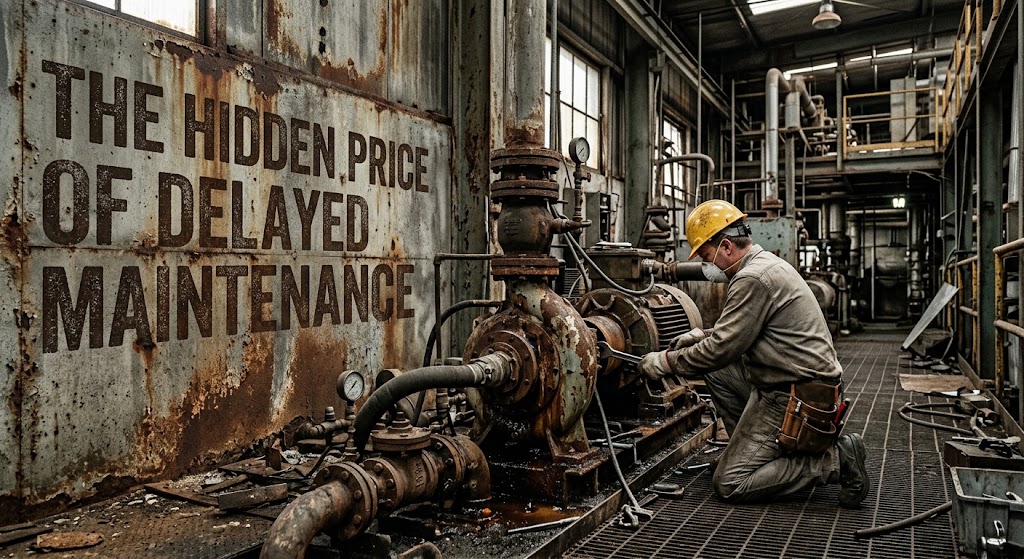
The Hidden Price of Delayed Maintenance
Every day, millions of people make decisions that seem harmless in the moment but become incredibly expensive over time. One of the most overlooked of these decisions is delaying maintenance. Whether it involves a house, a vehicle, a business, personal finances, technology, relationships, health, or even personal development, putting off necessary maintenance almost always comes with a hidden price. The cost is rarely immediate, which is why so many people underestimate its impact. Problems often begin quietly, almost invisibly, before growing into crises that require far more money, time, energy, and emotional strength than would have been needed if they had been addressed early. The hidden price of delayed maintenance is not just measured in financial losses. It can also be seen in lost opportunities, damaged reputations, declining productivity, unnecessary stress, and reduced quality of life.
The phrase “The Hidden Price of Delayed Maintenance” applies to nearly every aspect of modern living. Many people associate maintenance with repairing machines or servicing vehicles, but maintenance is much broader than that. It is the consistent effort invested in preserving value before deterioration becomes obvious. Every valuable possession and every worthwhile investment requires care. Buildings require inspections. Cars require servicing. Businesses require regular evaluations. Savings require monitoring. Skills require continuous learning. Relationships require communication. Health requires preventive care. When maintenance is ignored, deterioration begins long before visible signs appear.
One of the greatest misconceptions people have is believing that delaying maintenance saves money. On the surface, it appears logical. Skipping a routine vehicle service may save money this month. Ignoring a leaking roof may postpone an expensive repair. Delaying software updates may avoid temporary inconvenience. Putting off medical checkups may seem like avoiding unnecessary expenses. Yet these short-term savings often create much larger long-term costs. What appears to be financial wisdom today may become financial regret tomorrow.
Consider a homeowner who notices a small water stain on the ceiling. The repair seems unnecessary because the leak is minor and only appears during heavy rain. Weeks turn into months, and months become years. The moisture slowly damages wooden beams, insulation, electrical wiring, and interior walls. Mold begins developing behind the walls where it cannot easily be seen. Eventually, what could have been solved with a simple roof repair now requires structural reconstruction, electrical work, mold removal, repainting, and furniture replacement. The initial repair might have cost a few hundred pounds or dollars, while the final restoration could cost tens of thousands. The hidden price was never the leak itself. It was the decision to delay action.
The same principle applies to automobiles. Every manufacturer provides recommended service intervals because engines, brakes, transmission systems, and cooling components naturally wear over time. Engine oil gradually loses its protective qualities. Brake pads become thinner with every journey. Coolant becomes contaminated. Tyres wear unevenly. None of these issues create immediate disasters, which encourages many owners to postpone maintenance. Unfortunately, mechanical systems rarely repair themselves. Minor wear gradually becomes major damage. A neglected oil change can eventually destroy an engine. Ignoring brake maintenance can result in accidents. Delaying tyre replacement can lead to dangerous blowouts. What begins as a manageable expense eventually becomes an overwhelming financial burden.
Businesses suffer from delayed maintenance just as frequently. Many organisations postpone replacing outdated equipment because it still functions adequately. Employees continue working with slow computers, unreliable software, aging machinery, or inefficient production systems. Initially, productivity losses appear insignificant. Workers adapt to delays, temporary fixes, and repeated breakdowns. Over time, however, these inefficiencies accumulate. Projects take longer. Customer service declines. Employee frustration increases. Competitors with newer systems gain advantages. Eventually, the business loses customers not because its products are inferior, but because neglected maintenance gradually reduced operational excellence.
Technology provides another excellent example. Smartphones, computers, websites, and servers all require regular updates. Software developers constantly release security patches to eliminate newly discovered vulnerabilities. Many users postpone updates because they dislike interruptions or fear compatibility issues. Unfortunately, cybercriminals often exploit exactly these neglected systems. A single security breach can expose customer information, disrupt business operations, or destroy years of trust. The hidden price of delayed maintenance in technology is often measured not only in financial losses but also in damaged reputation.
Health may be the most valuable area where delayed maintenance becomes devastating. The human body constantly provides early warning signals. Fatigue, unusual pain, persistent headaches, unexplained weight changes, elevated blood pressure, and abnormal blood sugar levels often begin quietly. Routine medical examinations exist precisely because many serious illnesses develop gradually. Preventive healthcare identifies problems while they remain manageable. Unfortunately, many individuals postpone checkups because they feel healthy or wish to avoid medical expenses. Diseases that could have been treated early sometimes progress into life-threatening conditions requiring extensive treatment. Preventive care is almost always less expensive than emergency intervention.
Dental care demonstrates this principle perfectly. A small cavity may require a simple filling if detected early. Left untreated, it may develop into nerve damage requiring root canal treatment, crowns, or even tooth extraction. Beyond financial costs, delayed dental maintenance often leads to pain, infection, difficulty eating, and reduced confidence. The hidden price extends far beyond the dentist’s invoice.
Financial management also requires maintenance. Many people think wealth depends solely on earning more money, but preserving wealth requires consistent financial maintenance. Budgets should be reviewed regularly. Insurance policies require updates. Investments need periodic evaluation. Emergency funds should be replenished after use. Debts require monitoring. Ignoring these responsibilities allows small financial weaknesses to expand into major problems. Someone who never reviews subscription payments may unknowingly waste thousands over several years. An outdated insurance policy may leave valuable assets underprotected. An ignored investment portfolio may become dangerously unbalanced. Financial maintenance is rarely exciting, yet it quietly protects long-term stability.
Relationships deteriorate through delayed maintenance as well. Friendships, marriages, business partnerships, and family relationships all depend on regular communication, trust, appreciation, and conflict resolution. Small misunderstandings rarely destroy relationships immediately. Instead, unresolved frustrations slowly accumulate. Resentment quietly replaces affection. Distance replaces closeness. Silence replaces communication. Eventually, people describe a relationship as suddenly falling apart, when in reality it has been deteriorating for years due to neglected emotional maintenance.
Personal development follows the same pattern. Skills gradually become outdated in a rapidly changing economy. Industries evolve. Technology advances. Consumer preferences shift. Professionals who stop learning often discover that their expertise slowly loses value. The decline rarely feels dramatic because it happens gradually. By the time they recognise how much their industry has changed, catching up becomes significantly more difficult. Continuous learning functions as maintenance for professional relevance.
Many businesses have disappeared because they delayed adapting to changing markets. They assumed existing success would continue indefinitely. Instead of investing in innovation, customer experience, digital transformation, or employee development, they relied on past achievements. Competitors embraced change while they remained comfortable. Eventually, market leadership disappeared. Delayed maintenance of business strategy often proves more expensive than delayed maintenance of physical equipment.
There is also a powerful psychological reason people delay maintenance. Human beings naturally prioritise urgent problems over important ones. A leaking roof that leaks only occasionally rarely feels urgent. Preventive medical appointments can be postponed because no pain is present. Routine vehicle servicing feels optional when the engine starts every morning. This tendency is known as present bias. People naturally value immediate comfort over future security. Unfortunately, reality does not reward this behaviour. Time quietly transforms manageable issues into expensive emergencies.
Another psychological factor is optimism bias. Many individuals believe negative outcomes are unlikely to affect them personally. They assume their vehicle will continue running despite skipped maintenance. They believe their health will remain stable without preventive care. They expect their finances to recover automatically. Optimism itself is valuable, but unrealistic optimism often delays necessary action.
Maintenance should never be viewed as an expense alone. It is actually an investment in preserving value. Every routine service protects a larger asset. Every inspection extends useful life. Every update strengthens security. Every preventive measure reduces future uncertainty. People often celebrate acquiring valuable possessions but overlook the responsibility required to preserve them. Ownership always carries maintenance obligations.
Businesses that understand this principle often outperform competitors over long periods. Successful organisations regularly review customer satisfaction, employee engagement, operational efficiency, cybersecurity, financial controls, legal compliance, equipment reliability, and strategic direction. They understand that prevention costs less than recovery. Small improvements implemented consistently prevent major disruptions later.
Governments also experience the consequences of delayed maintenance. Roads develop small cracks that gradually expand into dangerous potholes. Bridges weaken through years of neglected inspections. Water systems deteriorate beneath cities until major failures occur. Electrical infrastructure becomes unreliable without consistent investment. Public maintenance rarely attracts attention because successful maintenance prevents visible problems. Unfortunately, delayed investment eventually produces highly visible and extremely expensive failures.
Nature itself illustrates the importance of maintenance. Forest management reduces wildfire risks. River maintenance reduces flooding. Agricultural soil management preserves productivity. Environmental neglect often produces consequences that take decades to reverse. Preventive stewardship consistently costs less than environmental restoration.
One reason delayed maintenance becomes so expensive is because deterioration compounds. Problems rarely remain isolated. A leaking pipe damages walls, flooring, electrical systems, furniture, insulation, and structural supports simultaneously. An ignored business problem affects customers, employees, revenue, reputation, and future growth together. Financial mistakes accumulate interest. Health issues trigger additional complications. Every delay increases both the number of affected areas and the complexity of eventual solutions.
The invisible nature of gradual decline makes maintenance psychologically difficult. People respond strongly to sudden disasters but often ignore slow deterioration. A house does not collapse overnight. Health rarely fails instantly. Businesses usually decline gradually. Relationships seldom end because of one conversation. Most valuable things deteriorate through countless small moments of neglect rather than dramatic events. That gradual process creates the illusion that no action is necessary.
Time is the most expensive element in delayed maintenance because it allows damage to spread unnoticed. Once deterioration crosses certain thresholds, repairs become significantly more complicated. Preventive action is usually simple because systems remain fundamentally healthy. Emergency repairs occur after multiple failures have already developed.
The most successful people in every field often develop maintenance mindsets rather than crisis mindsets. They schedule regular reviews instead of waiting for emergencies. They inspect before problems become obvious. They replace worn components before failure occurs. They invest consistently instead of reacting emotionally. They understand that excellence is preserved through continuous attention rather than occasional heroics.
This philosophy extends beyond physical possessions into personal character. Integrity requires maintenance through consistent honesty. Discipline requires maintenance through daily habits. Knowledge requires maintenance through continual learning. Confidence requires maintenance through preparation and competence. Every valuable personal quality either grows through deliberate attention or slowly weakens through neglect.
The hidden price of delayed maintenance ultimately teaches one of life’s most important financial and personal lessons. The true cost of ownership is never limited to the purchase price. Every valuable asset demands continuous care if it is expected to retain its value. Those who embrace maintenance protect not only their possessions but also their time, finances, opportunities, health, and peace of mind.
By understanding this principle, individuals and businesses alike can shift from constantly solving expensive emergencies to quietly preventing them. That single change in mindset often separates those who continually struggle with avoidable crises from those who enjoy lasting stability, sustainable growth, and long-term prosperity. The greatest savings in life frequently come not from spending less, but from maintaining what you already have before neglect transforms small responsibilities into overwhelming burdens.

EarnSmartOnline.com.ng is dedicated to helping readers make smarter financial decisions through practical guides on online income, personal finance, technology, digital business, and wealth creation. Our goal is to provide reliable, easy-to-understand, and actionable content that empowers individuals to earn smarter, build sustainable income streams and achieve long-term financial success.
Recommended: Start Earning Online
- Ultimate Affiliate Marketing Program — learn affiliate marketing with a done-for-you sales system ($15). Check it out
- The Newbie Affiliate Guide — the beginner-friendly starter guide (~$6.68). Check it out
- Easy Dollar Maker — earn in dollars uploading AI images and videos from your phone ($17). Check it out
Disclosure: These are affiliate links. If you buy through them, I may earn a commission at no extra cost to you.



