
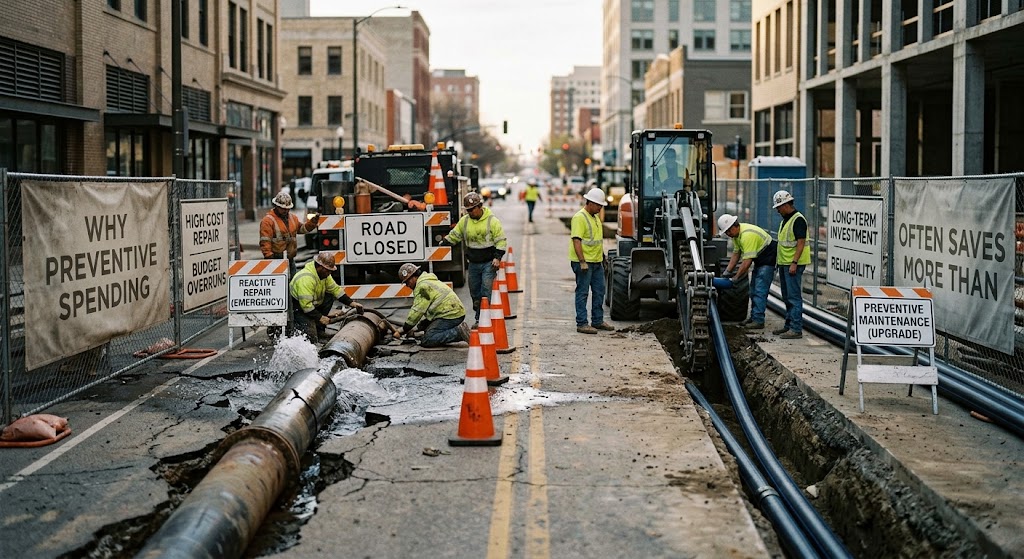
Why Preventive Spending Often Saves More Than Reactive Spending
Money has a strange way of teaching lessons. Some lessons come through careful planning, while others arrive through painful and expensive mistakes. One of the greatest financial principles that separates financially stable people from those who constantly struggle is understanding that preventive spending often saves more than reactive spending. Although many people believe that spending less is always the smartest financial decision, the reality is more complex. There are times when refusing to spend a small amount today can lead to paying a much larger amount tomorrow. This simple truth affects individuals, families, businesses, and even entire nations. Why Preventive Spending Often Saves More Than Reactive Spending.
Why preventive spending often saves more than reactive spending is a lesson that extends far beyond money. It is about wisdom, foresight, discipline, and understanding how small investments made at the right time can prevent enormous losses in the future. Preventive spending is not about wasting money or buying unnecessary things. It is about identifying risks before they become expensive problems and taking reasonable action before those risks grow beyond control.
Many people naturally delay spending because they believe they are saving money. They postpone servicing their vehicles, ignore leaking roofs, refuse regular health checkups, neglect insurance, delay replacing worn out equipment, and avoid maintaining their businesses. At first, this behaviour appears financially responsible because money stays in the bank. Unfortunately, what looks like saving often becomes one of the most expensive decisions a person can make.
Consider a simple example involving a vehicle. A routine oil change costs only a fraction of what it would cost to replace a damaged engine. Yet countless drivers postpone servicing because they believe they are avoiding unnecessary expenses. Months later, the neglected engine develops serious mechanical problems that require repairs costing many times more than the original maintenance would have required. The person did not actually save money. They merely postponed spending until it became unavoidable and significantly more expensive.
The same principle applies inside our homes. A tiny crack in a wall may appear harmless. A leaking pipe under a sink may seem insignificant. A damaged electrical wire may not seem urgent. However, these small issues rarely remain small. Water quietly destroys walls, weakens foundations, encourages mould growth, and damages expensive furniture. Faulty electrical systems can destroy appliances or even cause devastating fires. The cost of fixing the original problem is usually tiny compared to repairing the damage that develops when nothing is done.
Preventive spending reflects long term thinking. Reactive spending reflects delayed decision making. The difference between the two is often measured in thousands or even millions of naira over a lifetime. Financially successful people understand that every decision should be evaluated not only by today’s price but also by tomorrow’s consequences.
One reason many people struggle with preventive spending is that the benefits are often invisible. When you pay to service your car, nothing dramatic happens. When you install security systems, hopefully no theft occurs. When you purchase insurance, you hope never to use it. When you invest in regular health examinations, you may never experience serious illness because problems are discovered early. Since nothing obvious happens immediately, people begin questioning whether the spending was worthwhile.
Reactive spending feels different because the consequences are immediate and emotional. When a roof collapses, action becomes unavoidable. When the engine stops working, repairs cannot be delayed. When illness becomes severe, emergency treatment suddenly becomes necessary. By then, the financial cost has multiplied dramatically.
Human psychology often works against wise financial behaviour. Most people naturally prioritise immediate comfort over future security. Spending money today to prevent a possible future problem feels painful because the future remains uncertain. Unfortunately, uncertainty does not eliminate risk. Problems ignored today usually continue growing quietly until they become impossible to ignore.
Healthcare provides one of the clearest demonstrations of why preventive spending often saves more than reactive spending. Regular medical checkups, healthy eating, exercise, vaccinations, dental cleaning, and early screening all require money. Some people avoid these expenses because they believe they are healthy. Unfortunately, many serious illnesses develop gradually without obvious symptoms. Diseases such as diabetes, hypertension, heart disease, and certain cancers often become much easier and cheaper to manage when detected early.
The financial difference between prevention and reaction in healthcare can be enormous. Annual checkups may cost relatively little compared to emergency surgeries, prolonged hospital admissions, expensive medications, or long term disability. Beyond the financial burden lies another cost that money cannot easily replace, which is lost quality of life.
Businesses also thrive or fail depending on whether they embrace preventive spending. Successful companies invest in equipment maintenance, cybersecurity, employee training, quality control, customer service, legal compliance, and financial auditing. These investments may seem expensive during profitable periods, but they protect the business from far greater losses.
Imagine a company refusing to update its cybersecurity systems to save money. Months later, hackers gain access to confidential customer information. The business now faces legal costs, compensation claims, reputational damage, regulatory penalties, and loss of customer trust. The amount saved by avoiding preventive spending becomes insignificant compared to the enormous cost of reacting after disaster strikes.
Manufacturing companies understand this principle particularly well. Machines require regular inspection and servicing even when they appear to function perfectly. Replacing worn components before failure reduces downtime, protects workers, and maintains productivity. Waiting until machines completely break down often stops production entirely, delays customer orders, and creates financial losses far beyond the repair costs themselves.
Homeowners experience similar realities every year. Cleaning drainage systems before heavy rainfall prevents flooding. Servicing air conditioning systems extends their lifespan. Painting exterior walls protects buildings from weather damage. Replacing worn roofing materials prevents water penetration. These actions require spending money before obvious problems exist, yet they often save far more than emergency repairs later.
Education represents another powerful form of preventive spending. Purchasing books, attending training programmes, learning valuable skills, and investing in professional development require both money and time. Some people consider education expensive because they focus only on the immediate cost. However, ignorance often proves far more expensive over an entire lifetime.
An employee who continuously develops new skills remains competitive even as industries change. A business owner who learns financial management avoids costly mistakes. An investor who studies markets reduces unnecessary risks. Every naira spent improving knowledge has the potential to generate returns that continue for decades.
Financial planning itself is preventive spending. Hiring professional accountants, consulting financial advisers when appropriate, preparing wills, maintaining proper records, and developing investment strategies all involve expenses. Many people avoid these costs because they believe they can manage everything themselves. Sometimes they can. Sometimes they cannot. When tax problems, inheritance disputes, poor investments, or legal complications arise, the cost of correcting mistakes usually exceeds the original advisory fees many times over.
Insurance remains one of the most misunderstood examples of preventive spending. Many people dislike paying premiums because they feel they receive nothing in return. Yet insurance exists precisely because catastrophic events are unpredictable. A single accident, fire, theft, natural disaster, or medical emergency can erase years of financial progress. Insurance transfers much of that financial risk to another party for a relatively predictable cost.
Of course, preventive spending must also be approached wisely. Not every expense marketed as prevention genuinely creates value. Financial wisdom requires distinguishing between necessary preventive investments and unnecessary purchases disguised as preparation. Spending excessively on products or services that provide little real protection defeats the purpose. Effective preventive spending is based on realistic risk assessment rather than fear or impulse.
Technology has also transformed preventive spending. Modern software automatically backs up important files, protecting businesses and individuals from devastating data loss. Security updates protect computers against evolving cyber threats. Cloud storage preserves valuable documents. Password management systems reduce identity theft risks. Although these services often involve subscriptions, their cost remains tiny compared to recovering from lost information or stolen identities.
Many entrepreneurs learn the importance of preventive spending only after painful experiences. They delay registering trademarks until competitors copy their brands. They postpone obtaining proper licences until authorities intervene. They ignore bookkeeping until financial confusion overwhelms them. They neglect customer service until negative reviews damage their reputation. These problems rarely appear overnight. They develop gradually while business owners believe they are saving money by postponing necessary investments.
Families also benefit enormously from preventive financial habits. Creating emergency funds requires sacrificing immediate consumption, yet emergency savings prevent families from relying on expensive loans during unexpected crises. Regular savings may appear slow and unrewarding during stable periods, but they provide financial resilience when income suddenly declines or emergencies arise.
Preventive spending also applies to relationships. Investing time and resources into communication, counselling when necessary, family activities, and emotional well being often prevents conflicts from escalating into broken relationships that carry significant emotional and financial consequences. While this type of spending may not appear on traditional financial statements, its long term value is impossible to ignore.
The environment provides another illustration of this principle. Communities that invest in drainage systems, flood control, waste management, infrastructure maintenance, and disaster preparedness usually spend less recovering from environmental disasters than communities that ignore these responsibilities. Prevention almost always proves less expensive than reconstruction.
One of the greatest obstacles to preventive spending is optimism bias. People naturally believe negative events are less likely to happen to them than to others. They assume accidents happen elsewhere. They believe serious illness affects someone else. They expect businesses to continue operating without interruptions. This false sense of security encourages delayed action until circumstances force expensive reactions.
Financial discipline requires resisting this bias by accepting uncertainty as a normal part of life. Wise individuals recognise that uncertainty cannot be eliminated, but its financial consequences can often be reduced through thoughtful preparation. Preventive spending is therefore not an expression of fear. It is an expression of responsibility.
Another reason preventive spending creates wealth is that it protects momentum. Financial success often depends upon uninterrupted progress. Major unexpected expenses interrupt investment plans, reduce savings, increase debt, and delay important goals. Preventive spending reduces these interruptions by lowering the probability of severe financial shocks.
Many wealthy individuals understand this principle intuitively. They maintain their properties regularly, diversify investments, employ professional advisers, protect assets legally, invest continuously in learning, maintain excellent health habits, and build multiple layers of financial protection. Their wealth is not preserved simply because they earn more money. It is preserved because they consistently reduce avoidable risks before those risks become expensive realities.
Ultimately, why preventive spending often saves more than reactive spending comes down to recognising that every financial decision has consequences extending far beyond its immediate price. Small investments made consistently today frequently eliminate much larger expenses tomorrow. Whether maintaining equipment, protecting health, educating yourself, securing your finances, strengthening relationships, or safeguarding valuable assets, prevention represents one of the highest returning investments available.
The smartest financial decisions are often the least exciting because they prevent events that never happen. A well maintained home never collapses unexpectedly. A regularly serviced vehicle rarely suffers catastrophic failure. A healthy lifestyle reduces medical emergencies. A protected business avoids devastating disruptions. An emergency fund prevents financial panic. These quiet victories rarely make headlines, but they steadily build lasting financial security.
Money should never be judged solely by how little is spent today. It should be judged by how effectively today’s spending protects tomorrow’s prosperity. Those who understand this principle begin viewing preventive spending not as an expense but as an investment in stability, resilience, peace of mind, and long term wealth. Over an entire lifetime, the difference between prevention and reaction is rarely measured in small amounts. It is often measured in financial freedom itself.

EarnSmartOnline.com.ng is dedicated to helping readers make smarter financial decisions through practical guides on online income, personal finance, technology, digital business, and wealth creation. Our goal is to provide reliable, easy-to-understand, and actionable content that empowers individuals to earn smarter, build sustainable income streams and achieve long-term financial success.
Recommended: Start Earning Online
- Ultimate Affiliate Marketing Program — learn affiliate marketing with a done-for-you sales system ($15). Check it out
- The Newbie Affiliate Guide — the beginner-friendly starter guide (~$6.68). Check it out
- Easy Dollar Maker — earn in dollars uploading AI images and videos from your phone ($17). Check it out
Disclosure: These are affiliate links. If you buy through them, I may earn a commission at no extra cost to you.



