
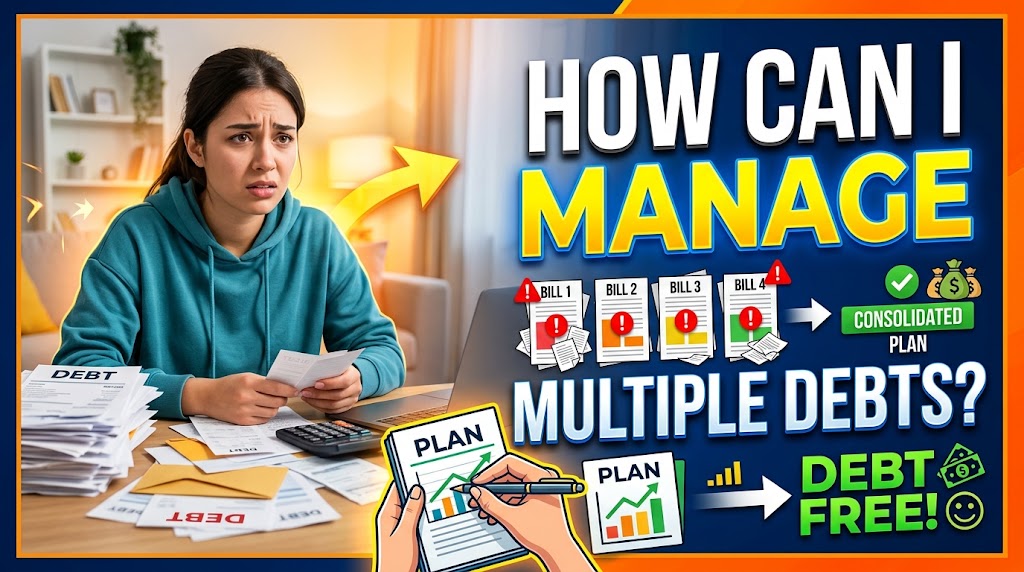
How can I manage multiple debts?
How can I manage multiple debts? This is one of the most common financial questions people ask when they find themselves juggling several loans, credit card balances, overdrafts, personal debts, and other financial obligations at the same time. Managing multiple debts can feel overwhelming, stressful, and sometimes even impossible. Many people lose sleep worrying about payment deadlines, increasing interest rates, collection calls, and the fear of falling deeper into financial trouble. The good news is that no matter how complicated your debt situation may appear, there are practical steps you can take to regain control and move toward financial stability.
If you are asking yourself, “How can I manage multiple debts?” the first thing you should understand is that debt itself is not necessarily a sign of financial failure. Many successful individuals, entrepreneurs, homeowners, and professionals have carried debt at different stages of their lives. Problems usually arise when debts become difficult to track, payments are missed, or the total amount owed begins to grow faster than your ability to repay it. The key is not to panic but to develop a structured plan that allows you to address your debts systematically.
One of the most important steps in managing multiple debts is gaining a complete understanding of your financial situation. Many people avoid looking at their debts because doing so can be emotionally uncomfortable. However, ignoring debt rarely makes it disappear. Instead, it often leads to larger problems. Begin by creating a comprehensive list of every debt you owe. Include the name of the lender, the total amount outstanding, the monthly payment requirement, the interest rate, and the due date. Seeing everything in one place provides clarity and helps you understand the true scope of your financial obligations.
After listing all your debts, calculate your total monthly income and your total monthly expenses. This exercise helps determine how much money is available for debt repayment. You may discover areas where spending can be reduced or eliminated. Small daily expenses that seem insignificant can accumulate into substantial amounts over time. By identifying unnecessary expenditures, you can redirect more money toward paying off your debts faster.
Budgeting plays a critical role in debt management. A realistic budget acts as a roadmap for your finances. It helps ensure that your essential needs such as housing, food, transportation, healthcare, and utilities are covered while allocating funds toward debt repayment. Without a budget, it becomes difficult to track where your money is going, increasing the likelihood of financial mistakes. A good budget should be practical and sustainable. Extreme budgets that leave no room for unexpected expenses often fail because they are difficult to maintain over the long term.
When considering how can I manage multiple debts, prioritisation becomes essential. Not all debts are equal. Some debts carry significantly higher interest rates than others. Credit card debts, for example, often accumulate interest much faster than mortgages or certain personal loans. One effective strategy is the debt avalanche method. This approach involves making minimum payments on all debts while directing any extra money toward the debt with the highest interest rate. Once that debt is paid off, the money previously allocated to it is applied to the next highest-interest debt. Over time, this strategy can reduce the total amount of interest paid.
Another popular approach is the debt snowball method. This method focuses on paying off the smallest debt first while maintaining minimum payments on other debts. Once the smallest debt is eliminated, the money used for that payment is rolled into the next smallest debt. The debt snowball method provides psychological benefits because it creates quick wins that help maintain motivation. While it may not always save the most money in interest, it can be highly effective for individuals who need encouragement to stay committed to their debt repayment journey.
Communication with creditors is another important aspect of managing multiple debts. Many people avoid contacting lenders when they experience financial difficulties, fearing judgment or negative consequences. In reality, many creditors are willing to work with borrowers who communicate honestly about their situation. They may offer temporary payment reductions, modified repayment plans, extended loan terms, or hardship programmes. Reaching out before missing payments often produces better results than waiting until accounts become severely delinquent.
Debt consolidation is another option worth considering. Debt consolidation involves combining multiple debts into a single loan or payment. This can simplify financial management by reducing the number of monthly payments and potentially lowering the overall interest rate. However, debt consolidation is not a magical solution. It works best when accompanied by disciplined financial habits. Without addressing the spending behaviours that contributed to debt accumulation, consolidation may simply create room for new debts to emerge.
If your debts have become particularly difficult to manage, seeking professional financial advice may be beneficial. Financial counsellors and debt management professionals can provide guidance tailored to your circumstances. They can help create repayment plans, negotiate with creditors, and offer practical strategies for improving your financial situation. Seeking help should never be viewed as a sign of weakness. Rather, it demonstrates a commitment to resolving financial challenges responsibly.
An emergency fund can also play a significant role in managing multiple debts. Many people fall deeper into debt because they lack savings for unexpected expenses. A medical emergency, car repair, home maintenance issue, or temporary job loss can quickly lead to additional borrowing. Even while repaying debt, it is wise to build a modest emergency fund. Having access to savings reduces reliance on credit during financial emergencies and helps prevent setbacks in your debt repayment efforts.
One common mistake people make when trying to manage multiple debts is continuing to accumulate new debt while paying off existing obligations. This creates a cycle that can be difficult to break. If possible, avoid taking on additional loans or increasing credit card balances. Focus your efforts on reducing current obligations before assuming new financial responsibilities. Every new debt increases the complexity of your financial situation and extends the time required to achieve financial freedom.
Understanding the emotional side of debt is equally important. Debt can create stress, anxiety, embarrassment, and feelings of hopelessness. These emotions can sometimes lead to avoidance behaviours that make financial problems worse. Recognising that debt management is a process rather than an overnight transformation can help maintain perspective. Progress may seem slow at times, but every payment made brings you closer to your goal. Celebrating small milestones can help sustain motivation throughout the journey.
Technology can be a valuable tool when managing multiple debts. Numerous budgeting applications, financial management tools, and debt tracking platforms are available to help monitor payments, due dates, and progress. Automated payment systems can also reduce the risk of missed payments. By leveraging technology, you can stay organised and maintain better control over your financial obligations.
Increasing income can significantly accelerate debt repayment. While reducing expenses is important, there are limits to how much spending can be cut. Exploring additional income opportunities may provide greater flexibility. Freelancing, part-time work, consulting, online businesses, tutoring, and other side income activities can generate extra funds specifically dedicated to debt reduction. Even modest additional earnings can make a substantial difference over time.
Financial education is another powerful tool for anyone asking, “How can I manage multiple debts?” Understanding concepts such as interest rates, credit scores, budgeting, loan structures, and financial planning enables better decision-making. The more knowledge you acquire about personal finance, the better equipped you become to avoid future debt problems and build long-term financial security.
Monitoring your credit report is also important. Multiple debts can affect your credit profile, particularly if payments are missed. Regularly reviewing your credit report helps identify errors, track progress, and understand how your financial actions influence your creditworthiness. A strong credit profile can provide access to better financial opportunities in the future, including lower interest rates and improved borrowing terms.
Patience is essential throughout the debt management process. Many debts accumulate over several years, making it unrealistic to expect immediate results. Sustainable financial improvement often occurs gradually. Consistency matters more than speed. Even relatively small monthly improvements can produce significant results when maintained over an extended period. The key is to remain committed to your plan and avoid becoming discouraged by temporary setbacks.
Developing healthy financial habits is crucial for long-term success. Once debts are paid off, maintaining responsible spending habits helps prevent future financial difficulties. This includes living within your means, saving regularly, planning for major expenses, and avoiding impulsive borrowing. Effective debt management is not just about eliminating existing debt but also about creating a financial lifestyle that supports stability and growth.
Family involvement can sometimes be helpful when managing multiple debts. If you share financial responsibilities with a spouse or household members, open communication is essential. Working together toward common financial goals can improve accountability and increase the likelihood of success. Transparency about income, expenses, and debts helps prevent misunderstandings and ensures everyone understands the steps being taken to improve the financial situation.
One important aspect that many people overlook is the importance of reviewing financial progress regularly. Monthly reviews allow you to track reductions in debt balances, evaluate budget performance, and identify areas for improvement. These reviews provide opportunities to adjust strategies as circumstances change. A debt management plan should remain flexible enough to accommodate unexpected events while maintaining focus on the overall objective.
For individuals facing severe debt challenges, it may be necessary to explore more advanced options such as debt restructuring or formal debt management programmes. These solutions should be approached carefully and often require professional guidance. Understanding the advantages, disadvantages, costs, and long-term implications of each option is essential before making any decisions.
It is also important to avoid common debt relief scams. Unfortunately, some organisations target financially vulnerable individuals with unrealistic promises of instant debt elimination. Legitimate debt solutions usually require time, commitment, and financial discipline. Be cautious of any company guaranteeing immediate results, demanding large upfront fees, or making promises that seem too good to be true.
When people ask, “How can I manage multiple debts?” they are often searching for a quick fix. However, effective debt management is typically achieved through consistent effort, careful planning, disciplined spending, and strategic repayment. There may be challenges along the way, but countless individuals have successfully overcome significant debt burdens and achieved financial freedom. Their success demonstrates that debt problems, while serious, are not insurmountable.
The journey toward debt freedom begins with a single step. Whether that step involves creating a debt list, building a budget, contacting creditors, reducing expenses, increasing income, or seeking professional guidance, taking action is far more productive than remaining paralysed by worry. Every positive financial decision contributes to progress, no matter how small it may seem at the time.
Ultimately, the answer to the question “How can I manage multiple debts?” lies in organisation, prioritisation, discipline, and persistence. By understanding your financial situation, creating a realistic repayment strategy, controlling spending, exploring opportunities to increase income, and maintaining a long-term perspective, you can gradually reduce your debt burden and regain control of your finances. While the process requires commitment and patience, the rewards extend far beyond debt repayment. Financial stability brings peace of mind, greater opportunities, improved confidence, and the freedom to focus on building the future you desire. With determination and a clear plan, managing multiple debts becomes not only possible but entirely achievable.

EarnSmartOnline.com.ng is dedicated to helping readers make smarter financial decisions through practical guides on online income, personal finance, technology, digital business, and wealth creation. Our goal is to provide reliable, easy-to-understand, and actionable content that empowers individuals to earn smarter, build sustainable income streams and achieve long-term financial success.
Recommended: Start Earning Online
- Ultimate Affiliate Marketing Program — learn affiliate marketing with a done-for-you sales system ($15). Check it out
- The Newbie Affiliate Guide — the beginner-friendly starter guide (~$6.68). Check it out
- Easy Dollar Maker — earn in dollars uploading AI images and videos from your phone ($17). Check it out
Disclosure: These are affiliate links. If you buy through them, I may earn a commission at no extra cost to you.



