
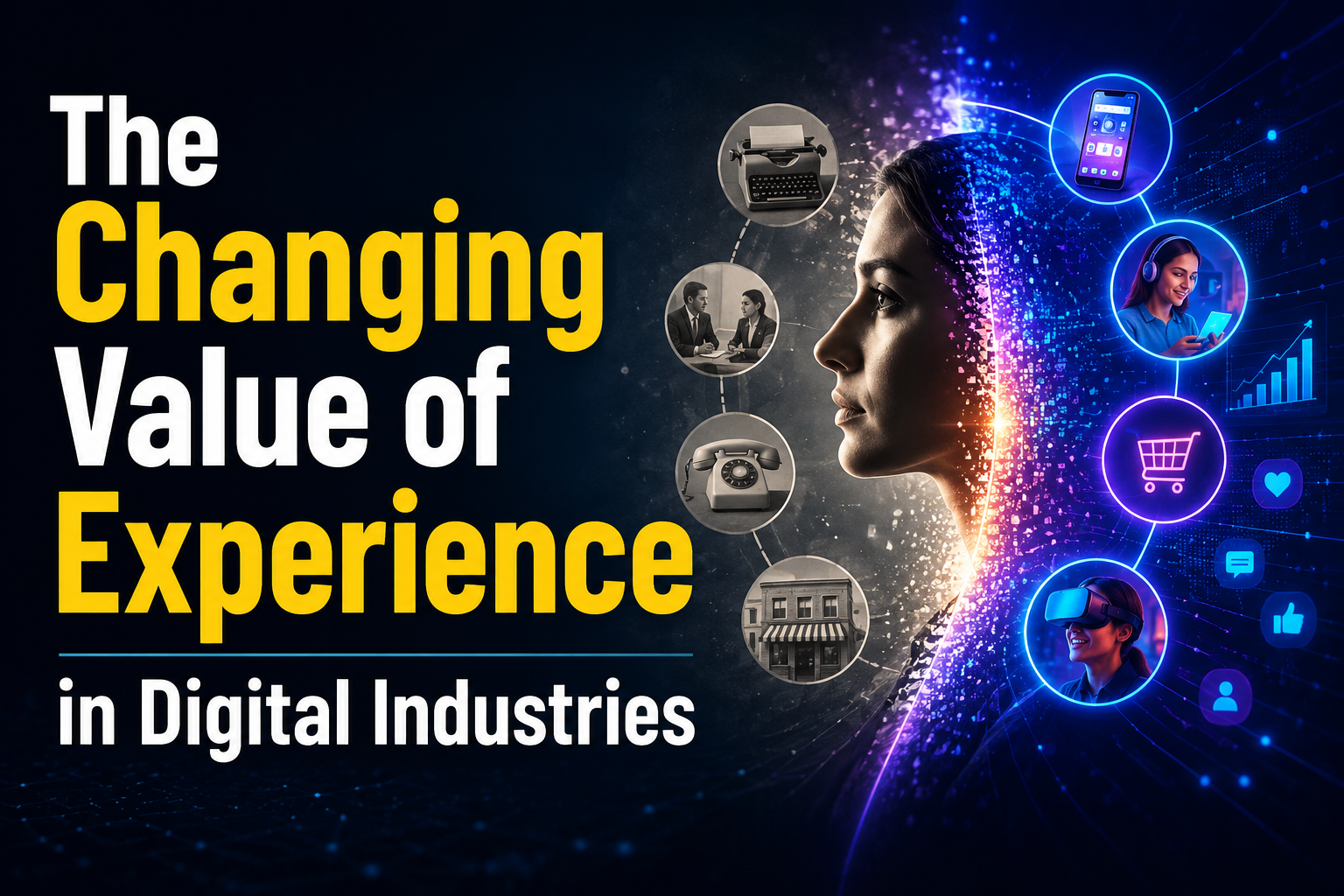
The Changing Value of Experience in Digital Industries
For generations, experience was considered one of the most valuable assets a professional could possess. The longer someone worked in a particular field, the more respect, authority, and opportunities they gained. Years of service often translated directly into career advancement, higher salaries, and greater influence. Experience was viewed as proof of competence, reliability, and expertise. However, the rise of digital industries has dramatically changed how experience is valued. While experience still matters, its role and significance have evolved in ways that would have been difficult to imagine just a few decades ago.
Digital industries operate differently from traditional sectors. They are driven by rapid technological advancements, constant innovation, and shifting consumer behaviors. What worked five years ago may no longer be effective today. In some cases, strategies, tools, and technologies become outdated within months. This fast-paced environment has transformed the relationship between experience and success.
In traditional industries, experience often accumulated in a relatively stable environment. An accountant who mastered financial procedures twenty years ago could still apply many of the same principles today. A skilled carpenter could rely on techniques passed down through generations. A lawyer could build expertise through years of handling similar cases. While improvements and changes occurred, the core foundations remained relatively stable.
Digital industries tell a different story. A web developer who was highly skilled ten years ago may struggle today if they failed to keep up with modern programming languages, frameworks, and development practices. A social media marketer who achieved success on older platforms may find their strategies ineffective in today’s algorithm-driven environment. Experience alone is no longer enough. Continuous adaptation has become essential.
One of the biggest changes in digital industries is the reduced shelf life of knowledge. In many fields, knowledge gained several years ago can quickly lose relevance. Search engine optimization techniques that once guaranteed top rankings may now result in penalties. Marketing tactics that generated massive engagement yesterday may produce little impact today. Software tools that dominated the market can disappear almost overnight.
As a result, employers and clients increasingly value current knowledge alongside accumulated experience. A professional with five years of recent, relevant experience may sometimes outperform someone with twenty years of outdated experience. This shift has forced workers to rethink what experience truly means in a digital economy.
Another factor changing the value of experience is the democratization of information. In the past, experience often provided access to knowledge that was difficult to obtain elsewhere. Professionals accumulated valuable insights through years of practice because information was limited. Today, countless resources are available online. Tutorials, courses, webinars, forums, and digital communities allow newcomers to learn skills at unprecedented speeds.
A motivated individual can acquire technical knowledge that once required years of apprenticeship. While practical experience still matters, the gap between beginners and veterans has narrowed in many digital fields. This has created a more competitive environment where experience alone no longer guarantees superiority.
The rise of artificial intelligence has further accelerated this transformation. Many routine tasks that once required years of experience can now be assisted or automated by intelligent systems. Content creation, data analysis, coding assistance, customer support, and research have all been influenced by AI technologies. Professionals who previously relied solely on experience may find themselves competing with younger workers who effectively leverage these new tools.
In this new reality, adaptability often becomes more valuable than experience itself. The ability to learn, unlearn, and relearn has emerged as one of the most important skills in digital industries. Employers increasingly seek individuals who can quickly adapt to changing technologies rather than those who simply possess extensive historical knowledge.
This does not mean experience has become irrelevant. On the contrary, experience remains valuable when combined with adaptability. Experienced professionals often possess judgment, critical thinking, and problem-solving abilities that cannot easily be replaced by technology. They have encountered challenges, failures, and unexpected situations that provide valuable perspectives. However, the most successful professionals are those who combine their experience with a willingness to evolve.
Digital industries also place greater emphasis on results than tenure. In many traditional workplaces, promotions and opportunities were often linked to years of service. Digital businesses tend to prioritize measurable outcomes. Employers want to know what a person can accomplish rather than how long they have been working.
A young software developer who creates an innovative application may attract significant attention despite having limited professional experience. A content creator who builds a large audience within a short period may secure lucrative partnerships. A digital marketer who generates impressive campaign results may advance rapidly regardless of age or tenure. Performance increasingly outweighs seniority.
Remote work has also contributed to changing perceptions of experience. Digital industries allow companies to hire talent from around the world. This global competition means professionals are evaluated against a much larger pool of candidates. Employers can compare skills, portfolios, and achievements rather than relying solely on traditional indicators such as years of experience.
As a result, demonstrable competence has become increasingly important. Portfolios, case studies, certifications, personal projects, and proven accomplishments often carry significant weight. Employers want evidence that candidates can deliver value in real-world situations. Experience matters, but proof of capability matters even more.
The startup culture that dominates many digital industries has reinforced this trend. Startups often prioritize innovation, agility, and experimentation. They seek individuals who can adapt quickly and solve problems creatively. In such environments, rigid reliance on past experiences can sometimes become a disadvantage.
Experienced professionals occasionally fall into the trap of assuming that previous success guarantees future success. Digital markets evolve rapidly, and strategies that worked yesterday may become obsolete tomorrow. Younger professionals who approach challenges with fresh perspectives may identify opportunities that more experienced individuals overlook.
The increasing importance of lifelong learning represents another major shift. In digital industries, education no longer ends with a degree or certification. Professionals must continuously update their knowledge to remain competitive. Learning has become an ongoing process rather than a one-time achievement.
Those who embrace continuous learning often maintain their relevance regardless of age or experience level. Conversely, individuals who stop learning risk becoming obsolete despite extensive experience. This reality has fundamentally altered the traditional relationship between age, experience, and expertise.
The changing value of experience is also visible in hiring practices. Many companies now focus on skills-based hiring rather than relying exclusively on educational qualifications or years of experience. Employers increasingly use practical assessments, project-based evaluations, and portfolio reviews to identify capable candidates.
This approach reflects a growing recognition that experience alone does not guarantee competence. Some individuals accumulate years of experience without significantly improving their skills, while others achieve remarkable expertise within shorter periods through focused learning and practical application.
Digital entrepreneurship provides perhaps the clearest example of this shift. Many successful entrepreneurs launch profitable online businesses without decades of industry experience. They succeed by identifying emerging opportunities, learning quickly, and adapting to market changes. Their achievements demonstrate that experience remains valuable but is no longer the sole determinant of success.
Consumer behavior also plays a role in reshaping the value of experience. Digital consumers constantly seek innovation, convenience, and personalization. Companies must respond rapidly to changing preferences. Organizations that rely too heavily on past experience may struggle to keep pace with evolving customer expectations.
This dynamic encourages businesses to balance experience with innovation. Experienced professionals provide stability and strategic insight, while newer talent often contributes fresh ideas and technological fluency. The most successful organizations recognize the importance of combining both perspectives.
Looking ahead, the value of experience in digital industries will likely continue evolving. As technology advances, knowledge cycles may become even shorter. Artificial intelligence, automation, virtual reality, blockchain technologies, and future innovations will create new opportunities while disrupting existing practices.
In such an environment, experience will increasingly be defined not by the number of years worked but by the ability to generate relevant insights, solve complex problems, and adapt to change. Professionals who continuously update their skills will maintain their value regardless of age. Those who rely solely on past achievements may find themselves struggling to remain competitive.
The future belongs to individuals who view experience as a foundation rather than a destination. Experience provides valuable lessons, but those lessons must be combined with curiosity, adaptability, and continuous learning. The professionals who thrive in digital industries are not necessarily those with the most experience. They are often those who know how to make their experience relevant in a constantly changing world.
Ultimately, the changing value of experience in digital industries reflects a broader transformation in the nature of work itself. Success is no longer determined solely by how long someone has been doing something. It is increasingly determined by how effectively they can learn, adapt, and create value in an environment where change is the only constant. Experience still matters, but its true worth now depends on whether it helps individuals navigate the future rather than simply understand the past.

EarnSmartOnline.com.ng is dedicated to helping readers make smarter financial decisions through practical guides on online income, personal finance, technology, digital business, and wealth creation. Our goal is to provide reliable, easy-to-understand, and actionable content that empowers individuals to earn smarter, build sustainable income streams and achieve long-term financial success.
Recommended: Start Earning Online
- Ultimate Affiliate Marketing Program — learn affiliate marketing with a done-for-you sales system ($15). Check it out
- The Newbie Affiliate Guide — the beginner-friendly starter guide (~$6.68). Check it out
- Easy Dollar Maker — earn in dollars uploading AI images and videos from your phone ($17). Check it out
Disclosure: These are affiliate links. If you buy through them, I may earn a commission at no extra cost to you.



