
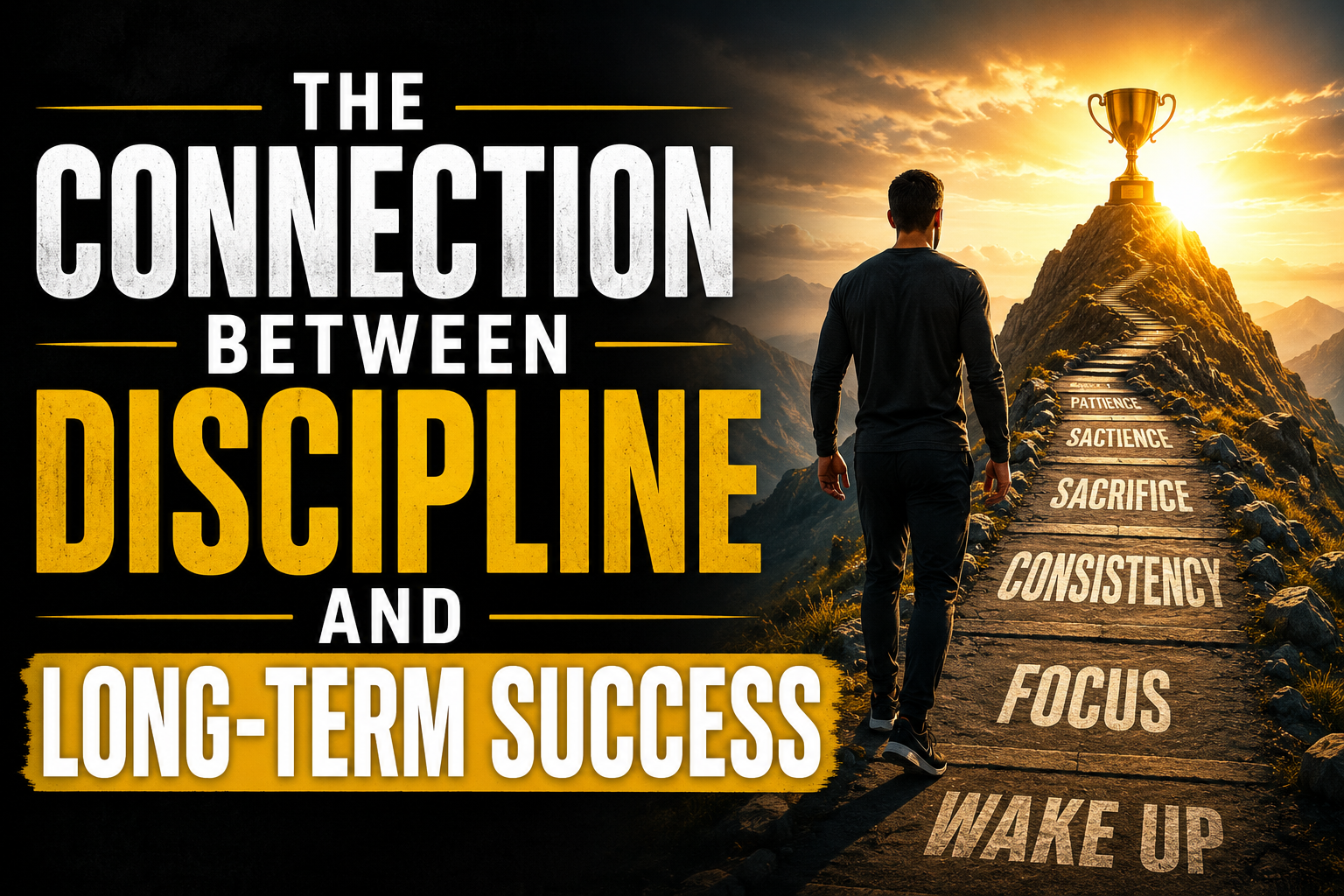
The Connection Between Discipline and Long-Term Success
Success is one of the most desired achievements in human life, yet it remains one of the most misunderstood concepts. Many people believe success is mainly connected to talent, luck, intelligence, background, or opportunity. While these things may play a role, the true foundation of long-term success is discipline. Discipline is the invisible force that separates dreams from reality and intentions from achievements. Without discipline, even the most talented individuals often struggle to maintain progress, while disciplined individuals continue to grow steadily despite challenges and limitations. The Connection Between Discipline and Long-Term Success.
Discipline is the ability to stay committed to a goal even when motivation disappears. Motivation is temporary and emotional, but discipline is consistent and intentional. This is why many people start projects with excitement but eventually abandon them halfway. They rely too much on feelings instead of building habits. Long-term success cannot survive on temporary emotions. It requires repeated effort, consistency, patience, and self-control over a long period of time.
One of the strongest connections between discipline and success is consistency. Success rarely happens overnight. Most achievements are the result of small daily actions repeated over months or years. A disciplined person understands that every small effort matters. Waking up early, managing time wisely, saving money regularly, studying consistently, improving skills daily, and avoiding distractions may seem insignificant in the moment, but over time these habits create powerful results. Many people underestimate the power of consistency because they focus too much on immediate rewards instead of long-term outcomes.
Discipline also helps people remain focused in a world filled with distractions. Modern society constantly competes for attention. Social media, entertainment, unnecessary comparison, and unhealthy habits often pull people away from their goals. Without discipline, it becomes easy to waste valuable time on activities that add little value to personal growth. Disciplined individuals understand the importance of protecting their attention and energy. They learn how to prioritize what truly matters instead of constantly chasing temporary pleasure.
Another important connection between discipline and long-term success is emotional control. Life is filled with difficult moments, disappointments, stress, failure, and uncertainty. People who depend only on emotions often make poor decisions during hard times. They quit too early, react impulsively, or lose direction when things become uncomfortable. Discipline creates emotional stability because it trains people to act based on purpose rather than feelings. A disciplined person continues working even when tired, discouraged, or unmotivated because they understand that success requires endurance.
Financial success is also strongly connected to discipline. Many people earn money but still struggle financially because they lack self-control. Discipline influences spending habits, saving habits, investment decisions, and long-term financial planning. People who constantly seek instant gratification often find themselves trapped in debt and financial stress. On the other hand, disciplined individuals understand delayed gratification. They are willing to sacrifice short-term comfort for future stability. This mindset plays a major role in wealth building and financial independence.
Health and physical well-being also reveal the power of discipline. Staying healthy requires regular exercise, proper nutrition, quality sleep, and self-control. These habits are not always easy or enjoyable, especially in a world filled with unhealthy temptations and convenience. However, disciplined individuals understand that long-term health is more valuable than temporary pleasure. Many people destroy their bodies slowly through careless habits, while disciplined people make intentional choices that protect their future well-being.
Discipline is equally important in relationships and personal development. Strong relationships require patience, communication, loyalty, honesty, and emotional maturity. These qualities are often difficult to maintain without discipline. Long-term success in relationships is not built only on feelings or attraction but also on commitment and responsibility. The same principle applies to personal growth. People become better versions of themselves by practicing self-awareness, learning from mistakes, controlling negative behaviors, and continuously improving their mindset.
One reason discipline is difficult for many people is because society often celebrates results more than process. People admire success stories without paying attention to the sacrifices behind them. They see the rewards but ignore the years of consistency, rejection, hard work, and patience required to achieve those results. This creates unrealistic expectations. Many individuals want success quickly and become frustrated when progress feels slow. Discipline teaches patience because it understands that meaningful success takes time to develop.
Another major reason discipline matters is because life is unpredictable. Opportunities may come and go, motivation may rise and fall, and external circumstances may change unexpectedly. Discipline creates stability in unstable situations. It allows individuals to continue moving forward regardless of temporary setbacks. This is why disciplined people often recover faster from failure. They do not allow one bad moment to destroy their long-term vision. Instead, they learn, adjust, and continue working toward their goals.
Discipline also builds self-confidence. Every time a person keeps a promise to themselves, they strengthen their sense of self-respect. Completing tasks, staying consistent, and overcoming temptations gradually create inner confidence. People who constantly break their own commitments often struggle with self-doubt because deep inside they no longer trust themselves. Discipline changes this by creating evidence of reliability and personal strength. Confidence built through discipline is more powerful than confidence built through external validation.
The connection between discipline and success can also be seen in education and skill development. Learning any valuable skill requires repetition, patience, and practice. Whether it is writing, business, music, sports, technology, or communication, mastery is impossible without discipline. Talented people sometimes fail because they depend too much on natural ability while ignoring the importance of consistent effort. Meanwhile, disciplined individuals continue improving steadily until they eventually outperform others who relied only on talent.
Social media has made discipline even more important in modern life. Many people now struggle with short attention spans, constant comparison, and addiction to instant entertainment. These habits weaken focus and reduce productivity. Discipline helps individuals resist these distractions and maintain control over their time. Successful people understand that attention is valuable. They avoid wasting excessive hours consuming meaningless content because they know every day contributes either to growth or stagnation.
Discipline also teaches responsibility. Long-term success requires accountability and maturity. Blaming circumstances, other people, or bad luck may provide temporary comfort, but it rarely creates improvement. Disciplined individuals take ownership of their actions and decisions. They focus on what they can control instead of constantly complaining about what they cannot change. This mindset allows them to adapt, improve, and continue progressing even in difficult environments.
One of the most powerful aspects of discipline is delayed gratification. This is the ability to resist immediate pleasure in order to achieve greater rewards later. Many failures in life happen because people choose comfort over growth. They avoid difficult tasks, spend recklessly, procrastinate, or chase temporary satisfaction without considering long-term consequences. Discipline trains the mind to think beyond the present moment. It understands that sacrifice today often creates freedom tomorrow.
Long-term success also depends heavily on routines and habits. People often think success comes from major life-changing moments, but in reality daily habits shape most outcomes. Discipline creates routines that support productivity, growth, and stability. Simple actions repeated consistently can completely transform a person’s future. Reading daily, exercising regularly, learning continuously, and managing time wisely may appear ordinary, but over several years these habits create extraordinary results.
Another important truth is that discipline protects people from self-destruction. Many individuals lose opportunities not because they lacked potential but because they lacked self-control. Poor decisions, laziness, emotional reactions, addiction, impatience, and inconsistency often destroy promising futures. Discipline acts as a protective system that helps people avoid behaviors that could damage their goals. It encourages wiser decision-making and long-term thinking.
Successful people are not necessarily people who never fail. In fact, many highly successful individuals experienced repeated setbacks before achieving their goals. The difference is that disciplined people continue working despite failure. They understand that setbacks are part of growth rather than proof of defeat. Discipline allows them to remain committed during difficult seasons when others give up.
The relationship between discipline and success becomes even more obvious with time. In the beginning, disciplined habits may seem difficult and unrewarding. However, over the years the benefits become undeniable. Financial stability, personal growth, strong relationships, emotional maturity, good health, and career advancement are often the result of disciplined living. Meanwhile, the consequences of indiscipline also become visible over time through regret, missed opportunities, stress, and instability.
Ultimately, discipline is one of the greatest investments a person can make in themselves. It influences every area of life and creates the foundation for lasting success. Motivation may help people start, but discipline is what helps them continue. Success is rarely determined by a single moment of brilliance. It is usually built through ordinary actions repeated consistently over long periods of time.
People who understand the connection between discipline and long-term success stop depending solely on luck, feelings, or temporary inspiration. They begin focusing on habits, consistency, self-control, and responsibility. They recognize that the future is shaped by daily decisions and that every disciplined action contributes to a larger outcome. In the end, discipline is not about punishment or restriction. It is about creating a life strong enough to achieve meaningful goals and stable enough to maintain success for years to come.

EarnSmartOnline.com.ng is dedicated to helping readers make smarter financial decisions through practical guides on online income, personal finance, technology, digital business, and wealth creation. Our goal is to provide reliable, easy-to-understand, and actionable content that empowers individuals to earn smarter, build sustainable income streams and achieve long-term financial success.
Recommended: Start Earning Online
- Ultimate Affiliate Marketing Program — learn affiliate marketing with a done-for-you sales system ($15). Check it out
- The Newbie Affiliate Guide — the beginner-friendly starter guide (~$6.68). Check it out
- Easy Dollar Maker — earn in dollars uploading AI images and videos from your phone ($17). Check it out
Disclosure: These are affiliate links. If you buy through them, I may earn a commission at no extra cost to you.



