
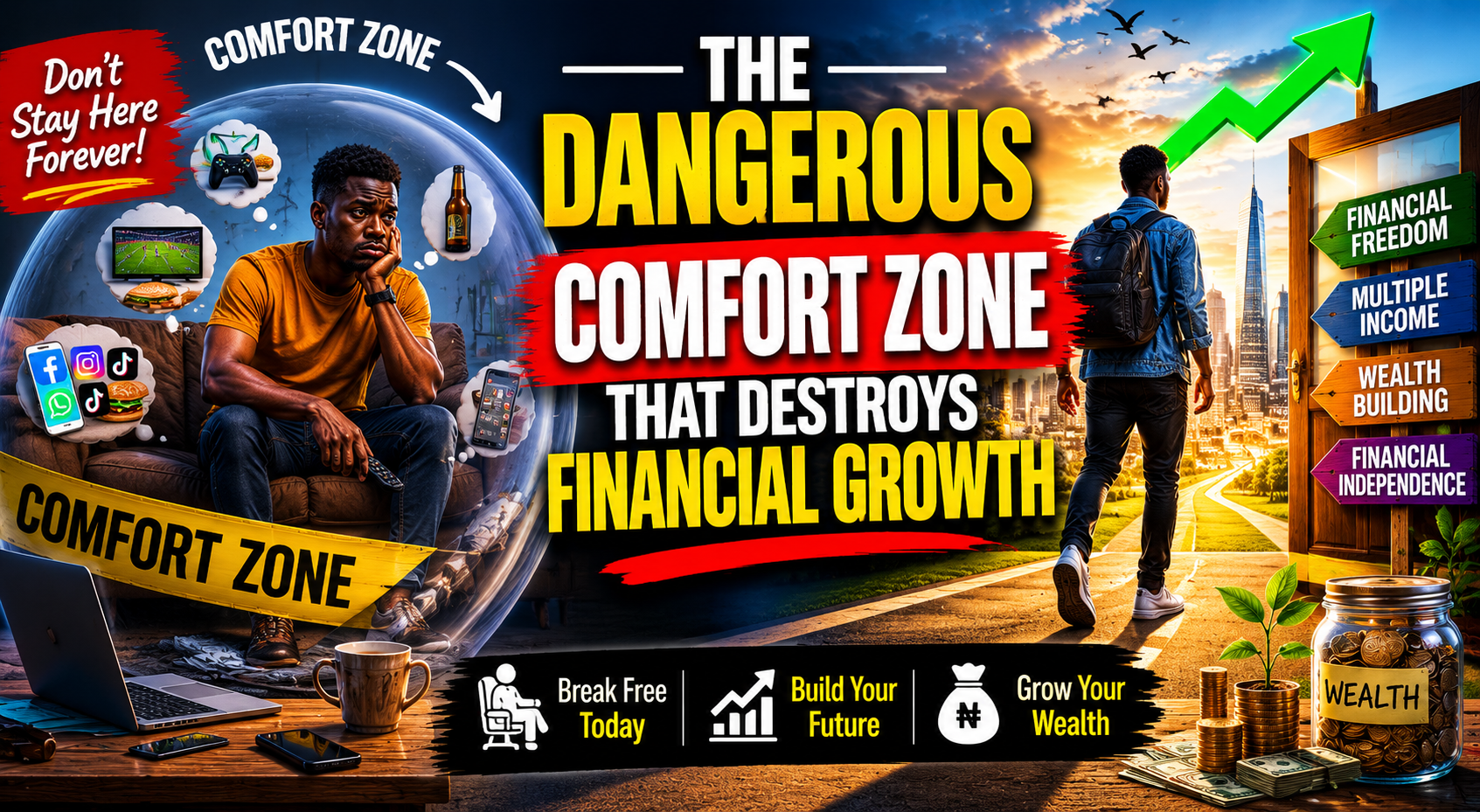
The Dangerous Comfort Zone That Destroys Financial Growth
The dangerous comfort zone that destroys financial growth is one of the biggest silent traps affecting millions of people today. Many individuals dream about financial freedom, wealth, stability, and a better future, yet they remain stuck in the exact routines that prevent those dreams from becoming reality. The truth is that comfort can become dangerous when it slowly kills ambition, limits creativity, weakens discipline, and prevents growth. Most people do not even realize they are trapped because the comfort zone often feels safe, familiar, and emotionally relaxing. Unfortunately, what feels safe today can quietly become the biggest obstacle to financial progress tomorrow.
A comfort zone is simply a place where a person feels secure and unchallenged. It is the routine lifestyle that avoids risk, uncertainty, fear, or discomfort. While comfort itself is not bad, the problem begins when people become too comfortable with situations that are no longer helping them grow financially. Many people settle into jobs they hate, businesses that no longer expand, lifestyles they cannot sustain, and habits that slowly drain their future potential. They convince themselves that remaining where they are is safer than trying something new. In reality, staying stagnant for too long often becomes more dangerous than taking calculated risks.
One major reason the comfort zone destroys financial growth is because it kills the willingness to learn. Financial growth requires continuous learning, adaptation, and improvement. The world changes quickly, and opportunities constantly evolve. New technologies emerge, industries shift, and income opportunities appear every day. However, people trapped in comfort zones often resist learning new skills because learning requires effort and temporary discomfort. They prefer staying with what they already know even when it no longer produces meaningful financial results. Over time, they become outdated while others move ahead.
Many people also remain trapped in comfort zones because they fear failure. Fear has destroyed more financial dreams than lack of money ever will. Some individuals refuse to start businesses because they fear losing money. Others avoid investing because they fear making mistakes. Some people never apply for better opportunities because they fear rejection. Unfortunately, avoiding failure also means avoiding growth. Every successful person has experienced setbacks, disappointments, and mistakes. The difference is that successful people understand that failure is often part of the process of learning and improving financially.
Another dangerous aspect of the comfort zone is that it encourages dependency. Many individuals depend entirely on one salary, one customer, one business source, or one income stream. They become comfortable with monthly routines even when the income barely meets their needs. Instead of seeking additional opportunities, they settle into survival mode. The problem with dependency is that it creates vulnerability. A single job loss, economic crisis, illness, or unexpected expense can completely destabilize someone financially. Financial growth usually begins when people develop the courage to diversify income sources and explore new opportunities outside their normal routine.
The comfort zone also destroys financial growth by promoting procrastination. People often delay important decisions because they believe there will always be more time in the future. They postpone investing, learning new skills, starting businesses, saving money, or improving their financial habits. Days become months, and months become years. Before they realize it, valuable opportunities have passed them by. One of the greatest tragedies in life is wasted potential caused by unnecessary delay. Many people are not poor because they lack ability. They remain financially stagnant because they delayed action for too long while waiting for perfect conditions that never arrived.
Social pressure also contributes heavily to dangerous comfort zones. Many people remain trapped in familiar environments because they fear criticism from friends, family, or society. Sometimes people want to start online businesses, move into new industries, or learn profitable digital skills, but those around them discourage them. Society often rewards conformity and punishes unusual ambition. Unfortunately, people who constantly seek approval from others rarely achieve extraordinary financial success. Growth often requires stepping away from familiar expectations and embracing uncomfortable change.
The comfort zone becomes even more dangerous when combined with lifestyle inflation. As some people earn slightly more money, instead of investing or building assets, they immediately increase spending. They buy expensive phones, clothing, cars, or luxury items to maintain appearances. They become comfortable with temporary pleasures while ignoring long-term financial stability. This cycle traps many individuals in permanent financial pressure because their expenses rise alongside their income. Instead of building wealth, they build liabilities. True financial growth requires discipline, patience, and the ability to delay gratification.
Many people confuse comfort with happiness, but the two are not always the same. Temporary comfort can sometimes produce long-term regret. For example, staying in a safe but low-paying job may feel comfortable today, but years later the person may regret never pursuing greater opportunities. Avoiding difficult financial decisions may reduce stress temporarily, but it can create larger financial problems later in life. Real growth often requires short-term discomfort for long-term rewards. Learning new skills, building businesses, saving aggressively, and investing wisely may feel uncomfortable initially, but they create future stability and freedom.
The internet has created enormous financial opportunities in recent years, yet many people still remain trapped in old thinking patterns. Some individuals refuse to learn digital skills because they believe online income is too complicated or unrealistic. Others continue relying entirely on traditional systems despite increasing economic uncertainty. The dangerous comfort zone convinces people that familiar routines are always safer, even when evidence clearly shows the world is changing rapidly. Those who adapt early often benefit the most financially, while those who resist change struggle to catch up later.
Another hidden danger of comfort zones is the gradual destruction of ambition. Human beings naturally adapt to situations over time. People who once had big dreams can slowly lower their expectations after repeated disappointments or long exposure to survival conditions. They begin to accept financial struggle as normal. Instead of aiming for wealth creation, they focus only on surviving each month. This mindset is extremely dangerous because it reduces motivation for improvement. Once ambition dies, financial growth becomes very difficult.
Financial growth also requires calculated risk-taking, something comfort zones strongly resist. Every major financial breakthrough usually involves some level of uncertainty. Starting a business, changing careers, investing money, relocating for opportunities, or learning new skills all involve temporary discomfort. However, avoiding all risks does not guarantee safety. In many cases, refusing to take action becomes the riskiest decision of all. Inflation rises, economies shift, industries disappear, and stable jobs become unstable. People who refuse to adapt often suffer financially in the long run.
One important truth many people ignore is that financial growth is often more psychological than mathematical. Two people can earn the same amount of money yet experience completely different financial outcomes based on mindset and habits. A person trapped in a comfort zone usually prioritizes short-term emotional security over long-term financial expansion. They avoid difficult conversations about money, ignore opportunities for self-improvement, and resist change even when change is necessary. Meanwhile, growth-oriented individuals constantly seek ways to improve their knowledge, income, and financial systems.
The comfort zone also affects relationships and social environments. People who want financial growth sometimes need to distance themselves from environments filled with negativity, laziness, or discouragement. Unfortunately, staying around individuals who constantly complain but never take action can influence someone’s mindset negatively. Successful financial growth often requires surrounding oneself with people who value ambition, discipline, and progress. Environment plays a powerful role in shaping financial behavior.
One of the most painful realities about comfort zones is that they often feel harmless while slowly destroying future possibilities. Unlike sudden disasters, comfort zones damage people gradually. A person may not notice the effects immediately. However, after several years of avoiding growth, the consequences become visible through financial stress, missed opportunities, lack of savings, debt problems, and unfulfilled potential. By the time many people recognize the damage, valuable years have already passed.
Breaking free from a dangerous comfort zone requires honesty and courage. People must first acknowledge that certain habits, routines, or fears are limiting their growth. They must become willing to embrace discomfort temporarily for the sake of future rewards. This may involve learning new skills, starting side businesses, networking with different people, reducing unnecessary spending, or taking small calculated risks. Growth rarely happens inside permanent comfort.
Discipline also plays a major role in escaping financial stagnation. Many people wait for motivation before taking action, but motivation is often temporary. Discipline creates consistency even when emotions change. Building savings, investing regularly, improving skills, and pursuing opportunities require repeated effort over time. Financial growth is usually the result of small consistent actions rather than one dramatic breakthrough.
The most successful people in the world understand something many others ignore. Comfort and growth rarely coexist for long periods. At some point, every person must choose between remaining comfortable or pursuing improvement. This does not mean living recklessly or making careless decisions. It simply means recognizing that meaningful progress often requires stepping beyond familiar limitations.
The dangerous comfort zone that destroys financial growth continues to trap millions of people every day. Some remain there because of fear, others because of laziness, and many simply because they have become too used to surviving instead of growing. However, financial transformation becomes possible the moment a person decides to challenge old habits, embrace learning, and pursue opportunities despite uncertainty. The journey may not always feel easy, but long-term financial freedom is rarely built through permanent comfort. It is built through courage, discipline, adaptability, and the willingness to grow beyond familiar limits.

EarnSmartOnline.com.ng is dedicated to helping readers make smarter financial decisions through practical guides on online income, personal finance, technology, digital business, and wealth creation. Our goal is to provide reliable, easy-to-understand, and actionable content that empowers individuals to earn smarter, build sustainable income streams and achieve long-term financial success.
Recommended: Start Earning Online
- Ultimate Affiliate Marketing Program — learn affiliate marketing with a done-for-you sales system ($15). Check it out
- The Newbie Affiliate Guide — the beginner-friendly starter guide (~$6.68). Check it out
- Easy Dollar Maker — earn in dollars uploading AI images and videos from your phone ($17). Check it out
Disclosure: These are affiliate links. If you buy through them, I may earn a commission at no extra cost to you.



