
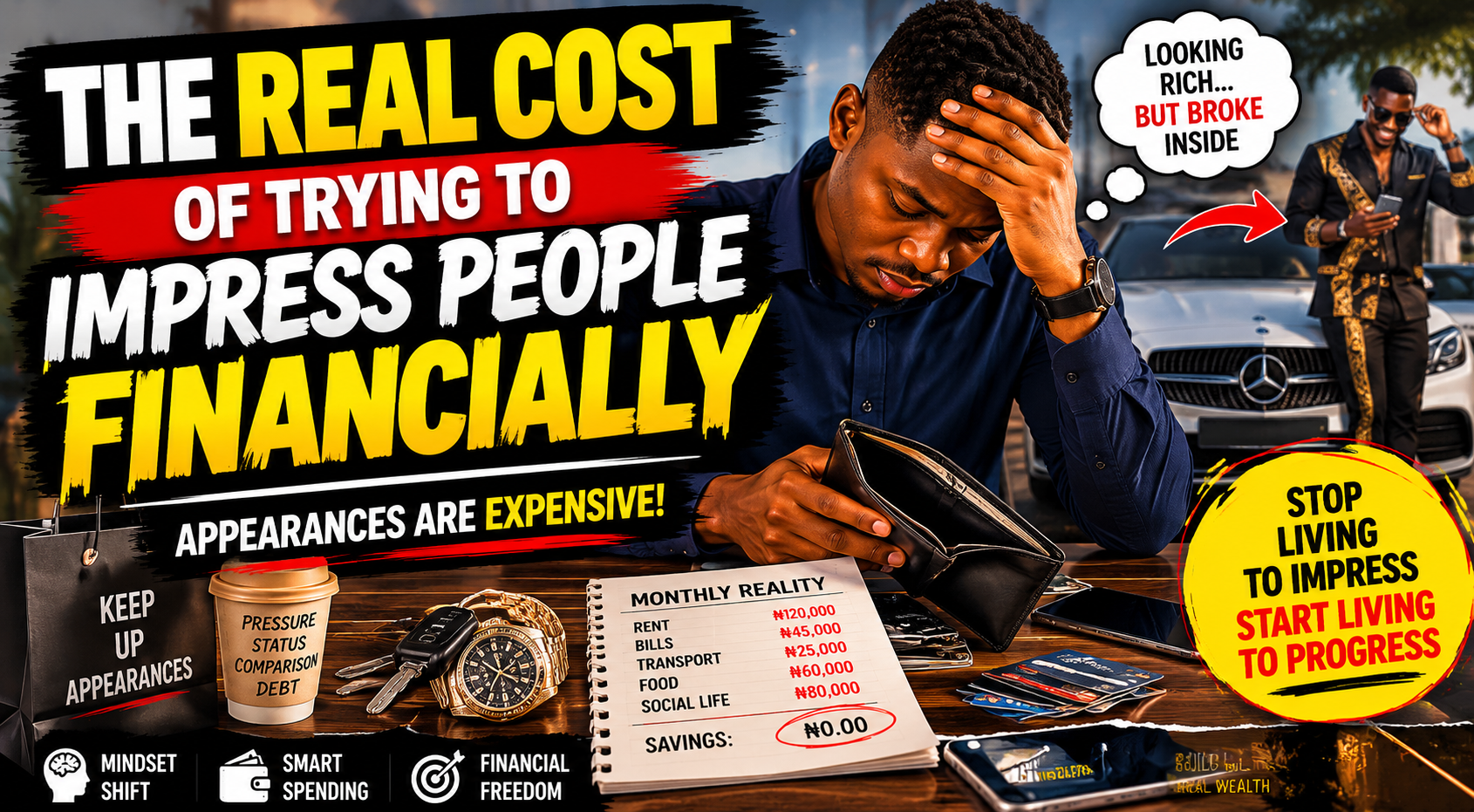
The Real Cost of Trying to Impress People Financially
Trying to impress people financially is not just about buying expensive clothes, phones, or cars. It starts from a deeper emotional place. It begins when people start measuring their self worth based on how others see them. Once that mindset settles in, financial decisions stop being logical and start becoming emotional. Instead of asking “Can I afford this comfortably,” the question becomes “What will people think if I don’t have this?”
This shift is dangerous because it disconnects income from spending reality. Many individuals end up spending money they do not have just to maintain an image. They borrow to look good. They stretch their salaries to fit a lifestyle that was never designed for their income level. And over time, this creates a cycle where money is always coming in but never staying long enough to build anything meaningful.
One of the biggest hidden costs of trying to impress people financially is debt. Debt does not always start big. It often begins with small decisions that feel harmless. A phone upgrade to “keep up,” a designer outfit for an event, or an expensive outing just to avoid feeling left out. These small decisions accumulate over time and become monthly repayment burdens that quietly drain future income. What makes it worse is that most of these purchases do not improve long term financial stability. They only improve short term perception.
Another major cost is lack of savings. People who prioritize appearance over financial health rarely build emergency funds. Every extra naira or dollar goes into maintaining an image instead of building security. So when life eventually brings unexpected situations like job loss, illness, or urgent family needs, they find themselves completely unprepared. At that point, the same image they worked so hard to build becomes impossible to maintain, and reality catches up quickly.
There is also the issue of lost opportunities. Money that could have been used to learn a skill, start a small business, invest in assets, or even improve personal development is instead spent on temporary validation. Many people do not realize that financial growth is often delayed not because of low income but because of wrong allocation of income. Two people can earn the same salary, but the one who avoids unnecessary social pressure often ends up financially stable while the other remains stuck in survival mode.
Trying to impress people financially also creates emotional stress. It forces individuals to live double lives. On the outside, everything looks fine. On the inside, there is constant anxiety about bills, debts, and upcoming expenses. There is also fear of being exposed or judged if people find out the real financial situation. This emotional pressure can affect mental health, relationships, and even productivity at work. It becomes difficult to enjoy life genuinely when everything is centered around appearance.
Social media has made this problem even worse. People are constantly exposed to highlight reels of other people’s lives. Expensive vacations, luxury fashion, flashy gadgets, and celebrations are displayed everywhere. What many forget is that social media shows outcomes, not financial realities. Some of those lifestyles are funded by debt, sponsorships, or even financial struggles hidden behind the scenes. But for the average viewer, it creates pressure to match what they see online, even if it is not realistic for their income.
Another hidden cost is delayed financial freedom. Every time money is spent on impressing others, it delays the journey toward true independence. Financial freedom is built through consistent saving, investing, and building income streams. But when money is constantly redirected toward appearances, those foundations are never built. Years pass, and people find themselves in the same financial position with no real progress.
One of the most painful realities is that people you are trying to impress are often not as concerned about your financial image as you think. Most people are focused on their own lives, their own challenges, and their own financial pressures. This means a large portion of the effort to appear wealthy or successful is often wasted energy. In many cases, people move on quickly and forget what you tried so hard to show them.
A major turning point in financial maturity happens when individuals realize that real respect does not come from appearance but from stability and results. People who are financially secure rarely feel the need to prove anything to others. They focus more on building assets, creating income streams, and improving their long term situation. Ironically, the people who are least concerned with impressing others often end up becoming the most financially successful.
Breaking free from the habit of impressing people financially requires a mindset reset. It starts with understanding that money is a tool for freedom, not validation. Every financial decision should be guided by long term benefit rather than short term attention. This means learning to say no to unnecessary expenses, ignoring social pressure, and building a personal financial plan that is independent of outside influence.
It also requires accepting that not everyone will understand your financial decisions. When you stop spending to impress people, some may misunderstand your choices or even judge you. But financial discipline is not about public approval. It is about personal stability and future security. The discomfort of being misunderstood today is far less painful than the regret of financial instability later in life.
Another important step is learning delayed gratification. Instead of spending money immediately for emotional satisfaction, it helps to pause and think about long term consequences. That same money could be redirected into savings, investment, or something that generates future value. Over time, this habit builds financial strength and reduces dependency on external validation.
Financial growth becomes faster when the focus shifts from appearance to accumulation. Accumulation of savings, skills, investments, and income sources creates real wealth. Appearance, on the other hand, only creates temporary impressions. The difference between the two becomes clear over time when life becomes unpredictable and only real financial preparation provides stability.
Ultimately, the real cost of trying to impress people financially is not just money. It is time, peace of mind, opportunities, and long term freedom. It delays growth and creates unnecessary pressure that prevents individuals from reaching their full financial potential. Once this cycle is broken, financial clarity becomes easier, decisions become smarter, and progress becomes more consistent.
True financial success is not about who looks rich. It is about who is actually building something sustainable behind the scenes. When individuals begin to understand this, their entire relationship with money changes. They stop chasing validation and start building real value. And that shift is what eventually separates financial struggle from financial freedom.

EarnSmartOnline.com.ng is dedicated to helping readers make smarter financial decisions through practical guides on online income, personal finance, technology, digital business, and wealth creation. Our goal is to provide reliable, easy-to-understand, and actionable content that empowers individuals to earn smarter, build sustainable income streams and achieve long-term financial success.
Recommended: Start Earning Online
- Ultimate Affiliate Marketing Program — learn affiliate marketing with a done-for-you sales system ($15). Check it out
- The Newbie Affiliate Guide — the beginner-friendly starter guide (~$6.68). Check it out
- Easy Dollar Maker — earn in dollars uploading AI images and videos from your phone ($17). Check it out
Disclosure: These are affiliate links. If you buy through them, I may earn a commission at no extra cost to you.



