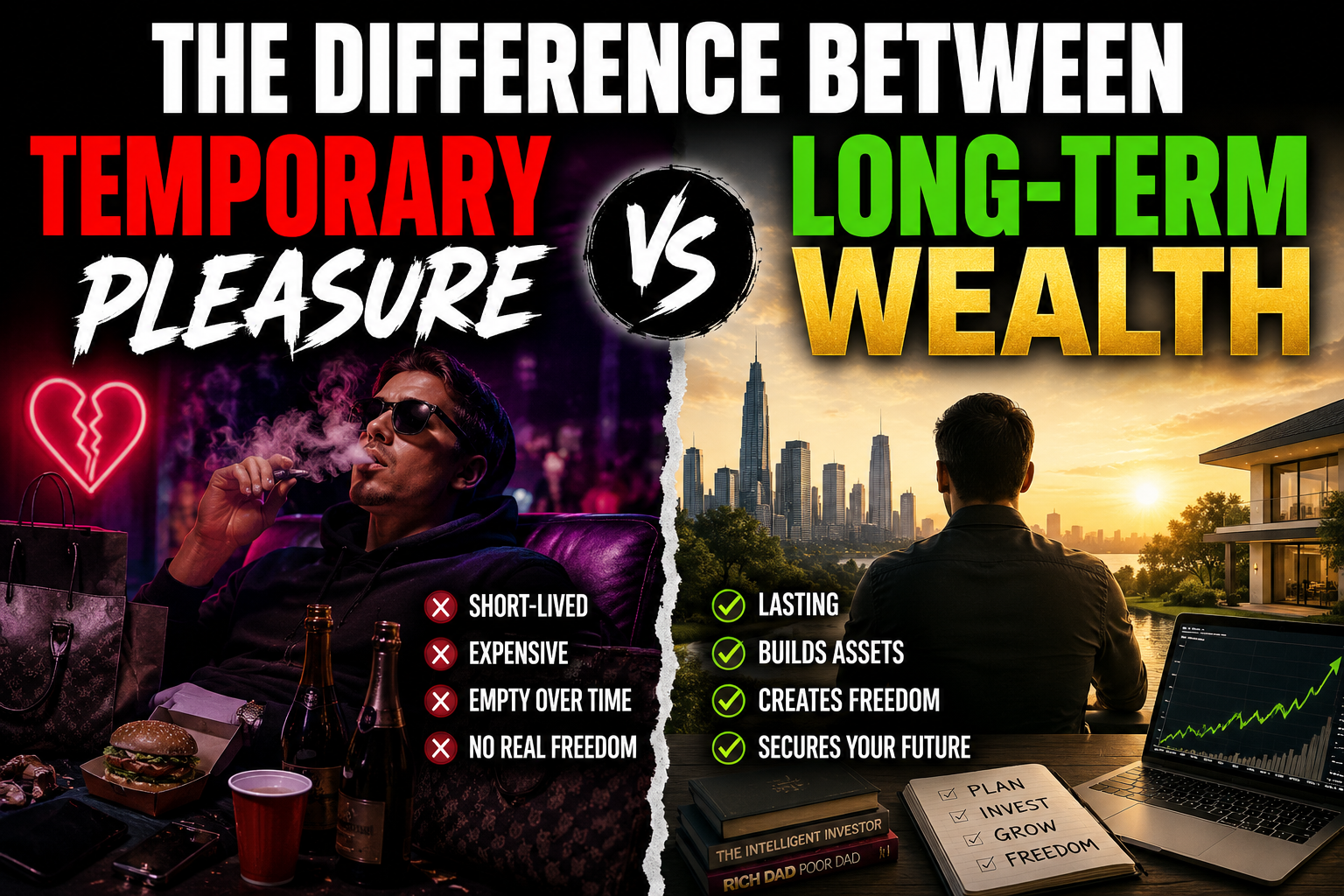
The Difference Between Temporary Pleasure and Long-Term Wealth
In today’s world, where social media constantly shows people enjoying luxury lifestyles, quick pleasures, and instant gratification, it has become harder for the average person to understand what truly builds long-term financial success. Many people are caught in a cycle of spending money on things that bring short bursts of happiness but leave them financially stuck in the long run. The difference between temporary pleasure and long-term wealth is not just about money, it is about mindset, discipline, and understanding the consequences of every financial decision you make.
Temporary pleasure refers to the immediate satisfaction you get from spending money on things that are enjoyable in the moment but have no lasting value. This could be buying expensive clothes just to impress others, eating out frequently because cooking feels stressful, upgrading your phone every year even when your current one works perfectly, or spending your salary immediately after receiving it without any plan. These things feel good at first. They give a sense of happiness, confidence, and even social acceptance. But the effect is short lived. Once the moment passes, you are left with the same financial reality or even worse because your resources have reduced.
Long-term wealth, on the other hand, is built through decisions that may not feel exciting immediately but create lasting financial stability and growth over time. It involves saving consistently, investing wisely, learning high income skills, avoiding unnecessary expenses, and building systems that generate money even when you are not actively working. Unlike temporary pleasure, long-term wealth requires patience. It is not about what makes you happy today, but what will make you financially secure in the future.
One of the biggest problems many people face is that they confuse spending with living well. They believe that enjoying life means spending money constantly, but real financial wisdom shows that living well is actually about balance. A person who earns a modest income but saves and invests regularly is building a stronger future than someone who earns more but spends everything on temporary enjoyment. The illusion of comfort created by temporary pleasure often hides the long term damage it causes.
For example, imagine someone earning a steady monthly income. On payday, they decide to celebrate by going out, buying new outfits, ordering expensive food, and taking care of non essential wants. Within a few days, most of the money is gone. They feel satisfied at first, but as the month continues, they start borrowing, struggling, or waiting for the next salary. This cycle repeats every month and becomes a lifestyle. This is how temporary pleasure silently traps people in financial instability.
Now compare this with someone who earns the same amount but chooses discipline. Instead of spending immediately, they allocate their income carefully. A portion goes into savings, another into basic needs, and a small portion for enjoyment. They still enjoy life, but in moderation. Over time, their savings grow, they start investing, and eventually they have financial security that allows them to make bigger life decisions without fear. The difference between both individuals is not income, it is choice.
Temporary pleasure often comes with emotional spending. Many people spend money based on feelings such as stress, boredom, peer pressure, or the desire to feel important. This type of spending is dangerous because it is not planned. It is reactive. For instance, someone might feel down and decide to buy something online just to feel better. The happiness lasts a few minutes or hours, but the financial consequence lasts much longer. When this pattern repeats, it becomes difficult to build wealth.
Long-term wealth requires emotional control. It requires asking yourself simple questions before spending. Do I really need this? Will this improve my financial situation? Is this helping me move closer to my goals? People who build wealth are not necessarily those who never spend money, but those who understand timing, purpose, and priorities. They delay gratification today so they can enjoy greater freedom tomorrow.
Another important difference between temporary pleasure and long-term wealth is ownership versus consumption. Temporary pleasure focuses on consuming value, while long-term wealth focuses on building or owning value. When you spend money on items that lose value immediately, such as luxury meals, entertainment, or fast fashion, you are consuming wealth. But when you invest in skills, assets, or income generating opportunities, you are building wealth. One drains your future, the other strengthens it.
This is why financial education is so important. Many people were never taught how money actually works. They were taught to work for money, not how to make money work for them. As a result, they prioritize comfort today over security tomorrow. But those who learn financial principles early begin to see money differently. They understand that every financial decision is either pushing them closer to freedom or keeping them in the rat race.
Temporary pleasure is also strongly influenced by comparison. When people constantly compare their lives to others on social media or in real life, they feel pressure to match lifestyles they cannot afford. This leads to unnecessary spending just to appear successful. But real wealth is often quiet. Many financially stable people do not show their lifestyle publicly. They focus more on growth than display. The desire to impress others is one of the fastest ways to destroy financial progress.
Long-term wealth is built through consistency. It is not about one big decision, but hundreds of small disciplined choices over time. Saving a small amount regularly, avoiding unnecessary debt, learning new skills, and investing patiently may not feel exciting, but they compound into something powerful. Wealth is not created overnight, it is built gradually through discipline and repetition.
Another key difference is freedom versus dependency. Temporary pleasure often leads to dependency because it consumes resources without replacing them. Long-term wealth creates freedom because it builds systems that generate income and reduce financial stress. A person focused on temporary pleasure is always waiting for the next paycheck, while a person focused on long-term wealth gradually reduces their dependence on active work for survival.
It is also important to understand that enjoying life is not wrong. The goal is not to eliminate pleasure but to prioritize it correctly. Wealth building does not mean suffering or denying yourself everything. It means structuring your finances so that enjoyment does not destroy your future. You can still enjoy meals, travel, or entertainment, but it should be intentional, not impulsive.
The biggest shift happens when a person realizes that money is not just for spending, it is for building a future. Once this mindset changes, financial behavior changes naturally. You begin to see saving as rewarding, investing as empowering, and spending as something that must be carefully considered. This mental shift is what separates those who remain financially stuck from those who eventually break free.
In conclusion, the difference between temporary pleasure and long-term wealth is the difference between short term satisfaction and long term freedom. One gives you momentary happiness that fades quickly, while the other gives you stability, options, and peace of mind. Every financial decision you make is shaping your future whether you realize it or not. If you consistently choose temporary pleasure, you remain in the cycle of financial struggle. But if you learn to balance enjoyment with discipline, you gradually build a life of true financial independence.

EarnSmartOnline.com.ng is dedicated to helping readers make smarter financial decisions through practical guides on online income, personal finance, technology, digital business, and wealth creation. Our goal is to provide reliable, easy-to-understand, and actionable content that empowers individuals to earn smarter, build sustainable income streams and achieve long-term financial success.
Recommended: Start Earning Online
- Ultimate Affiliate Marketing Program — learn affiliate marketing with a done-for-you sales system ($15). Check it out
- The Newbie Affiliate Guide — the beginner-friendly starter guide (~$6.68). Check it out
- Easy Dollar Maker — earn in dollars uploading AI images and videos from your phone ($17). Check it out
Disclosure: These are affiliate links. If you buy through them, I may earn a commission at no extra cost to you.