
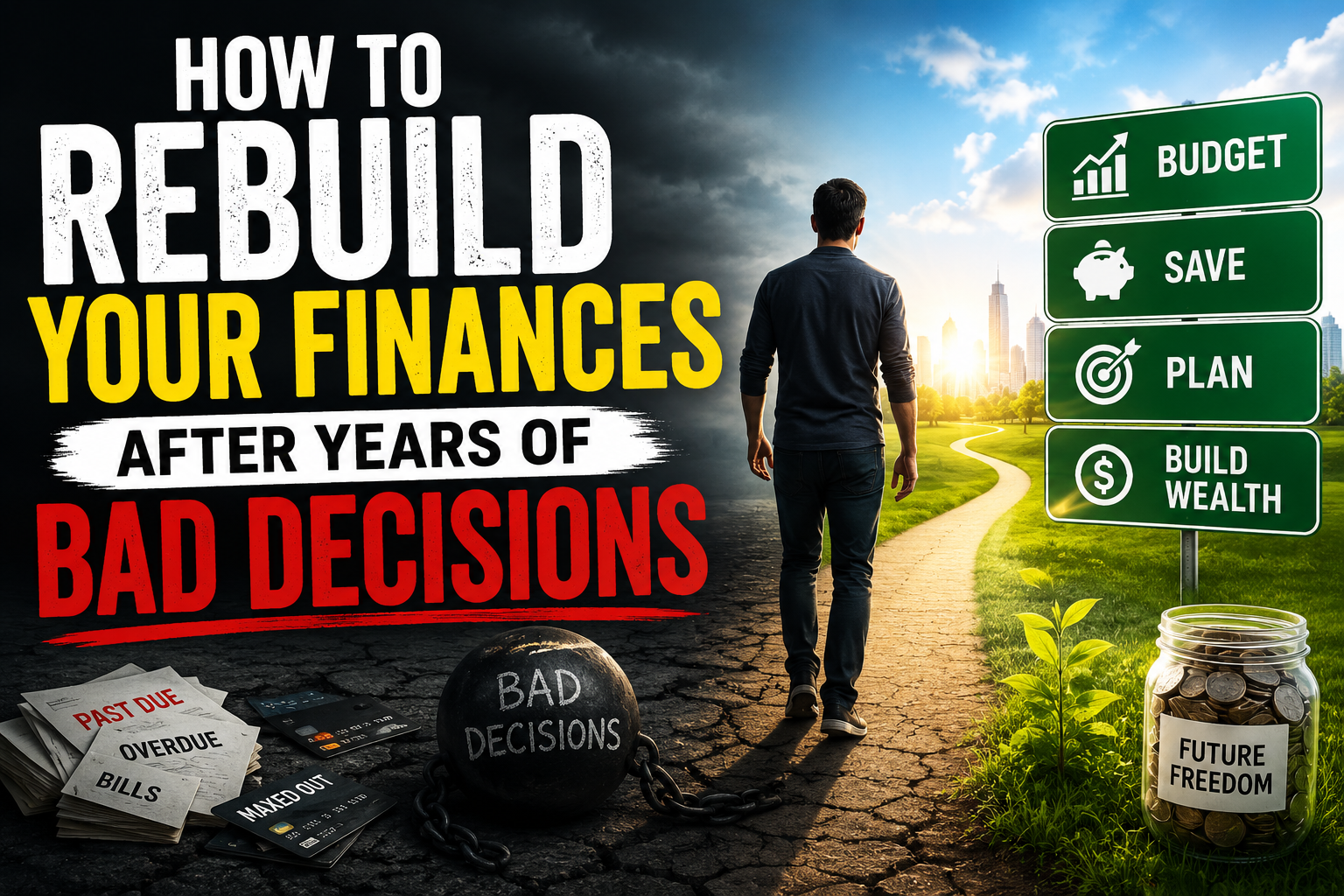
How to Rebuild Your Finances After Years of Bad Decisions
Rebuilding your finances after years of bad decisions is not an easy journey, but it is absolutely possible for anyone willing to be honest with themselves and committed to change. Many people find themselves stuck in financial regret because of poor spending habits, unnecessary debt, lack of planning, or simply living without understanding how money actually works. The good news is that financial recovery does not require perfection, it requires structure, discipline, and a willingness to start again with a new mindset.
The first step in rebuilding your finances is accepting your current reality without denial or excuses. A lot of people stay financially stuck because they avoid facing the truth about how much they owe, how little they have saved, or how much they waste daily. This emotional resistance keeps them in the same cycle. The moment you become fully honest about your financial situation, you begin to regain control. Write everything down clearly, your debts, your income, your monthly expenses, and even the small unnecessary spending you usually ignore. This clarity might feel uncomfortable at first, but it becomes the foundation for recovery.
Once you understand where you stand, the next step is to stop the financial bleeding. You cannot rebuild wealth while still making the same mistakes that destroyed it in the first place. This means cutting off unnecessary spending immediately, even if it feels painful. It may require reducing outings, avoiding impulsive purchases, cancelling subscriptions you do not truly need, and learning to prioritize survival over comfort for a while. This stage is not permanent, but it is necessary. Think of it as financial first aid. Until the bleeding stops, healing cannot begin.
After stabilizing your spending, the next focus should be rebuilding your income structure. Many people in financial trouble rely on a single source of income, which is often one of the reasons they fell into financial difficulty in the first place. If your income is limited, you must begin exploring additional streams, even if they start small. This could include freelance work, small online jobs, selling skills you already have, or offering services within your immediate environment. The goal is not to become rich overnight but to increase cash flow gradually so you can breathe financially again.
At the same time, you need to begin restructuring your mindset around money. Financial mistakes are often not just mathematical problems but psychological ones. If your thinking has always been centered around spending first and worrying later, you must actively train yourself to reverse that habit. Start thinking in terms of priorities and consequences. Ask yourself if every expense is helping you move forward or keeping you stuck in the same cycle. This shift in mindset is what separates those who recover permanently from those who fall back into the same financial traps.
Debt management becomes extremely important during your recovery process. If you are carrying debts, ignoring them will only make things worse. You need a simple repayment strategy that you can stick to consistently. Start by identifying which debts are urgent and which ones can be managed over time. Focus on staying consistent with small repayments rather than waiting for a large amount that may never come. Many people make the mistake of avoiding debt entirely because it feels overwhelming, but progress only begins when you start confronting it step by step.
Another critical part of rebuilding your finances is learning how to live below your means. This is one of the most powerful financial principles that many people ignore. If your income is small, your lifestyle must reflect that reality temporarily. Living below your means does not mean suffering, it means making intentional choices that protect your future. It means choosing stability over appearance, and long term peace over short term satisfaction. The more you practice this discipline, the faster your financial situation begins to improve.
As your situation gradually stabilizes, you should start building an emergency fund, even if it is very small at first. This fund acts as protection against unexpected expenses that would otherwise push you back into debt. Many financial setbacks happen not because people do not earn money, but because they are unprepared for emergencies. Saving even small amounts consistently builds both financial security and emotional confidence. It reminds you that you are no longer completely vulnerable to life’s surprises.
In addition to saving, you should also begin learning basic financial literacy. Understanding how money works gives you an advantage that many people never develop. Learn about budgeting, saving strategies, simple investment principles, and how to avoid common financial traps. The more you understand money, the less likely you are to repeat past mistakes. Financial education is not reserved for the wealthy, it is actually one of the reasons people become wealthy in the first place.
It is also important to separate yourself from environments and influences that encourage poor financial behavior. Sometimes financial problems are reinforced by peer pressure, social expectations, or environments where overspending is normalized. If you constantly surround yourself with people who encourage unhealthy financial habits, it becomes difficult to change. You may need to limit certain social interactions temporarily or redefine how you engage with them while you rebuild your stability.
Another important step is patience. Many people fail in their financial recovery journey because they expect quick results. But rebuilding after years of financial mistakes takes time. There will be moments where progress feels slow or invisible, but consistency is what eventually produces transformation. Every small positive decision adds up over time, even if you do not see immediate results. The key is not to stop halfway through the process.
As you continue improving your financial habits, you will start noticing a shift in your confidence and overall mindset. You will begin to feel more in control of your decisions, less stressed about money, and more focused on long term goals. This stage is where real transformation happens, because you are no longer just fixing past mistakes, you are building a new financial identity.
Eventually, as your income improves and your habits stabilize, you can begin exploring basic investments or wealth building opportunities. This should only happen after you have gained control over your spending and established some level of savings discipline. Investments are not a rescue plan for financial chaos, they are a growth strategy for financial stability. When used correctly, they help you move from recovery to long term prosperity.
In conclusion, rebuilding your finances after years of bad decisions is not about luck or sudden breakthroughs. It is about discipline, structure, and consistent improvement. It requires honesty with yourself, willingness to change your habits, and patience with the process. No matter how bad your past financial decisions may be, your future is still within your control. Every responsible step you take today is a brick in the foundation of a stronger financial life tomorrow.

EarnSmartOnline.com.ng is dedicated to helping readers make smarter financial decisions through practical guides on online income, personal finance, technology, digital business, and wealth creation. Our goal is to provide reliable, easy-to-understand, and actionable content that empowers individuals to earn smarter, build sustainable income streams and achieve long-term financial success.
Recommended: Start Earning Online
- Ultimate Affiliate Marketing Program — learn affiliate marketing with a done-for-you sales system ($15). Check it out
- The Newbie Affiliate Guide — the beginner-friendly starter guide (~$6.68). Check it out
- Easy Dollar Maker — earn in dollars uploading AI images and videos from your phone ($17). Check it out
Disclosure: These are affiliate links. If you buy through them, I may earn a commission at no extra cost to you.



