
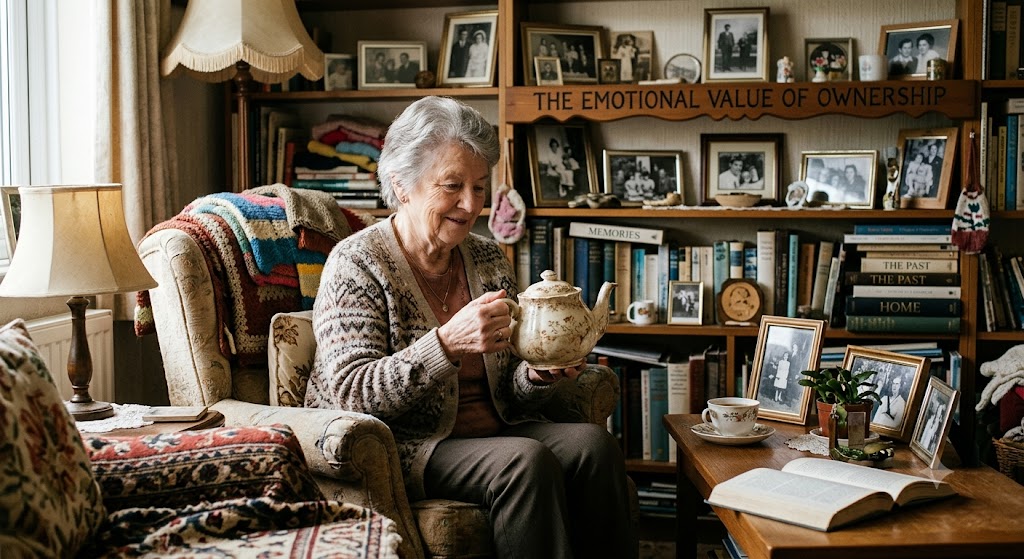
The Emotional Value of Ownership is something people rarely discuss when talking about money, wealth, business, property, or financial success. Most conversations about ownership focus on numbers. How much is the property worth? How much profit does the business make? How much money is in the investment account? How much rent can the property generate? How much can the asset be sold for? These questions are important, but they do not tell the entire story. Ownership has an emotional dimension that can be just as powerful as its financial value.
There is something deeply different about owning something compared with simply using it. Ownership creates a psychological connection between a person and an asset. When you own a home, business, piece of land, investment, vehicle, intellectual property, or even a small digital asset, you are not merely holding something with a monetary value. You are holding something that represents effort, sacrifice, responsibility, independence, achievement, security, and possibility. That emotional connection can influence how people think, behave, plan, and make decisions about their future.
The Emotional Value of Ownership becomes particularly obvious when someone finally acquires something they have worked towards for years. Imagine someone who has spent ten years paying rent and eventually buys a modest house. From a purely financial perspective, the house is an asset with a certain market value. But to the owner, it may represent something much greater. It may represent every late night, every difficult decision, every sacrifice, every postponed pleasure, and every month when money was tight but the person continued saving. The building is physical, but the meaning attached to it is emotional.
This is one reason ownership can change the way people see themselves. When someone owns an asset, they often begin to see themselves differently. They may become more confident because they have tangible evidence that their efforts can produce lasting results. A person who once believed that certain things were impossible may begin to believe that bigger goals are achievable. Ownership can therefore become a psychological milestone rather than simply a financial transaction.
Consider the emotional difference between saying, “I live in a house,” and saying, “I own this house.” The first statement describes a living arrangement. The second communicates a sense of possession, responsibility, permanence, and achievement. The difference may appear small, but psychologically it can be enormous. Ownership gives people a stronger feeling of control over part of their environment.
That sense of control matters because human beings naturally want some degree of stability and autonomy. Constant uncertainty can be emotionally exhausting. When a person does not own anything meaningful, they may feel as though their life is permanently dependent on decisions made by other people. Their landlord can increase the rent. Their employer can terminate their employment. A business owner can change the terms of a contract. A platform can change its policies. A service provider can increase its prices. Ownership does not eliminate uncertainty, but it can give people something they control.
This is particularly important in an economy where many people spend their entire productive lives paying for access rather than building ownership. People pay rent to access housing. They subscribe to entertainment platforms to access content. They pay for software access. They lease equipment. They depend on employment for income. They borrow money to acquire things that may lose value. None of these things are necessarily bad. Access can be practical and efficient. The problem begins when a person reaches old age and realises that decades of income created very little that they actually own.
Ownership therefore has a relationship with dignity. There is a particular emotional satisfaction that comes from knowing that something belongs to you because you built it, bought it, created it, or earned it. The object itself may not be extraordinary. A small piece of land may look insignificant compared with a luxury mansion. A small business may look tiny beside a multinational corporation. A modest investment portfolio may look unimpressive beside a billionaire’s fortune. Yet the emotional meaning can be enormous to the person who owns it.
This is why comparing ownership purely by market value can be misleading. A person’s first investment may be worth only a small amount, but emotionally it can represent the beginning of a completely different financial identity. Before that investment, the person may have been someone who only consumed financial products. After making it, they become an investor. That psychological transition can encourage better financial behaviour.
The same principle applies to entrepreneurship. Building a business creates an emotional connection that goes beyond profit. Entrepreneurs often become attached to their businesses because the business represents their ideas, courage, reputation, relationships, failures, lessons, and persistence. A business may eventually become an asset that can be sold, but its emotional value may be impossible to calculate. The owner remembers the first customer, the first sale, the first major failure, the first employee, the first profitable month, and the moments when giving up seemed easier than continuing.
The Emotional Value of Ownership is also connected to identity. People often use what they own to communicate something about themselves. A business can represent independence. A home can represent stability. A book can represent knowledge. A farm can represent heritage. An investment portfolio can represent discipline. A personal brand can represent expertise. Intellectual property can represent creativity. Ownership gives people something tangible around which they can build part of their identity.
This can be both positive and dangerous. Positive ownership can encourage responsibility and long term thinking. But when people become emotionally attached to possessions, they can begin making irrational decisions. Someone may refuse to sell a property simply because it belonged to their parents even when maintaining it is financially damaging. Another person may refuse to close a failing business because they have spent years building it. Someone may keep an expensive vehicle they cannot afford because selling it feels like admitting failure. Emotional attachment can therefore protect ownership, but it can also make people prisoners of what they own.
The healthiest approach is to understand that ownership should serve your life rather than control it. An asset is valuable because of what it contributes to your goals, not simply because you possess it. If something is draining your finances, destroying your peace, or preventing you from pursuing better opportunities, emotional attachment should not automatically override financial reality.
Ownership also creates a sense of legacy. People naturally think differently when they believe that something can outlive them. A person who buys land may think about their children. A person who builds a company may imagine future generations benefiting from it. A person who creates intellectual property may think about how their ideas could influence people long after they are gone. This changes the time horizon of decision making.
When people own nothing meaningful, it can be easier to think only about immediate survival. When people begin building assets, they may start thinking in terms of five years, ten years, twenty years, or even generations. This shift is powerful because wealth is rarely created through one dramatic decision. It is usually created through repeated decisions that become meaningful over time.
Ownership can also produce emotional security. This does not mean that owning assets guarantees happiness. It does not. Wealthy people can still experience anxiety, loneliness, grief, insecurity, and fear. However, productive ownership can reduce certain forms of financial vulnerability. Having savings can create breathing room. Owning a home can reduce dependence on rental markets. Owning a profitable business can diversify income. Owning productive investments can create future cash flow.
The emotional benefit often comes from knowing that you have options. Financial security is not merely about having money. It is about having choices. If you lose your job but have savings, you have more time to search for another opportunity. If your business has multiple sources of income, one failed product may not destroy the entire company. If you own productive assets, you may have additional resources during difficult periods. Ownership can therefore create psychological resilience.
The Emotional Value of Ownership
However, people should be careful not to confuse ownership with status. Buying something simply to impress other people is very different from acquiring an asset that improves your financial position. A person can own a luxury car and still be financially fragile. Another person can own a small piece of land and have a stronger financial foundation. One person may appear wealthy while constantly struggling to maintain an expensive lifestyle. Another may appear ordinary while quietly accumulating valuable assets.
This is where financial education becomes important. People need to learn the difference between owning things and owning assets that support their financial goals. Ownership itself is not automatically good. Productive ownership is more powerful than ownership for appearance.
The emotional value of ownership can also be seen in the way people treat things they have worked hard to acquire. People often take greater care of what they own. When someone buys their first laptop after saving for months, they may protect it carefully. When someone builds their first business website, they may monitor it constantly. When someone purchases their first property, they may pay closer attention to maintenance. Ownership can increase responsibility because the consequences of neglect become personal.
This responsibility can develop character. Ownership teaches people that maintaining something is often harder than acquiring it. Buying a house is one event. Maintaining it can require decades of decisions. Starting a business can happen in a moment. Keeping it alive requires consistency. Buying an investment is easy compared with managing it intelligently over time. Ownership therefore teaches patience, discipline, planning, and accountability.
There is also an emotional difference between earning something and receiving it without effort. This does not mean that gifts or inheritance lack value. They can be incredibly meaningful. But when someone works for years to acquire something, the object often carries memories of the journey. The asset becomes a physical reminder of personal growth.
A person may look at a small business and remember the days when nobody knew their name. They may look at a house and remember living in a cramped apartment. They may look at an investment account and remember making their first contribution when money was scarce. They may look at a piece of land and remember the sacrifices made to purchase it. The asset becomes a storage place for memories.
This is one of the most overlooked aspects of wealth. Wealth is often measured by what can be counted, but some of its most important benefits cannot be easily measured. Peace of mind, confidence, freedom, stability, pride, and a sense of achievement are not numbers on a balance sheet. Yet they influence how people experience their lives.
The Emotional Value of Ownership also explains why people sometimes experience profound satisfaction from relatively modest achievements. A first house does not need to be luxurious to be meaningful. A first business does not need to generate millions to be important. A first investment does not need to make someone rich immediately. What matters is what that achievement represents.
It represents movement.
It represents progress.
It represents evidence that the person is no longer standing in exactly the same place.
That psychological evidence can be incredibly powerful. When someone sees themselves making progress, they are more likely to continue. One small asset can become the foundation for another. One investment can encourage another. One successful business can create confidence to build another. One property can provide capital for future opportunities.
But ownership should not become an obsession. The goal of life is not to die with the longest list of possessions. Ownership is valuable because it can create freedom, security, opportunity, and meaning. If acquiring more assets destroys relationships, health, peace, or happiness, then the pursuit has become counterproductive.
There is a deeper question every person should ask when thinking about ownership: What do I want my ownership to make possible?
Perhaps you want to own a home so your family has stability. Perhaps you want to own a business so you can control your time. Perhaps you want investments so you can eventually reduce your dependence on employment. Perhaps you want intellectual property so your ideas can continue generating value. Perhaps you want land because you want something that can be passed to your children. The answer matters because ownership without purpose can easily become another form of consumption.
The best ownership strategy is therefore not about collecting as many things as possible. It is about deliberately acquiring things that support the life you want to build.
Someone who owns a productive asset but has no idea why they own it may be less financially secure than someone who owns fewer assets but understands exactly how each one fits into their long term plan.
Ownership also changes the relationship people have with time. A person who is building assets begins to understand that today’s decisions can affect tomorrow’s freedom. Saving today can create investment capital later. Investing today can create income years from now. Building a business today can create employment opportunities later. Creating valuable content today can build an audience over time. Buying an asset today can create opportunities that are difficult to see immediately.
This is why ownership is closely connected to patience. Many valuable assets do not produce spectacular results immediately. Their value compounds gradually. The emotional challenge is learning to respect slow progress.
Modern society constantly encourages immediate gratification. Buy now. Upgrade now. Travel now. Consume now. Show people now. Ownership often requires the opposite mindset. Build now. Save now. Invest now. Sacrifice now. Wait. Allow time to work.
That waiting can feel frustrating, especially when other people appear to be enjoying more expensive lifestyles. But appearances can be deceptive. Someone may be spending everything they earn while another person is quietly buying assets. The first person may look richer today. The second person may have greater freedom tomorrow.
This is why financial success should not be judged only by lifestyle. Lifestyle tells you what someone is consuming. Ownership can tell you what someone is building.
There is another emotional benefit that deserves attention: hope. Ownership can give people something to look forward to. A person saving towards a property has a target. Someone building a business has a vision. Someone investing for retirement has a future objective. These goals can give financial discipline a deeper emotional meaning.
Instead of saying, “I cannot afford this,” the person begins thinking, “I am choosing not to spend this because I am building something.” That mental shift is significant. Sacrifice becomes strategy rather than punishment.
The Emotional Value of Ownership ultimately comes down to the meaning people attach to what they build and acquire. Ownership is not merely about possession. It is about control, responsibility, identity, security, legacy, freedom, and personal evidence of progress.
The most valuable thing you may own one day might not be the most expensive thing you own. It might be the first thing that proves to you that you can build something that lasts.
Maybe it will be a small piece of land.
Maybe it will be your first investment.
Maybe it will be a business.
Maybe it will be a book you wrote.
Maybe it will be a digital product.
Maybe it will be a home.
Maybe it will be something nobody else considers impressive.
But if it represents years of discipline, sacrifice, learning, courage, and persistence, its emotional value may be far greater than its market price.
That is the part of wealth that financial statements cannot capture.
Money can tell you what something is worth.
Ownership can remind you what it took to get there.
And sometimes, that reminder is worth more than the asset itself.
The ultimate goal should not be to own things simply so you can tell people that they belong to you. The goal should be to build ownership that gives your life greater stability, flexibility, opportunity, and meaning. Every asset should have a purpose. Every investment should have a reason. Every business should contribute to a larger vision. Every piece of ownership should move you closer to the kind of life you actually want.
Because at the end of the day, wealth is not simply about having more.
It is about having something that gives you more control over your future.
That is the emotional value of ownership.

EarnSmartOnline.com.ng is dedicated to helping readers make smarter financial decisions through practical guides on online income, personal finance, technology, digital business, and wealth creation. Our goal is to provide reliable, easy-to-understand, and actionable content that empowers individuals to earn smarter, build sustainable income streams and achieve long-term financial success.
Recommended: Start Earning Online
- Ultimate Affiliate Marketing Program — learn affiliate marketing with a done-for-you sales system ($15). Check it out
- The Newbie Affiliate Guide — the beginner-friendly starter guide (~$6.68). Check it out
- Easy Dollar Maker — earn in dollars uploading AI images and videos from your phone ($17). Check it out
Disclosure: These are affiliate links. If you buy through them, I may earn a commission at no extra cost to you.



