
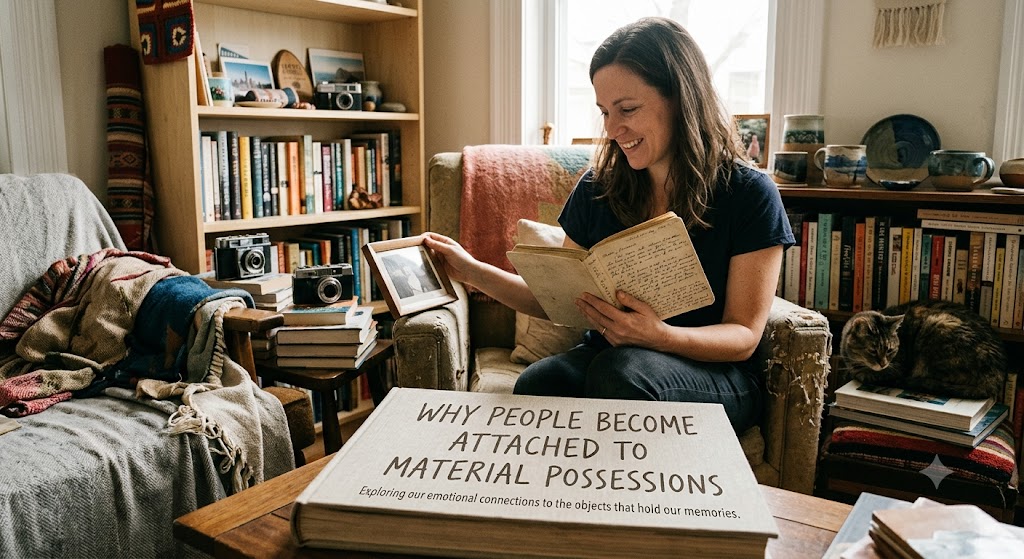
Why do people become attached to material possessions? At first glance, the answer seems obvious. People like nice things. They enjoy comfortable homes, expensive phones, fashionable clothes, beautiful cars, jewellery, gadgets and other possessions that make life easier or more enjoyable. But material attachment goes much deeper than simply wanting something attractive or useful. For many people, possessions become connected to identity, memories, security, status, achievement, relationships and even self worth. A person may hold onto an old shirt because it reminds them of someone they loved, refuse to sell a car because it represents years of hard work, or become emotionally devastated when they lose an object that others consider replaceable. The object itself may have little financial value, but the meaning attached to it can be enormous.
Human beings naturally form emotional relationships with the things around them. From childhood, we learn that certain objects represent important experiences. A toy may remind a child of a happy period. A school uniform may represent the beginning of an important chapter. A photograph may preserve the memory of someone who is no longer alive. A wedding ring may represent love and commitment. A house may represent years of sacrifice. A business may represent a person’s struggle to become independent. Over time, possessions stop being merely physical objects and become symbols of personal history.
One of the strongest reasons people become attached to material possessions is memory. Objects can act like physical containers for memories. When someone looks at an old photograph, they are not simply looking at paper. They are remembering a person, a place, a conversation or a particular period of life. When someone keeps the phone they used during a major turning point in their life, the phone may become connected to everything that happened during that period. The object becomes valuable because of what it represents. Why People Become Attached to Material Possessions
This explains why people sometimes struggle to throw away things they no longer use. They may know intellectually that the object is useless, yet emotionally they cannot let it go. The real difficulty is often not about losing the object. It is about feeling as though they are losing the memory connected to it. A person may think, “If I throw this away, I am throwing away part of my past.” That emotional association can make even ordinary possessions extremely difficult to release.
Material possessions can also provide a sense of security. Throughout human history, having resources has been connected to survival. Food, shelter, clothing, tools and other physical resources have helped humans protect themselves against uncertainty. Although modern society has changed dramatically, the psychological desire for security remains powerful. People often feel safer when they know they have money, property, equipment, savings or valuable possessions available to them.
Someone who grew up experiencing financial hardship may develop an especially strong attachment to material things. If a person spent childhood watching their parents struggle to afford basic necessities, owning certain possessions later in life may feel like proof that life has finally become stable. A fully stocked house, a reliable car or a substantial collection of valuable items can create an emotional feeling of safety. The person may not consciously think about their childhood, but the attachment can still be influenced by those earlier experiences.
This is one reason why telling someone to simply “let go of material things” can be insensitive. Not everyone relates to possessions in the same way. For one person, an expensive watch may simply be an accessory. For another, buying that watch may represent the first time they were able to afford something they once considered impossible. The object carries a story.
Material possessions can also become symbols of achievement. Modern society often teaches people to measure progress through visible results. A better car, larger house, expensive phone, designer clothing or sophisticated office can become evidence that someone is succeeding. The problem begins when external possessions become the primary measurement of personal worth.
A person may work for years to purchase their first car. When they finally get it, the car represents discipline, sacrifice and progress. There is nothing inherently wrong with feeling proud of that achievement. The danger appears when the person begins believing that they are only successful because of what they own. Their identity becomes attached to their possessions. If the possessions disappear, their confidence disappears with them.
This is why some people experience an identity crisis after losing wealth. The loss is not only financial. They may suddenly feel invisible, embarrassed or unsuccessful because the possessions that once communicated their social position are gone. They are forced to confront a difficult question: “Who am I when I no longer have the things that made people respect me?”
That question exposes one of the deepest psychological reasons behind material attachment. People do not always want possessions because of what the possessions do. Sometimes they want them because of what the possessions say about them.
A luxury car can communicate success. A large house can communicate financial strength. Designer clothing can communicate status. Expensive technology can communicate sophistication. Jewellery can communicate wealth. Even seemingly ordinary possessions can communicate social identity. People use things to tell stories about themselves without saying a word.
Advertising understands this psychology extremely well. Companies rarely sell products based purely on functionality. They sell feelings, identity and aspiration. A phone is not presented merely as a device for making calls. It may be presented as a symbol of creativity, intelligence or modern living. A car is not simply transportation. It can be presented as freedom, power, elegance or success. Clothing is not merely fabric. It can be presented as confidence, attractiveness or belonging.
As people repeatedly consume these messages, they can begin believing that purchasing certain products will bring them closer to the person they want to become. The possession becomes connected to an imagined future version of themselves.
Social comparison makes this even stronger. Human beings naturally compare themselves with others, and social media has dramatically increased the number of people available for comparison. Every day, people see photographs of expensive holidays, new cars, beautiful houses, fashionable clothing, restaurants, gadgets and luxurious lifestyles. Even when viewers understand that social media is highly selective, repeated exposure can still influence their perception of what a successful life should look like.
Someone may be perfectly satisfied with their life until they repeatedly see other people displaying possessions they cannot afford. Suddenly their own possessions feel inadequate. Their old phone becomes embarrassing. Their modest house feels too small. Their car feels outdated. Their wardrobe feels insufficient. Their life has not necessarily become worse, but their perception of it has changed.
This creates a dangerous cycle. A person buys something to feel better, receives temporary satisfaction, becomes accustomed to it, compares themselves with someone who has something better and then wants another upgrade. The cycle can continue indefinitely because there is always another level of consumption.
Why People Become Attached to Material Possessions
This is why material attachment is closely connected to the psychology of status. Humans are social creatures. Throughout history, people have cared about their position within groups because social belonging has been important for survival and cooperation. In modern society, status can be communicated through possessions. The brands people wear, the places they live, the cars they drive and the technology they use can become signals of social position.
For some people, owning expensive possessions provides a sense of importance. They feel noticed, respected or admired. Unfortunately, when self esteem depends heavily on external validation, the satisfaction becomes fragile. The person must continue maintaining the appearance of success because losing the appearance may feel like losing respect.
Material possessions can also become emotional compensation. People sometimes buy things when they are unhappy, stressed, lonely, frustrated or emotionally exhausted. Shopping can provide temporary excitement. The anticipation of purchasing something new can create a feeling of pleasure and distraction. The person may temporarily forget their problems.
But emotional shopping does not solve the underlying problem. Once the excitement disappears, the original emotion may return. The person may then purchase something else to recreate the temporary relief. Over time, this can develop into unhealthy spending habits, financial pressure and even debt. Why People Become Attached to Material Possessions
There is another reason people become attached to possessions: control. Life contains uncertainty. People cannot control everything that happens to them, but they can control certain aspects of their physical environment. Organising belongings, collecting valuable items or building a comfortable home can create a feeling of order in an unpredictable world.
Someone who feels powerless in other areas of life may become highly protective of their possessions because those possessions are among the few things they feel they can control. This can explain why seemingly small incidents, such as someone touching their belongings or moving something without permission, can produce surprisingly strong emotional reactions.
Possessions can also represent independence. For someone who has struggled to depend on others, owning their own house, car, business equipment or personal belongings may represent freedom. The possession becomes evidence that they can take care of themselves.
This is particularly powerful when the possession was purchased through personal sacrifice. People tend to value things more when they remember exactly what they endured to obtain them. A person who saved for years to buy a laptop may feel much more emotionally attached to it than someone who received the same laptop as a gift. The object carries the memory of sacrifice.
The same principle explains why people sometimes attach enormous emotional value to inexpensive objects. A handwritten letter may be worth almost nothing financially but mean everything to its owner. A child’s drawing may be worthless in the marketplace but priceless to a parent. An old photograph may have no monetary value yet be impossible to replace.
This demonstrates an important distinction between price and value. Price is what the market says something is worth. Emotional value is what the object means to the individual.
The problem is not having possessions. Material things are necessary for living. People need homes, clothing, transportation, technology, furniture, tools and many other physical resources. Money itself can provide genuine opportunities and security. The problem begins when possessions stop serving people and people begin serving their possessions.
A person may spend years working merely to maintain a lifestyle they are afraid to lose. They may accept jobs they hate because they need to pay for things that make them appear successful. They may accumulate debt to purchase things that impress people who may not actually care about them. They may sacrifice family time, health, peace and freedom in pursuit of increasingly expensive possessions.
At that point, ownership becomes a strange form of captivity.
The person believes they own the house, but the house controls their financial decisions. They believe they own the car, but the car requires constant payments, maintenance and fuel. They believe they own luxury items, but those items create pressure to maintain a particular image. What appears to be freedom from the outside may actually be dependence.
This is why it is useful to regularly question the role possessions play in our lives. A simple question can reveal a great deal: “If nobody could see this, would I still want it?”
The answer can be surprisingly revealing. If nobody knew what phone you owned, would you still want the same model? If nobody could see your car, would you still choose the same one? If nobody knew the price of your clothes, would you still buy them? If social media did not exist, would your definition of luxury change?
These questions do not mean that people should stop enjoying beautiful or expensive things. There is nothing wrong with comfort, quality or luxury when they are affordable and genuinely appreciated. The issue is whether the possession is being purchased for personal enjoyment or external validation.
A healthy relationship with material possessions allows a person to enjoy things without becoming psychologically dependent on them. You can appreciate a beautiful house without believing the house determines your worth. You can enjoy an expensive watch without believing it makes you superior. You can own a powerful car without using it to prove that you are successful.
The ability to let go is another important sign of a healthy relationship with possessions. This does not mean becoming careless or throwing everything away. It means understanding that objects are replaceable while certain aspects of life are not.
A broken phone can be replaced. A damaged car can be repaired. Clothes can be purchased again. Furniture can be replaced. Money can sometimes be earned again. But time cannot be recovered. Relationships can be damaged permanently. Opportunities can disappear. Life itself is temporary.
Sometimes people spend so much energy protecting and acquiring possessions that they forget to experience the life those possessions were supposed to support.
A beautiful dining table means little if nobody ever sits around it together. A large house means little if everyone inside it feels lonely. An expensive car means little if the owner has no time to enjoy the journey. A wardrobe full of clothes means little if the person constantly feels inadequate. A bank account can provide security, but it cannot automatically provide meaningful relationships.
The healthiest perspective is not to hate material possessions but to put them in their proper place. Objects should be tools, comforts and expressions of personal taste, not substitutes for identity, purpose and human connection.
People become attached to material possessions because possessions can carry memories, provide security, represent achievement, communicate status, create emotional comfort and reinforce identity. None of these motivations is automatically wrong. They become dangerous when the physical object becomes more important than the life it was supposed to enhance.
Perhaps the greatest freedom is not owning nothing. It is reaching a point where you can own something valuable without allowing it to own you.
When people understand this, their relationship with money and possessions begins to change. They can buy without needing to impress. They can save without becoming obsessed. They can enjoy luxury without worshipping it. They can lose an object without believing they have lost themselves.
At the end of life, very few people wish they had spent more time protecting possessions. People tend to remember experiences, relationships, acts of kindness, moments of courage, family conversations, friendships, journeys and meaningful achievements.
Possessions can make life more comfortable, but they cannot give life its deepest meaning.
The real challenge, therefore, is not learning how to own more. It is learning how to recognise what deserves to own a place in our hearts.
Because there is a difference between having something and needing it to feel like somebody.
And sometimes the thing we are most afraid of losing is not the possession itself, but the version of ourselves we believe exists because we possess it. Why People Become Attached to Material Possessions
That is why understanding our attachment to material possessions matters. It forces us to look beyond what we own and ask a much more uncomfortable question: if everything you owned disappeared tomorrow, what would still remain that proves your life was valuable?
Your answer may tell you more about your wealth than your bank balance ever could.

EarnSmartOnline.com.ng is dedicated to helping readers make smarter financial decisions through practical guides on online income, personal finance, technology, digital business, and wealth creation. Our goal is to provide reliable, easy-to-understand, and actionable content that empowers individuals to earn smarter, build sustainable income streams and achieve long-term financial success.
Recommended: Start Earning Online
- Ultimate Affiliate Marketing Program — learn affiliate marketing with a done-for-you sales system ($15). Check it out
- The Newbie Affiliate Guide — the beginner-friendly starter guide (~$6.68). Check it out
- Easy Dollar Maker — earn in dollars uploading AI images and videos from your phone ($17). Check it out
Disclosure: These are affiliate links. If you buy through them, I may earn a commission at no extra cost to you.



