
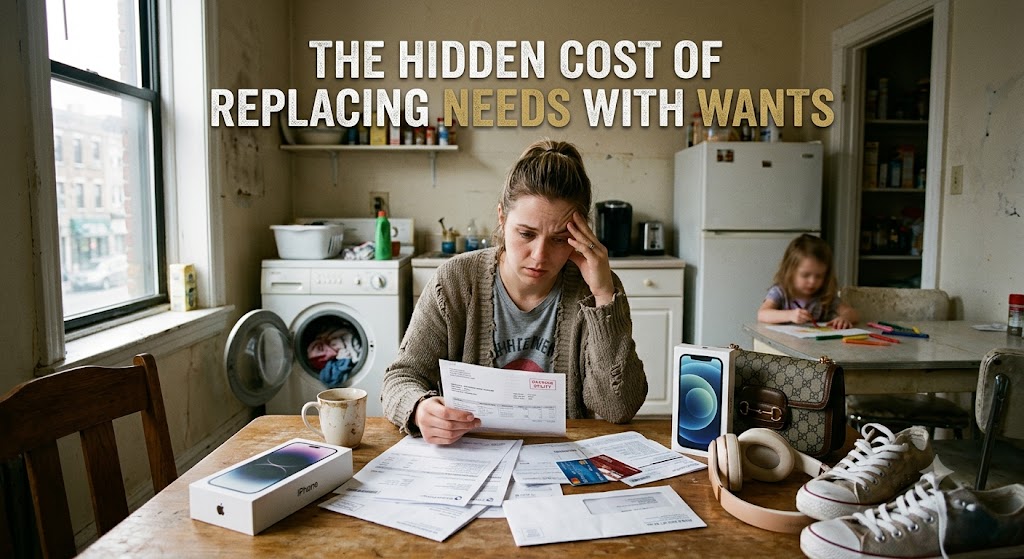
The Hidden Cost of Replacing Needs With Wants
Every day, millions of people make purchasing decisions without realizing they are slowly reshaping their financial future. The choice between buying what is needed and buying what is wanted often seems harmless in the moment. A new smartphone instead of repairing the old one, a luxury outfit instead of paying down debt, expensive restaurant meals instead of cooking at home, or upgrading to a larger house simply because others have done the same. None of these decisions appear dangerous individually, yet when repeated over months and years, they quietly influence financial stability, emotional well-being, personal freedom, and long-term wealth. The hidden cost of replacing needs with wants is rarely noticed immediately because the consequences accumulate slowly. By the time they become visible, reversing the damage often requires years of sacrifice.
Human beings naturally desire comfort, beauty, excitement, and convenience. There is nothing wrong with wanting better things or enjoying the rewards of hard work. Problems begin when wants are treated as necessities. Once a desire is mentally promoted into a need, spending decisions become easier to justify. A person begins to believe they need the latest phone to remain productive, need designer clothing to gain respect, need a luxury car to appear successful, or need expensive vacations to escape ordinary life. The mind quietly rewrites the definition of necessity, and spending follows that new definition.
Needs are the essentials required for survival and basic well-being. Food, shelter, healthcare, education, transportation suitable for one’s circumstances, and security fall into this category. Wants, on the other hand, improve comfort, status, entertainment, or convenience but are not essential for survival. The difficulty is that modern society constantly blurs the line between these two categories. Advertisements rarely encourage people to buy because they simply want something. Instead, marketing persuades consumers that happiness, confidence, acceptance, attractiveness, and even success depend on owning particular products.
Companies invest billions in understanding human psychology because emotions sell better than logic. Commercials rarely discuss technical specifications alone. They associate products with love, achievement, popularity, confidence, family, adventure, and personal identity. The product itself becomes secondary. The emotional promise becomes primary. A watch is no longer a device for telling time. It becomes a symbol of prestige. A vehicle is no longer transportation. It becomes a statement of personal achievement. A pair of shoes becomes confidence. A phone becomes social relevance.
This psychological shift explains why many people spend beyond their means while believing they are making reasonable decisions. They are no longer purchasing products. They are purchasing emotions, identity, and perceived social acceptance. When wants become emotional needs, financial discipline becomes significantly more difficult.
One of the greatest hidden costs of replacing needs with wants is the destruction of financial flexibility. Money spent on unnecessary consumption cannot be used for investments, emergency savings, business opportunities, education, or future security. Every unnecessary purchase carries an invisible opportunity cost. That expensive gadget could have earned investment returns. That luxury handbag could have funded professional training. Those frequent impulse purchases could have become the emergency fund that prevents future debt.
Opportunity cost remains invisible because people naturally focus on what they receive rather than what they sacrifice. They celebrate acquiring a new possession without considering the future opportunities quietly disappearing because of today’s spending decisions. The price tag reflects only the immediate financial cost. The real cost includes everything that money could have achieved elsewhere.
Replacing needs with wants also creates lifestyle inflation. As income increases, spending expands just as quickly. Instead of building wealth, people simply upgrade every aspect of their lifestyle. A salary increase leads to a more expensive apartment. A promotion justifies a luxury vehicle. Higher earnings encourage more expensive holidays, restaurants, subscriptions, electronics, and fashion purchases. The result is surprising. Despite earning significantly more money than before, many individuals experience little improvement in actual financial security.
Lifestyle inflation creates the illusion of progress without producing genuine wealth. Outward appearances improve while financial resilience remains fragile. Income rises, but expenses rise alongside it. Wealth is measured not by income alone but by what remains after expenses. Someone earning a modest salary while consistently saving and investing may possess greater financial security than someone earning several times more but spending nearly everything.
Another hidden consequence is increased financial stress. Ironically, many people chase luxury because they hope it will improve happiness, yet excessive consumption often creates greater anxiety. Higher expenses require higher income. Higher income frequently requires longer working hours, greater pressure, and increased dependence on maintaining employment. Financial obligations multiply, reducing freedom rather than expanding it.
Many households become trapped in cycles where every paycheck has already been committed before it arrives. Mortgage payments, vehicle financing, premium subscriptions, insurance, personal loans, credit card balances, luxury purchases, and lifestyle commitments consume nearly every pound, dollar, or naira earned. Instead of owning their possessions, their possessions effectively own them.
Debt often becomes the bridge between wants and immediate gratification. Credit cards, buy-now-pay-later services, consumer loans, and financing plans make expensive purchases appear affordable. Monthly instalments disguise the true financial burden by focusing attention on smaller payments instead of total cost. People begin purchasing tomorrow’s income today, reducing future financial flexibility before tomorrow even arrives.
The emotional satisfaction from most purchases also fades remarkably quickly. Psychologists refer to this as hedonic adaptation. New possessions create excitement initially, but that excitement gradually disappears as the product becomes familiar. The luxury phone eventually feels ordinary. The expensive furniture blends into the background. The new vehicle loses its novelty. Soon another purchase promises renewed excitement, beginning the cycle once again.
This endless pursuit of temporary satisfaction creates what many describe as the hedonic treadmill. People continue running after greater consumption without experiencing lasting improvements in happiness. Their expectations continuously rise alongside their possessions. What once seemed luxurious eventually feels average. Satisfaction becomes increasingly difficult to achieve because comparison standards continually change.
Social media has intensified this phenomenon dramatically. Every day people encounter carefully curated images displaying expensive holidays, designer fashion, luxury homes, successful businesses, and seemingly perfect lifestyles. These images rarely reveal debt, financial anxiety, relationship struggles, or personal sacrifices behind the scenes. Constant exposure to carefully selected highlights creates unrealistic expectations about normal living.
Comparison quietly transforms wants into perceived necessities. Seeing friends upgrade vehicles may create pressure to upgrade your own. Observing influencers travelling frequently may convince someone that expensive holidays are essential for happiness. Watching successful entrepreneurs showcase luxury lifestyles may create the false impression that visible consumption represents genuine financial success.
The irony is that many genuinely wealthy individuals often spend far less than people attempting to appear wealthy. Lasting wealth usually grows through disciplined financial decisions, consistent investing, controlled spending, and patience rather than constant displays of luxury. Many millionaires continue driving reliable vehicles, living below their means, and avoiding unnecessary status purchases precisely because those habits helped create their wealth in the first place.
Replacing needs with wants also affects relationships. Financial disagreements remain one of the leading sources of conflict within marriages and families. When partners possess different spending priorities, tension naturally develops. One partner may prioritise security and savings while the other prioritises lifestyle improvements and visible success. Without shared financial values, resentment gradually builds.
Children also learn spending behaviour by observation rather than instruction alone. Parents who consistently prioritise wants over needs unintentionally teach the next generation similar financial habits. Young people raised in environments where appearance consistently outweighs practicality may struggle to distinguish genuine needs from social pressure later in life.
Another hidden cost appears in lost freedom. Financial independence is not simply about possessing money. It is about having choices. Individuals with controlled expenses can leave unhealthy jobs, pursue entrepreneurship, relocate for better opportunities, invest during economic downturns, or take career breaks when necessary. Those burdened by excessive lifestyle commitments often lack these options because every financial obligation requires continued income.
Freedom has immense economic value that rarely appears on financial statements. The ability to say no, change direction, or seize unexpected opportunities often depends more upon manageable expenses than exceptionally high income.
Replacing needs with wants also affects environmental sustainability. Excessive consumption encourages increased manufacturing, resource extraction, transportation, packaging, and waste generation. Products designed for short replacement cycles contribute significantly to environmental pressure. Buying only what genuinely adds value benefits both personal finances and broader society.
Technology has accelerated consumption patterns through planned obsolescence. Many devices remain fully functional long before consumers replace them. Software updates, cosmetic redesigns, aggressive marketing, and social expectations encourage upgrades despite limited practical necessity. Consumers gradually become accustomed to replacing products before replacement becomes genuinely necessary.
Learning to distinguish needs from wants requires conscious awareness rather than instinct. The human brain naturally seeks immediate rewards. Delayed gratification requires intentional practice. Before making significant purchases, asking a few simple questions can transform decision-making. Does this solve an actual problem? Will my life meaningfully improve without this purchase? Am I buying this because I genuinely need it or because someone else convinced me I should want it? Would I still purchase this if nobody else ever saw it?
Time also provides valuable perspective. Many impulse purchases lose their appeal after waiting several days or weeks. Creating intentional delays before non-essential spending allows emotions to settle while logic regains influence. Often the strongest desire disappears entirely once immediate excitement fades.
Budgeting becomes significantly easier when needs receive priority before wants. Essential expenses, savings, investments, emergency funds, and insurance should ideally be funded first. Wants then become conscious choices made within remaining resources rather than automatic financial obligations competing with necessities.
This approach does not require eliminating enjoyment from life. Financial discipline does not demand permanent deprivation. Instead, it encourages intentional consumption. Buying something because it genuinely brings lasting value differs greatly from buying it simply because advertising, comparison, or temporary emotion encouraged the purchase.
Minimalism has gained popularity partly because it challenges the assumption that more possessions automatically create more happiness. Many people discover greater satisfaction through owning fewer but more meaningful items. Less clutter often produces greater mental clarity. Fewer financial obligations create greater peace of mind. Simpler lifestyles frequently provide more room for experiences, relationships, learning, health, and personal growth.
There is also a profound psychological benefit to controlling wants rather than being controlled by them. Self-discipline strengthens confidence because individuals recognise their ability to make decisions based upon long-term values rather than temporary impulses. Each disciplined financial choice reinforces personal identity as someone capable of directing money intentionally rather than reacting emotionally.
Economic uncertainty further highlights the importance of distinguishing needs from wants. Recessions, job losses, inflation, medical emergencies, or unexpected expenses arrive without warning. Households built around essential needs typically adapt more successfully than households dependent upon maintaining expensive lifestyles. Lower fixed expenses create resilience during difficult periods.
Many financial success stories share a surprisingly simple characteristic. Rather than dramatically increasing income alone, successful individuals consistently control unnecessary spending while directing surplus money toward appreciating assets. Over time, investments begin generating income themselves, gradually reducing dependence on active employment. This transition rarely happens through constant consumption. It occurs through disciplined allocation of resources toward future value instead of immediate gratification.
The hidden cost of replacing needs with wants is therefore much larger than the purchase price itself. It includes lost investment opportunities, reduced financial flexibility, increased stress, higher debt, weakened relationships, diminished freedom, greater vulnerability during emergencies, environmental consequences, and delayed wealth creation. Most importantly, it often delays the achievement of genuine financial independence.
Money functions as a tool reflecting priorities. Every purchase communicates what we value most at that moment. Consistently choosing wants over needs may provide temporary pleasure, but it often postpones lasting security. Conversely, consistently prioritising needs while treating wants as rewards rather than requirements builds a stronger financial foundation capable of supporting future dreams.
Ultimately, the goal is not to eliminate every want from life. Comfort, enjoyment, celebration, and occasional luxury all have their place. The real challenge is ensuring that wants never disguise themselves as needs. When individuals maintain that distinction, they gain something far more valuable than another possession. They gain control over their finances, greater peace of mind, stronger resilience, expanded opportunities, and the freedom to build a future based on deliberate choices instead of emotional impulses. That freedom is worth far more than anything money alone can buy.

EarnSmartOnline.com.ng is dedicated to helping readers make smarter financial decisions through practical guides on online income, personal finance, technology, digital business, and wealth creation. Our goal is to provide reliable, easy-to-understand, and actionable content that empowers individuals to earn smarter, build sustainable income streams and achieve long-term financial success.
Recommended: Start Earning Online
- Ultimate Affiliate Marketing Program — learn affiliate marketing with a done-for-you sales system ($15). Check it out
- The Newbie Affiliate Guide — the beginner-friendly starter guide (~$6.68). Check it out
- Easy Dollar Maker — earn in dollars uploading AI images and videos from your phone ($17). Check it out
Disclosure: These are affiliate links. If you buy through them, I may earn a commission at no extra cost to you.



