
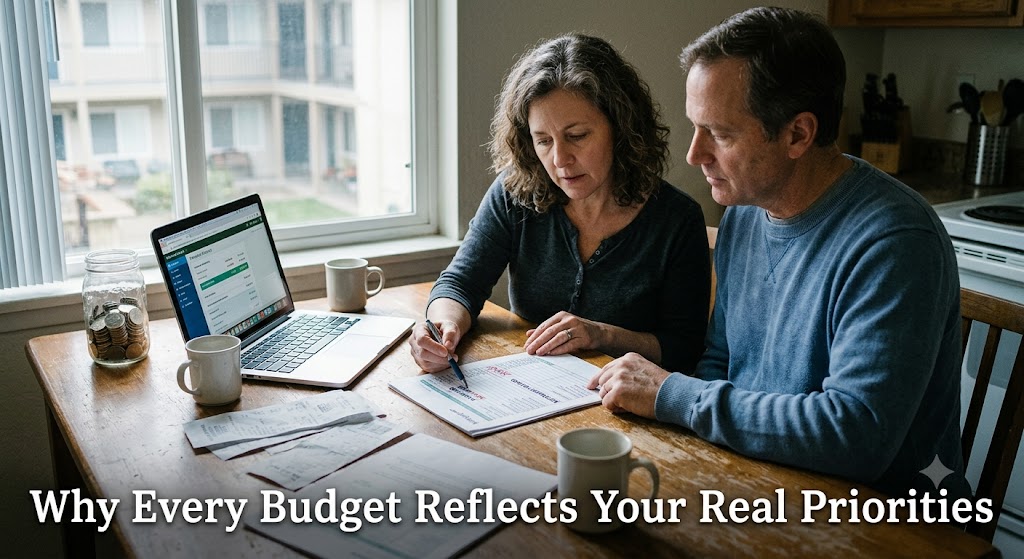
Why Every Budget Reflects Your Real Priorities
Money has a way of revealing truths that words often hide. People can talk endlessly about their dreams, values, ambitions, and commitments, but their financial decisions frequently tell a more honest story. This is why every budget reflects your real priorities. Whether you consciously create a budget or simply spend as situations arise, your money inevitably flows toward what matters most to you in that moment. Understanding this principle is one of the most powerful steps anyone can take toward financial awareness, personal growth, and long-term wealth.
Many people think a budget is nothing more than a list of expenses or a boring financial document that limits enjoyment. In reality, a budget is a mirror. It quietly records your habits, your desires, your fears, your discipline, your relationships, and even your emotional state. It exposes the gap between what you claim is important and what you consistently invest your money in. You may say your family comes first, but if most of your disposable income is spent on entertainment while your children’s education is constantly postponed, your budget reveals a different set of priorities. You may claim you want financial freedom, yet if every salary increase is immediately followed by higher spending rather than increased saving or investing, your budget tells another story.
The truth is that every financial decision is also a life decision. Every naira, dollar, pound, or euro you spend represents a choice. Since income is limited for almost everyone, choosing one expense automatically means giving up another opportunity. Economists call this opportunity cost, but in everyday life it simply means that every purchase carries a hidden price beyond the amount printed on the receipt. When you spend money on one thing, you are simultaneously deciding not to use that same money elsewhere. Over weeks, months, and years, these repeated decisions shape your financial future far more than occasional windfalls or unexpected setbacks.
Many people mistakenly believe they have money problems when they actually have priority problems. They feel frustrated because they never seem to have enough money, yet they rarely stop to evaluate where their income consistently goes. They blame inflation, low salaries, rising costs, or difficult economic conditions. While these challenges are very real, they do not fully explain why two people earning similar incomes can experience completely different financial outcomes. One person gradually builds savings, invests consistently, avoids unnecessary debt, and enjoys increasing financial security. Another earns the same amount yet remains trapped in constant financial pressure. The difference often lies not in income but in priorities reflected through daily spending habits.
Budgets are emotional documents as much as they are financial ones. Human beings rarely spend money based purely on logic. Emotions frequently guide financial behaviour without us even realizing it. Some people shop to reduce stress. Others spend to gain social approval. Some purchase expensive items to feel successful, while others overspend because they fear missing out on experiences enjoyed by friends or colleagues. Without self-awareness, emotional spending quietly takes control of the budget and slowly redirects resources away from long-term goals.
This explains why many people struggle to save even after receiving salary increases. They assume that earning more money will automatically solve their financial problems. Instead, higher income often leads to higher spending because priorities remain unchanged. Lifestyle inflation quietly expands to absorb every increase in earnings. Bigger houses, newer phones, more expensive restaurants, luxury clothing, premium subscriptions, and frequent impulse purchases gradually become normal. Before long, the higher income disappears into a more expensive lifestyle, leaving little room for wealth creation.
Every budget also reflects how someone views the future. People who consistently save and invest are not simply making financial decisions. They are expressing confidence in tomorrow. They believe their future deserves today’s sacrifice. They understand that delayed gratification creates greater opportunities later in life. On the other hand, those who spend everything they earn often place greater value on immediate satisfaction than future security. This does not necessarily make them irresponsible, but it does reveal the priorities influencing their financial choices.
One of the greatest misconceptions about budgeting is that it removes freedom. Many imagine budgets as restrictive systems filled with endless rules and limitations. In reality, a well-designed budget creates freedom by ensuring your money serves your goals instead of controlling your life. Financial stress usually comes from uncertainty. When people do not know where their money is going, they experience anxiety, confusion, and frustration. A budget replaces uncertainty with clarity. It allows every pound, dollar, naira, or euro to have a purpose before it is spent.
The most successful budgets are not built around deprivation but around intentionality. They recognize that spending itself is not the enemy. Spending without purpose is. Buying something that genuinely improves your life, supports your family, develops your skills, or strengthens your health can be an excellent financial decision. The problem arises when spending becomes automatic, emotional, or driven by external pressure rather than personal values.
Social media has amplified this challenge dramatically. Every day people are exposed to carefully edited lifestyles displaying luxury holidays, expensive vehicles, designer clothing, high-end restaurants, and seemingly effortless success. Constant exposure to these images subtly reshapes priorities. Many begin spending not because they genuinely need something but because they feel left behind. Comparison quietly enters the budget without permission. Instead of asking whether a purchase aligns with personal goals, many ask whether it helps them fit into a particular image.
This creates a dangerous cycle where appearance receives more financial attention than actual progress. Individuals may finance luxury items through debt while neglecting emergency savings, retirement planning, insurance, or investments. Their budget begins serving public perception rather than private security. Although the lifestyle appears impressive, financial foundations become increasingly fragile.
Parents experience another dimension of budgeting that reflects priorities. Every financial decision influences future generations. Money allocated toward education, books, nutritious food, healthcare, family experiences, and skill development represents investments extending far beyond immediate enjoyment. Likewise, poor financial habits often become examples children unconsciously imitate. Young people learn far more from observing financial behaviour than listening to financial advice.
Businesses understand this principle extremely well. Companies regularly allocate budgets according to strategic priorities. If customer service is important, money is invested there. If research and development matter, funding follows. If marketing becomes the priority, advertising budgets increase accordingly. Rarely does a successful business claim one priority while consistently funding something completely different. Yet many individuals unknowingly do exactly that in their personal finances.
Consider someone who says health is their highest priority while consistently spending large amounts on processed foods, alcohol, cigarettes, and unhealthy habits but very little on nutritious meals, exercise, medical check-ups, or preventative care. Their budget reveals a disconnect between stated values and actual behaviour. Similarly, someone may insist lifelong learning is important yet spend almost nothing on books, courses, training, or educational resources while regularly purchasing short-lived entertainment.
Budgets also expose the relationship between short-term pleasure and long-term purpose. Human psychology naturally favours immediate rewards because they feel tangible and satisfying. Long-term benefits require imagination and discipline. This explains why saving, investing, and paying down debt often feel difficult even when people understand their importance intellectually. The future seems distant while today’s desires feel urgent. Successful budgeting requires repeatedly choosing what matters most over what feels most tempting.
Financial discipline should never be confused with financial perfection. Everyone makes mistakes. Unexpected emergencies arise. Priorities occasionally shift because life itself changes. Marriage, parenthood, illness, career changes, relocation, and economic uncertainty all require adjustments. A good budget is flexible enough to accommodate life’s unpredictability while remaining faithful to core values.
Many people avoid budgeting because they fear confronting uncomfortable truths. Looking closely at spending habits may reveal years of waste, impulsive purchases, forgotten subscriptions, unnecessary debt, or missed investment opportunities. While this can feel discouraging initially, awareness is always the first step toward improvement. Problems hidden remain problems unsolved. Once spending patterns become visible, positive changes become possible.
Technology has made budgeting easier than ever before. Mobile banking applications, budgeting software, expense trackers, digital wallets, and automated savings systems provide unprecedented visibility into personal finances. Yet technology alone cannot determine priorities. Software merely records decisions already made. True financial transformation begins internally by honestly deciding what deserves your financial attention.
One useful exercise involves reviewing several months of bank statements without judgment. Instead of focusing solely on amounts spent, examine the categories receiving the largest share of your income. Compare those categories with your stated life goals. If becoming debt-free matters most, does your spending support that objective? If building wealth is important, do your financial decisions consistently move you closer to financial independence? If family remains your highest priority, does your budget reflect meaningful investment in their wellbeing?
Often the answers reveal surprising inconsistencies. These inconsistencies should not produce guilt but insight. They highlight opportunities for alignment between personal values and financial behaviour. Every adjustment, no matter how small, gradually strengthens that alignment.
Successful budgeting is not about eliminating enjoyment from life. Entertainment, travel, hobbies, celebrations, dining out, and personal rewards all have legitimate places within a balanced financial plan. Problems arise only when temporary pleasures permanently delay meaningful goals. The objective is balance rather than extreme restriction.
Financial priorities also evolve throughout different stages of life. Young adults may prioritize education, career development, and building emergency savings. Families often shift toward housing, childcare, healthcare, and long-term security. Older adults frequently focus on retirement planning, wealth preservation, charitable giving, or leaving a legacy. Healthy budgets adapt alongside these changing responsibilities while remaining intentional.
One overlooked benefit of budgeting is reduced decision fatigue. When spending priorities are predetermined, fewer daily financial decisions require emotional debate. Instead of constantly asking whether to buy something, established priorities provide immediate guidance. This reduces impulsive spending while increasing confidence in financial choices.
Another powerful aspect of budgeting is that it transforms abstract goals into measurable action. Nearly everyone wants financial security, but vague desires rarely produce consistent behaviour. Budgets translate dreams into numbers. They assign resources to objectives. They convert hope into strategy. Every monthly allocation becomes a vote supporting the future you want to build.
The relationship between budgeting and personal identity is equally significant. People naturally behave in ways consistent with how they see themselves. Someone who identifies as financially responsible gradually makes decisions reinforcing that identity. Someone who constantly believes they are “bad with money” often repeats habits confirming that belief. Changing financial behaviour therefore requires changing both actions and self-perception.
Delayed gratification remains one of the strongest predictors of long-term financial success. Choosing not to purchase something today does not always represent sacrifice. Often it represents choosing something better tomorrow. Every budget reflects this ongoing conversation between present desires and future possibilities. The people who consistently build wealth understand that every small financial decision contributes to a much larger picture.
Emergency funds illustrate priorities particularly well. Setting aside money for unexpected situations may not provide immediate excitement, but it demonstrates a commitment to stability and resilience. Emergencies are inevitable. Medical bills, job loss, vehicle repairs, family responsibilities, and economic downturns eventually affect nearly everyone. Budgets that include emergency savings acknowledge reality instead of hoping problems never occur.
Debt provides another revealing example. Not all debt is inherently harmful, but unmanaged consumer debt frequently reflects prioritizing present consumption over future flexibility. Interest payments quietly redirect income toward yesterday’s decisions, reducing options for tomorrow. Budgets emphasizing debt reduction gradually restore financial freedom by reclaiming resources previously committed elsewhere.
Generosity also reflects priorities. People often assume charitable giving requires great wealth, yet generosity depends more on intentionality than income level. Many individuals with modest incomes consistently support causes they value because generosity occupies an important place within their priorities. Others with substantially higher incomes postpone giving indefinitely while waiting for perfect financial circumstances.
Ultimately, budgets are less about mathematics than character. They reveal patience, discipline, honesty, self-control, gratitude, foresight, resilience, and purpose. They expose whether decisions are guided by values or impulses. Every transaction quietly answers an important question: what matters most right now?
The encouraging reality is that budgets are never permanently fixed. Every payday provides another opportunity to realign financial behaviour with personal values. Every spending decision becomes another chance to move closer toward the life you truly want. Wealth is rarely built through one dramatic event. It usually emerges through thousands of ordinary financial choices made consistently over many years.
If your current budget does not reflect the life you hope to build, the solution is not shame but adjustment. Small changes repeated consistently produce remarkable transformation. Redirecting even a modest portion of income toward savings, investments, education, debt reduction, or meaningful experiences gradually reshapes both your finances and your future.
In the end, money simply magnifies priorities that already exist. It reveals what receives your attention, your commitment, and your sacrifice. Every purchase tells a story. Every financial decision casts a vote. Every budget becomes a written record of what truly matters. When your spending aligns with your deepest values, financial peace becomes far more attainable, because your money finally begins working toward the same future your heart has desired all along.

EarnSmartOnline.com.ng is dedicated to helping readers make smarter financial decisions through practical guides on online income, personal finance, technology, digital business, and wealth creation. Our goal is to provide reliable, easy-to-understand, and actionable content that empowers individuals to earn smarter, build sustainable income streams and achieve long-term financial success.
Recommended: Start Earning Online
- Ultimate Affiliate Marketing Program — learn affiliate marketing with a done-for-you sales system ($15). Check it out
- The Newbie Affiliate Guide — the beginner-friendly starter guide (~$6.68). Check it out
- Easy Dollar Maker — earn in dollars uploading AI images and videos from your phone ($17). Check it out
Disclosure: These are affiliate links. If you buy through them, I may earn a commission at no extra cost to you.



