
The Hidden Power of Making Imperfect Decisions Quickly
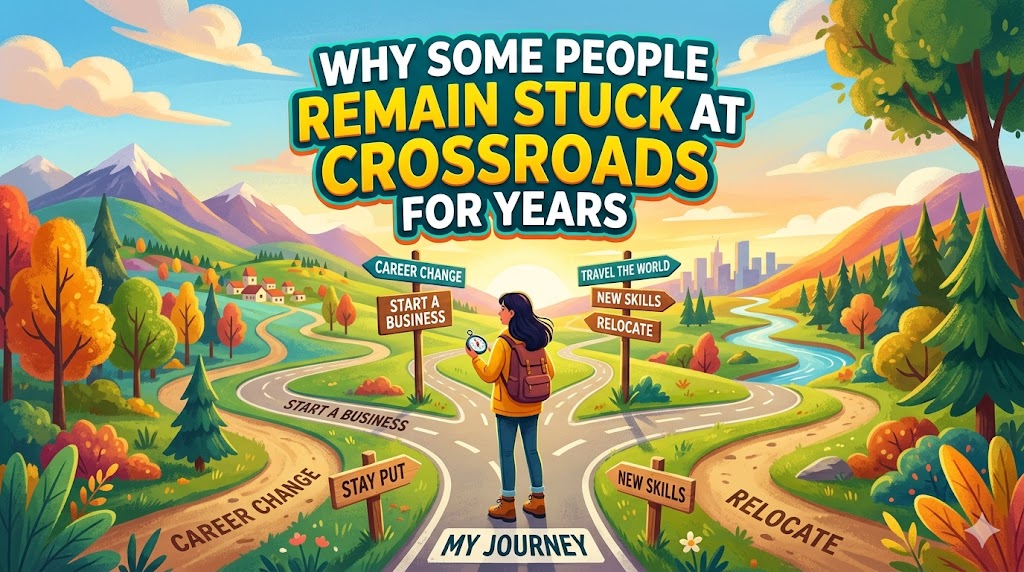
In a world that constantly rewards certainty, people often believe that the best decisions are the most carefully planned, the most researched, and the most perfectly timed. Yet in reality, many of the opportunities that shape careers, businesses, relationships, and personal growth are not unlocked by perfect decisions, but by fast ones that are imperfect but actionable. The hidden power of making imperfect decisions quickly is not about being careless or reckless. It is about understanding that speed creates clarity, and clarity refines direction far more effectively than endless hesitation ever will.
Most people are not stuck because they lack information. They are stuck because they overvalue precision at the expense of progress. They wait for the perfect moment, the perfect answer, the perfect plan, or the perfect level of confidence before they act. But perfection is a moving target. The more you chase it, the further it moves away. Meanwhile, life continues to change, opportunities shift, and doors that were open quietly close. In contrast, people who move quickly with imperfect decisions often gain something far more valuable than accuracy. They gain real feedback from reality.
Reality is the best teacher, but it only teaches those who act. You cannot think your way into complete certainty because most real-world decisions are probabilistic, not absolute. Every major path in life involves unknowns. Whether you are starting a business, choosing a career direction, building a skill, or investing your time into a relationship, you are always operating with incomplete data. Waiting for full certainty is not wisdom; it is disguised fear. The people who move forward early understand that motion itself reduces uncertainty.
When you make a quick, imperfect decision, you create a feedback loop. That feedback loop begins to refine your judgment in real time. Instead of guessing endlessly in your mind, you begin to interact with reality, and reality responds. Sometimes it confirms your direction. Other times it forces correction. But either outcome is progress, because both eliminate false paths and bring you closer to what actually works. Slow decision-makers often never reach this stage because they are still preparing while others are already adjusting.
There is also a psychological shift that happens when you act quickly. Indecision drains mental energy. Every unfinished decision becomes an open loop in the mind, quietly consuming focus. The longer you delay, the heavier the decision feels. What starts as a simple choice eventually becomes emotionally charged and harder to make. Quick imperfect decisions prevent this buildup. They keep your mental environment clean and free, allowing you to focus on execution rather than internal debate.
Interestingly, most successful outcomes are not the result of one perfect decision but a series of small, fast, imperfect decisions stacked over time. Each decision slightly adjusts direction. Each adjustment brings better information. Over time, what looks like a well-planned success from the outside is often just a trail of corrections made by someone who was willing to act early and refine continuously. This is why execution speed often beats initial correctness. You can correct a wrong action, but you cannot improve a frozen idea.
Fear is one of the main reasons people avoid quick decisions. They fear making mistakes, being judged, or wasting resources. But mistakes made through action are not failures in the traditional sense. They are data points. A wrong decision that is acted upon still produces useful information. A correct idea that is never executed produces nothing. In this sense, inaction is often the greater risk. It silently guarantees stagnation while giving the illusion of safety.
Another hidden benefit of making imperfect decisions quickly is that it builds confidence through evidence. Confidence is not built by thinking you can succeed. It is built by surviving the outcomes of your actions. When you act, even imperfectly, you begin to collect personal proof that you can handle outcomes, adapt, and recover. This builds resilience. Over time, this resilience becomes more valuable than any individual decision you make.
Quick decision-making also improves creativity. When you give yourself permission to act without perfect certainty, your mind becomes more flexible. You stop over-filtering ideas and start experimenting. Many breakthroughs come not from long contemplation but from rapid experimentation. The willingness to try something imperfect opens doors that perfectionism keeps closed. Creativity thrives in environments where failure is acceptable and iteration is constant.
On the other hand, people who delay decisions often experience a hidden cost: opportunity decay. Not all opportunities wait. Timing is often just as important as quality. A good idea executed too late may become irrelevant. Markets change, people change, environments shift. The advantage often belongs not to the person with the best plan, but to the person who acted when the opportunity was alive. Speed, therefore, is not just efficiency; it is relevance.
It is important to clarify that making quick decisions does not mean abandoning thought. It means compressing the decision cycle. Instead of spending excessive time trying to eliminate all risk, you aim to identify acceptable risk and act within it. You are not trying to be perfect; you are trying to be responsive. This distinction is what separates impulsiveness from strategic speed. One is random reaction, the other is controlled movement with awareness of uncertainty.
Another subtle advantage of fast imperfect decisions is momentum. Once you start moving, it becomes easier to continue moving. Action generates energy, while hesitation consumes it. Many people believe they lack motivation, but in reality, they are stuck in inaction loops. The moment they begin acting, even imperfectly, momentum builds and motivation often follows, not the other way around. Movement creates clarity that thinking alone cannot produce.
Over time, those who consistently make faster decisions develop something extremely valuable: better intuition. Intuition is not magic. It is the brain’s ability to recognize patterns based on experience. The more decisions you make, the more data your mind collects. Eventually, you begin to sense outcomes faster because you have seen similar patterns before. This is why experienced people often appear to make “instant” good decisions. It is not instant thinking; it is accumulated exposure.
There is also a compounding effect in decision-making speed. A person who makes ten small decisions and adjusts quickly will often outperform someone who makes one “perfect” decision after months of delay. This compounding effect shows up in business, relationships, and personal growth. Small early actions create trajectories. Delayed perfection often leads to missed trajectories altogether.
One of the most misunderstood truths is that clarity often comes after commitment, not before it. People expect clarity to come first so they can commit confidently. But in reality, commitment produces clarity. When you choose a direction and move, you begin to see what matters and what does not. The fog does not lift before you start walking; it clears as you move through it.
The fear of imperfection is deeply tied to ego. People want to avoid looking wrong, so they avoid acting until they are sure they will be right. But life does not reward certainty as much as it rewards adaptability. The ability to recover, adjust, and refine is far more important than initial correctness. Imperfect decisions made quickly create the conditions for adaptability to develop.
Ultimately, the hidden power of making imperfect decisions quickly is that it aligns you with how life actually works. Life is not a static exam with one correct answer. It is a dynamic system that responds to action. Those who engage with it early gain experience, feedback, and momentum. Those who wait for perfection often find that life has already moved on without them.
The goal is not to eliminate mistakes but to reduce delay. It is to choose progress over paralysis, movement over mental loops, and learning over illusion of certainty. When you understand this deeply, decision-making becomes lighter. You stop treating every choice as permanent and start treating it as iterative. And in that shift, you unlock a pace of growth that perfectionism can never achieve.

EarnSmartOnline.com.ng is dedicated to helping readers make smarter financial decisions through practical guides on online income, personal finance, technology, digital business, and wealth creation. Our goal is to provide reliable, easy-to-understand, and actionable content that empowers individuals to earn smarter, build sustainable income streams and achieve long-term financial success.
Recommended: Start Earning Online
- Ultimate Affiliate Marketing Program — learn affiliate marketing with a done-for-you sales system ($15). Check it out
- The Newbie Affiliate Guide — the beginner-friendly starter guide (~$6.68). Check it out
- Easy Dollar Maker — earn in dollars uploading AI images and videos from your phone ($17). Check it out
Disclosure: These are affiliate links. If you buy through them, I may earn a commission at no extra cost to you.



