
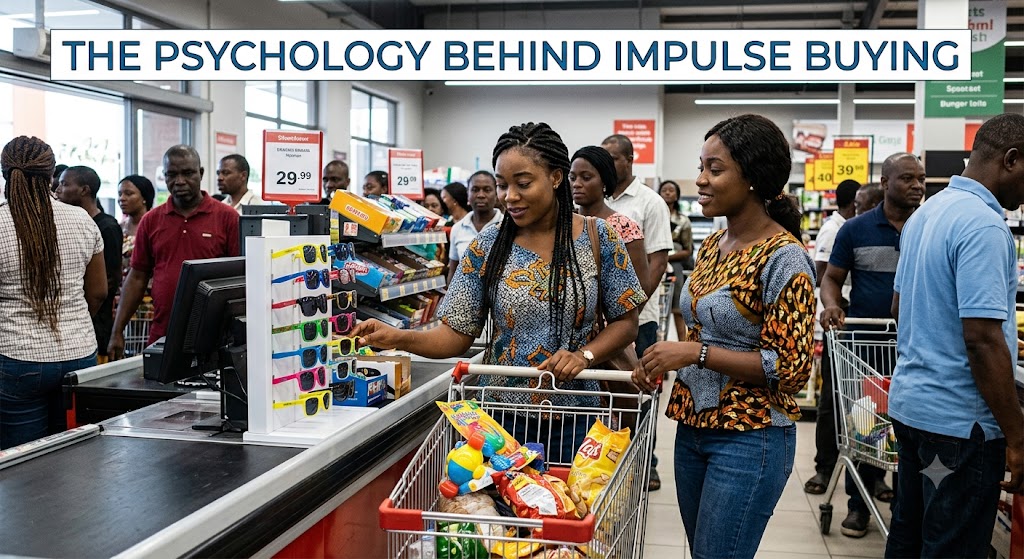
Every day, millions of people walk into shops or browse online stores intending to buy just one or two items, only to leave with far more than they originally planned. A person may enter a supermarket to buy bread and milk but end up purchasing chocolates, soft drinks, scented candles, magazines, and several other products that were never on the shopping list. Online shoppers experience something similar when they visit an e-commerce website to compare prices but eventually complete an order containing multiple products they had no intention of buying. This behaviour is known as impulse buying, and it has fascinated psychologists, marketers, economists, and consumer behaviour experts for decades. Understanding the psychology behind impulse buying helps individuals become smarter consumers while also revealing the powerful techniques businesses use to influence purchasing decisions.
The psychology behind impulse buying is deeply connected to human emotions rather than logical thinking. Contrary to what many people believe, people rarely make purchasing decisions based solely on necessity. Emotions often play a much larger role than facts. When consumers feel excited, stressed, lonely, happy, anxious, bored, or even rewarded after accomplishing something, they become far more likely to make spontaneous purchases. Shopping temporarily satisfies emotional needs, creating a feeling of pleasure that encourages buying without careful consideration of long-term consequences.
One of the biggest psychological drivers of impulse buying is the brain’s reward system. Whenever someone anticipates receiving something enjoyable, the brain releases dopamine, a neurotransmitter associated with motivation, pleasure, and reward. Interestingly, dopamine begins to increase before the purchase is completed rather than after it. This anticipation creates excitement, making consumers eager to own the product. The act of purchasing itself becomes emotionally rewarding, regardless of whether the product is actually useful. This explains why many people feel a rush while clicking the “Buy Now” button online but lose interest in the product shortly after it arrives.
Retailers understand this neurological response exceptionally well. Every aspect of modern shopping environments is carefully designed to stimulate excitement and encourage spontaneous purchases. Bright colours, attractive lighting, relaxing music, pleasant scents, and strategically placed products all work together to create an atmosphere where consumers feel comfortable spending money. Even the arrangement of products inside supermarkets is carefully planned. Everyday essentials such as bread, eggs, and milk are often placed at the back of the store, forcing customers to walk past hundreds of tempting products before reaching what they originally came to buy.
The psychology behind impulse buying is also closely linked to instant gratification. Human beings naturally prefer immediate rewards over future benefits. This psychological tendency explains why saving money can feel difficult while spending money often feels easy. Purchasing something desirable provides immediate emotional satisfaction, whereas saving offers a reward that may not be experienced until months or years later. Since the human brain is wired to prioritise immediate pleasure, consumers often choose the instant emotional reward of buying instead of the delayed satisfaction of financial security.
Another powerful psychological factor is emotional regulation. Many people shop not because they need something but because they want to change how they feel. Shopping becomes a coping mechanism for dealing with stress, sadness, disappointment, frustration, or boredom. Someone who has had a difficult day at work may decide to visit a shopping centre simply to relax. Another person experiencing loneliness might browse online marketplaces late at night, believing that purchasing new clothes, gadgets, or home decorations will improve their mood. While shopping can provide temporary emotional relief, the effect usually fades quickly, often leading to regret once reality returns.
The Psychology Behind Impulse Buying
This emotional cycle explains why impulse buying is frequently associated with feelings of guilt. Immediately after making an unnecessary purchase, consumers often begin questioning whether they truly needed the item. They realise the excitement has disappeared, leaving only the financial cost behind. Many unopened products sitting in wardrobes, cupboards, or garages are reminders of purchases driven by emotion rather than genuine need.
Scarcity is another psychological trigger that significantly increases impulse buying. Whenever consumers believe a product is available only for a limited time, they become afraid of missing an opportunity. This fear of missing out creates urgency that discourages careful decision-making. Phrases such as “Only two left,” “Limited stock,” “Offer ends tonight,” and “Flash Sale” are designed to activate this psychological response. Instead of asking whether they need the product, consumers begin worrying that they may never have another chance to purchase it at the same price.
Social influence also plays an enormous role in spontaneous purchasing decisions. Human beings naturally compare themselves with others. Seeing friends, celebrities, influencers, or colleagues using certain products creates a desire to own similar items. Social media has intensified this phenomenon by constantly exposing users to carefully curated lifestyles filled with luxury products, fashionable clothing, expensive holidays, and the latest technology. As people scroll through these images, they may begin believing that purchasing similar products will make them happier, more successful, or more accepted by others.
Influencer marketing has become particularly effective because consumers often trust recommendations from personalities they follow online. Unlike traditional advertisements, influencer promotions appear more personal and authentic. Followers feel they know the influencer personally, making them more receptive to purchasing recommended products. Even when viewers understand they are watching sponsored content, emotional connections with influencers continue to influence buying behaviour.
The psychology behind impulse buying also involves cognitive biases that affect human judgment. One common example is anchoring. When consumers first see a product priced at a very high amount followed by a discounted price, the lower price appears far more attractive, even if it still exceeds the product’s actual value. Retailers frequently display original prices alongside sale prices because consumers compare the two figures rather than evaluating whether the discounted price is genuinely reasonable.
Another psychological principle is the decoy effect. Businesses often introduce a third pricing option that makes another product appear to offer significantly better value. Consumers believe they are making a rational decision, but their choices have been subtly influenced by how the options are presented rather than by objective evaluation.
The layout of online shopping websites has become increasingly sophisticated in encouraging impulse buying. Recommendation algorithms analyse previous purchases, browsing history, and search behaviour to suggest products consumers are statistically more likely to purchase. Features such as “Customers also bought,” “Recommended for you,” and “Frequently purchased together” encourage shoppers to add extra items to their carts. Many consumers end up buying products they never actively searched for simply because the suggestions appeared relevant.
Free shipping thresholds represent another highly successful psychological strategy. Suppose delivery costs £5 or its equivalent unless a shopper spends a certain minimum amount. Rather than paying the delivery fee, many consumers choose to purchase additional products they never intended to buy simply to qualify for free shipping. Ironically, they spend considerably more money than the shipping fee they were trying to avoid.
Impulse buying becomes even more powerful when combined with convenience. Digital payment methods have removed much of the psychological discomfort associated with spending money. Handing over physical cash creates a stronger awareness of financial loss because consumers can physically see their money leaving their possession. Credit cards, debit cards, digital wallets, and one-click payment systems reduce this emotional discomfort, making purchases feel less significant than they actually are.
Buy Now Pay Later services have introduced another psychological dimension. By separating the enjoyment of ownership from the pain of payment, these services encourage consumers to purchase products that might otherwise exceed their budgets. Since the financial consequences are delayed, people often underestimate the total amount they are committing to repay over time.
The psychology behind impulse buying differs across various age groups. Children are especially vulnerable because they have not yet developed strong self-control or financial reasoning. Colourful packaging, cartoon characters, toys placed near checkout counters, and sweets displayed at eye level all target children’s attention. Parents often experience pressure to satisfy these requests simply to avoid conflict during shopping trips.
Teenagers and young adults frequently experience impulse buying driven by identity formation and peer acceptance. Fashion trends, technology, cosmetics, and entertainment products become symbols of belonging within social groups. Purchasing these products helps individuals express personality and maintain social status among friends.
Adults may experience impulse buying for different reasons, including career stress, family responsibilities, financial pressure, or the desire to reward themselves after achieving personal goals. Retirement-aged consumers may purchase products that promise improved health, comfort, or convenience, demonstrating that impulse buying evolves throughout different stages of life.
Personality traits also influence susceptibility to spontaneous purchases. Individuals who naturally seek excitement, novelty, and new experiences tend to make impulse purchases more frequently than those who carefully plan and evaluate every financial decision. Highly materialistic individuals may also associate possessions with personal success, making them more likely to buy emotionally rather than practically.
Mood significantly affects shopping behaviour. Research consistently shows that positive moods increase optimism, making consumers more willing to spend money. However, negative moods can be equally influential because shopping provides temporary emotional relief. This creates an interesting paradox in which both happiness and sadness may increase impulse buying, although for different psychological reasons.
The physical environment also shapes consumer decisions more than many people realise. Comfortable temperatures encourage shoppers to remain inside stores for longer periods. Slow background music reduces walking speed, increasing the likelihood of noticing additional products. Pleasant fragrances improve mood, making customers associate positive emotions with the shopping experience. Even wider shopping trolleys encourage consumers to purchase more because partially filled trolleys create the illusion that very little has been selected.

EarnSmartOnline.com.ng is dedicated to helping readers make smarter financial decisions through practical guides on online income, personal finance, technology, digital business, and wealth creation. Our goal is to provide reliable, easy-to-understand, and actionable content that empowers individuals to earn smarter, build sustainable income streams and achieve long-term financial success.
Recommended: Start Earning Online
- Ultimate Affiliate Marketing Program — learn affiliate marketing with a done-for-you sales system ($15). Check it out
- The Newbie Affiliate Guide — the beginner-friendly starter guide (~$6.68). Check it out
- Easy Dollar Maker — earn in dollars uploading AI images and videos from your phone ($17). Check it out
Disclosure: These are affiliate links. If you buy through them, I may earn a commission at no extra cost to you.



