
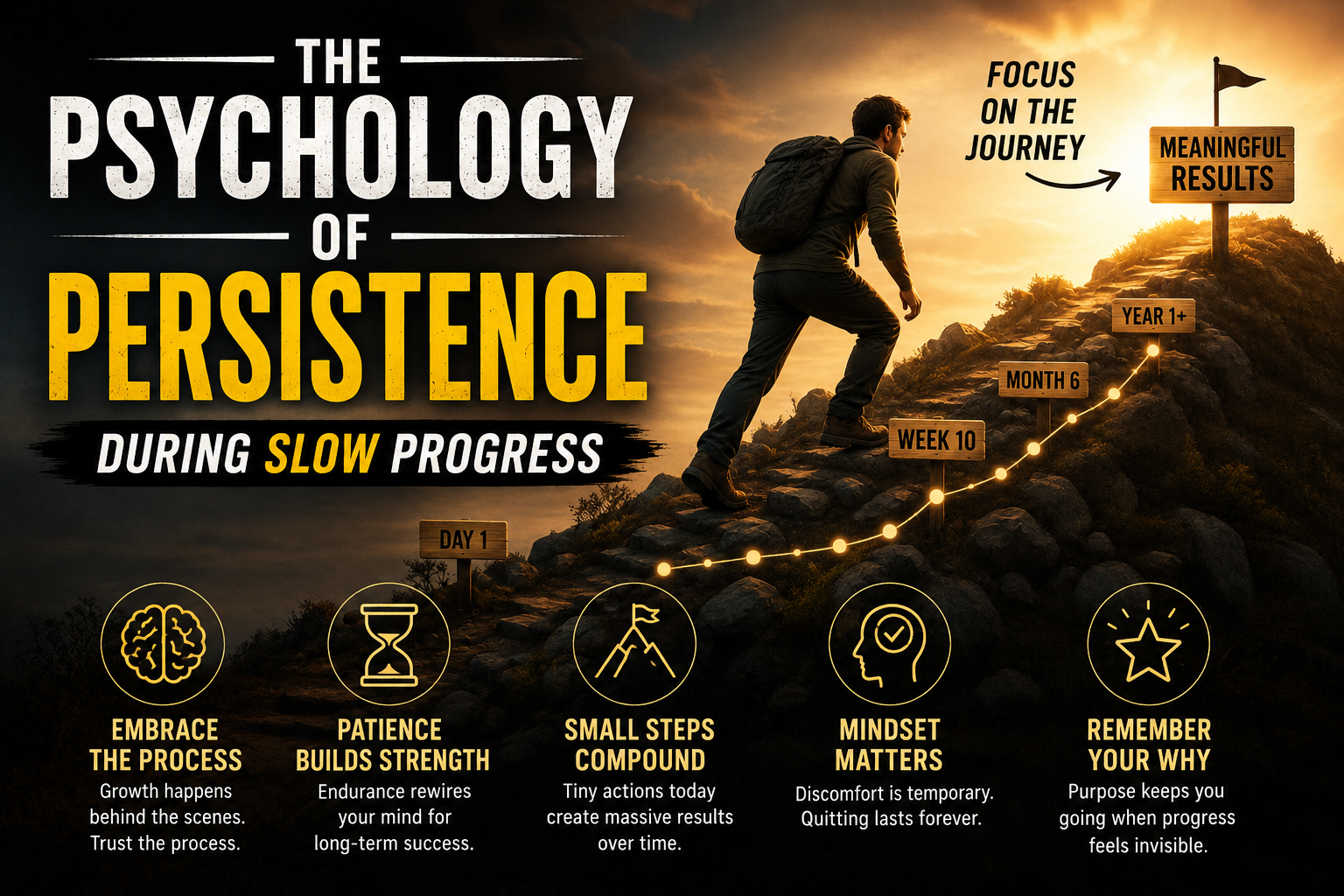
The Psychology of Persistence During Slow Progress
The psychology of persistence during slow progress is one of the most important yet least understood aspects of personal growth, success, and achievement. Almost everyone starts a journey with enthusiasm. Whether it is building a business, improving finances, learning a new skill, losing weight, growing a social media audience, or pursuing a lifelong dream, the beginning is usually exciting. People are motivated by the possibilities ahead and energized by the vision of what they hope to accomplish. However, the true test of character does not come during periods of rapid success. It comes during the long stretches when effort seems disconnected from results.
Slow progress creates a unique psychological challenge. Human beings are naturally wired to seek rewards. When we put effort into something, we expect to see evidence that our work is producing results. This expectation influences how we think, feel, and behave. When results arrive quickly, motivation tends to increase. When results are delayed, motivation often declines. The mind begins to question whether the effort is worthwhile, whether the goal is realistic, and whether continuing is the right decision.
One of the biggest reasons people quit too early is that they misunderstand how progress actually works. Many imagine success as a straight line. They believe that if they work consistently, results will appear consistently. Reality is often very different. Progress is frequently invisible before it becomes visible. Many achievements grow beneath the surface long before they become obvious to others. Just as a seed develops roots underground before breaking through the soil, personal and professional growth often occurs out of sight.
This hidden phase creates psychological discomfort because humans tend to judge success based on visible outcomes. When there is little external evidence of advancement, people begin to doubt themselves. They compare their current reality with their expectations and conclude that they are failing. In many cases, they are not failing at all. They are simply experiencing the natural delay between effort and reward.
The psychology of persistence during slow progress is deeply connected to how people interpret setbacks and delays. Two individuals can experience the same situation and respond very differently. One person may view slow progress as proof that success is impossible. Another may view it as proof that growth takes time. The difference lies in mindset rather than circumstances.
Research and real life experience consistently show that people who persist through slow progress tend to focus more on the process than the outcome. They understand that results are often lagging indicators. The work done today may not produce visible benefits until weeks, months, or even years later. Because of this understanding, they measure success by commitment rather than immediate rewards.
Patience plays a critical role in persistence. Unfortunately, patience is increasingly difficult to maintain in a world built around instant gratification. Technology allows people to receive information, entertainment, products, and services almost immediately. This convenience has subtly conditioned many individuals to expect fast results in every area of life. When goals require long periods of effort without obvious rewards, frustration grows quickly.
The challenge is that most meaningful achievements operate according to a different timeline. Building expertise takes years. Developing trust takes years. Creating wealth often takes years. Strengthening relationships takes years. Personal transformation takes years. The gap between effort and reward can be much longer than most people anticipate.
During this waiting period, the mind often becomes its own worst enemy. Negative thoughts begin to appear. People wonder whether they started too late. They question whether others are more talented. They worry that they are wasting their time. They become distracted by alternative opportunities that seem easier or faster. These thoughts are normal, but they can become dangerous if left unchecked.
Persistence requires the ability to manage internal dialogue. Successful individuals are not immune to doubt. They simply refuse to allow doubt to dictate their actions. They acknowledge uncertainty while continuing to move forward. They recognize that emotions are temporary but decisions often have lasting consequences.
Another important aspect of persistence is understanding the power of small improvements. Many people abandon their goals because they underestimate the value of incremental progress. They focus only on dramatic breakthroughs and overlook the significance of daily improvements. Yet history repeatedly demonstrates that extraordinary outcomes are often the result of ordinary actions performed consistently over long periods.
A person who improves by a small amount every day may not notice significant changes in the short term. However, those small improvements accumulate. Over time, they create a gap between those who persist and those who quit. What appears insignificant today can become transformative tomorrow.
This principle explains why persistence is often more important than talent. Talent may provide an initial advantage, but consistency multiplies over time. A moderately talented individual who remains committed for years frequently outperforms a highly talented individual who gives up when progress slows.
The psychology of persistence is also influenced by identity. People who see themselves as committed individuals are more likely to continue during difficult periods. Instead of asking whether they feel motivated, they ask whether their actions align with the type of person they want to become. Their behavior is driven by identity rather than emotion.
This distinction matters because motivation is unreliable. Some days people feel energized and focused. Other days they feel tired, discouraged, or distracted. If persistence depends entirely on motivation, progress becomes inconsistent. Identity provides stability. It allows people to continue taking action even when enthusiasm fades.
Slow progress also teaches resilience. Resilience is not simply the ability to endure hardship. It is the ability to recover from disappointment and continue moving forward. Every significant goal includes obstacles, setbacks, and unexpected challenges. Persistence develops the mental strength necessary to navigate these difficulties without abandoning the journey.
One reason resilience is so valuable is that success rarely occurs exactly as planned. Many people assume that achieving a goal means following a predictable path from point A to point B. In reality, progress often involves detours, adjustments, and temporary failures. Those who persist understand that setbacks are part of the process rather than evidence that the process is broken.
Comparison can be one of the greatest threats to persistence during slow progress. In today’s connected world, people are constantly exposed to the achievements of others. Social media highlights success stories while often hiding the years of struggle that preceded them. This creates unrealistic expectations and fuels discouragement.
When people compare their behind the scenes journey to someone else’s highlight reel, they often conclude that they are falling behind. The truth is that every journey operates according to its own timeline. Comparing progress rarely provides useful information. It usually creates unnecessary anxiety and distracts from meaningful action.
A healthier approach is to compare current performance with past performance. This shifts attention away from external validation and toward personal growth. The goal becomes continuous improvement rather than competition. This mindset supports long term persistence because it focuses on factors within personal control.
Another psychological factor that strengthens persistence is purpose. People are more likely to endure slow progress when their goals are connected to something meaningful. Superficial motivations often fade quickly when challenges arise. Deeper motivations provide lasting fuel during difficult periods.
Purpose gives effort significance beyond immediate results. It reminds individuals why they started and why continuing matters. When people connect their daily actions to a larger vision, temporary setbacks become easier to tolerate. The journey gains meaning even before the destination is reached.
It is also important to recognize that slow progress is not necessarily bad progress. In many situations, slow growth is actually more sustainable than rapid growth. Quick success can create unrealistic expectations and fragile foundations. Gradual progress allows skills, habits, and systems to develop properly. What grows slowly often becomes stronger and more durable over time.
The psychology of persistence ultimately revolves around trust. It requires trusting the process when evidence is limited. It requires trusting that effort has value even when rewards are delayed. It requires trusting that consistency will eventually produce results that are currently invisible.
This trust does not mean blind optimism. It means understanding that meaningful achievement is rarely immediate. It means accepting that progress often occurs beneath the surface before becoming visible. It means recognizing that persistence itself is a competitive advantage because so many people quit during the slow stages.
The individuals who eventually achieve remarkable results are often not the smartest, luckiest, or most talented. They are the ones who continue when others stop. They remain committed when excitement fades. They stay focused when progress appears slow. They understand that success is frequently hidden inside ordinary days filled with repetitive effort.
The psychology of persistence during slow progress teaches one of life’s most valuable lessons. Progress does not always announce itself. Growth is not always visible. Results do not always arrive on schedule. Yet those who continue moving forward despite uncertainty position themselves for breakthroughs that others never experience. Persistence transforms potential into achievement, effort into results, and dreams into reality. In a world that celebrates instant success, the ability to remain committed during slow progress remains one of the most powerful skills a person can develop.

EarnSmartOnline.com.ng is dedicated to helping readers make smarter financial decisions through practical guides on online income, personal finance, technology, digital business, and wealth creation. Our goal is to provide reliable, easy-to-understand, and actionable content that empowers individuals to earn smarter, build sustainable income streams and achieve long-term financial success.
Recommended: Start Earning Online
- Ultimate Affiliate Marketing Program — learn affiliate marketing with a done-for-you sales system ($15). Check it out
- The Newbie Affiliate Guide — the beginner-friendly starter guide (~$6.68). Check it out
- Easy Dollar Maker — earn in dollars uploading AI images and videos from your phone ($17). Check it out
Disclosure: These are affiliate links. If you buy through them, I may earn a commission at no extra cost to you.



